
Myrmicocrypta collaris
- Tud. név
- Myrmicocrypta collaris
- Nemzetség
- Attini
- Alcsalád
- Myrmicinae
- Szerző
- Emery, 1913
- Elterjedés
- 0 országban megtalálható
Bevezetés
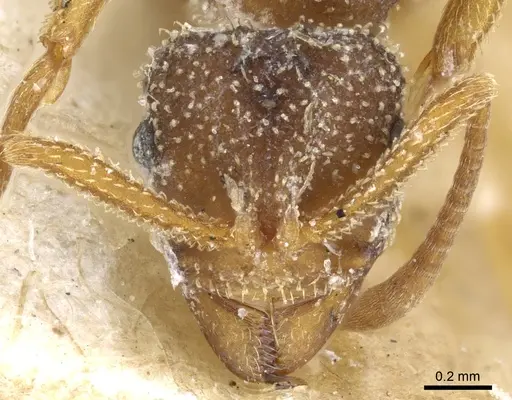
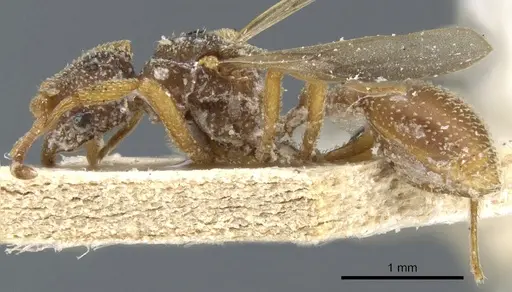
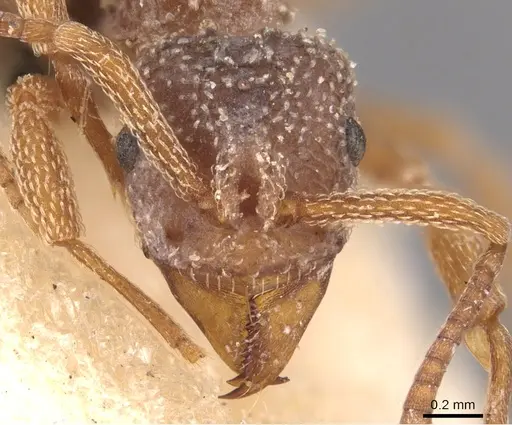
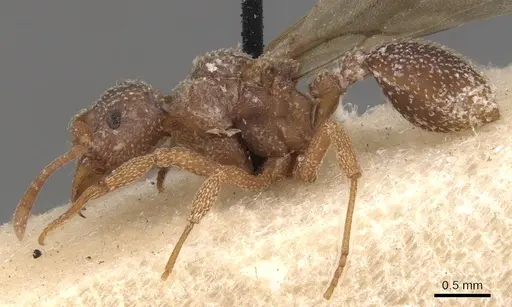
Myrmicocrypta collaris is a small fungus-growing ant native to Peru in the Neotropical region . The species was described by Emery in 1913 and belongs to the tribe Attini, which includes leaf-cutter ants. Like all Attini ants, this species cultivates a fungal garden as its primary food source - the ants tend and harvest the fungus, which serves as their sole nutritional source . This species remains poorly documented in scientific literature, with most records coming from Peru's tropical forests. The genus Myrmicocrypta represents relatively small, primitive fungus-growing ants that nest in soil or decaying wood. They possess a functional stinger typical of Myrmicinae ants, though it is less medically significant to humans .
Quick Summary
- Difficulty: Medium
- Origin & Habitat: Peru (Neotropical region). Found in tropical forest habitats, typically nesting in soil or decaying wood [1][2].
- Colony Type: Colony structure is unconfirmed for this species. Based on typical Attini patterns, single-queen colonies are common in the tribe.
- Size & Growth:
- Queen: Size data unavailable, the original description by Emery (1913) did not provide measurements [2].
- Worker: Size data unavailable, no worker measurements have been documented [2].
- Colony: Colony size data unavailable for this species
- Growth: Growth rate is unconfirmed
- Development: Development timeline is unconfirmed for this species (Attini development is generally temperature-dependent, but specific data for M. collaris is unavailable.)
- Antkeeping:
- Temperature: Temperature requirements are unconfirmed for this species. As a tropical Peruvian ant, warm conditions are likely needed, start around 24-26°C and observe colony behavior.
- Humidity: Humidity requirements are unconfirmed. As a fungus-cultivating ant, moderate to high humidity is likely beneficial, keep the nest substrate consistently moist but not waterlogged.
- Diapause: No, this is a tropical species that does not require hibernation. Maintain warm conditions year-round.
- Nesting: Y-tong (AAC) nests or plaster nests work well for fungus-growing ants. The nest should hold humidity effectively. Naturalistic setups with soil and decaying wood also work [2].
- Behavior: These ants are peaceful. Workers are small and may be overlooked due to their size. They are not escape artists but their small size means fine mesh on any ventilation openings is recommended. The most notable behavior is their fungus cultivation, workers tend to a fungal garden that serves as their food source. They do not scavenge like typical ants but instead harvest and maintain their fungal crop [2].
- Common Issues: Fungal garden failure is the primary risk, if the fungus dies, the colony will starve. Never let the fungus dry out or become contaminated., Temperature extremes outside their tolerance range can harm the colony and fungal garden., Overfeeding can cause fungal rot, only provide small amounts of substrate material at a time., Wild-caught colonies may have parasites or diseases that affect the fungus culture., Limited scientific data means care requirements are not fully understood, monitor your colony closely and adjust conditions as needed.
Fungus Cultivation - The Key to Their Survival
Myrmicocrypta collaris belongs to the tribe Attini, a group of ants that evolved a unique agricultural symbiosis. Unlike most ants that hunt insects or collect honeydew, Attini ants cultivate fungus for food. The colony maintains a fungal garden within the nest, with workers constantly tending, pruning, and harvesting the fungus. This fungus is the colony's sole food source, the ants do not eat insects or sugar. For captive care, you must provide suitable fungal substrate. This typically consists of fresh plant material (leaf fragments, flower petals, or grass) that the ants use to inoculate and feed their fungal garden. The key challenge is maintaining a healthy fungal culture, it must stay moist but not rot, and receive fresh substrate regularly. A failing fungal garden will turn dark and slimy, at which point the colony typically dies within weeks [2].
Feeding and Nutrition
Feeding Attini ants is fundamentally different from typical antkeeping. These ants do not accept sugar water, honey, or protein-rich foods like mealworms. Their diet consists entirely of the fungal garden they cultivate. You must provide fresh plant material regularly, small pieces of leaves, flower petals, grass clippings, or other organic matter. The ants will process this material and add it to their fungal garden. The fungus then digests this material, and the ants consume the fungal strands. Only provide small amounts of fresh material at a time to prevent mold. Remove any uneaten plant material before it rots. The feeding schedule depends on colony size, a small colony needs only tiny amounts, while larger colonies consume more. Watch how quickly they process what you provide and adjust accordingly [2].
Nest Setup and Housing
For Myrmicocrypta collaris, Y-tong (AAC) nests or plaster nests work well because they hold humidity effectively. The nest chambers should be appropriately sized for their tiny workers, narrow passages and small chambers are better than large open spaces. Include a water reservoir to maintain humidity. The foraging area should be simple, with a small dish or area for placing fresh plant material. Use fine mesh on any ventilation to prevent escapes since these are very small ants. Avoid naturalistic setups unless you have experience with Attini husbandry, as mold control is more difficult. A simple setup with good humidity control is preferable. Avoid moving or disturbing the nest once the fungal garden is established, this can damage the sensitive fungal culture [2].
Temperature and Seasonal Care
As a tropical species from Peru, Myrmicocrypta collaris likely requires warm conditions year-round. Start with the nest area at approximately 24-26°C and monitor the colony. Observe how the ants behave, if they seem sluggish, try slightly warmer conditions. If the fungus appears to struggle, adjust gradually. Since this is a tropical species, no hibernation or diapause is needed. Maintain consistent warm conditions throughout the year. Avoid placing the nest near air conditioning vents or in drafty areas. Room temperature in most homes may be too cold, check with a thermometer and add heating if needed [2].
Behavior and Observation
Observing Attini ants is a unique experience in antkeeping. Unlike typical ants that run frantically searching for food, Myrmicocrypta workers move with deliberate purpose, tending their fungal garden. You will see workers pruning the fungus with their mandibles, harvesting small pieces, and carrying plant material into the nest to feed the garden. This behavior is fascinating to watch and represents millions of years of co-evolution. The ants possess a stinger but are not aggressive and rarely use it. They are small and may seem timid. Colonies are quiet and do not produce much activity in the outworld. The main activity happens inside the nest where the fungal garden is tended. This species is best suited for keepers who are interested in observing unusual ant biology rather than watching active foraging [2].
Frequently Asked Questions
What do Myrmicocrypta collaris ants eat?
They eat only the fungus they cultivate. Unlike typical ants, they do not eat sugar, honey, or insects. You must provide fresh plant material (leaves, flower petals, grass) for them to feed their fungal garden. The fungus digests this material and the ants eat the fungal strands [2].
How do I start a fungal garden for Myrmicocrypta collaris?
If you acquire a colony with an established fungal garden, simply maintain it by providing small amounts of fresh plant material regularly. If starting from scratch with a founding queen, she will establish a small fungal culture from spores she carries. Provide tiny pieces of plant material and keep conditions humid. The queen will tend the initial garden until workers emerge [2].
Can I keep Myrmicocrypta collaris in a test tube?
A test tube can work for a founding queen, but you will need to move the colony to a proper nest (Y-tong or plaster) once the colony grows. Test tubes dry out too quickly for the fungal garden to thrive long-term. The humidity control in a proper nest is essential for keeping the fungus healthy [2].
How long does it take for Myrmicocrypta collaris to develop from egg to worker?
Development timeline is unconfirmed for this species. Attini development is generally slower than typical ants because the colony must also grow its fungal garden, but specific data for M. collaris is unavailable. Observe your colony and adjust conditions as needed [2].
Are Myrmicocrypta collaris good for beginners?
They are intermediate difficulty. The fungus cultivation requirement is more challenging than typical antkeeping. You must maintain the fungal garden properly or the colony will die. They are best suited for keepers who understand the unique needs of Attini ants [2].
What temperature do Myrmicocrypta collaris need?
Temperature requirements are unconfirmed for this species. As a tropical Peruvian ant, warm conditions are likely needed, start around 24-26°C and observe colony behavior. Adjust gradually based on how the colony responds [2].
Why is my Myrmicocrypta collaris colony dying?
The most common cause is fungal garden failure. This can happen if the fungus dries out, gets too wet and rots, or runs out of fresh plant material. Check humidity levels, ensure the fungus looks healthy (white, fuzzy strands), and provide appropriate amounts of fresh plant material. Also verify temperatures are within an appropriate range [2].
How often should I feed Myrmicocrypta collaris?
Provide small amounts of fresh plant material every few days. The amount depends on colony size, a small colony needs only tiny pieces, while larger colonies can handle more. Remove any uneaten material before it molds. Watch how quickly they process what you provide and adjust the frequency accordingly [2].
Do Myrmicocrypta collaris need hibernation?
No, they do not hibernate. This is a tropical species from Peru that requires warm conditions year-round [2].
How big do Myrmicocrypta collaris colonies get?
Colony size data is unavailable for this species. Related Myrmicocrypta species typically form modest colonies, but specific maximum sizes have not been documented [2].
Can I keep multiple queens together?
This has not been documented for this specific species. Based on typical Attini behavior, single-queen colonies are most common. Combining unrelated queens is not recommended as it may lead to aggression [2].
Report an Issue
The current care sheet is based fully on literature. See inconsistencies, or something that's incorrect? Please , it will be resolved after review from an admin. Contributing to the blogs tab also helps providing information, to make us be able to further improve the caresheets. Thank you for your support!
References

Ez a tartási útmutató a következő licenc alatt áll: CC BY-SA 4.0 .
Közösségi blogok
USNMENT00445576
Megtekintés az AntWeb-en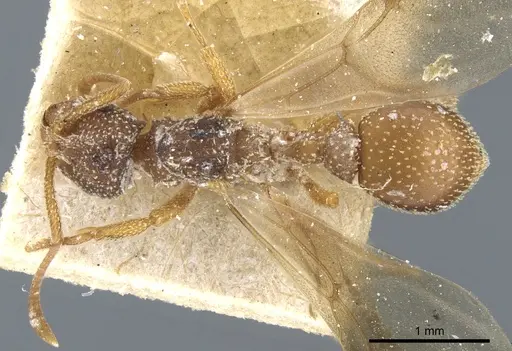
USNMENT00445577
Megtekintés az AntWeb-en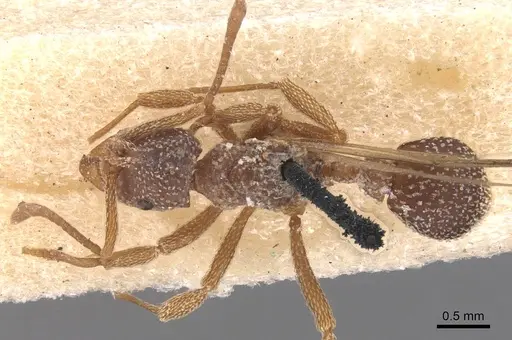
Irodalom
Elterjedési térkép betöltése...Termékek betöltése...