
Myrmica sculptiventris
- Tud. név
- Myrmica sculptiventris
- Nemzetség
- Myrmicini
- Alcsalád
- Myrmicinae
- Szerző
- Radchenko & Elmes, 2009
- Elterjedés
- 0 országban megtalálható
Bevezetés
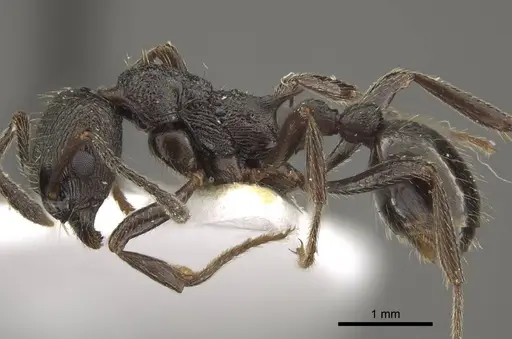
Myrmica sculptiventris is an extremely rare ant species from the pachei species-group, described in 2009 from only two worker specimens collected in the mountains of Sichuan Province, China. Workers are blackish-brown with notably long propodeal spines and a distinctive sculpted gaster - the basal third of the first abdominal segment has dense punctures and longitudinal striations that fade toward the rear, a feature shared by only two other Palaearctic Myrmica species. They have a robust alitrunk and relatively long scape. This is one of the most poorly known Myrmica species in existence - queens and males remain undescribed and no captive colonies have ever been documented. The limited distribution at 2175m altitude indicates a cool, high-elevation mountain meadow habitat .
Quick Summary
- Difficulty: Expert
- Origin & Habitat: Sichuan Province, China (Palaearctic Region). Found only on mountain meadows at 2175m altitude, a cool, high-elevation habitat [1][2].
- Colony Type: Unknown, only the worker caste has been described. No data exists on queen number or colony structure.
- Size & Growth:
- Queen: Size data unavailable, queens have never been described [1]
- Worker: Size data unavailable, no total length measurements exist. Based on typical Myrmica genus patterns, workers likely fall in the 4-7mm range [1]
- Colony: Unknown, only two workers have ever been collected [1]
- Growth: Unknown
- Development: Unknown, no breeding data exists for this species. (This species has never been documented in captivity, so development timelines are entirely unknown.)
- Antkeeping:
- Temperature: Keep cool, their mountain meadow habitat at 2175m suggests preference for temperatures between 15-22°C. Avoid overheating.
- Humidity: Moderate humidity typical of mountain habitats. Keep nest substrate moist but not waterlogged, with some drier areas available.
- Diapause: Likely yes, high-altitude origin suggests they need a winter dormancy period. Based on similar cool-climate Myrmica, expect 3-4 months at 5-10°C during winter.
- Nesting: No specific data exists. Based on mountain meadow habitat, they likely nest in soil or under stones. A naturalistic setup with soil substrate and flat stones for cover works well.
- Behavior: No behavioral observations have been documented for this species. Based on typical Myrmica behavior, they are likely moderately aggressive when defending the nest. Their long propodeal spines suggest they are well-equipped for combat. Escape risk is moderate, standard Myrmica-sized workers, so standard barrier methods should suffice.
- Common Issues: this species has never been kept in captivity, there are no established care protocols., queens have never been described, making captive breeding essentially impossible at this time., high-altitude origin means they likely need cool temperatures and winter diapause, overheating is a serious risk., extremely limited distribution data means habitat requirements are poorly understood., no information on diet, feeding protocols are entirely speculative.
Species Overview and Identification
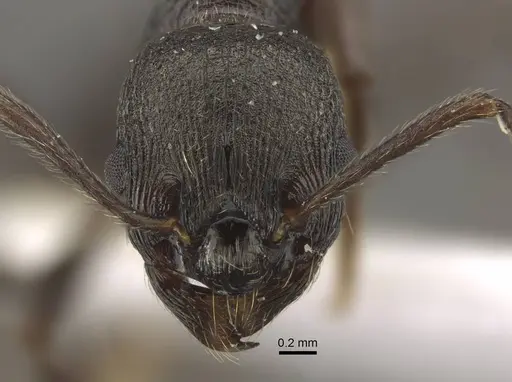
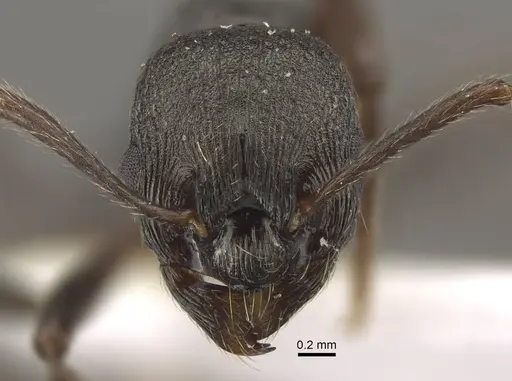
Myrmica sculptiventris belongs to the pachei species-group, a relatively small and obscure group of Myrmica ants. The species was formally described in 2009 by Radchenko and Elmes based on just two worker specimens collected in China's Sichuan Province. What makes this species immediately recognizable is its unusual gastral sculpture, the basal third of the first abdominal segment has dense punctures and longitudinal striations that gradually fade toward the rear, leaving the rest of the surface with a distinctive hexagonal microsculpture visible under 50x magnification. Only two other Myrmica species in the entire Palaearctic region share this trait: Myrmica luteola and Myrmica brancuccii. Workers are blackish-brown with notably long, straight propodeal spines directed backward at about 45°, and a relatively long scape that exceeds head width. Queens and males remain unknown, making this one of the most poorly documented Myrmica species in existence [1][2].
Distribution and Habitat
This species is known only from a single collection event in western Sichuan Province, China, at an altitude of 2175 meters above sea level. The collection site was described as mountain meadows, a cool, open habitat typical of high elevations in this region. Sichuan Province spans significant elevation ranges and diverse habitats, but this species appears to be extremely localized or rare in its distribution. No additional specimens have been recorded since the original collection in 2005,despite extensive ant surveys in the region. This suggests either a genuinely restricted range, very low population density, or potentially specialized habitat requirements that make them difficult to find. The high-altitude mountain meadow habitat indicates preference for cooler temperatures and likely seasonal temperature extremes [1][2].
Current Knowledge and Care Challenges
Honest assessment requires acknowledging that Myrmica sculptiventris is essentially unknown in antkeeping, no captive colonies exist, no queens have ever been described, and no biological data beyond worker morphology exists. This places it firmly in the 'expert only' category, not because the species is inherently difficult, but because there is no foundation of knowledge to guide husbandry. The pachei-group species in general are poorly studied, and this particular species has never been maintained in captivity. Any keeper attempting to keep this species would be essentially pioneering husbandry protocols with no prior reference points. The primary value in documenting this species is for the antkeeping community to understand what we don't know and to potentially inspire targeted field collection efforts to find living colonies with queens [1].
Speculative Care Recommendations
Based on the limited habitat data and genus-level patterns, some speculative recommendations can be offered. The high-altitude mountain meadow origin strongly suggests they prefer cool temperatures, aim for 15-22°C range with a thermal gradient. Like other Myrmica, they likely need a winter diapause period of 3-4 months at 5-10°C. Humidity should be moderate, damp but not saturated substrate. Nesting preferences are unknown, but the mountain meadow habitat suggests they likely nest in soil or under stones in nature, so a naturalistic setup with good moisture retention would be appropriate. Diet is entirely speculative, other Myrmica are omnivorous, accepting sugar sources and protein, but specific acceptance for this species is unknown. Given the complete absence of captive data, these recommendations are educated guesses at best [1].
Frequently Asked Questions
Can I keep Myrmica sculptiventris as a pet ant?
No, this species is not available in the antkeeping hobby and has never been documented in captivity. Only two worker specimens have ever been found, and queens have never been described. There are no established colonies to obtain, making captive keeping impossible at this time.
What does Myrmica sculptiventris look like?
Workers are blackish-brown with lighter-colored appendages. They have notably long, straight propodeal spines directed backward at about 45°, and a distinctive sculpted gaster, the basal third of the first abdominal segment has dense punctures and longitudinal striations. They have a relatively long scape that exceeds head width. Exact body size measurements are not available.
Where does Myrmica sculptiventris live?
This species is known only from Sichuan Province, China, at an altitude of 2175 meters. Only two workers have ever been collected, both from mountain meadows. This is one of the rarest and most poorly known Myrmica species.
How big do Myrmica sculptiventris colonies get?
Unknown, colony size has never been documented. Only two workers have ever been collected in the wild. Related Myrmica species typically form colonies ranging from dozens to several hundred workers.
Do Myrmica sculptiventris ants sting?
Likely yes, Myrmica ants have functional stingers and will use them defensively. However, no specific observations exist for this species, and their sting is not considered medically significant to humans.
What do Myrmica sculptiventris eat?
Unknown, no feeding observations exist for this species. Based on genus patterns, they likely accept sugar sources and protein, but this is entirely speculative.
What temperature do Myrmica sculptiventris need?
Based on their high-altitude mountain meadow origin (2175m), they likely prefer cool temperatures around 15-22°C. Overheating is likely a serious risk. A thermal gradient allowing self-regulation is recommended.
Do Myrmica sculptiventris need hibernation?
Likely yes, their high-altitude origin strongly suggests they need a winter dormancy period. Based on similar cool-climate Myrmica, expect 3-4 months at 5-10°C during winter.
Are Myrmica sculptiventris good for beginners?
No, this species is not suitable for beginners or even intermediate antkeepers. It is one of the most poorly known Myrmica species with no captive husbandry data. Queens have never been described, making captive breeding impossible. This species should only be considered by expert myrmecologists conducting research.
How do I start a Myrmica sculptiventris colony?
You cannot, this species is not available in the antkeeping hobby. No colonies exist in captivity, and queens have never been described or documented. Any colony would need to be established from wild-caught queens, which have never been found.
Report an Issue
The current care sheet is based fully on literature. See inconsistencies, or something that's incorrect? Please , it will be resolved after review from an admin. Contributing to the blogs tab also helps providing information, to make us be able to further improve the caresheets. Thank you for your support!
References

Ez a tartási útmutató a következő licenc alatt áll: CC BY-SA 4.0 .
Közösségi blogok
CASENT0917722
Megtekintés az AntWeb-en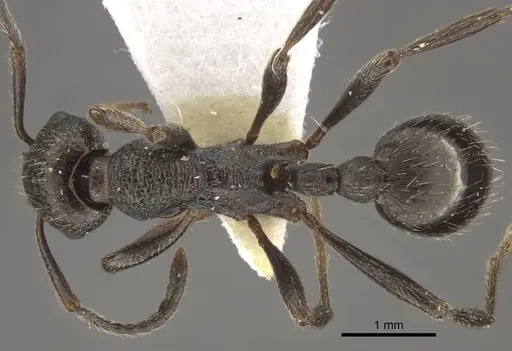
Irodalom
Elterjedési térkép betöltése...Termékek betöltése...