
Myrmica brancuccii
- Tud. név
- Myrmica brancuccii
- Nemzetség
- Myrmicini
- Alcsalád
- Myrmicinae
- Szerző
- Radchenko <i>et al.</i>, 1999
- Elterjedés
- 0 országban megtalálható
Bevezetés
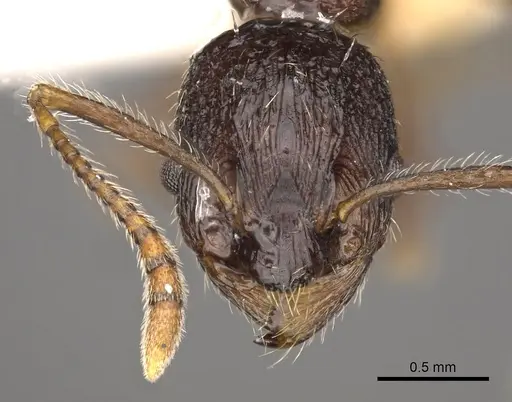
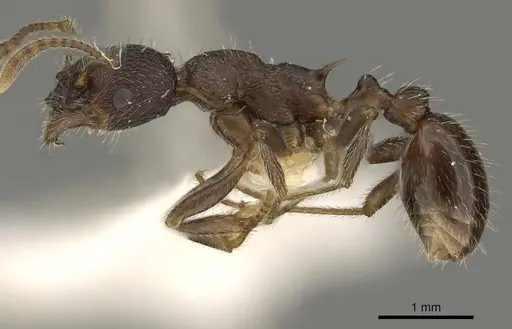
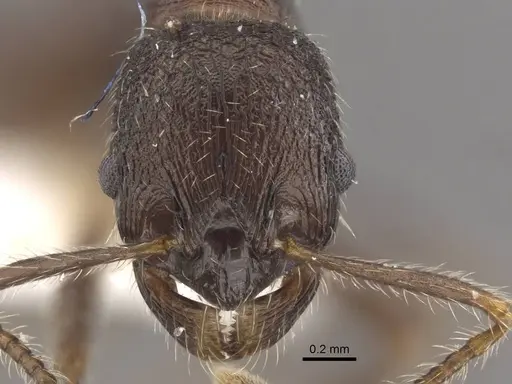
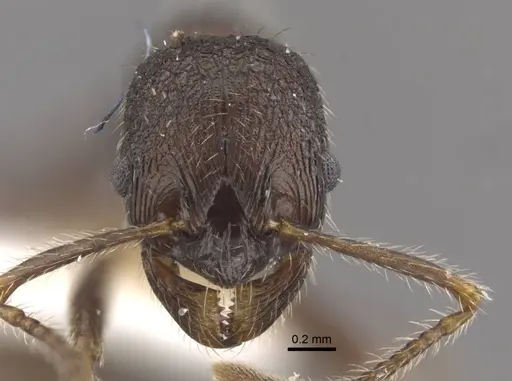
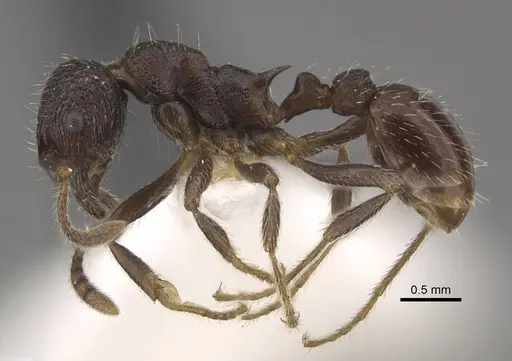
Myrmica brancuccii is a small to medium-sized ant native to the Himalayan region, found in Nepal and northern Pakistan at altitudes around 2400 meters . Workers show significant size variation, making this one of the more polymorphic Myrmica species - a trait that helps distinguish it from related species . The most distinctive feature is the striato-punctated first gastral tergite, meaning the upper surface of the first abdominal segment has a grooved and pitted texture. Only Myrmica sculptiventris from southwest China shares this feature . This species was described in 1999 and is known only from the worker caste - queens have never been documented .
Quick Summary
- Difficulty: Unknown, likely Medium to Hard
- Origin & Habitat: High-altitude Himalayan regions in Nepal and Pakistan, found at approximately 2400 meters elevation [1][4]. Type specimens were collected from Utrot and Lawarai in Pakistan, and Lumle in Nepal's Kaski district [2][5].
- Colony Type: Unconfirmed, colony structure has not been documented for this species
- Size & Growth:
- Queen: Unknown, queens have never been documented [3]
- Worker: Variable, polymorphic, size data unavailable
- Colony: Unknown, no colony size data available
- Growth: Unknown
- Development: Unknown, no development data available for this species (Development time is unconfirmed. Based on typical Myrmica patterns, development likely takes several weeks to months, but this is speculative.)
- Antkeeping:
- Temperature: Likely prefers cooler conditions given high-altitude origin. Based on typical Myrmica care, aim for 18-22°C with a slight gradient. Do not overheat.
- Humidity: Moderate to high humidity preferred. Keep nest substrate moist but not waterlogged.
- Diapause: Yes, likely required. Based on high-altitude origin and typical Myrmica behavior, expect a winter dormancy period of 3-4 months at temperatures around 5-10°C.
- Nesting: Natural nesting sites are undocumented. In captivity, a test tube setup or Y-tong nest with moist substrate works well. Provide a moisture gradient so ants can choose their preferred humidity.
- Behavior: Typical Myrmica behavior expected, workers are active foragers and capable of stinging when threatened. Escape risk is moderate, use standard barrier methods. The polymorphic worker caste means significant size variation among workers.
- Common Issues: limited information makes care requirements uncertain, proceed with caution and observe colony response, high-altitude origin means these ants likely cannot tolerate warm conditions, avoid overheating, queens have never been documented, so founding behavior is completely unknown, obtaining a colony may be difficult, as a poorly studied species, wild-caught colonies may have unknown parasites or health issues
Discovery and Naming
Myrmica brancuccii was formally described in 1999 by Radchenko, Elmes, and Collingwood based on worker specimens collected in Nepal [3]. The species was named in honor of Professor Michael Brancucci, a coleopterologist at the Natural History Museum in Basel, Switzerland, who collected the type material [3]. Type localities include Utrot and Lawarai in Pakistan, and Lumle in Nepal's Kaski district [2][5]. This species remains poorly known, with only worker specimens documented and queens never observed [3].
Identification and Unique Features
This species is well distinguished from most other Old World Myrmica by its striato-punctated first gastral tergite, meaning the upper surface of the first abdominal segment has a distinctive grooved and pitted texture [3]. Only Myrmica sculptiventris from southwest China shares this feature. Workers show significant size variation, which is unusual compared to other Myrmica species and suggests this may be a relatively polymorphic species [3]. Scientists have been unable to place this species confidently into any Myrmica species group, indicating it may represent a distinct evolutionary lineage within the genus.
Distribution and Habitat
Myrmica brancuccii is known from high-altitude locations in the Himalayan region, specifically Nepal and northeastern Pakistan [1]. Specimens have been collected at approximately 2400 meters above mean sea level [4][1]. Known localities include Chitral, Lawarai, and Utrot in Pakistan, and Lumle in Nepal's Kaski district [2][5]. The original description was based on specimens from Nepal, though more specimens have since been found in Pakistan [5]. This high-altitude distribution suggests the species is adapted to cooler, mountainous conditions.
Care Recommendations
Since this species has never been kept in captivity and basic biology is undocumented, care recommendations must be based on typical Myrmica genus behavior and the species' high-altitude origin. Keep temperatures cool, aim for 18-22°C and avoid any overheating. Provide moderate to high humidity with a moist but not saturated nest substrate. A test tube setup or Y-tong nest with moisture-retaining material works well. Like other Myrmica species, these ants will likely require a winter dormancy period of 3-4 months at cool temperatures (5-10°C). Feed standard Myrmica fare: sugar water or honey as an energy source, and small insects for protein. Start with conservative parameters and adjust based on colony behavior.
Research Gaps
Myrmica brancuccii is one of the least-studied Myrmica species. Key unknowns include: queen morphology and size, colony structure, founding behavior, development timeline, colony size, and exact temperature and humidity preferences. The species is known only from worker specimens, queens have never been described or collected [3]. This makes establishing captive colonies challenging since wild queens are unlikely to be identifiable. Any information about this species in captivity would be valuable contributions to antkeeping knowledge.
Frequently Asked Questions
How do I care for Myrmica brancuccii ants?
Care is unconfirmed since this species has never been documented in captivity. Based on its high-altitude Himalayan origin and typical Myrmica behavior, keep temperatures cool (18-22°C), provide moderate humidity, and expect a winter dormancy period. Use a test tube or Y-tong nest with moist substrate. This is an expert-level species due to limited information.
What do Myrmica brancuccii ants eat?
Diet is unconfirmed for this specific species, but based on typical Myrmica care, offer sugar water or honey for energy and small insects for protein. Myrmica ants are generalist feeders that readily accept both sugar and protein sources.
Do Myrmica brancuccii ants sting?
Myrmica ants have functional stingers and can sting if threatened. Handle with care.
What temperature do Myrmica brancuccii ants need?
Temperature requirements are unconfirmed, but given their high-altitude Himalayan origin (2400m), they likely prefer cooler conditions than most ants. Based on related species, aim for 18-22°C and avoid warm conditions. Do not use heating cables or mats unless the colony clearly needs additional warmth.
Do Myrmica brancuccii ants need hibernation?
Likely yes, based on high-altitude origin and typical Myrmica behavior, expect a winter dormancy period of 3-4 months. During autumn, gradually reduce temperatures to around 5-10°C and keep them cool for several months before slowly warming in spring.
How big do Myrmica brancuccii colonies get?
Colony size is unknown, no data exists on maximum colony size for this species.
Can I keep multiple Myrmica brancuccii queens together?
Colony structure is unconfirmed for this species. Without documented colony structure, combining unrelated queens is not recommended.
Where is Myrmica brancuccii found?
This species is found in the Himalayan region at high altitudes (around 2400m), specifically in Nepal and northeastern Pakistan. Known localities include Utrot and Lawarai in Pakistan, and Lumle in Nepal's Kaski district [1][2][5].
How long does it take for Myrmica brancuccii eggs to become workers?
Development time is unconfirmed for this species. No direct data is available.
Is Myrmica brancuccii good for beginners?
No, this species is not recommended for beginners. Basic biology is undocumented, queens have never been described, and care requirements are uncertain. This is an expert-level species best suited for experienced antkeepers interested in working with poorly studied species.
Report an Issue
The current care sheet is based fully on literature. See inconsistencies, or something that's incorrect? Please , it will be resolved after review from an admin. Contributing to the blogs tab also helps providing information, to make us be able to further improve the caresheets. Thank you for your support!
References

Ez a tartási útmutató a következő licenc alatt áll: CC BY-SA 4.0 .
Közösségi blogok
CASENT0900337
Megtekintés az AntWeb-en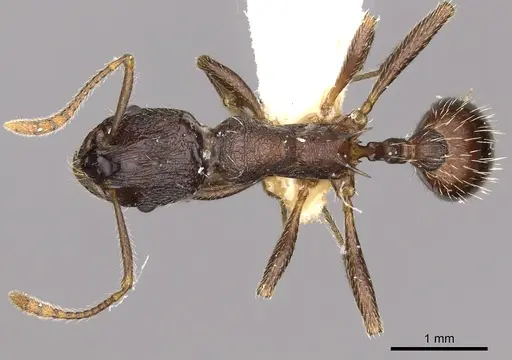
CASENT0917699
Megtekintés az AntWeb-en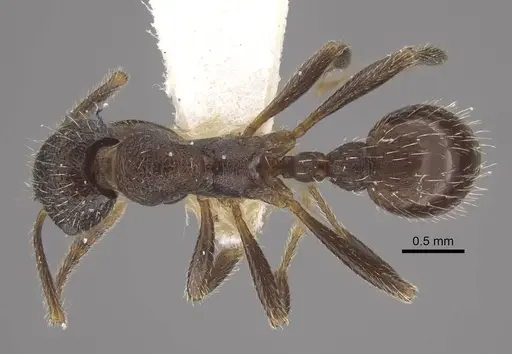
Irodalom
Elterjedési térkép betöltése...Termékek betöltése...