
Myopias emeryi
- Tud. név
- Myopias emeryi
- Nemzetség
- Ponerini
- Alcsalád
- Ponerinae
- Szerző
- Forel, 1913
- Elterjedés
- 0 országban megtalálható
Bevezetés
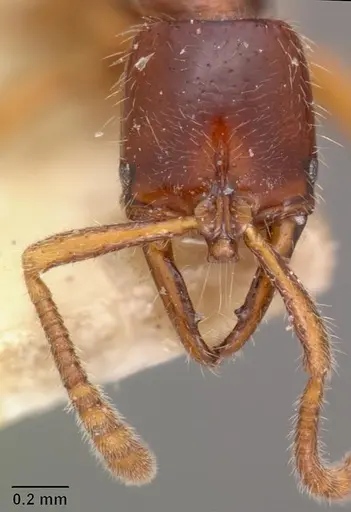
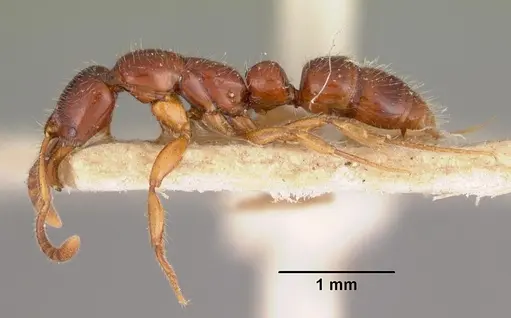
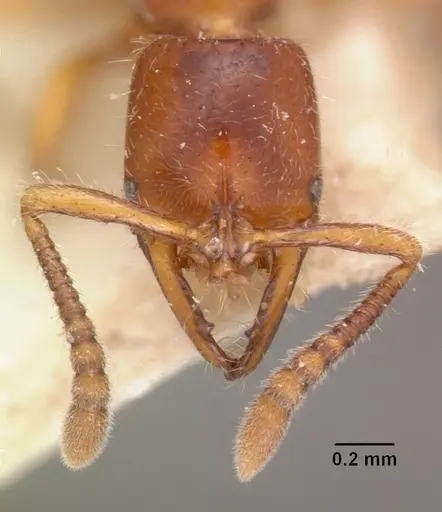
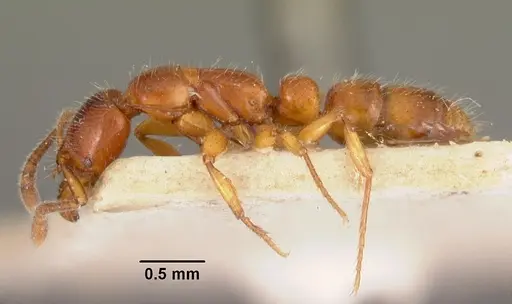
Myopias emeryi is a small ponerine ant native to Southeast Asia, found throughout Indonesia including Java and Sumatra. Workers have a reddish to yellowish-brown coloration. This species is a specialized predator that hunts and feeds on millipedes, using its simplified exocrine gland system compared to other Myopias species. Colonies are polygynous, meaning they contain multiple queens, and typically remain small with fewer than 100 workers. They nest in rotten wood or soil under rocks in humid tropical environments .
Quick Summary
- Difficulty: Medium
- Origin & Habitat: Southeast Asia, Indonesia (Java, Sumatra) [2]. Found in botanical gardens including Bogor and Purwodadi [3]. Natural habitat is rotten wood or soil under rocks in humid tropical areas [1].
- Colony Type: Polygynous, colonies contain multiple queens working together [4][1]. Workers completely lack reproductive organs (no ovarioles, no spermatheca), so only queens can lay eggs [5][6][7].
- Size & Growth:
- Queen: ~5-7mm, inferred from Myopias genus patterns
- Worker: ~3-4mm, inferred from Myopias genus patterns
- Colony: Up to 70 workers [8][1]
- Growth: Slow
- Development: Unknown, development time not directly documented for this species (Ponerine ants typically take 8-12 weeks from egg to worker at optimal temperatures.)
- Antkeeping:
- Temperature: Keep at 24-28°C. As a tropical Southeast Asian species, they need warm conditions.
- Humidity: High humidity required, keep the nest substrate consistently moist but not waterlogged. These ants naturally live in humid rotten wood and soil [1].
- Diapause: No, as a tropical species, they do not require hibernation.
- Nesting: Naturalistic setup with moist substrate works best. They nest in rotten wood or soil under rocks in the wild [1]. A Y-tong or plaster nest with narrow chambers scaled to their tiny size is suitable. Keep the nesting area dark and humid.
- Behavior: These are shy, non-aggressive ants that specialize in hunting millipedes. Workers are small and docile. They do not show clear trail-following behavior [1]. Because of their tiny size, escape prevention is critical, they can squeeze through very small gaps. They are skittish and prefer to stay hidden in the nest.
- Common Issues: escape prevention is critical due to their very small size, use fine mesh and tight-fitting lids, specialized diet means they may refuse standard ant foods, live millipedes or other small arthropods may be required, small colony size makes them vulnerable to stress, avoid disturbing the nest frequently, high humidity needs can lead to mold if ventilation is poor, balance humidity with adequate airflow, multiple queens means colony harmony is usually stable, but stress from poor conditions can cause queen deaths
Housing and Nest Setup
Myopias emeryi requires a naturalistic or semi-naturalistic setup that maintains high humidity. They naturally nest in rotten wood or soil under rocks in the wild, so a Y-tong nest with moist substrate or a plaster nest with narrow chambers works well. The nest should be kept dark, these ants prefer dim conditions and will be more active when the nest area is shaded. Because workers are tiny, all connections between the nest and outworld must use fine mesh to prevent escapes. A small outworld is sufficient given their small colony size. Keep the nest substrate consistently moist but not waterlogged, the substrate should feel damp to the touch. [1]
Feeding and Diet
This species is a specialized millipede predator [9][1]. In captivity, you will need to provide small live prey appropriate to their tiny size. They likely accept other small arthropods like springtails, tiny beetles, and millipede nymphs. Do not rely on sugar water or honey, as specialized predators, they get most of their nutrition from prey. Feed small live prey 2-3 times per week, removing any uneaten prey after 24 hours. The related species Myopias conicara and Myopias hollandii show similar millipede-hunting behavior [10]. Their simplified exocrine gland system suggests they may have less complex chemical communication for prey detection compared to other Myopias species.
Temperature and Humidity
As a tropical species from Indonesia, Myopias emeryi needs warm and humid conditions. Keep the nest at 24-28°C, use a heating cable on one side of the nest to create a gentle temperature gradient if your room temperature is below this range. Place the heating on top of the nest, not underneath, to avoid evaporating moisture too quickly. Humidity should be high. Mist the nest occasionally and ensure the water reservoir stays topped up. The substrate should remain consistently moist. Avoid placing the nest near air conditioning or heating vents that could cause temperature swings.
Colony Structure and Queens
Myopias emeryi is polygynous, meaning colonies naturally have multiple queens [4][1]. This is unusual among ants, most species have only one queen per colony. The presence of multiple queens does not cause aggression in this species, and you may see several queens contributing to egg-laying. Workers completely lack reproductive organs, they have zero ovarioles and no spermatheca [5][6][7]. This means only the queens can produce offspring. The colony propagates through budding, where a queen and some workers leave to establish a new nest, rather than through independent queen founding [4]. Colony size remains small, typically under 100 workers.
Behavior and Temperament
These are shy, docile ants. Workers are tiny and non-aggressive. They are not aggressive and will typically flee rather than defend. You will rarely see them foraging in the open, they prefer to stay hidden in the nest or search for prey in covered areas. Unlike some ant species, they do not show clear trail-following behavior [1]. They are skittish and may be stressed by frequent disturbances. Because of their small size and docile nature, they are best suited for watchers rather than hands-on keepers who want interactive ants.
Growth and Development
Colonies grow slowly, reaching a maximum of around 70 workers [8][1]. This small colony size is typical for the genus. Development time from egg to worker is not directly documented for this species. The first workers will be very small. Because colonies remain small, do not expect rapid population growth. Be patient, these ants are long-lived and a healthy colony will slowly expand over several years. Avoid overfeeding, as excess prey can mold and cause health problems in small colonies.
Frequently Asked Questions
Can I keep Myopias emeryi in a test tube?
Yes, a test tube setup works well for founding colonies. Use a small test tube with a cotton-wrapped water reservoir. Keep the tube humid and dark. However, because they need high humidity and eventually need space for a small colony, consider moving to a small Y-tong or naturalistic setup as the colony grows.
What do Myopias emeryi ants eat?
They are specialized millipede predators. Feed small live prey like springtails, tiny beetles, millipede nymphs, and other small arthropods. Sugar sources are unlikely to be accepted. Remove uneaten prey after 24 hours to prevent mold.
How long until first workers appear?
Development time has not been directly documented for this species. Ponerine ants typically take 8-12 weeks from egg to worker. Be patient, colonies grow slowly and remain small.
Are Myopias emeryi good for beginners?
No, they are considered medium difficulty. Their specialized diet (requiring live millipedes or small arthropods), high humidity needs, tiny size making escape likely, and slow growth make them better suited for experienced antkeepers who can provide the specific conditions they need.
Can I keep multiple queens together?
Yes, this is natural for the species. Myopias emeryi is polygynous, colonies naturally have multiple queens that work together without aggression. Do not combine unrelated foundress queens, but a colony with multiple established queens is normal.
How big do colonies get?
Colonies remain small, reaching a maximum of around 70 workers. This is typical for the genus Myopias. Do not expect large, impressive colonies, these are tiny ants that prefer to live in small groups.
Do they need hibernation?
No, as a tropical species from Indonesia, they do not require hibernation. Keep temperatures stable year-round at 24-28°C. Do not expose them to temperatures below 20°C for extended periods.
Why are my ants dying?
Common causes include: low humidity, temperatures below 24°C, inappropriate food (they need live prey, not sugar), stress from disturbance, and escapes due to poor barrier maintenance. Check your setup against each of these requirements.
When should I move them to a formicarium?
Move to a larger setup when the colony reaches 20-30 workers or when the test tube becomes cramped. A small Y-tong or naturalistic setup with moist substrate works well. They do not need much space given their small colony size.
Report an Issue
The current care sheet is based fully on literature. See inconsistencies, or something that's incorrect? Please , it will be resolved after review from an admin. Contributing to the blogs tab also helps providing information, to make us be able to further improve the caresheets. Thank you for your support!
References

Ez a tartási útmutató a következő licenc alatt áll: CC BY-SA 4.0 .
Közösségi blogok
CASENT0102465
Megtekintés az AntWeb-en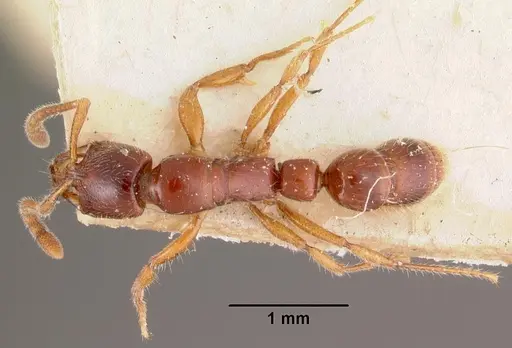
CASENT0102466
Megtekintés az AntWeb-en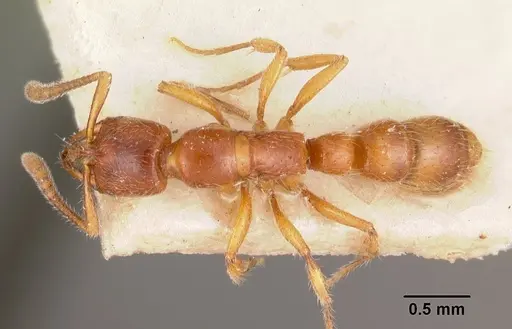
Irodalom
Elterjedési térkép betöltése...Termékek betöltése...