
Monomorium mahyoubi
- Tud. név
- Monomorium mahyoubi
- Nemzetség
- Solenopsidini
- Alcsalád
- Myrmicinae
- Szerző
- Collingwood & Agosti, 1996
- Elterjedés
- 0 országban megtalálható
Bevezetés
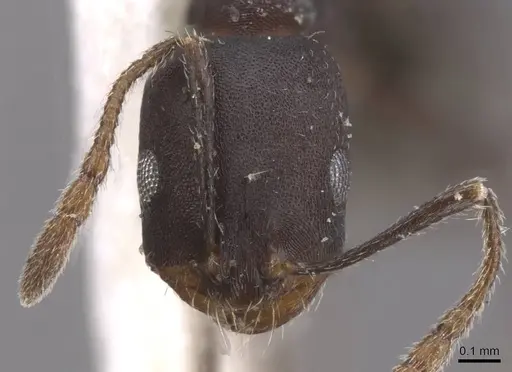
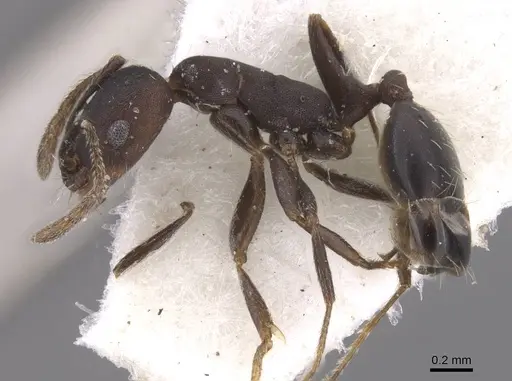
Monomorium mahyoubi is a tiny, dark ant species endemic to Yemen in the Middle East. Workers measure just 2.7-2.9mm in total length . They have uniformly black to dark brownish-black coloration throughout their body, with coarse punctation giving a dull, matte appearance . Their head has parallel sides when viewed from the front, and antennae scapes just reach the posterior margin of the head when laid back . This species was described in 1996 and remains poorly studied, with almost no biological data documented .
Quick Summary
- Difficulty: Hard
- Origin & Habitat: Endemic to Yemen, collected from roadside habitats in Taiz and Sana'a regions [3][1].
- Colony Type: Unconfirmed, no colony structure data exists. Based on typical Monomorium patterns, likely single-queen (monogyne) colonies, but this is unconfirmed.
- Size & Growth:
- Queen: Unknown, queen caste has not been described in scientific literature
- Worker: 2.7-2.9mm total length [1]
- Colony: Unknown, no colony size data available
- Growth: Unknown, no development data exists
- Development: Unknown, no direct measurements exist. Based on similar small Myrmicinae, estimated 4-8 weeks at warm temperatures, but this is a rough guess. (No developmental data exists for this species. Estimates based on genus-level patterns only.)
- Antkeeping:
- Temperature: Estimated based on Yemen origin: warm-preferring, around 24-28°C. Provide a temperature gradient if possible.
- Humidity: Likely prefers moderate to dry conditions given Yemen's arid climate. Keep nest substrate slightly moist but allow drying periods.
- Diapause: Unknown, no seasonal data exists [2].
- Nesting: No natural nesting data exists. Likely nests in soil or under stones in captivity. Test tubes and small nests should work for their tiny size.
- Behavior: No documented behavior studies exist. Based on genus patterns, they are likely generalist foragers. Their small size makes escape prevention critical. Defense mechanism: As a member of Solenopsidini, they likely have a sting with piperidine alkaloids, but no specific data exists for this species.
- Common Issues: lack of biological data may lead to improper care and colony failure., escape risk is high due to tiny size (2.7-2.9mm), which can cause colony loss., unknown founding behavior may affect queen establishment and colony development., no data on temperature or humidity needs may result in unsuitable conditions.
Species Identification and Appearance
Monomorium mahyoubi is a distinctive tiny ant species. Workers are uniformly dark brownish-black throughout their head, mesosoma, and waist segments, with no lighter coloration [1]. The entire body has a dull, matte appearance due to coarse punctation covering the head, alitrunk, and nodes [2]. They have relatively large eyes for their size, which helps distinguish them from similar species like M. suleyile [2]. The head has parallel sides when viewed front-on, and the antennae scapes are short, just reaching the posterior margin of the head when laid back [1]. Workers measure only 2.7-2.9mm total length, making them one of the smaller Monomorium species [1].
Natural History and Distribution
This species is endemic to Yemen, meaning it is found nowhere else in the world [1]. It has only been documented from two locations: Taiz-Al-Turbah and Sana'a [2]. Yemen has a predominantly arid to semi-arid climate with very hot summers and mild winters. The type specimens were collected from roadside habitats, suggesting they can tolerate disturbed areas [2]. Beyond these basic geographic facts, absolutely nothing has been documented about their biology, no nesting habits, no foraging behavior, no colony sizes, no reproductive biology, nothing. This is one of the least studied ant species in the hobby.
Housing and Nesting
Since no natural nesting data exists, you'll need to make educated guesses based on similar Monomorium species. For their tiny 2.7-2.9mm size, test tube setups work well for founding colonies. The small diameter prevents excess space stress that can cause queens to abandon broods. Once established, small ytong nests or plaster nests with appropriately scaled chambers work well. Avoid large, open spaces, these tiny ants do better in compact, tight-fitting chambers. Ensure excellent escape prevention regardless of setup, their small size means they can squeeze through gaps you'd never expect. [2]
Feeding and Diet
No dietary studies exist for this species. Based on typical Monomorium patterns, they are likely generalist omnivores that accept both sugar sources and protein. Start with standard ant keeping foods: sugar water or honey as a carbohydrate source, and small protein sources like fruit flies, pinhead crickets, or mealworm pieces. Given their tiny size, prey items should be appropriately small. Observe whether they accept different foods and adjust accordingly. Do not overfeed, excess food mold is a common colony killer. [2]
Temperature and Seasonal Care
Given their origin in Yemen (a warm Middle Eastern country), these ants likely prefer temperatures in the 24-28°C range. Provide a temperature gradient so the colony can self-regulate. A heating cable on one side of the nest can help maintain warmth, but avoid overheating. No data exists on whether they require a winter rest period (diapause). Most tropical and warm-climate Monomorium do not hibernate, but without specific information, you may experiment with slight temperature reductions in winter and observe colony behavior. If they become less active, they may be signaling a rest period preference. [2]
Challenges and Limitations
This species presents significant challenges for antkeepers. First and foremost, absolutely no biological data exists, everything we recommend is based on educated guesses from genus patterns and what we know about other Middle Eastern ants. Colony founding may be difficult if their specific requirements differ from typical Monomorium. They are extremely small, making escape prevention critical and limiting food options. Finding colonies to purchase may be difficult since this species is rarely kept in the hobby. Before purchasing, ensure you understand you are essentially pioneering husbandry techniques for a species with no documented care history. [2]
Frequently Asked Questions
How long does it take for Monomorium mahyoubi to develop from egg to worker?
This is unknown, no developmental data exists for this species. Based on similar small Myrmicinae, a rough estimate would be 4-8 weeks at warm temperatures (around 26°C), but this is purely speculative.
Are Monomorium mahyoubi good for beginners?
This cannot be recommended for beginners due to the complete lack of biological data and their tiny size, which creates challenges even for experienced keepers.
What do Monomorium mahyoubi eat?
No dietary studies exist. Based on genus patterns, likely generalist omnivores. Offer sugar water/honey and small protein sources like fruit flies or tiny crickets. Adjust based on what they accept [2].
Do Monomorium mahyoubi queens need to hibernate?
Unknown, no seasonal data exists. Based on Yemen's warm climate, they likely do not require hibernation, but this is unconfirmed [2].
How big do Monomorium mahyoubi colonies get?
Unknown, no colony size data exists for this species.
Can I keep multiple Monomorium mahyoubi queens together?
Unknown, no colony structure data exists. Most Monomorium are single-queen species, but this has not been studied for M. mahyoubi.
What temperature should I keep Monomorium mahyoubi at?
Based on Yemen origin, likely 24-28°C. Start in this range and observe colony activity to fine-tune. Provide a gradient if possible.
How do I prevent Monomorium mahyoubi from escaping?
Excellent escape prevention is critical due to their tiny 2.7-2.9mm size. Use tight-fitting lids, fine mesh barriers, and check for any gaps even smaller than you expect [1].
Where can I get Monomorium mahyoubi?
This species is rarely available in the antkeeping hobby due to its limited distribution and recent description. You may need to seek specialized dealers or wait for colonies to become available.
Report an Issue
The current care sheet is based fully on literature. See inconsistencies, or something that's incorrect? Please , it will be resolved after review from an admin. Contributing to the blogs tab also helps providing information, to make us be able to further improve the caresheets. Thank you for your support!
References

Ez a tartási útmutató a következő licenc alatt áll: CC BY-SA 4.0 .
Közösségi blogok
CASENT0913823
Megtekintés az AntWeb-en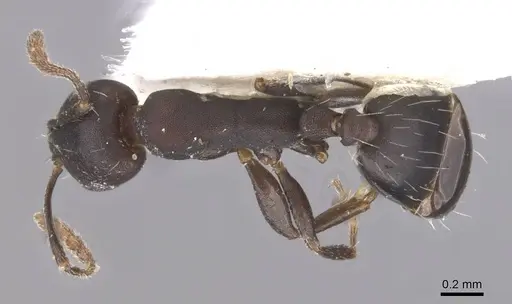
Irodalom
Elterjedési térkép betöltése...Termékek betöltése...