
Messor muscatus
- Tud. név
- Messor muscatus
- Nemzetség
- Stenammini
- Alcsalád
- Myrmicinae
- Szerző
- Collingwood & Agosti, 1996
- Elterjedés
- 0 országban megtalálható
Bevezetés
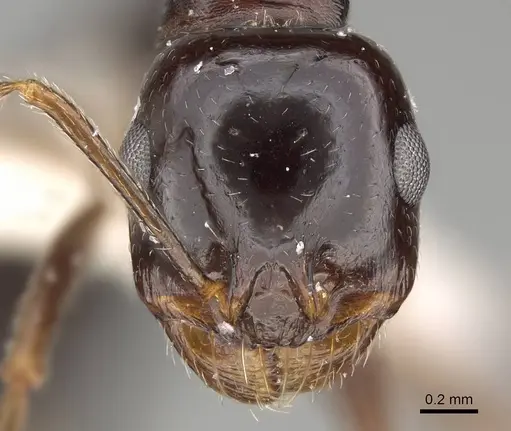
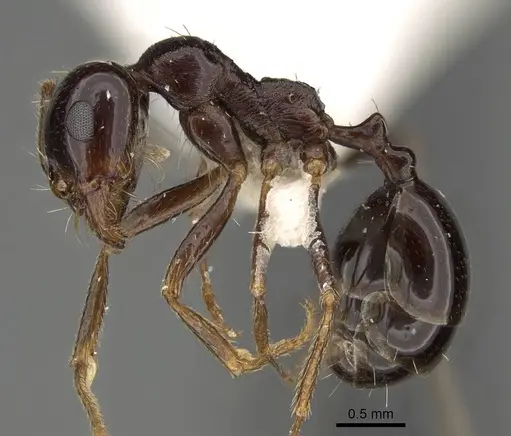
Messor muscatus is a small harvester ant species native to the Arabian Peninsula, found in Oman, Saudi Arabia, and Yemen . Workers measure approximately 5.2mm in total length, featuring large eyes and antennae that extend past the back of the head when laid back . The body is uniformly brownish with distinct long hairs on the middle body section and shorter hairs on the abdomen. This species belongs to the harvester ant group, which collects and stores seeds as a primary food source. As a desert-dwelling species from one of the hottest regions on Earth, these ants are adapted to warm, dry conditions. The psammophore (a basket of hairs used to carry sand and debris) is present but less developed than in some related species. Almost nothing is known about their specific biology in the wild, no colony sizes, founding behavior, or detailed care requirements have been documented in scientific literature. What we know comes from the original species description and general knowledge of the Messor genus.
Quick Summary
- Difficulty: Medium
- Origin & Habitat: Oman, Saudi Arabia, and Yemen, arid desert and semi-desert environments along the Arabian Peninsula [1]. The type locality is Ras al-Hamra near Muscat, Oman [3].
- Colony Type: Unconfirmed, colony structure has not been documented for this species.
- Size & Growth:
- Queen: Size data unavailable, no documented measurements exist for queens of this species
- Worker: Approximately 5.2mm total length [2]
- Colony: Unknown, no colony size data exists for this species
- Growth: Unknown, growth rate has not been documented
- Development: Unknown, no specific development data exists for this species (Estimates based on related Messor species suggest several months, but this is unconfirmed.)
- Antkeeping:
- Temperature: Keep at 24-28°C, desert species requiring warm conditions. A heating cable on one side of the nest creates a temperature gradient allowing the colony to self-regulate.
- Humidity: Low, prefer drier conditions. Keep nest substrate mostly dry. Avoid excessive moisture.
- Diapause: Unlikely, being from a tropical/desert region, they probably do not require hibernation.
- Nesting: Use a dry, sandy substrate, these are desert-adapted ants. Y-tong (AAC) nests or plaster nests work well. Avoid overly humid conditions.
- Behavior: Generally peaceful harvester ants. They are foragers that collect seeds and store them in the nest. Workers are moderately sized and not particularly aggressive. Escape risk is moderate, standard barrier methods work well for ants of this size.
- Common Issues: no documented biology means care is based on genus inference, expect some trial and error, dry-adapted species are sensitive to excess humidity, overwatering kills them faster than under watering, slow growth compared to tropical species can lead to keeper impatience and overfeeding, wild-caught colonies may have parasites since nothing is known about their health in captivity, desert species are sensitive to cold, temperatures below 20°C may cause problems
Housing and Nest Setup
Messor muscatus is a desert-adapted species requiring dry housing conditions. A Y-tong (acrylic and cotton) nest or plaster formicarium works well, these provide the dry conditions this species needs. The nest should have a water chamber on one side to create a humidity gradient, but the actual nesting chambers should remain relatively dry. For the outworld, use a simple container with a sand or soil substrate they can dig in if they choose. Escape prevention is straightforward, standard barrier methods like fluon on test tube rims work well for ants of this size. They are not extreme escape artists, but always use secure lids. [2]
Feeding and Diet
As harvester ants, Messor species primarily collect and store seeds. Offer a variety of seeds, grass seeds, millet, and small bird seed mixes are readily accepted. They also need protein sources, so offer small insects like fruit flies, small mealworms, or cricket pieces periodically. Sugar water or honey can be offered but is not their primary food source. Unlike some ants, they do not aggressively hunt live prey, they are more inclined to collect and store seeds. Feed seeds constantly and protein 2-3 times per week. Remove uneaten seeds periodically to prevent mold.
Temperature and Heating
Being from the Arabian Peninsula, these ants need warm conditions. Keep the nest area at 24-28°C for optimal activity and brood development. A small heating cable placed on one side of the nest creates a gradient that allows the colony to regulate its own temperature. Do not let temperatures drop below 20°C for extended periods, this species is adapted to desert heat and may struggle in cool conditions. Room temperature may be sufficient in warm climates, but most keepers need supplemental heating.
Humidity and Water
This is a dry-adapted species. Keep humidity low, the nest substrate should be mostly dry with only a small moist area available. Overwatering is a common mistake with desert Messor species and kills colonies quickly. Provide a constant water source via a test tube with a cotton plug, but do not saturate the nesting material. The outworld can be slightly moister than the nest area. Watch for condensation on nest walls, if present, increase ventilation and reduce watering.
Growth and Development
No specific development timeline exists for this species. Based on related Messor species, expect several months from egg to first worker at optimal temperature. The first workers (nanitics) will be smaller than mature workers. Growth is typically moderate, not as fast as tropical species but not extremely slow. Colonies likely reach several hundred workers over time, though maximum size is unknown. Be patient, Messor species are not fast growers, and rushing them with excessive heat or food can cause problems.
Behavior Observations
Messor muscatus workers are foragers that collect seeds and bring them back to the nest for storage. This is a defining trait of the genus, they act as seed harvesters in nature. Workers are not particularly aggressive and are generally calm in captivity. They may show increased activity during warmer months and reduce activity when cooler. Unlike some ants, they do not form massive supercolonies. The psammophore (hair basket for carrying particles) mentioned in their description suggests they may move substrate particles, though this is less developed than in some related species. [2]
Frequently Asked Questions
How long does it take for Messor muscatus to produce first workers?
The exact timeline is unknown for this species. Based on related Messor species, expect several months from egg to first worker at optimal temperature (24-28°C). Be patient, harvester ants are not fast growers.
What do Messor muscatus ants eat?
They are harvester ants that primarily collect seeds. Offer various seeds like grass seeds, millet, and small bird seed mixes. Supplement with small insects for protein. They are not aggressive predators.
Can I keep Messor muscatus in a test tube?
Yes, initially, a test tube setup works for founding colonies. However, because they are dry-adapted, monitor humidity carefully. Once the colony grows, transfer to a Y-tong or plaster nest with dry conditions.
Do Messor muscatus ants need hibernation?
Probably not, being from the Arabian Peninsula (desert/tropical region), they likely do not require a true hibernation. A slight cooling period in winter may be beneficial but is not mandatory.
Are Messor muscatus good for beginners?
They are moderate difficulty, not the easiest but not the hardest. The main challenge is that almost nothing is documented about their specific care, so you will be relying on genus-level knowledge. They are forgiving of minor errors but sensitive to overwatering and cold.
How big do Messor muscatus colonies get?
The maximum colony size is unknown, no scientific data exists. Based on related species, expect several hundred workers. Do not expect massive colonies like some tropical species.
Do Messor muscatus ants sting?
Messor ants have stingers but are not aggressive and rarely sting. At around 5mm worker size, their sting is not particularly potent to humans. They are considered docile.
What temperature should I keep Messor muscatus at?
Keep them warm at 24-28°C. Use a heating cable on one side of the nest to create a gradient. Do not let temperatures drop below 20°C for extended periods.
Why is my Messor muscatus colony dying?
The most common causes are: overwatering (desert species rot easily in moist conditions), cold temperatures below 20°C, or poor seed storage leading to mold. Review your humidity levels and temperature immediately.
Can I keep multiple Messor muscatus queens together?
This has not been documented. Most Messor species are single-queen colonies. Do not attempt combining unrelated queens without documented evidence that this species tolerates polygyny.
When should I move my Messor muscatus to a formicarium?
Move them when the test tube becomes crowded or the water reservoir runs out, typically when the colony reaches 20-30 workers. Use a dry nest setup like Y-tong or plaster.
Is Messor muscatus invasive anywhere?
No, this species is native only to the Arabian Peninsula (Oman, Saudi Arabia, Yemen). It has not been documented as invasive in any region.
Report an Issue
The current care sheet is based fully on literature. See inconsistencies, or something that's incorrect? Please , it will be resolved after review from an admin. Contributing to the blogs tab also helps providing information, to make us be able to further improve the caresheets. Thank you for your support!
References

Ez a tartási útmutató a következő licenc alatt áll: CC BY-SA 4.0 .
Közösségi blogok
CASENT0922320
Megtekintés az AntWeb-en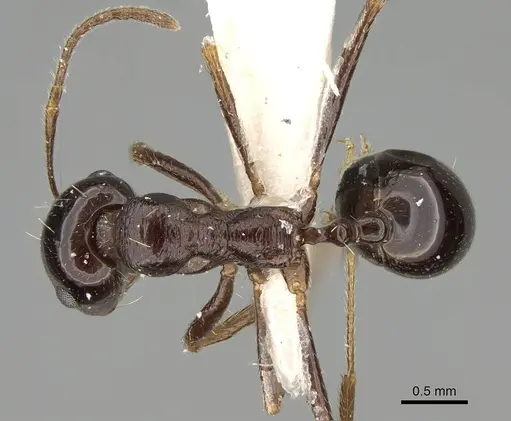
Irodalom
Elterjedési térkép betöltése...Termékek betöltése...