
Leptogenys zohy
- Tud. név
- Leptogenys zohy
- Nemzetség
- Ponerini
- Alcsalád
- Ponerinae
- Szerző
- Rakotonirina & Fisher, 2014
- Elterjedés
- 0 országban megtalálható
Bevezetés
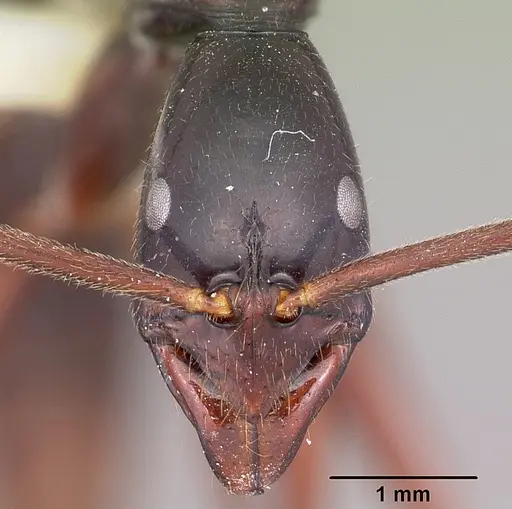
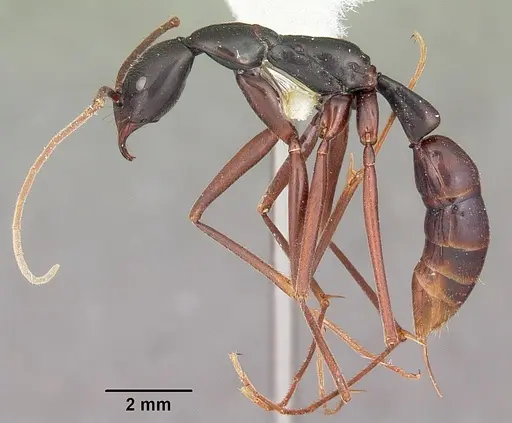
Leptogenys zohy is an extremely rare predatory ant from northern Madagascar, known only from a single worker specimen collected in the Grotte d'Andrafiabe cave in the Tsingy of Ankarana . These ants have remarkably elongated bodies with very long antennae and legs, small eyes that do not break the outline of the head, and a pale reddish-brown coloration with yellow-tipped appendages . The combination of small eyes, elongate appendages, and light body color strongly suggests adaptation to cave life (cavernicolous), making this species potentially unique among Malagasy Leptogenys . This is one of the least-studied ants in existence, with essentially no information on colony structure, founding behavior, or captive requirements.
Quick Summary
- Difficulty: Expert
- Origin & Habitat: Known only from Grotte d'Andrafiabe in the Tsingy of Ankarana, Antsiranana Province, northern Madagascar. The single known specimen was collected in a cave at 53m elevation [2]. The cave environment suggests stable, humid, low-light conditions.
- Colony Type: Unknown. Only a single worker has ever been collected, it is unclear whether this was a nest-forager or a stray forager outside its nest [2]. No information exists on queen number or colony size.
- Size & Growth:
- Queen: Unknown, no queen has been described
- Worker: Size data unavailable, the single known specimen has head measurements (HW: 1.60mm) but no total body length is published [1]
- Colony: Unknown, only one worker ever collected
- Growth: Unknown
- Development: Unknown, no development data exists for this species (No development data available for this species)
- Antkeeping:
- Temperature: Unknown. Related Malagasy Leptogenys typically prefer warm conditions. Start around 24-26°C and observe colony activity.
- Humidity: Likely high humidity given cave origin. Keep nest substrate consistently moist but not waterlogged.
- Diapause: Unknown. Madagascar has mild winters, so diapause may not be required.
- Nesting: Unknown in captivity. The cave origin suggests they may prefer dark, enclosed spaces. A Y-tong or plaster nest with minimal light exposure would be a reasonable starting point.
- Behavior: Behavior is unconfirmed. Leptogenys species are typically predatory, using their slender mandibles to capture prey. As a member of the Ponerinae subfamily, they possess a functional stinger. Escape risk cannot be assessed without observing live colonies.
- Common Issues: this species has never been kept in captivity, no established care protocols exist, only one worker has ever been collected, meaning all captive advice is speculative, the cave-dwelling adaptation suggests they may be sensitive to light and require dark nesting areas, predatory feeding requirements may be challenging to meet with appropriate live prey, wild-caught colonies may be impossible to obtain as the species is only known from a single specimen
Why This Species Is Extremely Challenging
Leptogenys zohy represents one of the most poorly documented ant species in existence. It is known from only a single worker specimen collected in 1981 from a cave in northern Madagascar [1]. We have no information on queens, colony size, founding behavior, nuptial flights, or any aspect of their biology that would guide captive care. The single specimen was collected in a cave, but researchers could not determine whether it was nesting there or simply foraging outside its nest [2]. This means every aspect of keeping this species would be experimental and carries a high risk of failure. This is not a species for beginners or even intermediate antkeepers, it is best left to researchers or extremely advanced hobbyists willing to document their findings.
What We Know About Their Biology
The morphology of Leptogenys zohy provides clues about their lifestyle. The extremely long antennae and legs, small eyes that do not break the head outline, and pale reddish-brown coloration with yellow-tipped appendages strongly suggest adaptation to life in caves [1]. The only other known cave-dwelling Leptogenys is Leptogenys khammouanensis from Laos [2]. However, researchers caution that these morphological features are not definitive proof of cave-dwelling as some surface-foraging species share similar traits [2]. The species belongs to the attenuata group within Leptogenys, a genus of predatory ants that typically hunt small invertebrates using their slender, toothed mandibles. As Ponerinae ants, they possess a functional stinger capable of delivering venom.
Inferring Care from Related Species
Since we have no direct data on L. zohy, we can only make educated guesses based on other Leptogenys species and their Malagasy habitat. Leptogenys are predatory ants that typically hunt small invertebrates. In captivity, related species usually accept small live prey like fruit fly larvae, pinhead crickets, and other tiny arthropods. They likely require high humidity given their cave origin. Temperature preferences are unknown but would probably be in the warm range typical of Madagascar's lowland environments. The cave environment suggests they may prefer dark conditions and may be sensitive to light exposure in their nesting area. These are all inferences, not confirmed requirements, keepers should document their observations carefully. [2]
Housing Recommendations (Highly Speculative)
Given the cave-dwelling hypothesis, a naturalistic setup with dark, enclosed nesting areas would be a reasonable starting point. A Y-tong or plaster nest with minimal light exposure might work well. Keep the nest area consistently humid but avoid standing water. The extremely long legs suggest they are agile climbers, so escape prevention should be taken seriously once colonies are established. However, since no one has successfully kept this species, these recommendations are entirely theoretical. The best approach would be to start with a small test tube setup, observe behavior, and adjust based on colony response. If you somehow obtain a colony, document everything, your observations would be scientifically valuable given how little we know about this species. [2]
Frequently Asked Questions
Can I keep Leptogenys zohy in captivity?
It is extremely unlikely you will ever find this species for sale. Only a single worker has ever been collected, and the species is only known from a cave in northern Madagascar. Even if you could obtain one, there is no established care protocol and success would be highly uncertain.
How do I care for Leptogenys zohy?
No care information exists for this species. All advice would be speculative guesswork based on related Leptogenys species. If you somehow obtained a colony, you would essentially be conducting an experiment with unknown parameters.
What does Leptogenys zohy eat?
Unknown for this species, but Leptogenys ants are predatory. Related species typically hunt small invertebrates. You would likely need to provide live prey such as fruit flies, springtails, or other tiny arthropods.
Where does Leptogenys zohy live?
Only known from Grotte d'Andrafiabe in the Tsingy of Ankarana, northern Madagascar. The single known specimen was collected deep inside this cave system.
Is Leptogenys zohy a good species for beginners?
Absolutely not. This is one of the least-known ant species in existence with no captive care information whatsoever. Even expert antkeepers would have no established protocol to follow. This species is not available in the antkeeping hobby and likely cannot be legally collected or exported.
How big do Leptogenys zohy colonies get?
Unknown. Only a single worker has ever been collected. No colony size data exists for this species.
Does Leptogenys zohy need hibernation?
Unknown. Madagascar has mild winters, and as a cave-dwelling species, they may not experience strong seasonal temperature fluctuations. No information exists on diapause requirements.
Can I find Leptogenys zohy for sale?
Almost certainly not. This species is only known from a single specimen collected in 1981. It has never been documented in the antkeeping hobby and is unlikely to be available from any breeder or dealer.
Why is Leptogenys zohy so rare?
Only one specimen has ever been collected, making it one of the rarest ant species known. It may have a very restricted range limited to this specific cave system, or it may be that researchers simply have not found more specimens due to the difficulty of accessing Madagascar's cave systems.
Report an Issue
The current care sheet is based fully on literature. See inconsistencies, or something that's incorrect? Please , it will be resolved after review from an admin. Contributing to the blogs tab also helps providing information, to make us be able to further improve the caresheets. Thank you for your support!
References

Ez a tartási útmutató a következő licenc alatt áll: CC BY-SA 4.0 .
Közösségi blogok
CASENT0102922
Megtekintés az AntWeb-en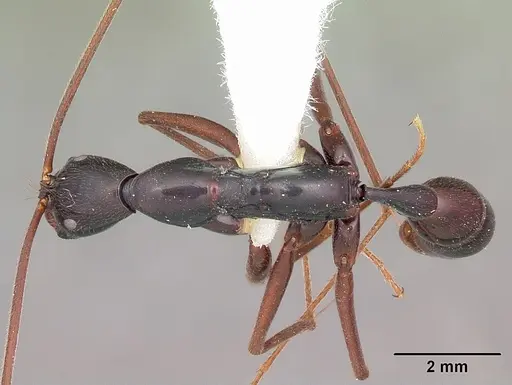
Irodalom
Elterjedési térkép betöltése...Termékek betöltése...