
Leptogenys punctiventris
- Tud. név
- Leptogenys punctiventris
- Nemzetség
- Ponerini
- Alcsalád
- Ponerinae
- Szerző
- Mayr, 1879
- Elterjedés
- 0 országban megtalálható
Bevezetés
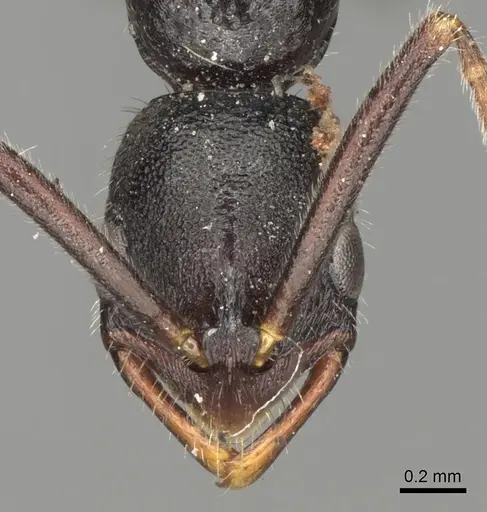
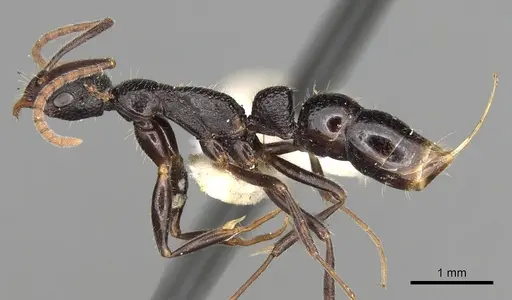
Leptogenys punctiventris is a medium-sized predatory ant native to the Indomalaya region, found across India, the Philippines, Cambodia, Thailand, and southern China. Workers measure 5–6 mm . They are black, with a densely punctured head and thorax, longitudinally rugose sides on the mesosoma and petiolar node, and a mostly smooth and shiny first gastral segment (sides smooth, dorsum punctate) and a smooth second gastral segment . The petiolar node is cubical and longer than broad when viewed from above . Their eyes are relatively large, occupying about one-third of the lateral head margin . This species is considered rare in its native range , with records from the Himalayan foothills up to 1300 meters elevation and various Indian states including Kerala, Meghalaya, Sikkim, and West Bengal . As a Ponerine ant, they are active hunters equipped with a potent sting.
Quick Summary
- Difficulty: Medium
- Origin & Habitat: Indomalaya region – found in India, Philippines, Cambodia, Thailand, and Hainan, China. Inhabits Himalayan foothills up to 1300 m elevation, with records from Kerala, Meghalaya, Sikkim, and West Bengal in India [5][6][3].
- Colony Type: Colony structure is unconfirmed. Based on typical Leptogenys genus patterns, likely single-queen colonies, but this has not been directly documented for this species.
- Size & Growth:
- Queen: Undocumented – likely ~7–9 mm based on genus patterns.
- Worker: 5–6 mm [1][2]. Some sources cite 5.5 mm [7].
- Colony: Up to several hundred workers (estimated from related species).
- Growth: Moderate (estimated based on genus patterns).
- Development: 6–10 weeks (estimated based on typical Ponerine development at warm temperatures). (Development timeline has not been directly studied for this species. Estimates are based on genus-level data.)
- Antkeeping:
- Temperature: Based on Himalayan distribution at 1300 m elevation, they likely prefer cooler conditions than tropical ants. Start around 20–24°C and observe colony activity. A gentle heat gradient allows workers to regulate their temperature [5].
- Humidity: Keep the nest substrate consistently moist but not waterlogged. Provide a moisture gradient with a wetter area near the brood and a drier retreat zone. Because they inhabit diverse conditions from Himalayan foothills to tropical lowlands, they are adaptable.
- Diapause: Unknown – the Himalayan elevation suggests they may tolerate cooler temperatures, but specific diapause requirements have not been documented.
- Nesting: In nature they likely nest in soil or under stones in shaded, moist areas. In captivity, a Y-tong (AAC) nest or plaster nest with moisture chambers works well. Provide a moist substrate area and a drier retreat zone.
- Behavior: Leptogenys are active predators that hunt small invertebrates. Workers are fast-moving and will aggressively pursue prey. They have a functional sting and can deliver a painful sting if handled roughly. Escape prevention is important – while not tiny, they are agile and will explore gaps. They are not aggressive toward humans but will defend the nest if threatened. Foraging occurs primarily at night in many Leptogenys species.
- Common Issues: predatory nature means they require live prey – colonies can starve if only given dead food, sting can cause discomfort – handle with care and avoid provoking them, rare species in the wild – ethical considerations should guide collection decisions, slow colony growth compared to faster-breeding species may frustrate beginners, humidity management is critical – too dry causes brood death, too wet causes mold
Housing and Nest Setup
Leptogenys punctiventris can be housed in standard ant keeping setups. A Y-tong (AAC) nest or plaster nest with moisture chambers works well. The nest should have a moist area for brood development and a slightly drier retreat zone where workers can regulate humidity. Because they come from varied elevations in the Himalayas and tropical regions, they are adaptable but prefer stable conditions. The outworld should include hiding places and a foraging area. Use a test tube setup for founding colonies, transitioning to a formicarium once the colony reaches a small worker force (after the first few nanitics). Escape prevention is important – while not among the smallest ants, they are agile and can squeeze through small gaps if motivated.
Feeding and Diet
As a Ponerine ant, Leptogenys punctiventris is a predator that hunts live prey. In captivity, offer small live invertebrates such as fruit flies, pinhead crickets, small mealworms, and live springtails or isopods. They are active hunters that will pursue and subdue prey with their sting. Unlike many ants that readily accept sugar, Leptogenys species are primarily protein-focused and may show limited interest in honey or sugar water. Offer protein prey 2–3 times per week, adjusting based on colony size and consumption. Remove uneaten prey after 24–48 hours to prevent mold. A well-fed colony will have distended abdomens on workers.
Temperature and Seasonal Care
Based on their presence in the Himalayan foothills at elevations up to 1300 m, Leptogenys punctiventris likely tolerates cooler temperatures than purely tropical species. Aim for a temperature range of 20–24°C in the nest area, with a slight gradient allowing workers to choose their preferred temperature. A heating cable on one side of the nest can create this gradient. Avoid overheating – temperatures above 28°C may stress the colony. Specific diapause requirements are unknown, but the Himalayan connection suggests they may benefit from a cooler period during winter months, perhaps reducing temperature to 15–18°C for 2–3 months. Observe colony behavior to guide seasonal adjustments. [5]
Behavior and Temperament
Leptogenys punctiventris is an active, predatory ant with a strong hunting instinct. Workers are fast-moving and will aggressively pursue any potential prey in the foraging area. They possess a functional sting that they use to subdue prey, and this sting can cause mild to moderate pain in humans if the ant feels threatened. They are not typically aggressive toward humans but will defend the nest if provoked. Workers may exhibit territorial behavior around the nest entrance. Colony activity is often highest during evening and night hours, though they will forage whenever prey is available. The massive abdomen contains the venom gland and is a distinctive feature of this species. [1]
Colony Development
Colony growth in Leptogenys punctiventris is expected to be moderate. The first workers (nanitics) will be smaller than mature workers but should already exhibit the predatory hunting behavior typical of the species. A newly mated queen will found her colony claustrally, sealing herself in a chamber and using stored fat reserves to produce the first brood. The time from egg to first worker is estimated at 6–10 weeks based on typical Ponerine development, though this has not been directly documented for this species. Once the first workers emerge, they will begin foraging for prey to feed subsequent brood. Colonies likely reach several hundred workers at maturity, though maximum colony size is not documented.
Frequently Asked Questions
How long does it take for Leptogenys punctiventris to produce first workers?
The exact timeline is unconfirmed for this species, but based on typical Ponerine development, expect 6–10 weeks from egg to first worker at optimal warm temperatures around 22–24°C.
What do Leptogenys punctiventris ants eat?
They are predators that require live prey. Feed small live insects like fruit flies, pinhead crickets, small mealworms, and springtails. They may ignore sugar sources, so focus on protein-rich foods.
What temperature do Leptogenys punctiventris need?
Keep them around 20–24°C. Their Himalayan distribution at 1300 m elevation suggests they tolerate cooler conditions than tropical ants. A temperature gradient is ideal.
Are Leptogenys punctiventris good for beginners?
They are rated as medium difficulty. Their predatory diet requires more effort than sugar-feeding ants, but they are not as demanding as some specialized species. They are also rare in the antkeeping hobby.
How big do Leptogenys punctiventris colonies get?
The maximum colony size is not documented, but based on related species, they likely reach several hundred workers at maturity.
Can I keep multiple Leptogenys punctiventris queens together?
Colony structure is unconfirmed for this species. Combining unrelated queens is not recommended as it has not been documented as successful.
Do Leptogenys punctiventris need hibernation?
Specific diapause requirements are unknown. The Himalayan elevation suggests they may benefit from a cooler winter period at 15–18°C for 2–3 months, but this is not confirmed.
What size are Leptogenys punctiventris workers?
Workers measure 5–6 mm, making them medium-sized ants among the Ponerinae subfamily.
Where is Leptogenys punctiventris found?
They are found across the Indomalaya region: India, Philippines, Cambodia, Thailand, and Hainan, China. In India, they are recorded from Kerala, Meghalaya, Sikkim, and West Bengal.
Report an Issue
The current care sheet is based fully on literature. See inconsistencies, or something that's incorrect? Please , it will be resolved after review from an admin. Contributing to the blogs tab also helps providing information, to make us be able to further improve the caresheets. Thank you for your support!
References

Ez a tartási útmutató a következő licenc alatt áll: CC BY-SA 4.0 .
Közösségi blogok
CASENT0281939
Megtekintés az AntWeb-en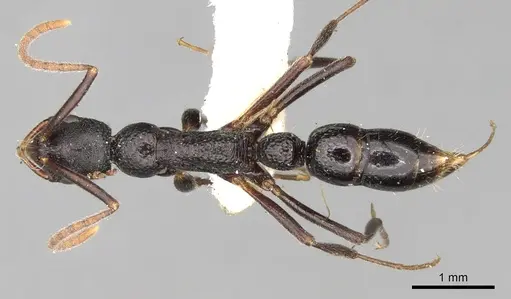
Irodalom
Elterjedési térkép betöltése...Termékek betöltése...