
Leptanilla qinlingensis
- Tud. név
- Leptanilla qinlingensis
- Nemzetség
- Leptanillini
- Alcsalád
- Leptanillinae
- Szerző
- Qian <i>et al.</i>, 2024
- Elterjedés
- 0 országban megtalálható
Bevezetés
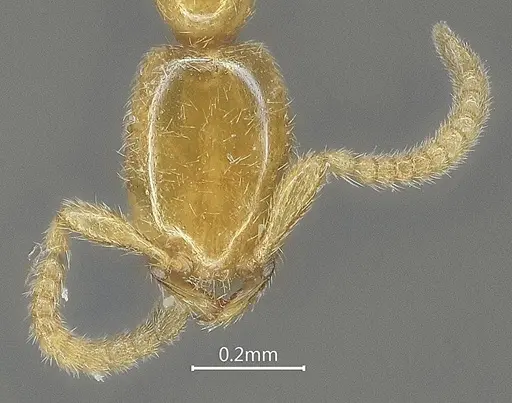
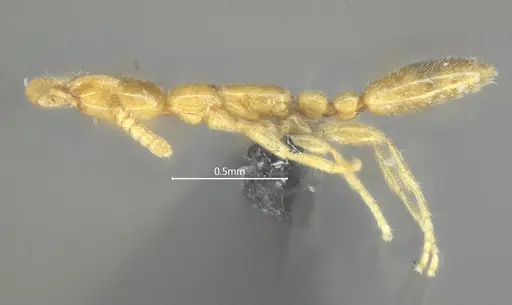
Leptanilla qinlingensis is an extremely tiny ant species recently described in 2024 from the Qinling Mountains in central China. Workers measure 1.4-2.0mm in total length, making them one of the smallest ant species in the world . They have a brownish-yellow body with yellow antennae and legs, a smooth and shiny surface, and a visible sting at the tip of their elongated gaster . The genus Leptanilla belongs to the subfamily Leptanillinae, a group of rare, cryptic ants known for their miniature size and specialized predatory habits. This species was discovered nesting in soil at 1200m elevation in a conifer-broadleaf mixed forest in Shaanxi Province, an area with a temperate climate that marks the boundary between Palearctic and Oriental zoogeographic regions . The petiolar node is nearly trapezoidal and obviously widens posteriorly, distinguishing them from the similar L. beijingensis .
Quick Summary
- Difficulty: Expert
- Origin & Habitat: Central China (Shaanxi Province, Chang'an District, Xi'an City), Qinling Mountains at 1200m altitude in conifer-broadleaf mixed forest. This region marks the boundary between Palearctic and Oriental zoogeographic regions and has a temperate climate [1].
- Colony Type: Colony structure is unconfirmed. No queen has been described for this species, and colony size data is not available.
- Size & Growth:
- Queen: Unknown, queen has not been described for this species [1]
- Worker: 1.4-2.0mm total length [1]
- Colony: Unknown, only six workers have ever been collected (the holotype and five paratypes) [1]
- Growth: Unknown
- Development: Unknown, no development data exists for this species (No direct development data exists for this recently described species.)
- Antkeeping:
- Temperature: Keep at room temperature (18-24°C) as a starting point. The temperate climate of their natural habitat (1200m in Qinling Mountains) suggests they prefer cooler conditions than tropical species. Adjust based on colony activity.
- Humidity: Maintain moderate to high humidity. Their natural habitat in mixed forest at 1200m elevation suggests damp but not waterlogged conditions. Keep the nest substrate consistently moist but allow some drying between waterings.
- Diapause: Likely yes, the temperate climate of their native habitat (Qinling Mountains,1200m elevation) suggests they need a winter rest period. Provide reduced temperatures during winter months.
- Nesting: Soil-nesting species. In captivity, use a small test tube setup with moist substrate or a small naturalistic setup. Tight chambers scaled to their tiny size are essential.
- Behavior: Very little is known about the behavior of this specific species. Members of the genus Leptanilla are predatory on tiny arthropods and have a functional sting [1]. They are extremely small and fragile. Escape prevention is critical due to their minute size, they can squeeze through the tiniest gaps.
- Common Issues: their extreme tiny size makes them difficult to keep and observe, they require specialized micro-housing, escape prevention is critical, they can fit through gaps smaller than 0.5mm, colony growth rate is unknown and likely slow, no established captive care protocols exist, this is a recently described species (2024), wild-caught colonies may not adapt to captivity, only six workers have ever been collected, making this one of the rarest ants in the world [1]
Housing and Nest Setup
Leptanilla qinlingensis is an extremely tiny ant that requires specialized housing. Use small test tubes with tight-fitting stoppers, or a small nest with chambers scaled to their minute size. Fill a small test tube with water and cotton, providing a humid chamber. Cover any gaps with cotton or tissue to prevent escapes, these ants can fit through gaps smaller than 0.5mm. A small outworld area can be attached but should also have fine mesh barriers. Avoid formicarium setups designed for larger ants, the chambers will be too large and the ants may feel exposed and stressed. [1]
Feeding and Diet
Leptanilla species are predatory on tiny arthropods. Feed small live prey such as springtails, tiny mites, and fruit fly offspring. These ants are too small to tackle standard ant prey like mealworms or crickets. Offer prey items that are appropriately sized, generally no larger than 1mm. Sugar sources are unlikely to be accepted given their predatory nature, though you can occasionally offer a tiny drop of honey or sugar water to test. Remove any uneaten prey after 24-48 hours to prevent mold. Feed every 2-3 days, adjusting based on consumption.
Temperature and Seasonal Care
Based on their natural habitat in the Qinling Mountains at 1200m elevation with a temperate climate, these ants prefer cooler conditions than tropical species. Keep them at room temperature, ideally 18-22°C. They likely do not need additional heating. During winter, provide a diapause period at reduced temperatures around 10-15°C. This can be achieved by moving them to an unheated room or refrigerator. Do not feed during diapause. Return to normal temperatures gradually in spring. [1]
Handling and Observation
These ants are extremely small and fragile. Direct handling should be avoided entirely, use gentle blowing or soft brushes if relocation is necessary. Observation requires good lighting and magnification. A magnifying glass or stereo microscope will help you see the colony activity and any brood. Keepers report that Leptanilla species spend most of their time within the nest, with workers rarely emerging into the outworld. This cryptic behavior means you may not see much activity unless you carefully observe the nest. Their small size also means they dry out quickly, maintain humidity carefully.
Why This Species is Challenging
Leptanilla qinlingensis was only described in 2024,meaning there is essentially no established captive husbandry information for this species. Everything we know comes from the original species description based on six workers collected from a single soil nest in Shaanxi Province, China [1]. This makes it one of the most challenging ants to keep, you will be essentially pioneering captive care for this species. Expect trial and error. The extreme rarity of Leptanilla in the antkeeping hobby means few resources exist for guidance. This species is recommended only for very experienced antkeepers who are comfortable experimenting and documenting their findings.
Frequently Asked Questions
How long do Leptanilla qinlingensis workers live?
The lifespan of workers is unknown. Queens, if you ever obtain one, would likely live significantly longer, potentially several years.
Can I keep Leptanilla qinlingensis in a standard test tube setup?
Yes, but use a small test tube with tight-fitting barriers. The key is ensuring no gaps exist, these ants are among the smallest in the world and can escape through gaps that other ants cannot fit through. Use cotton stoppers packed firmly and consider adding additional barriers.
What should I feed Leptanilla qinlingensis?
Feed small live prey, springtails and fruit fly larvae are the most practical options. These ants are predatory and too small to tackle larger prey. Remove uneaten prey within 24-48 hours. Sugar sources are unlikely to be accepted.
How fast do Leptanilla qinlingensis colonies grow?
Growth rate is unknown. Do not expect rapid growth like larger ant species.
Do Leptanilla qinlingensis ants sting?
Yes, they have a visible sting at the tip of their gaster [1]. However, given their extremely small size, the sting is unlikely to penetrate human skin or cause any pain to humans.
Are Leptanilla qinlingensis good for beginners?
No. This species is not recommended for beginners. It was only described in 2024,has no established captive care protocols, is extremely tiny, and requires specialized housing. This is an expert-level species.
Do Leptanilla qinlingensis need hibernation?
Likely yes. Their natural habitat in the Qinling Mountains at 1200m elevation has a temperate climate with distinct seasons. Provide a winter rest period at reduced temperatures during winter months.
How many queens does Leptanilla qinlingensis have?
The colony structure is unconfirmed. No queen has been described for this species yet.
Where can I get Leptanilla qinlingensis?
This species is extremely rare. It was only described in 2024 from Shaanxi Province, China and has never been found in the antkeeping trade. It would require collecting in the wild, which would require permits and expertise.
Why is Leptanilla qinlingensis so rarely kept?
This species was only described in 2024 and has never been available in the antkeeping hobby. Additionally, their extreme tiny size, specialized requirements, and lack of documented captive care make them extremely challenging to maintain.
Report an Issue
The current care sheet is based fully on literature. See inconsistencies, or something that's incorrect? Please , it will be resolved after review from an admin. Contributing to the blogs tab also helps providing information, to make us be able to further improve the caresheets. Thank you for your support!
References

Ez a tartási útmutató a következő licenc alatt áll: CC BY-SA 4.0 .
Közösségi blogok
ANTWEB1060531
Megtekintés az AntWeb-en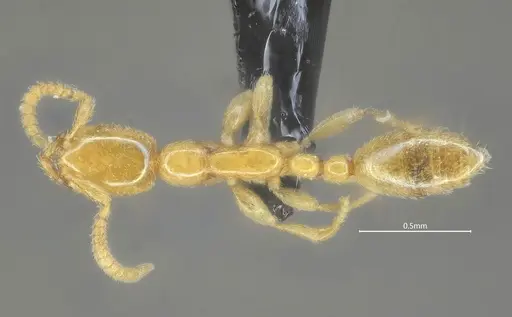
Irodalom
Elterjedési térkép betöltése...Termékek betöltése...