
Echinopla arfaki
- Tud. név
- Echinopla arfaki
- Nemzetség
- Camponotini
- Alcsalád
- Formicinae
- Szerző
- Donisthorpe, 1943
- Elterjedés
- 0 országban megtalálható
Bevezetés
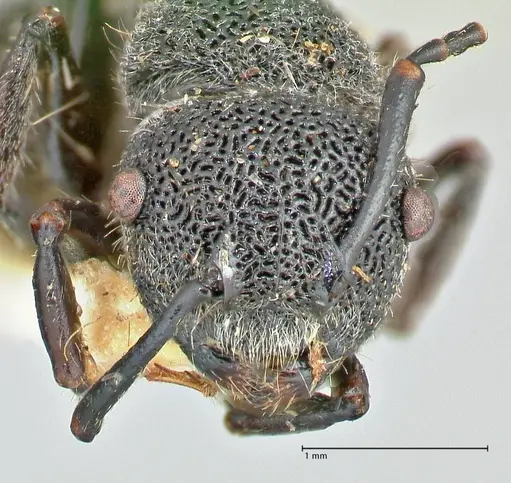
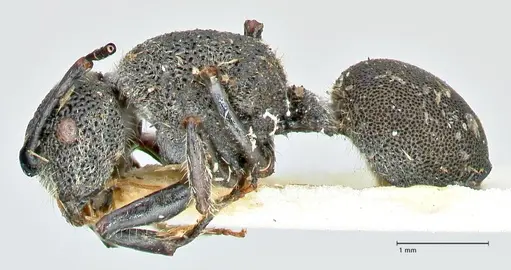
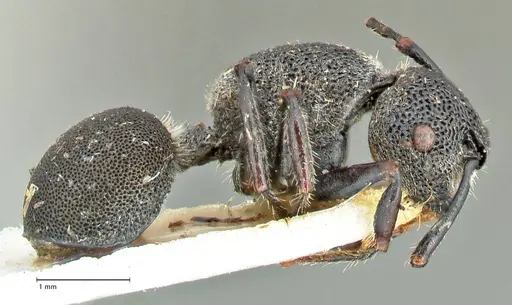
Echinopla arfaki is a distinctive ant species from the serrata-group within the genus Echinopla. It has jet-black coloration and unique serrated edges along the sides of its mesosoma (the middle body section). The mesosoma has regular, circular cribrate holes and is strongly constricted between the mesonotum and propodeum, with no metanotal groove. The sides of the promesonotum are serrate, giving the ant a saw-like appearance . This species is endemic to New Guinea, where it lives in tropical rainforests . Workers are estimated to be around 6-8 mm based on genus patterns, but exact measurements are not available. As a member of the Formicinae subfamily, Echinopla arfaki lacks a functional stinger and defends itself by biting and spraying formic acid. The genus Echinopla is known for its heavily sculptured bodies and spiny look, making these ants stand out from more common genera. Because this species is poorly studied, much of the care information comes from general Echinopla and tropical Formicinae patterns. Their origin in warm, humid New Guinea gives clear guidance on environment needs.
Quick Summary
- Difficulty: Medium
- Origin & Habitat: New Guinea (Australasian region), tropical rainforest environments [1][2]
- Colony Type: Colony structure is unconfirmed. Based on typical Echinopla genus patterns, likely monogyne (single queen) colonies, but this needs verification.
- Size & Growth:
- Queen: Size data unavailable, estimated from genus Echinopla patterns (~8-10 mm)
- Worker: Size data unavailable, estimated from genus Echinopla patterns (~6-8 mm)
- Colony: Likely several hundred workers, estimated from genus patterns
- Growth: Moderate, estimated
- Development: 6-10 weeks (estimated based on typical Formicinae development at tropical temperatures) (Development time is estimated from related Formicinae species. Tropical temperatures (24-28°C) likely speed up development compared to temperate species.)
- Antkeeping:
- Temperature: Keep at 24-28°C. Provide a gentle temperature gradient using a heating cable on one side of the nest. This tropical species needs warm, stable conditions all year (estimated from New Guinea habitat).
- Humidity: Keep humidity high (70-85%). Make sure the nest substrate is consistently moist but not waterlogged. Mist occasionally and use water reservoirs. The humid rainforest of New Guinea means these ants do best in damp conditions (estimated).
- Diapause: No, this is a tropical species from New Guinea, which has warm temperatures year-round. No hibernation needed (estimated).
- Nesting: In the wild, Echinopla species nest in rotting wood, under bark, or in soil cavities. For captivity, a Y-tong (AAC) nest or plaster nest with moisture chambers works well. Provide damp substrate and avoid dry conditions. Naturalistic setups with rotting wood pieces also fit this genus (estimated from genus behavior).
- Behavior: Echinopla arfaki workers are moderately active foragers. As Formicinae ants, they lack a stinger but can bite and spray formic acid as defense. They are likely somewhat aggressive when defending the nest. Workers are medium-sized and can climb, so you need escape prevention. In nature they likely forage for nectar, honeydew, and small insects (estimated from genus behavior).
- Common Issues: humidity control is critical, too dry and colonies will decline quickly., tropical species may struggle if temperatures drop below 22°C for extended periods., limited available care information means you must watch the colony closely and adjust., escape prevention needed, while not tiny, they are active foragers., wild-caught colonies may have parasites or diseases that cause captive failures.
Housing and Nest Setup
Echinopla arfaki needs a nest setup that keeps humidity high while still letting air circulate. A Y-tong (AAC) nest or plaster nest with built-in water chambers works well. The chambers should be sized for medium-sized ants (around 6-8 mm workers). Keep the nest substrate or water chambers consistently moist. Attach an outworld (foraging area) with a tube, and add natural items like small stones or rotting wood pieces to make it feel more natural. Make sure all connections are tight, as these ants can be active escape artists.
Feeding and Nutrition
As an omnivorous Formicinae ant, Echinopla arfaki will eat a variety of foods. Offer sugar sources like honey water, sugar water, or ripe fruit regularly. For protein, give small insects such as fruit flies, small crickets, mealworms, or other appropriately sized prey. In nature, they likely forage for nectar and honeydew, so a steady sugar source is important. Feed protein 2-3 times per week, adjusting based on colony size and how much they eat. Remove uneaten prey after 24-48 hours to prevent mold. Fresh water should always be available.
Temperature and Seasonal Care
This tropical species needs warm conditions year-round. Keep temperatures between 24-28°C in the nest area. A heating cable placed on top of the nest (not underneath, where it could dry out the moisture) can create a gentle heat gradient so workers can choose their preferred spot. Room temperature may work if your home stays consistently above 24°C, but use a thermometer to check. Unlike temperate species, Echinopla arfaki does not need a winter cooling period or hibernation. Avoid sudden temperature drops below 20°C, which can stress colonies. Keep the setup away from air conditioning vents, drafty windows, and other sources of temperature swings.
Humidity Management
High humidity is vital for this New Guinea species. Aim for 70-85% relative humidity inside the nest. In a Y-tong or plaster nest, keep the water chamber filled and the substrate consistently moist. Check moisture levels every few days, the substrate should feel damp but not have standing water. In dry rooms, you may need to mist the nest occasionally or use a larger water reservoir. But avoid creating stagnant, overly wet conditions, as that can cause mold. Good airflow helps balance humidity without drying out the nest too fast.
Colony Development and Growth
Echinopla arfaki colonies start with a queen who raises the first brood alone. The first workers (nanitics) will be smaller than mature workers and appear within 6-10 weeks under warm, optimal conditions. After the first workers emerge, the colony grows more quickly. Expect gradual growth over several months to years before reaching moderate colony size. Colonies likely reach several hundred workers over time. Be patient, Formicinae species often grow more slowly than some tropical myrmicines. Do not disturb the queen during the founding phase, as stress can cause her to abandon or eat her brood.
Behavior and Defense
Workers of Echinopla arfaki are active foragers and will explore the outworld in search of food. As Formicinae ants, they lack a stinger but have formic acid glands and can deliver a painful
Report an Issue
The current care sheet is based fully on literature. See inconsistencies, or something that's incorrect? Please , it will be resolved after review from an admin. Contributing to the blogs tab also helps providing information, to make us be able to further improve the caresheets. Thank you for your support!
References

Ez a tartási útmutató a következő licenc alatt áll: CC BY-SA 4.0 .
Közösségi blogok
FOCOL2561
Megtekintés az AntWeb-en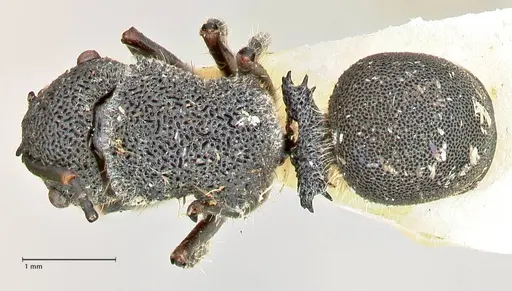
Irodalom
Elterjedési térkép betöltése...Termékek betöltése...