
Dolichoderus lactarius
- Tud. név
- Dolichoderus lactarius
- Nemzetség
- Dolichoderini
- Alcsalád
- Dolichoderinae
- Szerző
- Smith, 1860
- Elterjedés
- 0 országban megtalálható
Bevezetés
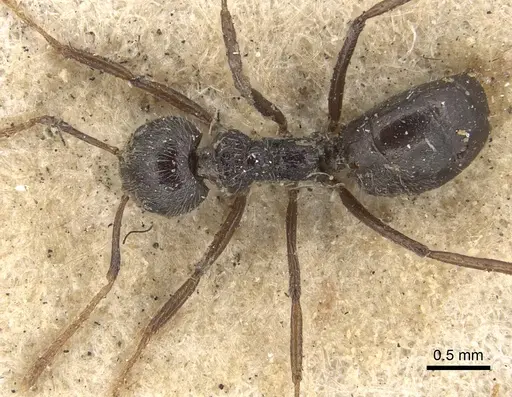
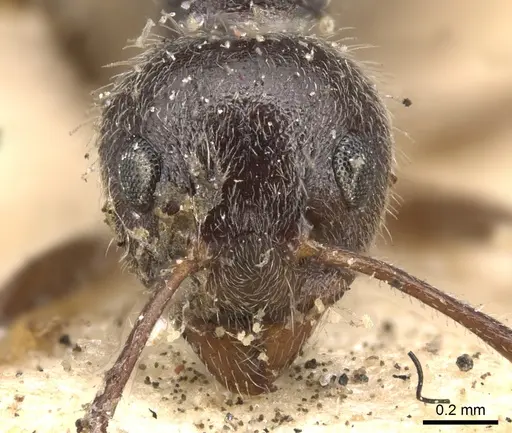
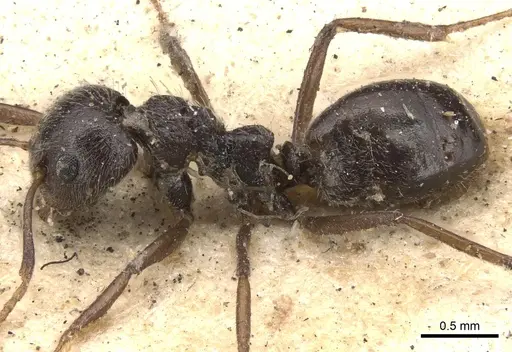
Dolichoderus lactarius is a tiny ant species native to the Maluku Islands of Indonesia. Workers measure approximately 3mm and are predominantly black with a smooth, shining head and abdomen, while the thorax has a rougher, wrinkled texture. Their antennae and legs are reddish-testaceous, and their mandibles are pale reddish-brown. This species was first described from Bachian Island, where they were observed in large numbers tending aphids on grass blades - a behavior known as 'milking,' where ants stroke aphids to encourage them to release honeydew . The species name 'lactarius' literally means 'milking,' referencing this distinctive aphid-tending behavior.
Quick Summary
- Difficulty: Medium
- Origin & Habitat: Native to the Maluku Islands of Indonesia, specifically recorded from Bachian Island. They inhabit tropical forest environments where they tend aphid colonies on vegetation [1].
- Colony Type: Colony structure is unconfirmed for this species.
- Size & Growth:
- Queen: Size data unavailable, no documented measurements exist for this species [1].
- Worker: Approximately 3mm [1].
- Colony: Unknown for this species.
- Growth: Unknown, likely moderate based on small worker size.
- Development: Estimated 6-8 weeks based on typical tropical ant development patterns. (Development timeline not directly studied for this species.)
- Antkeeping:
- Temperature: Keep at 24-28°C. As a tropical species from the Maluku Islands, they require warm conditions [1]. A heating cable on one side of the nest can create a gentle gradient.
- Humidity: High humidity required, aim for 70-80%. These forest-dwelling ants need moist conditions. Keep the nest substrate consistently damp but not waterlogged.
- Diapause: No, as a tropical species from near the equator, they do not require hibernation. Maintain consistent warm temperatures year-round.
- Nesting: In captivity, they do well in Y-tong (AAC) nests or plaster nests with good moisture retention. Their small size means chambers should be appropriately scaled. They prefer dark, humid nest environments.
- Behavior: These are relatively docile ants known for their aphid-tending behavior. Workers are active foragers that search for honeydew and small prey. Due to their very small size, escape prevention is critical, they can squeeze through tiny gaps. They are not aggressive and do not possess a painful sting.
- Common Issues: escape prevention is critical due to their tiny 3mm size, use fine mesh and tight-fitting barriers., high humidity requirements can lead to mold if ventilation is poor., tropical species are sensitive to temperature drops below 20°C., slow founding phase means colonies take time to establish, patience is required.
Nest Preferences
In their natural habitat in the Maluku Islands, these ants likely nest in soil or decaying wood in tropical forest settings. For captive care, Y-tong (AAC) nests or plaster nests work well due to their excellent moisture retention. The chambers should be appropriately sized for their tiny 3mm workers, tight-fitting passages help them feel secure. They prefer dark, humid nest environments and will readily move into moist substrate. Avoid dry environments or overly large, open spaces that can stress small colonies. [1]
Feeding and Diet
Dolichoderus lactarius is known for tending aphids and collecting honeydew, this was the behavior noted in their original description from 1860 [1]. In captivity, offer sugar water, honey, or diluted syrup as a constant energy source. They also accept small protein sources like fruit flies, pinhead crickets, and other tiny insects. Due to their small size, prey items should be appropriately sized. Regular feeding of both sugar and protein sources supports colony growth.
Temperature and Care
As a tropical species from the Indonesian Maluku Islands, these ants require warm temperatures between 24-28°C. A heating cable placed on one side of the nest can create a gentle temperature gradient, allowing ants to self-regulate. Room temperature may be insufficient in cooler climates, monitor with a thermometer. They do not require any diapause or hibernation period. Maintain consistent warmth year-round, as temperature drops below 20°C can stress or kill colonies. [1]
Behavior and Temperament
These are docile, non-aggressive ants that focus on foraging for honeydew and small prey. Workers are active and will readily explore their outworld for food. Their small size makes them vulnerable to larger predators and competitors. They are not known for painful stings, their main defense is retreat. Colonies establish moderate-sized worker populations over time. The most critical husbandry concern is their tiny size, which makes escape prevention essential. [1]
Frequently Asked Questions
How long does it take for Dolichoderus lactarius to produce first workers?
The exact timeline is unconfirmed, but based on typical tropical ant development, expect first workers approximately 6-8 weeks after the queen lays eggs. Smaller species often develop slightly faster than larger ones.
What do Dolichoderus lactarius ants eat?
They primarily feed on honeydew from aphids in the wild. In captivity, offer sugar water, honey, or diluted syrup as a constant sugar source. They also accept small protein like fruit flies, tiny crickets, and other small insects.
Can I keep Dolichoderus lactarius in a test tube setup?
Yes, test tube setups work well for founding colonies. Ensure the cotton is properly packed and the water reservoir is appropriately sized to prevent flooding. Their small size means you should use fine mesh barriers for escape prevention.
Are Dolichoderus lactarius good for beginners?
They are rated as medium difficulty. Their small size and high humidity requirements make them slightly more challenging than larger, hardier species. Experience with tropical ants is helpful.
What temperature do Dolichoderus lactarius need?
Keep them at 24-28°C. As a tropical species from the Maluku Islands of Indonesia, they require warm conditions year-round. A heating cable can help maintain appropriate temperatures.
Do Dolichoderus lactarius need hibernation?
No. As a tropical species from near the equator, they do not require hibernation or diapause. Maintain consistent warm temperatures throughout the year.
Why are my Dolichoderus lactarius escaping?
Their tiny 3mm size means they can squeeze through remarkably small gaps. Use fine mesh, tight-fitting lids, and reliable barrier coatings like fluon on all edges. Check for any tiny cracks around connections.
How big do Dolichoderus lactarius colonies get?
The maximum colony size is unconfirmed for this species. Based on typical ant patterns with small workers, colonies may reach several hundred workers over time.
When should I move my colony to a formicarium?
Move from test tube to a proper nest when the colony reaches 20-30 workers and the test tube shows signs of drying or space constraints. Ensure the new nest maintains high humidity.
Report an Issue
The current care sheet is based fully on literature. See inconsistencies, or something that's incorrect? Please , it will be resolved after review from an admin. Contributing to the blogs tab also helps providing information, to make us be able to further improve the caresheets. Thank you for your support!
References

Ez a tartási útmutató a következő licenc alatt áll: CC BY-SA 4.0 .
Közösségi blogok
CASENT0901927
Megtekintés az AntWeb-en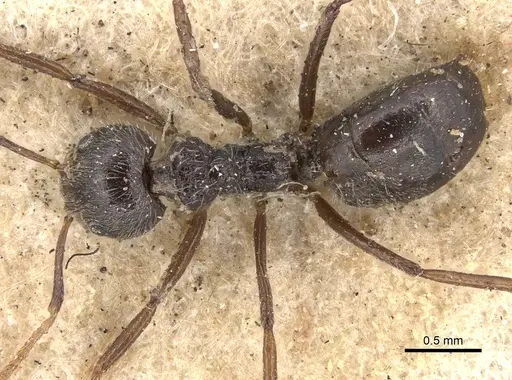
Irodalom
Elterjedési térkép betöltése...Termékek betöltése...