
Dilobocondyla silviae
- Tud. név
- Dilobocondyla silviae
- Nemzetség
- Crematogastrini
- Alcsalád
- Myrmicinae
- Szerző
- Zettel & Bruckner, 2013
- Elterjedés
- 0 országban megtalálható
Bevezetés
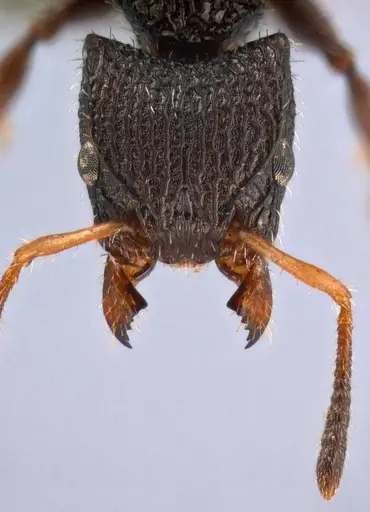
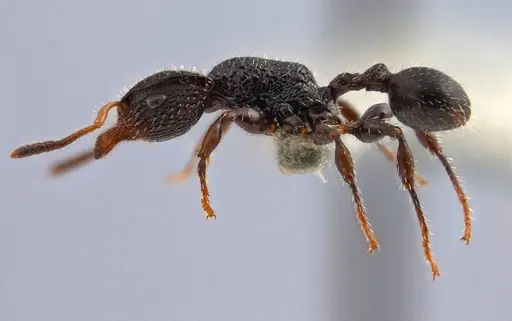
Dilobocondyla silviae is a tiny myrmicine ant species described in 2013 from Leyte Island in the Philippines. Workers measure just 3.9-4.1mm and have a distinctive blackish-brown body with bright yellow antennae (scape) and pale yellow leg tips (distal tarsomeres). The head has a concave posterior margin and strong frontal carinae that reach the hind corners. The sculpturing is moderately coarse with a matte, reticulated appearance. This species is known only from the worker caste - no queens, males, or colony structure has ever been documented. It was discovered in the Calbiga-a River valley at low elevation (50-100m) on Leyte, making it one of the rarest and least-studied ants in the hobby.
Quick Summary
- Difficulty: Expert
- Origin & Habitat: Philippines (Leyte Island), tropical lowland forest habitat at approximately 50-100m elevation in the Calbiga-a River valley [1][2]
- Colony Type: Unconfirmed, colony structure has never been documented. Only worker specimens have been collected.
- Size & Growth:
- Antkeeping:
- Temperature: Likely 24-28°C based on Philippine lowland tropical origin. Start in the mid-20s and observe colony activity.
- Humidity: Likely requires high humidity similar to other tropical forest ants from the Philippines. Keep substrate consistently moist but not waterlogged.
- Diapause: Unlikely, being a tropical species from lowland Philippines, they probably do not require a diapause period. Maintain warm conditions year-round.
- Nesting: Unknown, no natural nesting observations exist. Based on related species and Philippine habitat, they likely nest in rotting wood, under stones, or in soil in shaded, humid locations. A Y-tong or plaster nest with consistent moisture would be a reasonable starting point.
- Behavior: Behavior is completely unstudied. As a member of the tribe Crematogastrini, they have a smear defense mechanism, a flattened stinger used to wipe venom onto enemies rather than pierce flesh. They are likely too small to penetrate human skin. Tiny ants are excellent escape artists, use tight-fitting outworld barriers and check for any gaps.
- Common Issues: no documented captive colonies exist, this species has never been kept in captivity, queen and colony structure completely unknown, you cannot establish a colony without a queen, no breeding data exists, nuptial flight timing and location are unknown, extremely limited natural history data makes proper care difficult to determine, tiny size means high escape risk, check all barriers and gaps carefully
Species Discovery and Rarity
Dilobocondyla silviae was only described in 2013 by Zettel and Bruckner, making it one of the newest ant species in the hobby. The entire scientific knowledge base comes from just two worker specimens collected in March 2005 from the Calbiga-a River valley on Leyte Island in the Philippines. This species has never been found again since its original description, which tells you how rare it is in the wild. The species name 'silviae' honors the second author's wife. For antkeepers, this means you will not find established colonies for sale, the species is simply too rare and too newly described. [2][1]
Appearance and Identification
Workers are tiny at just 3.9-4.1mm total length. The most distinctive feature is the color pattern: a uniformly blackish-brown body contrasted with bright yellow antennae (specifically the scape) and pale yellow tips of the leg segments (distal tarsomeres). The head has a concave posterior margin (the back of the head dips inward) and very strong frontal carinae, ridge-like structures above the antennae that extend all the way to the hind corners of the head. The body surface has moderately coarse sculpturing with a matte, reticulated (net-like) appearance. The petiole (the narrow 'waist' segment) is slender. These ants are very similar to the related Dilobocondyla chapmani but can be distinguished by their darker color, smaller size, and different propodeum shape. [2][1]
Why This Species Is Not Recommended for Keepers
This species is listed as Expert difficulty for one overwhelming reason: absolutely no captive husbandry information exists. The species is known only from two worker specimens collected in 2005, no queens, no males, no colony structure, no nesting observations, no dietary information, no development data. There are no established colonies in captivity, no documented breeding success, and no way to obtain a founding queen because nuptial flight timing and location are completely unknown. You cannot keep what you cannot find or buy. Even if you somehow obtained a wild queen, there would be no care guide to follow. This species represents a frontier of antkeeping, it is a species to appreciate from a distance through scientific papers rather than attempt to keep. [2][1]
Related Species and Future Possibilities
If you are interested in Dilobocondyla ants, the related Dilobocondyla chapmani complex is better known and may occasionally appear in the ant trade. The genus Dilobocondyla contains several Philippine species, all of which are rarely collected and poorly studied. The tribe Crematogastrini (which includes Crematogaster and many related genera) contains species with varied biology. In the future, if D. silviae becomes available through breeding programs or new field collections, care would likely follow patterns typical of small tropical Myrmicinae: warm temperatures, high humidity, and protein-based diets. But for now, this species remains a scientific curiosity rather than a keeper's goal. [2][1]
Frequently Asked Questions
Can I keep Dilobocondyla silviae ants?
No, this species is not available in the antkeeping hobby and has never been kept in captivity. Only two worker specimens have ever been collected, all the way back in 2005. There are no established colonies for sale, no documented captive breeding, and no way to obtain a queen since nuptial flight timing is completely unknown.
What does Dilobocondyla silviae look like?
Workers are tiny at 3.9-4.1mm with a distinctive blackish-brown body. Their most striking feature is the bright yellow antennae (scape) and pale yellow leg tips. They have a concave head margin and strong ridges (frontal carinae) running from the antennae to the back of the head.
Where does Dilobocondyla silviae live?
This species is known only from Leyte Island in the Philippines, specifically from the Calbiga-a River valley at about 50-100m elevation. It has never been found anywhere else.
What do Dilobocondyla silviae ants eat?
Unknown, their diet has never been studied.
How do I set up a nest for Dilobocondyla silviae?
You cannot, there are no captive colonies to house. If they were to be kept in the future, a small nest with high humidity (like a Y-tong or plaster formicarium) in a warm setup would be a reasonable guess based on their Philippine lowland origin.
Do Dilobocondyla silviae ants sting?
As members of the tribe Crematogastrini, they have a smear defense mechanism, a flattened stinger used to wipe venom onto enemies rather than pierce flesh. They are likely too small to affect human skin.
How big do Dilobocondyla silviae colonies get?
Unknown, colony size has never been documented. Only two worker specimens have ever been collected, with no information on colony structure or size.
Are Dilobocondyla silviae good for beginners?
No species is available, so this question is moot. However, if it were available, it would likely be challenging due to the complete lack of any husbandry information. This is an Expert-difficulty species purely because there is no data to guide care.
Do Dilobocondyla silviae need hibernation?
Unlikely, being a tropical lowland species from the Philippines, they probably do not require a diapause or hibernation period. They would likely need warm conditions year-round.
How long does it take for Dilobocondyla silviae to develop from egg to worker?
Unknown, no brood development has ever been studied for this species.
Report an Issue
The current care sheet is based fully on literature. See inconsistencies, or something that's incorrect? Please , it will be resolved after review from an admin. Contributing to the blogs tab also helps providing information, to make us be able to further improve the caresheets. Thank you for your support!
References

Ez a tartási útmutató a következő licenc alatt áll: CC BY-SA 4.0 .
Közösségi blogok
ANTWEB1008118
Megtekintés az AntWeb-en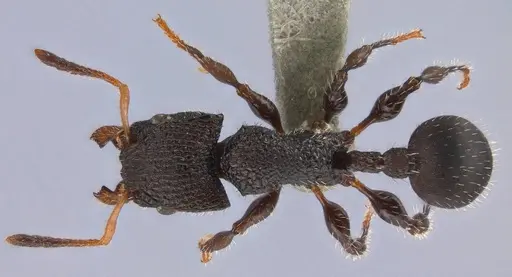
Irodalom
Elterjedési térkép betöltése...Termékek betöltése...