
Crematogaster augusti
- Tud. név
- Crematogaster augusti
- Nemzetség
- Crematogastrini
- Alcsalád
- Myrmicinae
- Szerző
- Emery, 1895
- Elterjedés
- 0 országban megtalálható
Bevezetés
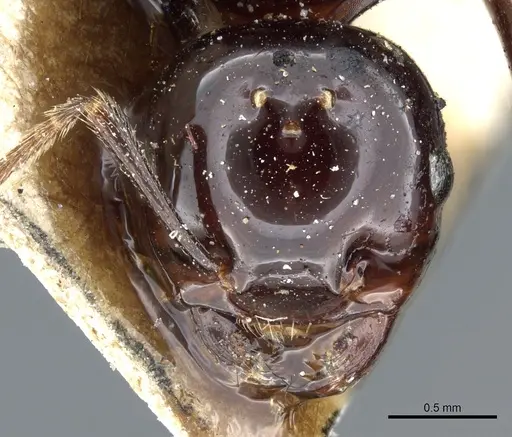
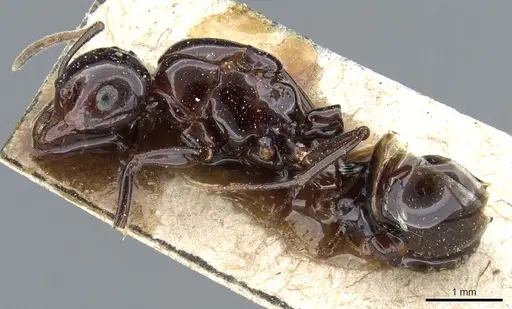
Crematogaster augusti is a tiny, enigmatic ant species known only from a single queen collected in Sumatra, Indonesia. The genus Crematogaster is commonly called 'acrobat ants' because they can raise their heart-shaped abdomen over their head and thorax as a defensive display. This particular species belongs to the ranavalonae-group and is distinguished by its completely smooth and shiny body surface and the complete absence of propodeal spines in the queen caste. Workers have never been collected, making this one of the most poorly known ants in Southeast Asia. The taxonomic status remains uncertain until nest series become available for study . Nothing is known about the biology, colony structure, or captive care requirements of this species. All care recommendations below are estimates based on typical Crematogaster genus behavior and the general conditions of their Sumatran habitat. This species is essentially unavailable in the antkeeping hobby and would be considered a specialist project for advanced keepers interested in contributing to our understanding of this mysterious ant.
Quick Summary
- Difficulty: Expert
- Origin & Habitat: Known only from Marang, Sumatra, Indonesia in the Indomalaya Region. The island of Sumatra features a tropical rainforest climate with high humidity and year-round warm temperatures [1][2].
- Colony Type: Unknown. Only a single queen has ever been documented. The colony structure (single-queen or multi-queen) has not been determined.
- Size & Growth:
- Queen: size data unavailable, only the queen was described, but no measurements are provided in the original description [1].
- Worker: size data unavailable, workers have never been collected or described [1].
- Colony: Unknown, no colony data exists [1].
- Growth: Unknown
- Development: Unknown, no developmental data exists for this species (Based on typical Crematogaster patterns, expect several weeks from egg to first worker at tropical temperatures, but this is entirely estimated.)
- Antkeeping:
- Temperature: Estimated 24-28°C based on the tropical rainforest climate of Sumatra. Provide a gentle temperature gradient allowing the colony to choose their preferred zone.
- Humidity: Estimated 70-85% humidity. Crematogaster species often prefer humid conditions. Keep the nest substrate consistently moist but not waterlogged.
- Diapause: Unlikely, Sumatra has a near-equatorial climate with minimal seasonal temperature variation. No diapause is expected, but observe colony behavior.
- Nesting: Estimated to nest in rotting wood, under bark, or in hollow stems based on typical Crematogaster behavior. In captivity, a Y-tong (AAC) nest or naturalistic setup with damp wood substrate would be the best starting point. Avoid overly dry conditions.
- Behavior: Crematogaster ants are known for their defensive behavior, they can raise their abdomen over their head like an acrobat and may excrete formic acid or venom when threatened. They are generally not aggressive toward humans but will defend their nest vigorously. Workers are small and may be capable of escaping through tiny gaps. Escape prevention should be excellent regardless of the exact worker size. Foraging style is estimated to be generalist, typical of the genus, they likely tend honeydew-producing insects and collect small insects.
- Common Issues: no documented captive colonies exist, all care is estimated from genus-level patterns, taxonomic uncertainty means identification may change as more specimens are collected, extremely rare in the wild, finding a colony would be exceptionally difficult, no growth or development data exists to benchmark colony progress against, the complete lack of worker specimens makes escape risk assessment speculative
Species Status and Availability
Crematogaster augusti represents one of the most poorly documented ant species in the world. The entire scientific knowledge base consists of a single queen described by Carlo Emery in 1895 from a specimen collected in Marang, Sumatra. No workers have ever been collected, and no ecological or behavioral observations exist in the scientific literature [1].
This species is essentially unavailable to antkeepers and would be considered a 'holy grail' discovery for myrmecologists. The taxonomic status remains uncertain, it belongs to the Crematogaster ranavalonae-group, but without worker specimens, its placement may change as more material becomes available [1]. Any antkeeper fortunate enough to locate a colony of this species would be contributing genuinely novel information to science.
Natural Habitat and Climate
The type locality is Marang on the island of Sumatra, Indonesia. Sumatra lies near the equator and features a tropical rainforest climate with consistently warm temperatures year-round (typically 25-30°C), high humidity (70-90%), and significant rainfall. The island hosts diverse ecosystems from lowland rainforests to mountain forests.
While the specific microhabitat of C. augusti is unknown, other Crematogaster species in Southeast Asia typically nest in rotting wood, under bark, in hollow stems, or in arboreal cavities. Given the ranavalonae-group affiliation and the smooth body surface of the queen, this species may prefer humid, shaded microhabitats similar to other members of the group. [2]
Estimated Care Requirements
Since no biological data exists for this species, all care recommendations are estimates based on typical Crematogaster genus behavior and the climate of their Sumatran habitat. Start with temperatures around 24-28°C and humidity at 70-85%. Provide a moist nest environment with some drier areas available.
Crematogaster ants are generalist feeders, they likely accept sugar sources (honey water, sugar water) and small protein sources (fruit flies, small insects, mealworms). Feed protein 2-3 times per week and provide constant access to sugar water. The nest should be humid but well-ventilated to prevent mold.
Because workers have never been described, the exact size is unknown. Use standard escape prevention measures (Fluon on test tube rims, tight-fitting lids) as a precaution.
Why This Species Matters
Crematogaster augusti represents an exciting opportunity for antkeepers interested in contributing to genuine scientific discovery. Every observation made in captivity would be novel information, there is no existing data on colony size, development time, behavior, or any aspect of their biology.
However, this also means keeping this species carries significant responsibility. Detailed records of all behaviors, development timing, colony growth, and care observations would be valuable contributions to myrmecology. This species is recommended only for experienced keepers who understand the importance of documentation and are comfortable with uncertainty in their care approach.
Frequently Asked Questions
Is Crematogaster augusti available in the antkeeping hobby?
No. This species is known only from a single queen collected in 1895. No workers have ever been found, and no colonies exist in captivity. It would be an extraordinary discovery to find a wild colony.
How do I care for Crematogaster augusti ants?
No confirmed care guidelines exist. Use estimated conditions based on typical Crematogaster behavior: 24-28°C, 70-85% humidity, moist nest environment. Feed sugar water and small insects. This is an expert-level project for those interested in contributing to scientific knowledge.
What does Crematogaster augusti look like?
Only the queen has been described. It lacks propodeal spines (unusual for the genus) and has a completely smooth and shiny body surface. Workers have never been collected, so their appearance is unknown.
Where does Crematogaster augusti live?
Only known from Marang, Sumatra, Indonesia. The entire scientific record consists of a single queen collected in the 1890s.
Do Crematogaster augusti ants sting?
Crematogaster ants can raise their abdomen over their head as a defensive display and may excrete formic acid or venom when threatened. However, they are small and typically not dangerous to humans. The exact behavior of this species is unknown.
How big do Crematogaster augusti colonies get?
Unknown. No colony data exists for this species. Typical Crematogaster colonies range from dozens to thousands of workers depending on the species.
What do Crematogaster augusti eat?
Estimated to be generalist feeders like other Crematogaster species. They likely accept sugar sources (honeydew, nectar, sugar water) and small insects. No direct feeding observations exist.
Is this species monogyne or polygyne?
Unknown. Only a single queen has ever been documented. The colony structure of this species has not been determined.
Does Crematogaster augusti need hibernation?
Unlikely. Sumatra has a near-equatorial climate with minimal seasonal temperature variation. No diapause would be expected, but observe colony behavior to confirm.
Are Crematogaster augusti good for beginners?
No. This species is not available in the antkeeping hobby, and even if it were, the complete lack of biological data would make it an expert-level project requiring careful observation and documentation.
Report an Issue
The current care sheet is based fully on literature. See inconsistencies, or something that's incorrect? Please , it will be resolved after review from an admin. Contributing to the blogs tab also helps providing information, to make us be able to further improve the caresheets. Thank you for your support!
References

Ez a tartási útmutató a következő licenc alatt áll: CC BY-SA 4.0 .
Közösségi blogok
CASENT0904487
Megtekintés az AntWeb-en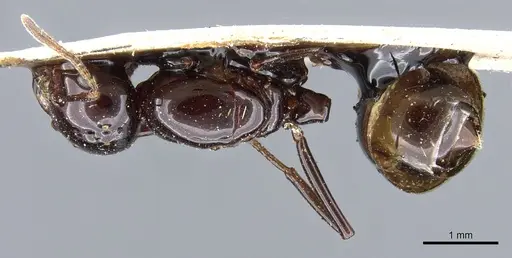
Irodalom
Elterjedési térkép betöltése...Termékek betöltése...