
Colobopsis oceanica
- Tud. név
- Colobopsis oceanica
- Nemzetség
- Camponotini
- Alcsalád
- Formicinae
- Szerző
- Mayr, 1870
- Elterjedés
- 0 országban megtalálható
Bevezetés
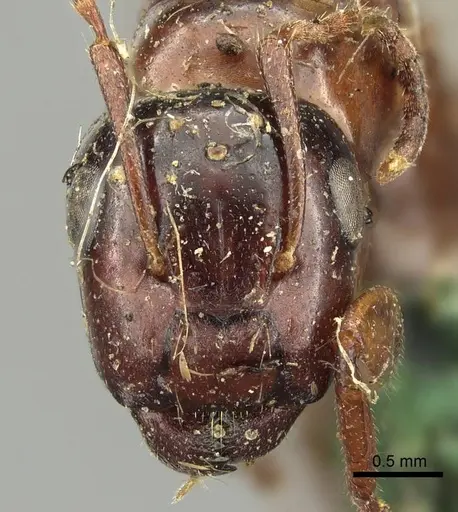
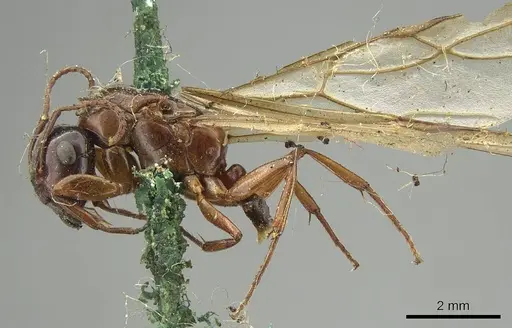
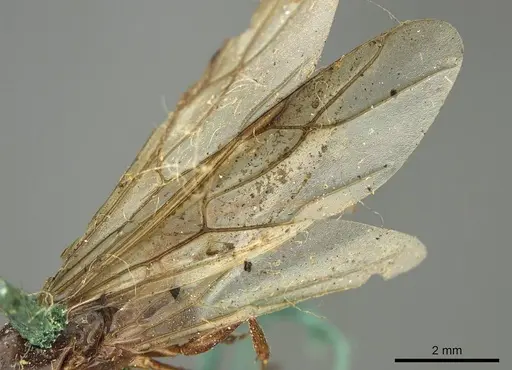
Colobopsis oceanica is a tiny ant species endemic to Fiji, known only from a single queen described in 1870 from Ovalau Island. The queen is approximately 4mm in length (inferred from the original description, which likely contains a typo), with a shiny chestnut-red coloration and a distinctly broad clypeus (the plate covering the mouthparts). The head is chestnut-colored while the abdomen is darker, almost pitchy. This species has never been observed in the wild since its original description, and recent ant surveys in Fiji have failed to locate any specimens, leading researchers to suspect it may either be extremely rare or potentially misidentified as a related species like C. polynesicus . This is one of the most poorly known ant species in the world. Almost nothing is known from scientific literature about its colony structure, behavior, or nesting preferences. All care recommendations are inferred from what we know about related Colobopsis species and general Camponotini biology. As a tropical Fiji species, it likely prefers warm, humid conditions similar to other Pacific island ants.
Quick Summary
- Difficulty: Unknown, Species not kept in captivity
- Origin & Habitat: Endemic to Fiji Islands, specifically Ovalau Island. Tropical Pacific island habitat [2][3].
- Colony Type: Unknown, only a single queen has ever been described [1].
- Size & Growth:
- Queen: Approximately 4mm (inferred from original description, likely a typo in the original text) [4]
- Worker: Unknown, workers have never been described
- Colony: Unknown, no colonies have ever been observed
- Growth: Unknown
- Development: Unknown, no data exists. Based on typical Camponotini patterns, likely 6-10 weeks at optimal temperature. (No direct data exists for this species. Estimates are speculative and based on genus-level patterns for Camponotini.)
- Antkeeping:
- Temperature: Likely 24-28°C based on tropical Fiji habitat. Provide a gentle gradient if possible.
- Humidity: Likely requires high humidity (60-80%) typical of tropical island species. Keep substrate consistently moist but not waterlogged.
- Diapause: Unlikely, Fiji has no cold winter. May show reduced activity during cooler months.
- Nesting: Unknown. Most Colobopsis species nest in rotting wood or hollow plant stems. A naturalistic setup with rotting wood or a Y-tong/plaster nest would be reasonable guesses.
- Behavior: Completely unknown, no behavioral observations have ever been recorded for this species. Based on genus patterns, they are likely relatively docile like most Colobopsis, with minor defensive capabilities (spraying formic acid like other Camponotini). Escape prevention should be excellent given their small size if they follow typical Colobopsis patterns.
- Common Issues: This species has never been kept in captivity, no established care protocols exist., The species may be extinct or extremely rare in the wild, making wild collection impossible., No workers have ever been described, so colony development is completely unknown., All care recommendations are speculative guesses based on related species.
Species Status and History
Colobopsis oceanica represents one of the most enigmatic ant species in the world. The species was originally described by Gustav Mayr in 1870 based on a single queen collected from Ovalau Island, Fiji [2]. The original description notes the queen measures approximately 4mm (the published 40mm is almost certainly a typographical error), with a distinctive shiny chestnut-red coloration and a particularly broad clypeus [4].
What makes this species notable is that it has never been observed or collected since its original description. William Morton Mann searched for specimens during his extensive Fiji ant surveys in the 1920s but found none [1]. Modern ant surveys in Fiji have also failed to locate any Colobopsis oceanica specimens, leading researchers to speculate that either the species is extremely rare and localized, or potentially represents a variant of the more common C. polynesicus [1]. The type specimen itself may have been destroyed during World War II (it was reportedly in the Hamburg Museum).
For antkeepers, this species represents both a mystery and an opportunity, it is essentially unavailable in the ant-keeping hobby and may even be extinct in the wild.
Why This Species Cannot Be Kept
Before discussing care, it must be clearly stated that Colobopsis oceanica cannot be legitimately kept by antkeepers. No colonies exist in captivity, and the species has not been observed in the wild for over 150 years. There are no documented captive breeding lines, no known sources for queens or colonies, and no established care protocols [1][2].
This is not a species that hobbyists should actively seek, attempting to find and collect this species would require extensive fieldwork in Fiji with no guarantee of success, and could potentially disturb an already critically endangered or possibly extinct species. The antkeeping community should respect the scientific uncertainty surrounding this species and avoid any pressure that might encourage harmful collection practices.
For keepers interested in similar ants, several documented Colobopsis species from the Pacific region are available through reputable suppliers and have established care protocols.
Inferred Care Guidelines (For Reference Only)
Should this species ever become available through scientific breeding programs or conservation efforts, the following represents the best available guidance based on typical Colobopsis and Camponotini biology. This is entirely speculative and should not be used as actual care instructions.
Temperature: As a tropical Fiji species, Colobopsis oceanica would likely thrive at 24-28°C with a gentle gradient. Room temperature (around 24°C) would likely be appropriate.
Humidity: Tropical island species typically require high humidity (60-80%). Keep the nest substrate consistently moist but not waterlogged, with some drier areas available.
Nesting: Most Colobopsis species nest in rotting wood, hollow stems, or under bark. A naturalistic setup with appropriately sized chambers or a Y-tong/plaster nest would be suitable guesses.
Feeding: Based on genus patterns, they likely accept sugar sources (honey, sugar water) and protein (insects, small prey). Colobopsis workers often have specialized head shapes for defense.
Colony founding: Likely claustral like other Camponotini, the queen seals herself in and lives off stored fat until the first workers emerge.
Development: Based on typical Camponotini patterns, egg-to-worker development likely takes 6-10 weeks at optimal temperature.
Related Species to Consider
For antkeepers interested in Pacific island Colobopsis species with established care protocols, several alternatives exist in the hobby. These related species offer the opportunity to keep ants from similar tropical environments while having documented care guides.
Colobopsis species in general are known for their distinctive caste system, with specialized 'soldier' ants that have enlarged, plug-like heads used to block nest entrances. This defensive adaptation makes them intriguing to observe. Many Colobopsis species are relatively docile and suitable for beginners.
Other Pacific ant species from Fiji and surrounding regions may also be available through specialty suppliers. These species would have the added benefit of being appropriate for room-temperature keeping in most climates, as they are adapted to similar tropical conditions.
Always ensure any ants purchased come from reputable suppliers who practice ethical breeding and do not harm wild populations.
Frequently Asked Questions
Can I keep Colobopsis oceanica ants?
No. Colobopsis oceanica has never been kept in captivity and may be extinct in the wild. The species is known only from a single queen described in 1870,and no specimens have been found in over 150 years of searching. No legitimate source exists for this species.
Where can I find Colobopsis oceanica for sale?
This species is not available for sale anywhere. It has never been collected since its original description in 1870,and recent surveys have failed to locate any wild populations. Purchasing any ant claimed to be this species would be fraudulent.
What does Colobopsis oceanica look like?
Only the queen has been described. Based on the original description, it is approximately 4mm long, with a shiny chestnut-red coloration. The head is chestnut-colored while the abdomen is darker (pitchy). It has a particularly broad clypeus and a low petiolar node. Workers have never been described.
Is Colobopsis oceanica extinct?
We don't know. The species has not been observed since 1870,despite multiple scientific surveys in Fiji. It may be extinct, extremely rare, or potentially a misidentification of another species (possibly C. polynesicus). More research is needed.
What is the natural habitat of Colobopsis oceanica?
Unknown. The only known specimen was collected from Ovalau Island, Fiji. As a tropical Pacific island species, it likely lives in forest environments typical of Fiji, but no specific habitat data exists.
How do I care for Fiji ants if this species isn't available?
Look for other Colobopsis species or Pacific island ants from reputable ant suppliers. Many similar species are available in the hobby with established care protocols. Always ensure purchases come from captive-bred colonies, not wild-caught specimens.
Why is Colobopsis oceanica so rare?
We don't know. It may have always been extremely rare, it could have gone extinct due to habitat loss on Ovalau Island, or it may have been misidentified as a related species like C. polynesicus. The type specimen needs examination to resolve the uncertainty.
Are there similar ants I can keep instead?
Yes, several other Colobopsis species are available in the antkeeping hobby with documented care requirements. These include various Pacific and Asian species that share similar biology. Check with reputable ant suppliers for available alternatives.
Report an Issue
The current care sheet is based fully on literature. See inconsistencies, or something that's incorrect? Please , it will be resolved after review from an admin. Contributing to the blogs tab also helps providing information, to make us be able to further improve the caresheets. Thank you for your support!
References

Ez a tartási útmutató a következő licenc alatt áll: CC BY-SA 4.0 .
Közösségi blogok
CASENT0915766
Megtekintés az AntWeb-en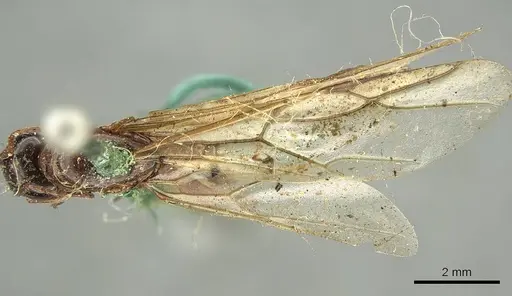
Irodalom
Elterjedési térkép betöltése...Termékek betöltése...