
Carebara crigensis
- Tud. név
- Carebara crigensis
- Nemzetség
- Crematogastrini
- Alcsalád
- Myrmicinae
- Szerző
- Belshaw & Bolton, 1994
- Elterjedés
- 0 országban megtalálható
Bevezetés
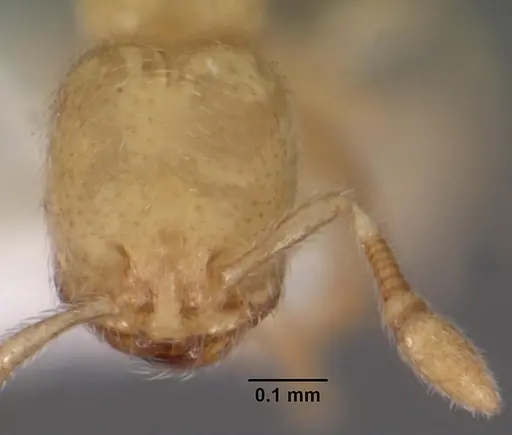
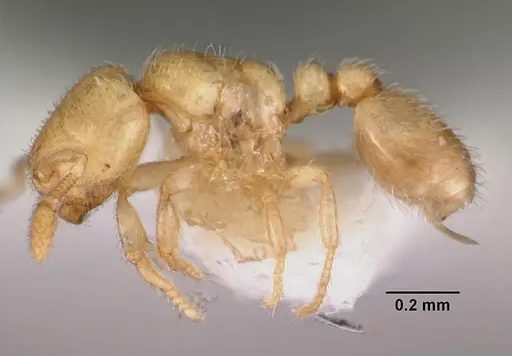
Carebara crigensis is an exceptionally tiny yellow ant species native to Ghana, West Africa. Workers measure approximately 1.4-1.5mm in total length, making them among the smallest ants in the hobby. They have 10-segmented antennae with a 2-segmented club, lack visible eyes (though a small pigmented spot marks their position), and possess a well-developed sabre-like sting. Unlike many Carebara species, this species lacks a major worker caste - only minor workers exist. The species was originally collected from leaf litter in cocoa farms in the Ashanti Region of Ghana and was named after the Cocoa Research Institute of Ghana (CRIG). [AntWiki]
Quick Summary
- Difficulty: Unknown, likely Expert
- Origin & Habitat: Ghana, West Africa. Found in leaf litter in shaded cocoa farms within the moist forest zone of the Ashanti Region. [1]
- Colony Type: Colony structure is unconfirmed. No queen specimens have been documented in scientific literature. The genus lacks a major worker caste, suggesting simple colony organization. [2]
- Size & Growth:
- Queen: Undescribed, no queen specimens have been documented in scientific literature
- Worker: Approximately 1.4-1.5mm total length [1]
- Colony: Unknown, no colony size data available
- Growth: Unknown, no development data exists
- Development: Unknown, no development data exists for this species. (Development timeline has not been studied.)
- Antkeeping:
- Temperature: Inferred from Ghana moist forest habitat: keep warm, around 24-28°C with moderate humidity. Avoid cool temperatures.
- Humidity: Moist forest species, keep substrate consistently damp but not waterlogged. Provide a gradient with slightly drier areas available.
- Diapause: Unknown, Ghana species from moist forest likely do not require true hibernation.
- Nesting: Natural nesting: leaf litter in shaded cocoa farms. In captivity, these tiny ants would likely thrive in a naturalistic setup with moist substrate, or a Y-tong/plaster nest with very small chambers scaled to their minute size. Their subterranean lifestyle suggests they prefer tight, dark spaces.
- Behavior: This is a poorly understood species with limited behavioral observations. They are blind (no eyes) and likely entirely subterranean, foraging through leaf litter and soil. The well-developed sting suggests they can defend themselves, but their tiny size makes them unlikely to penetrate human skin. Major workers are absent, only a single minor worker caste exists. Escape prevention must be excellent given their minute size, they can squeeze through virtually any gap. [1][2]
- Common Issues: escape prevention is critical, at 1.5mm, they can squeeze through the tiniest gaps in standard formicaria, no colony size data available, wild colonies may be very small, blind ants may be stressed by excessive light, keep nesting areas dark, humidity control is crucial, too dry will kill them quickly in their tiny nests, queen and founding behavior unconfirmed, no documented observations exist
Appearance and Identification
Carebara crigensis is an exceptionally small ant species with workers measuring approximately 1.4-1.5mm in total length. They are uniformly yellow in color throughout, with no sculpturing on the head or body. The most distinctive features include: 10-segmented antennae with a 2-segmented club, no visible eyes (only a small pigmented spot marking their position), and a well-developed sabre-like sting. The mandibles have two apical teeth followed by a long oblique edentate margin and a smaller basal tooth. Unlike many Carebara species, this species lacks a major worker caste, only minor workers exist. This combination of traits makes them relatively distinctive among Ghana's leaf litter ant fauna. [1][2][3]
Natural History and Distribution
This species is known only from Ghana, West Africa, specifically the Ashanti Region. Type specimens were collected from leaf litter in cocoa farms in the moist forest zone, one from Poano (collected September 9,1992) and another from near Ofinso (collected November 2,1992). The species name honors the Cocoa Research Institute of Ghana (CRIG). Their habitat in moist forest leaf litter suggests they prefer shaded, humid microenvironments with abundant organic matter. The cocoa farm environment provides a stable understory with consistent moisture and temperature. Nothing is known about their colony structure, queen biology, nuptial flight timing, or diet in the wild. [1]
Housing and Nesting
Given their minute size and subterranean leaf-litter lifestyle, these ants require specialized housing. In captivity, a naturalistic setup with moist, loose substrate (like a mixture of soil and coco fiber) would best mimic their natural environment. The substrate should be kept consistently damp but never waterlogged. Alternatively, a Y-tong or plaster nest with extremely small chambers and tunnels would work, though standard formicarium chambers are likely far too large for these tiny ants. Because they are blind, nesting areas should be kept dark, excessive light may stress them. Escape prevention is absolutely critical, at 1.5mm, they can squeeze through gaps that other ants cannot. Use fine mesh barriers and ensure all connections are sealed. [1]
Feeding and Diet
The diet of Carebara crigensis has not been documented in scientific literature. Based on typical Carebara genus behavior, they likely forage for small soft-bodied prey (micro-arthropods, springtails, tiny insects) in leaf litter and may tend aphids for honeydew. In captivity, offer small live prey items like springtails, fruit flies, and other tiny insects. Sugar sources (honey water, sugar water) may be accepted but this is unconfirmed. Given their subterranean lifestyle, they may be reluctant to forage in open spaces, food is best placed in shallow dishes or directly on the substrate surface. [1]
Temperature and Humidity
As a species from Ghana's moist forest zone, Carebara crigensis requires warm and humid conditions. Aim for temperatures in the range of 24-28°C, avoid temperatures below 22°C or above 30°C. A heating cable on one side of the nest can create a temperature gradient, allowing the ants to self-regulate. Humidity should be high, the substrate should feel consistently moist but not saturated. These ants are adapted to the stable, humid conditions of forest floor leaf litter and will likely not tolerate dry conditions. Monitor condensation levels in enclosed nests and adjust misting accordingly. Good ventilation is still necessary to prevent mold, but avoid airflow that dries the substrate. [1]
Defense Mechanism
Carebara crigensis belongs to the subfamily Myrmicinae and tribe Crematogastrini. Like other species in this tribe, they possess a well-developed, sabre-like sting. The stinger is modified and can be used to defend the colony against threats. However, given their extremely tiny size (approximately 1.5mm), they are unlikely to be able to penetrate human skin or cause any pain. [1][3]
Frequently Asked Questions
How big are Carebara crigensis ants?
Workers are extremely tiny at approximately 1.4-1.5mm in total length. This makes them among the smallest ant species kept in captivity. [1]
Where does Carebara crigensis come from?
This species is native to Ghana, West Africa, specifically the Ashanti Region. They were originally collected from leaf litter in cocoa farms in the moist forest zone. [1]
Do Carebara crigensis ants have eyes?
No, they are completely blind. Their eyes are absent, though a small pigmented spot marks where eyes would normally be located. [1]
What do Carebara crigensis eat?
Their diet is unconfirmed, but based on typical Carebara behavior, they likely eat small soft-bodied prey like springtails and micro-arthropods found in leaf litter, and may also accept honeydew. In captivity, offer small live prey and sugar sources. [1]
What temperature do Carebara crigensis need?
Keep them warm at 24-28°C based on their Ghana moist forest habitat. Avoid temperatures below 22°C. [1]
Are Carebara crigensis good for beginners?
No. This species has no established husbandry guidelines and their extreme tiny size creates significant housing and escape prevention challenges. They are not recommended for beginners. [1]
How long do Carebara crigensis take to develop from egg to worker?
This is unknown, no development data exists for this species. [1]
Do Carebara crigensis sting?
Yes, they have a well-developed, sabre-like sting. However, given their tiny size (approximately 1.5mm), they are extremely unlikely to be able to penetrate human skin or cause any pain. [1][3]
How big do Carebara crigensis colonies get?
Colony size is unknown, no wild colony size data exists in scientific literature. [1]
What type of nest should I use for Carebara crigensis?
Use a naturalistic setup with moist substrate or a Y-tong/plaster nest with very small chambers scaled to their minute size. Standard formicarium chambers are too large. Keep nesting areas dark since they are blind. [1]
Can I keep multiple queens together?
This is unknown, no data exists on colony structure or queen behavior for this species. [1]
Do Carebara crigensis need hibernation?
This is unknown. As a Ghana species from a moist forest habitat, they likely do not require true hibernation. [1]
Report an Issue
The current care sheet is based fully on literature. See inconsistencies, or something that's incorrect? Please , it will be resolved after review from an admin. Contributing to the blogs tab also helps providing information, to make us be able to further improve the caresheets. Thank you for your support!
References

Ez a tartási útmutató a következő licenc alatt áll: CC BY-SA 4.0 .
Közösségi blogok
CASENT0102359
Megtekintés az AntWeb-en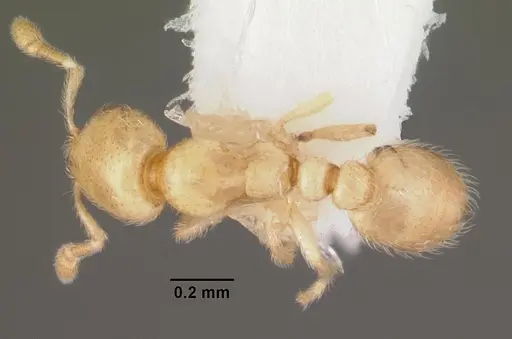
Irodalom
Elterjedési térkép betöltése...Termékek betöltése...