
Carebara amia
- Tud. név
- Carebara amia
- Nemzetség
- Crematogastrini
- Alcsalád
- Myrmicinae
- Szerző
- Forel, 1913
- Elterjedés
- 0 országban megtalálható
Bevezetés
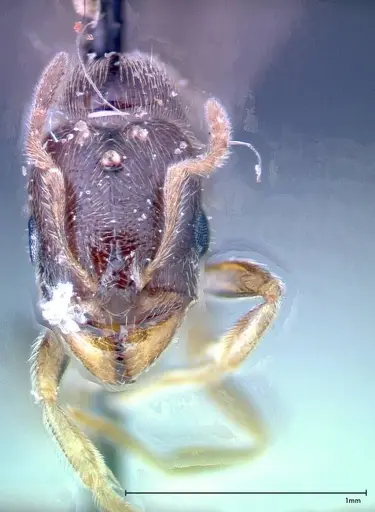
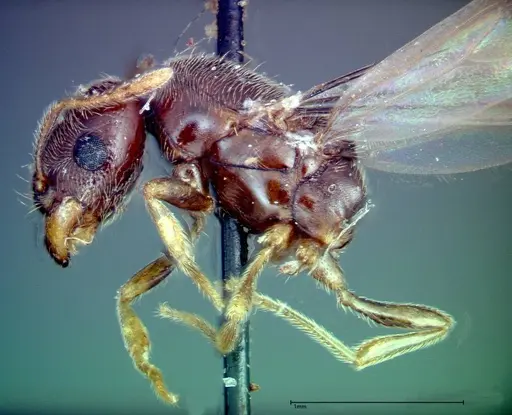
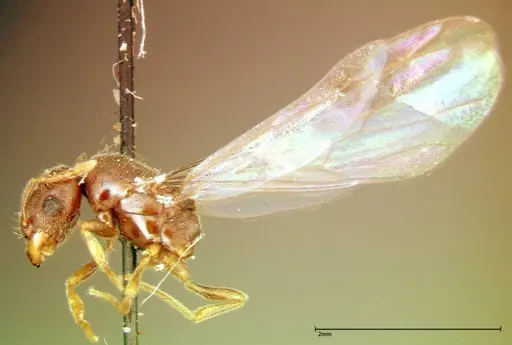
Carebara amia is a tiny myrmicine ant known only from the queen caste, originally described from Taiwan in 1913 . Queens measure approximately 5mm in total length and are dark brown to brown-black in color, with lighter yellowish-brown antennae and mandibles . The species has ten-segmented antennae and distinctive morphological features including a rectangular head that is nearly 1.5 times longer than wide, shiny punctate mandibles with seven teeth, and a characteristic frontal groove on the head . This ant belongs to the Carebara genus, which contains many small predatory ants found in tropical and subtropical regions across Asia. The species is currently documented only from Taiwan and southern China.
Quick Summary
- Difficulty: Unknown, species poorly studied
- Origin & Habitat: Taiwan and southern China (Indomalaya and Palaearctic regions), likely inhabits lowland forest habitats typical of tropical Carebara species
- Colony Type: Unconfirmed, only the queen caste has been scientifically described, no worker caste known
- Size & Growth:
- Antkeeping:
- Temperature: Keep warm, roughly 22-28°C, observe colony activity for optimal range
- Humidity: Maintain moderate to high humidity, keep substrate consistently moist but not waterlogged
- Diapause: Unlikely, tropical distribution suggests no true hibernation required
- Nesting: Use small test tubes or Y-tong nests with tight chambers scaled to their tiny size. Keep substrate moderately moist.
- Behavior: Behavior is unconfirmed due to limited scientific data. Based on typical Carebara genus patterns, these are likely small predatory ants that forage for tiny arthropods. Their tiny size means they can escape through standard mesh, use fine mesh or fluon barriers for containment.
- Common Issues: Only queen caste described, obtaining workers for identification may be difficult, No established care protocols exist for this specific species, Tiny size means escape prevention must be exceptional, they can squeeze through standard mesh, Growth rate and colony development timeline unknown, Limited availability, rarely available in antkeeping trade
Species Identification and History
Carebara amia was originally described in 1913 by Dr. A. Forel under the name Carebara amia, based on a queen collected from Kankau (Koshun) in Taiwan [1]. The species has since been reclassified through multiple genera, first to Aneleus by Emery in 1923, then to Oligomyrmex by Ettershank in 1966, and finally to Carebara by Fernández in 2004 [1]. What makes this species particularly interesting is that it remains known only from the queen caste, no workers have ever been described, which is unusual in ant taxonomy. The queen measures approximately 5mm and can be identified by its distinctive morphological features including seven-toothed mandibles, ten-segmented antennae, and a rectangular head with a characteristic frontal groove [1]. The species is currently documented only from Taiwan and China.
Distribution and Habitat
Carebara amia is currently known from two geographic regions: Taiwan (where it was originally described) and southern China [1]. This distribution spans both the Indomalaya and Palaearctic zoogeographic regions. While specific habitat data is not available for this species, other Carebara species in Asia are typically found in tropical and subtropical forest environments, often nesting in soil, rotting wood, or under stones in warm, humid conditions. The original collection location in southern Taiwan suggests a lowland tropical habitat.
Defense Mechanism
As a member of the subfamily Myrmicinae and tribe Crematogastrini, Carebara amia possesses a modified, flattened stinger used to wipe or smear venom onto enemies rather than piercing flesh. This smear defense is typical of many small myrmicine ants.
Current Knowledge Gaps
This is one of the most poorly known ant species in the antkeeping hobby. Scientific literature describes only the queen caste, worker morphology, colony size, colony structure, founding behavior, diet preferences, and development timeline have not been documented. Any successful colony would represent new knowledge for this species.
Care Recommendations
Since species-specific data is unavailable, care recommendations must be based on typical Carebara genus patterns. These are small ants that are generally predatory, feeding on tiny arthropods. Provide a small test tube setup for founding colonies, transitioning to small Y-tong nests as the colony grows. Temperature should be warm (22-28°C) and humidity moderate to high. Feed small live prey such as springtails, fruit flies, or tiny insects. Sugar sources may be accepted but are not a primary food source. Due to their tiny size, excellent escape prevention using fine mesh or fluon barriers is essential.
Acquiring This Species
Carebara amia is extremely rare in the antkeeping hobby and may not be commercially available. The species has only been scientifically documented from Taiwan and southern China, and since only the queen is known, positive identification is difficult. If available, expect to pay a premium for colonies. Always verify species identification with the seller and ensure any acquisition complies with local regulations regarding exotic ant species.
Frequently Asked Questions
How do I care for Carebara amia ants?
Specific care protocols do not exist because this species has never been scientifically described beyond the queen caste. Based on typical Carebara genus behavior, provide warm temperatures (22-28°C), moderate to high humidity, and small live prey. Use test tubes for founding colonies and small Y-tong nests as the colony grows.
What do Carebara amia ants eat?
Diet is unconfirmed for this specific species. Based on related Carebara species, they likely prey on tiny arthropods including springtails, fruit flies, and small insects. They may also accept honeydew from aphids. Offer small live prey and occasional sugar water.
How big do Carebara amia colonies get?
Colony size is unknown, no colony data exists in scientific literature for this species. Maximum colony size would need to be discovered through successful captive husbandry.
Do Carebara amia ants sting?
Unknown for this specific species. As Myrmicinae, they have a stinger but most small ants are too tiny to penetrate human skin effectively. Handle with care regardless.
How long does it take for Carebara amia to produce first workers?
The egg-to-worker timeline is unconfirmed. Actual development time would need to be discovered through captive observation.
Can I keep multiple Carebara amia queens together?
Colony structure (monogyne vs polygyne) is unconfirmed for this species. Do not attempt combining unrelated queens until more is known about their natural colony structure.
Is Carebara amia good for beginners?
No, this species is not recommended for beginners due to the complete lack of established care protocols. The species is also extremely rare and may not be available. Beginners should start with better-documented species like Lasius niger, Camponotus species, or other Myrmicinae with established care guides.
Where can I get Carebara amia ants?
This species is extremely rare in the antkeeping trade and may not be commercially available. It has only been documented from Taiwan and southern China, and only the queen caste is known to science.
Do Carebara amia need hibernation?
Diapause requirements are unknown. Based on tropical distribution in Taiwan and southern China, they likely do not require a true hibernation period. They may show reduced activity during cooler months.
Why are my Carebara amia dying?
Without established protocols, mortality causes are speculative. Ensure proper humidity (not too wet, not too dry), appropriate temperature (warm but not hot), and provide small live prey. Wild-caught colonies may carry parasites. The species may simply be difficult to keep in captivity due to unknown requirements.
Report an Issue
The current care sheet is based fully on literature. See inconsistencies, or something that's incorrect? Please , it will be resolved after review from an admin. Contributing to the blogs tab also helps providing information, to make us be able to further improve the caresheets. Thank you for your support!
References

Ez a tartási útmutató a következő licenc alatt áll: CC BY-SA 4.0 .
Közösségi blogok
FOCOL0275
Megtekintés az AntWeb-en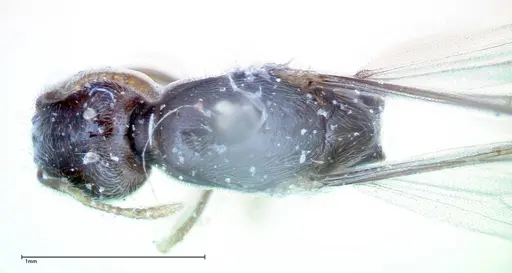
Irodalom
Elterjedési térkép betöltése...Termékek betöltése...