
Cardiocondyla opaca
- Tud. név
- Cardiocondyla opaca
- Nemzetség
- Crematogastrini
- Alcsalád
- Myrmicinae
- Szerző
- Seifert, 2003
- Elterjedés
- 0 országban megtalálható
Bevezetés
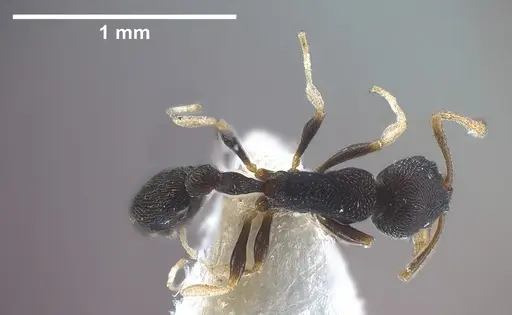
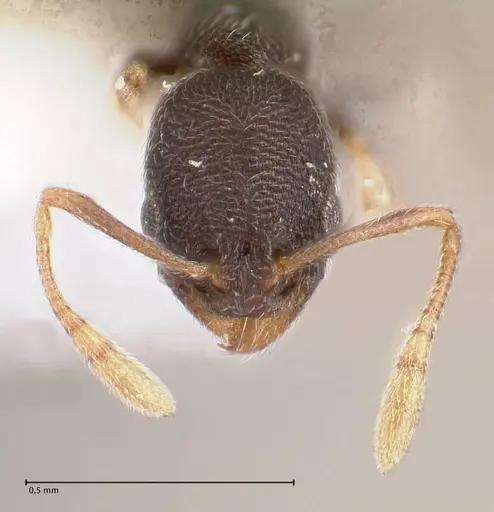
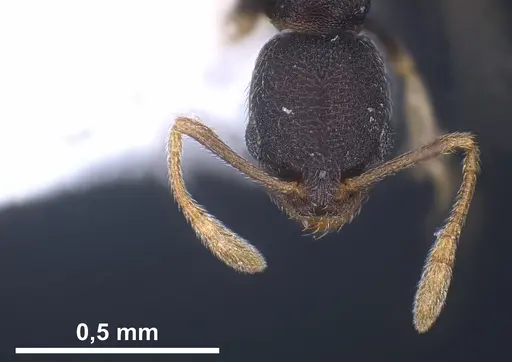
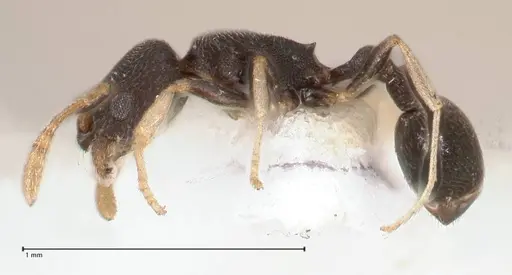
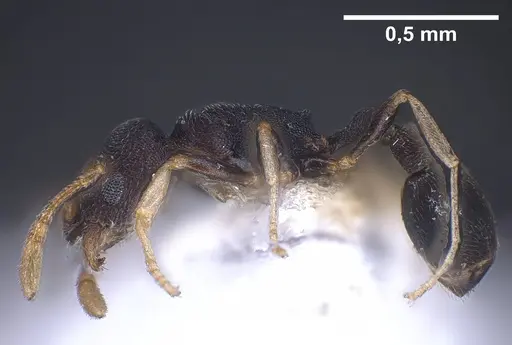
Cardiocondyla opaca is an extremely rare tiny ant species known only from a single worker specimen collected in the Cotigao Sanctuary in southwestern India. Workers have a very elongated head and notably long antennae scapes compared to any other species in the Cardiocondyla minutior group . The most distinctive feature is the perfectly matt (dull, non-shiny) surface of the entire body, including the abdomen, caused by a very dense microsculpture . The body is blackish with light-brown antennae and whitish-yellow legs . This species has only been recorded from Goa and Karnataka in India at approximately 100m elevation . Nothing is currently known about this species' biology, colony structure, or behavior in captivity - it remains one of the most poorly known ants in the world.
Quick Summary
- Difficulty: Unknown
- Origin & Habitat: Endemic to southwestern India (Goa and Karnataka states), found in the Cotigao Sanctuary at approximately 100m elevation in the Indomalaya region [3][1]. The single known specimen was collected in a protected forest area.
- Colony Type: Unknown, only a single worker has ever been documented. No queen, male, or colony specimens have been collected or described.
- Size & Growth:
- Queen: Size data unavailable, queen has not been described [2]
- Worker: Size data unavailable, only head measurement (CS 424 µm) exists, full body length not recorded [2][1]
- Colony: Unknown, no colony data exists
- Growth: Unknown
- Development: Unknown, no development data available (Development timeline has not been studied.)
- Antkeeping:
- Temperature: Unknown for this species. Based on its origin in southwestern India (Goa, a tropical coastal region), it likely prefers warm conditions. Start in the mid-range around 24-26°C and observe colony activity.
- Humidity: Unknown. The Cotigao Sanctuary is a tropical forest area, suggesting moderate to high humidity preferences. Keep nest substrate lightly moist but not waterlogged.
- Diapause: Unknown, no seasonal data exists. Given its tropical origin in Goa, it likely does not require a true hibernation period.
- Nesting: Unknown, no natural nesting observations exist. Based on related species in the genus, they likely nest in small cavities in soil, rotting wood, or under stones. Use small test tubes or a tiny formicarium with tight chambers scaled to their minute size.
- Behavior: Completely unknown, no behavioral observations have been documented for this species. Based on genus patterns, Cardiocondyla ants are typically non-aggressive, cryptic, and forage individually or in small groups. They are likely shy and may escape easily due to their extremely small size. Use excellent escape prevention with fine mesh barriers.
- Common Issues: escape prevention is critical due to their extremely tiny size, they can squeeze through standard test tube barriers, no biological data exists, keepers will be pioneers in learning to keep this species, slow growth is likely given their minute size, do not overfeed or disturb founding colonies, humidity control is important but specific needs are unknown, monitor for drying out, no established feeding guidelines exist, start with standard ant foods and observe acceptance
Discovery and Rarity
Cardiocondyla opaca represents one of the rarest and least-known ant species in the world. It was described in 2003 by Bernhard Seifert based on a single worker specimen collected in the Cotigao (Cortigao) Sanctuary in Goa, southwestern India [2]. The specimen was collected in January 1997 by researchers A. Schulz and K. Vock at an elevation of approximately 100 meters [1]. Despite being endemic to India with records from both Goa and Karnataka states [3], no additional specimens have been found since, and nothing is known about its biology, colony structure, or behavior in the wild.
Identification and Morphology
This species is a member of the Cardiocondyla minutior species group, which contains small, cryptic ants [4]. Workers are extremely tiny, only the head measurement has been recorded (CS 424 µm) [2]. The most distinctive morphological feature is the perfectly matt (completely dull, non-shiny) surface of the entire body including the gaster (abdomen), caused by a very dense and fine microsculpture [1]. They have a very elongated head (CL/CW 1.253) and notably long antennae scapes that are longer than any other species in the C. minutior group (SL/CS 0.836) [1]. The body is blackish except for light-brown antennae, trochanter, and distal ends of femora, with whitish-yellow tibiae and tarsi [2]. These subtle morphological differences distinguish it from related species like C. carbonaria, C. goa, C. minutior, and C. tjibodana [1].
Housing and Care Recommendations
Since no captive care information exists for this species, keepers must start with informed estimates based on related Cardiocondyla species and the species' origin in southwestern India. The type locality in Goa is a tropical coastal region with warm temperatures year-round, suggesting the species prefers warm, stable conditions. Use a small test tube setup or tiny formicarium with chambers scaled to their minute size, standard ant keeping equipment will be far too large. Excellent escape prevention is critical since they can easily slip through standard barriers. Keep the nest substrate lightly moist but not saturated. Start with a varied diet including small live prey (fruit flies, springtails), honey or sugar water, and observe what the colony accepts. This species represents a true pioneer keeping opportunity, every observation contributes to scientific knowledge.
Future Research Opportunities
Cardiocondyla opaca offers a unique opportunity for antkeepers to contribute original knowledge to science. Since no biological data exists for this species, any captive observations regarding founding behavior, colony development, worker behavior, temperature preferences, humidity needs, or diet acceptance would be scientifically valuable. Keep detailed records of your colony's behavior and consider sharing findings with myrmecologists. The species was redescribed in 2022 by Seifert, confirming its distinct status within the genus [1], but fundamental questions about its biology remain unanswered.
Frequently Asked Questions
How long does it take for Cardiocondyla opaca to develop from egg to worker?
This is unknown, no development data exists for this species.
What do Cardiocondyla opaca ants eat?
No feeding observations exist for this species. Based on related species, they likely accept small live prey (fruit flies, springtails), honeydew, and sugar water. Start with varied foods and observe acceptance.
Are Cardiocondyla opaca ants good for beginners?
This cannot be determined. Since no biological or captive care information exists, this species is entirely experimental. Only experienced antkeepers willing to document their findings should attempt to keep it.
What temperature should I keep Cardiocondyla opaca at?
No specific temperature requirements are known. Based on its origin in Goa, India (a tropical region), aim for warm conditions around 24-26°C and observe colony activity for guidance.
Do Cardiocondyla opaca ants need hibernation?
Unknown, no seasonal data exists. Given its tropical origin in southwestern India, a true hibernation period is unlikely.
How big do Cardiocondyla opaca colonies get?
Unknown, no colony size data exists. Related species in the genus typically form small colonies.
Can I keep multiple Cardiocondyla opaca queens together?
Unknown, no colony structure data exists for this species. The colony type (single-queen or multi-queen) has not been documented.
What size nest should I use for Cardiocondyla opaca?
Use the smallest available setup, their workers are extremely small. Standard test tubes will be too large, consider custom tiny setups or very small formicarium chambers.
Do Cardiocondyla opaca ants sting?
Unknown, no defense or sting observations exist. Given their extremely small size, any sting would likely be negligible to humans.
Where can I get Cardiocondyla opaca for my ant collection?
This species is extremely rare in the antkeeping hobby. It has only been found in the Cotigao Sanctuary in Goa, India. No captive colonies are known to exist. Acquisition would require field collection in India, which may be restricted.
Report an Issue
The current care sheet is based fully on literature. See inconsistencies, or something that's incorrect? Please , it will be resolved after review from an admin. Contributing to the blogs tab also helps providing information, to make us be able to further improve the caresheets. Thank you for your support!
References

Ez a tartási útmutató a következő licenc alatt áll: CC BY-SA 4.0 .
Közösségi blogok
FOCOL0732
Megtekintés az AntWeb-en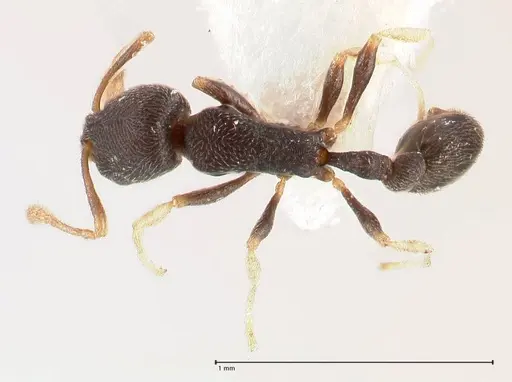
Irodalom
Elterjedési térkép betöltése...Termékek betöltése...