
Camponotus korthalsiae
- Tud. név
- Camponotus korthalsiae
- Alnem
- Myrmoplatys
- Nemzetség
- Camponotini
- Alcsalád
- Formicinae
- Szerző
- Emery, 1887
- Elterjedés
- 0 országban megtalálható
Bevezetés
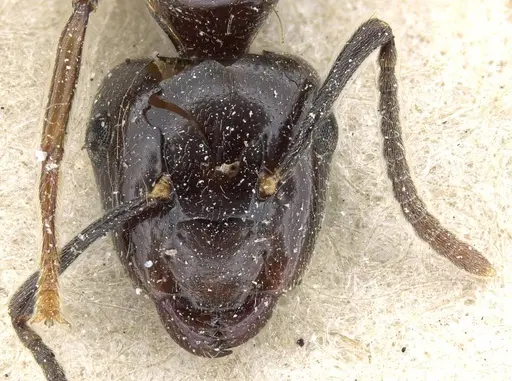
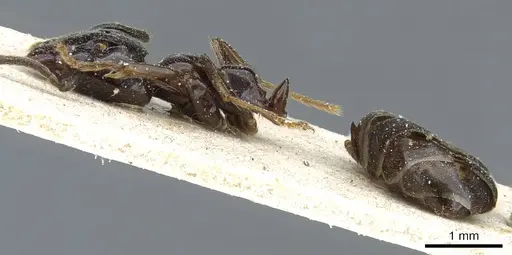
Camponotus korthalsiae is an arboreal ant species native to Indonesia, specifically found in Sumatra and the Mentawei Islands. Workers are dark brown with distinctive erect hairs on their mesosoma, petiole, and gastral dorsum. Queens have a microsculptured, matte body and are entirely brown in coloration. This species is unique because it nests exclusively inside the thickened leaf sheaths and stems of rattan palms (Korthalsia spp.), living its entire life in the tropical forest canopy .
Quick Summary
- Difficulty: Medium
- Origin & Habitat: Tropical Indonesia (Sumatra and Mentawei Islands), exclusively arboreal, nesting inside rattan palm plants in the forest canopy [1][2][3]
- Colony Type: Colony structure in the wild has not been documented. Based on typical Camponotus patterns, likely single-queen colonies.
- Size & Growth:
- Queen: Size data unavailable, no measurements exist for this species
- Worker: Size data unavailable, no measurements exist for this species
- Colony: Colony size data unavailable
- Growth: Growth rate data unavailable
- Development: Development time unconfirmed, no species-specific studies available (Development is likely temperature-dependent as with other tropical ants)
- Antkeeping:
- Temperature: Keep at 24-28°C, these are tropical arboreal ants that need warm, stable conditions. A heating cable on one side of the nest can help maintain optimal warmth.
- Humidity: Moderate to high humidity (60-80%). As arboreal ants from humid tropical forests, they need moisture but also good ventilation to prevent mold. Mist the nest occasionally and provide a water tube.
- Diapause: No, being a tropical species from near the equator, they do not require hibernation or winter rest. Keep temperatures consistent year-round.
- Nesting: These ants naturally nest inside plant stems. In captivity, they do well in Y-tong (AAC) nests or plaster nests with narrow chambers. The key is providing a nest with small passages scaled to their size. Avoid large, open spaces.
- Behavior: These ants are relatively docile and not aggressive toward keepers. They are arboreal, so they prefer to travel along branches and surfaces rather than across open ground. Workers are active foragers that will search for food throughout their enclosure. Escape prevention is important, use standard barriers, though they are not particularly escape-prone like some tiny species.
- Common Issues: tropical species needs warmth, temperatures below 22°C can slow activity and affect brood development, arboreal nesting means they prefer elevated spaces, ensure they have proper climbing structures, wild-caught colonies may be stressed from their specialized habitat and difficult to establish, mold can be an issue if humidity is too high without ventilation, balance moisture with airflow, size data is unavailable making it difficult to determine exact chamber sizing needs
Natural History and Nesting
Camponotus korthalsiae is a specialized arboreal ant that lives exclusively inside rattan palms (Korthalsia species). The thickened leaf sheaths and stems of these spiny palm plants provide dark, protected spaces that stay relatively stable. This is unusual because most ant species nest in soil, rotting wood, or under stones. The workers have distinctive erect hairs across their body that may help them navigate the rough interior surfaces of rattan stems. They are strictly arboreal, meaning they never come down to the ground [1][3].
Housing and Enclosure Setup
Since these ants are arboreal, your setup should include plenty of vertical space and climbing structures. A Y-tong (AAC) nest works well, these provide the dark, enclosed chambers they naturally prefer. Connect the nest to an outworld with branches, cork, or other climbing surfaces. The outworld should allow workers to forage while still feeling secure. Use standard escape prevention (Fluon on glass edges, baby powder barriers). A small water tube in the outworld provides drinking water.
Feeding and Diet
Like other Camponotus species, these ants are omnivorous. They will readily accept sugar sources (honey, sugar water) for energy, and protein sources for brood development. Offer small insects like fruit flies, small crickets, or mealworms. Since they are arboreal foragers, place food on elevated surfaces rather than the floor of the outworld. Feed them a few times per week, offer protein when you see brood developing, and keep sugar water available constantly. Remove any uneaten prey after 24-48 hours to prevent mold.
Temperature and Seasonal Care
Being a tropical species from near the equator, Camponotus korthalsiae does not experience cold winters and does not require diapause or hibernation. Keep their environment consistently warm at 24-28°C. This temperature range supports active foraging and healthy brood development. A slight temperature gradient (warmer on one side of the nest) allows the colony to self-regulate. If your room temperature is below 24°C, use a heating cable placed on top of the nest (never under it, as direct heat can dry them out). Avoid temperature fluctuations and drafts.
Behavior and Colony Dynamics
This species has been studied for rescue behavior and was found to not exhibit rescue responses when trapped. This makes sense given their arboreal lifestyle where entrapment in soil or antlion pits would be rare [4][5]. Workers are moderately active and will establish foraging trails. Queens are long-lived as is typical for Camponotus, and the colony will persist for many years with proper care.
Frequently Asked Questions
How long does it take for Camponotus korthalsiae to raise first workers?
Development time is unconfirmed for this species. Based on typical Camponotus patterns, expect several months for the queen to raise her first nanitic workers. The queen will remain sealed in while raising her first brood.
What do Camponotus korthalsiae ants eat?
They are omnivorous. Offer sugar water or honey constantly for energy, and small insects (fruit flies, small crickets, mealworms) 2-3 times per week for protein. Place food on elevated surfaces since they are arboreal.
Do Camponotus korthalsiae ants need hibernation?
No. Being a tropical species from Indonesia, they do not require hibernation or winter rest. Keep temperatures consistent year-round at 24-28°C.
What size colony do Camponotus korthalsiae reach?
Colony size data is unavailable for this species. Based on typical Camponotus patterns, colonies likely grow to several hundred workers over several years.
Are Camponotus korthalsiae good for beginners?
This species is rated Medium difficulty. They are more specialized than common pet ants because they are arboreal and need specific conditions. However, they are not as demanding as some exotic species. They are a good choice if you want something more challenging than beginner species.
What nest type is best for Camponotus korthalsiae?
Y-tong (AAC) nests or plaster nests work well. The key is providing dark, enclosed chambers. They are arboreal so they prefer elevated positions and climbing structures in their outworld.
Why is my Camponotus korthalsiae colony not growing?
Check that temperatures are warm enough (24-28°C), humidity is adequate but not excessive, and the queen is still laying eggs. Also ensure they have enough protein food. Slow growth can also be normal in the first few months as the colony establishes.
Can I keep multiple Camponotus korthalsiae queens together?
Colony type is unconfirmed for this species. Combining unrelated queens is not recommended as they will likely fight. Only keep one queen per colony.
Where is Camponotus korthalsiae found in the wild?
This species is native to Indonesia, specifically Sumatra and the Mentawei Islands. They live exclusively inside rattan palm plants (Korthalsia spp.) in the forest canopy [2][1][3].
Report an Issue
The current care sheet is based fully on literature. See inconsistencies, or something that's incorrect? Please , it will be resolved after review from an admin. Contributing to the blogs tab also helps providing information, to make us be able to further improve the caresheets. Thank you for your support!
References

Ez a tartási útmutató a következő licenc alatt áll: CC BY-SA 4.0 .
Közösségi blogok
CASENT0905443
Megtekintés az AntWeb-en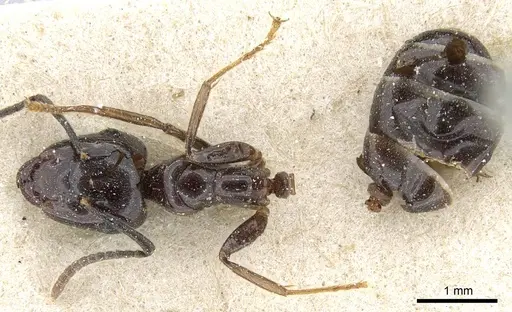
Irodalom
Elterjedési térkép betöltése...Termékek betöltése...