
Camponotus consanguineus
- Tud. név
- Camponotus consanguineus
- Alnem
- Myrmepomis
- Nemzetség
- Camponotini
- Alcsalád
- Formicinae
- Szerző
- Smith, 1861
- Elterjedés
- 0 országban megtalálható
Bevezetés
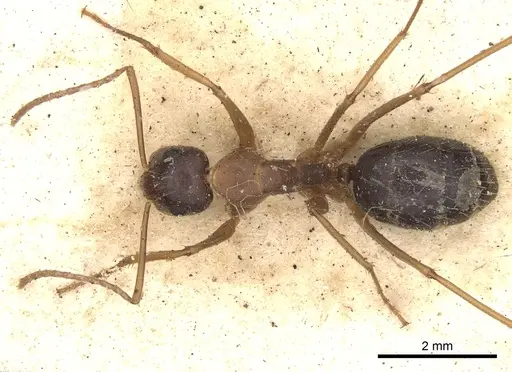
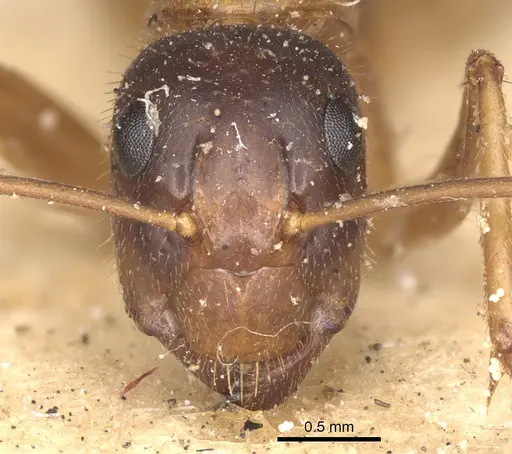
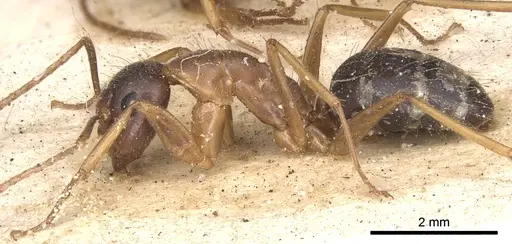
Camponotus consanguineus is a carpenter ant species native to the Indonesian island of Sulawesi (formerly Celebes). Workers are polymorphic, meaning they come in different sizes - minor workers are smaller and slender, while major workers have larger, more robust heads. The species has the typical Camponotus appearance with a smooth, rounded mesosoma and a single node between the thorax and abdomen. Queens are large with a bulky thorax built for independent founding. The coloration is generally dark brown to black, similar to many other carpenter ants. This species is known from the Tondano region of northern Sulawesi .
Quick Summary
- Difficulty: Medium
- Origin & Habitat: Native to Sulawesi (Celebes), Indonesia, specifically the Tondano region. In the wild, these ants likely nest in rotting wood in tropical forest areas [1].
- Colony Type: Colony structure is unconfirmed. Based on typical Camponotus patterns, likely single-queen colonies.
- Size & Growth:
- Queen: ~15-18mm, inferred from Camponotus genus patterns
- Worker: ~6-12mm polymorphic (minor workers smaller, majors larger), inferred from Camponotus genus patterns
- Colony: Up to several thousand workers at maturity, typical for Camponotus
- Growth: Moderate
- Development: 8-12 weeks from egg to first worker at optimal temperature, based on typical Camponotus development (First workers (nanitics) are smaller than normal workers. Development is faster at warmer temperatures within the tropical range.)
- Antkeeping:
- Temperature: Keep between 24-28°C. As a tropical species from Sulawesi, they prefer warm conditions.
- Humidity: High humidity preferred, aim for 60-80%. Keep the nest substrate consistently moist but not waterlogged.
- Diapause: No, being a tropical species, they do not require hibernation. Keep temperatures stable year-round.
- Nesting: Carpenter ants nest in wood, so they do well in Y-tong (AAC) nests, plaster nests, or naturalistic setups with rotting wood. Avoid overly dry conditions.
- Behavior: Typical carpenter ant temperament, generally calm and not aggressive toward keepers. Workers are active foragers that search for sugar sources and protein. Major workers defend the nest and process food. They are not known to be escape artists, but ensure enclosures are secure. Workers can emit formic acid as a defense when threatened.
- Common Issues: slow initial growth can frustrate beginners, first workers may take 2-3 months, and colonies often stall during this period, dry conditions are problematic, this tropical species needs humidity, dry nests lead to brood death, wild-caught colonies may arrive with parasites or diseases that can decimate the colony, queen loss during founding is common, claustral queens should not be disturbed during the founding phase, overheating is a risk, while they need warmth, direct heat sources can dry out the nest and kill the colony
Nest Preferences
Camponotus consanguineus does well in Y-tong (AAC) nests, which provide the dark, humid environment they prefer. Plaster nests with water reservoirs also work well for maintaining humidity. Naturalistic setups with rotting wood chunks mimic their natural habitat. Avoid test tube setups for established colonies, they need more space and the ability to regulate humidity. The nest should have chambers large enough for the colony to expand but not so large that the ants feel exposed. A humidity gradient within the nest allows the colony to choose optimal conditions.
Feeding and Diet
Like most Camponotus species, C. consanguineus is omnivorous with a preference for sugar sources. Offer sugar water, honey, or ripe fruit as a constant carbohydrate source. For protein, provide insects like fruit flies, small crickets, mealworms, or frozen bloodworms. Feed protein 2-3 times per week, and keep sugar available at all times. Remove uneaten prey after 24-48 hours to prevent mold. This species is not a specialized predator, so standard ant feeding protocols work well.
Temperature and Care
Maintain temperatures between 24-28°C year-round. Being a tropical species from Sulawesi, they do not tolerate cool temperatures well and should not be exposed to temperatures below 20°C. Use a heating cable or mat on one side of the nest to create a temperature gradient, allowing the colony to self-regulate. Place the heat source on top of the nest, not underneath, to avoid drying out the substrate. Room temperature within this range is acceptable without additional heating in most homes. Monitor humidity closely, aim for 60-80% in the nest area.
Behavior and Temperament
Camponotus consanguineus has a calm temperament typical of carpenter ants. Workers are moderately active and will readily forage for food. Major workers use their larger heads to process food and defend the nest, but they are not particularly aggressive toward keepers. When threatened, workers may bite and emit formic acid, though this is a mild defense. The species is not known for escape attempts, but standard secure enclosures are still recommended. Workers are primarily nocturnal or crepuscular in activity patterns, though they will forage during the day when food is available.
Colony Growth Timeline
Expect 8-12 weeks from egg to first worker at optimal temperature. The founding queen will lay a small batch of eggs, which develop through larvae and pupae to become the first workers. These nanitics are smaller than normal workers but will begin foraging to support the colony. After the first workers emerge, growth accelerates, the colony should reach 50-100 workers within 6-12 months. Full maturity with several thousand workers takes 2-4 years. During the founding phase, minimize disturbances, the queen needs darkness and stability to succeed.
Frequently Asked Questions
How long does it take for Camponotus consanguineus to get first workers?
First workers typically emerge 8-12 weeks after the queen lays eggs, assuming temperatures are maintained at 24-28°C. This is the founding period where the queen seals herself in and raises the first brood alone. Avoid disturbing the setup during this time.
Do Camponotus consanguineus ants need hibernation?
No, they do not need hibernation. Being a tropical species from Sulawesi, Indonesia, they require year-round warmth (24-28°C) and humidity. Do not expose them to cold temperatures or attempt to cool them for winter.
What do I feed Camponotus consanguineus?
Offer a constant sugar source (sugar water, honey, or ripe fruit) and protein 2-3 times per week (fruit flies, small crickets, mealworms, or frozen bloodworms). Remove uneaten food after 24-48 hours to prevent mold.
Are Camponotus consanguineus good for beginners?
They are intermediate difficulty. The main challenges are their need for high humidity and warm temperatures, plus slow growth during the founding phase. Beginners should be prepared for the 2-3 month wait before first workers and must maintain proper humidity levels.
What size colony does Camponotus consanguineus reach?
Mature colonies reach up to several thousand workers over 2-4 years. They are polymorphic, minor workers are around 6-8mm and majors can reach 10-12mm.
When should I move Camponotus consanguineus to a formicarium?
Wait until the colony has at least 50-100 workers before moving from a test tube setup. The colony should be actively foraging and outgrowing the test tube. Have the formicarium set up and ready with proper humidity before the transfer.
Can I keep multiple Camponotus consanguineus queens together?
This is not recommended. Colony structure is unconfirmed, but based on typical Camponotus patterns, they likely form single-queen colonies. Only keep one queen per colony.
Why is my Camponotus consanguineus colony not growing?
Common causes include: temperatures too low (below 24°C), humidity too low (below 60%), disturbing the queen during founding, or poor feeding. Check all parameters and ensure the queen is still alive and laying eggs.
What humidity level do Camponotus consanguineus need?
Aim for 60-80% humidity in the nest area. Use a moisture reservoir in your nest setup and monitor with a hygrometer. The substrate should feel consistently moist but not waterlogged.
Report an Issue
The current care sheet is based fully on literature. See inconsistencies, or something that's incorrect? Please , it will be resolved after review from an admin. Contributing to the blogs tab also helps providing information, to make us be able to further improve the caresheets. Thank you for your support!
References

Ez a tartási útmutató a következő licenc alatt áll: CC BY-SA 4.0 .
Közösségi blogok
CASENT0901910
Megtekintés az AntWeb-en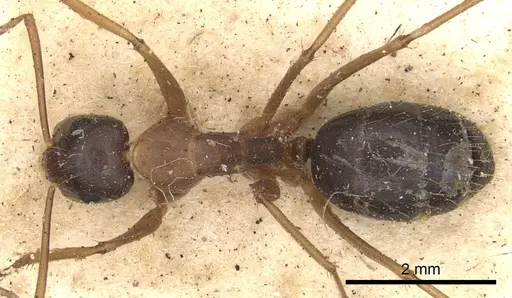
Irodalom
Elterjedési térkép betöltése...Termékek betöltése...