
Azteca crassicornis
- Tud. név
- Azteca crassicornis
- Nemzetség
- Leptomyrmecini
- Alcsalád
- Dolichoderinae
- Szerző
- Emery, 1893
- Elterjedés
- 0 országban megtalálható
Bevezetés
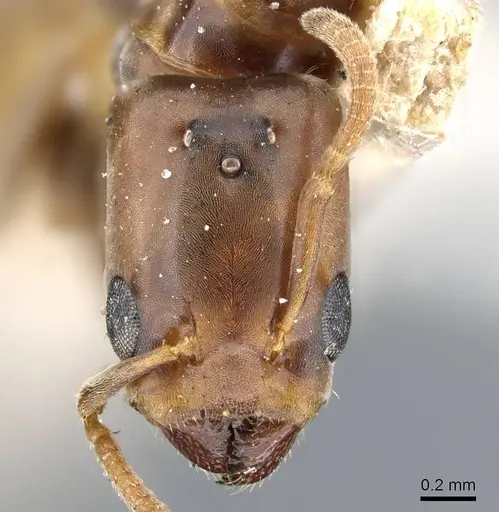
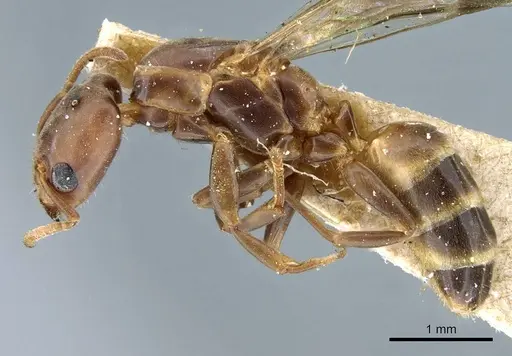
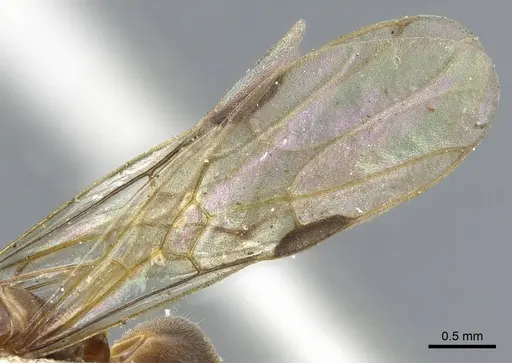
Azteca crassicornis is known only from two specimens collected in Pará, Brazil in the 1890s . Workers measure 5-5.5 mm and display a reddish-testaceous coloration with ferruginous mandibles and a brownish abdomen . Their most distinctive feature is their short, thick antennae with segments that are wider than they are long . The head is reddish, the body has a silky sheen with scattered hairs, and the wings are pale yellowish with brownish veins . Beyond this physical description, nothing is known of their biology, behavior, or colony structure.
Quick Summary
- Difficulty: Expert
- Origin & Habitat: Brazil (Pará), Neotropical region [1][2]. Specific habitat preferences are undocumented.
- Colony Type: Unconfirmed
- Size & Growth:
- Antkeeping:
- Temperature: Unknown. Tropical Brazilian origin suggests warm conditions may be appropriate, but specific requirements are unconfirmed.
- Humidity: Unknown
- Diapause: Unknown, tropical species likely does not require diapause
- Nesting: Unknown
- Behavior: Undocumented. The species is only known from two preserved specimens collected in 1893 [1]. As a Dolichoderine ant, they lack a functional sting and use chemical defense secretions instead.
- Common Issues: complete lack of biological data makes captive care experimental and high-risk., extreme rarity in scientific collections suggests specialized habitat requirements that are unknown., risk of misidentification with other Azteca species due to limited reference material., no captive colonies have ever been documented, any keeping attempt would be unprecedented.
Taxonomic History and Rarity
Azteca crassicornis was described by Carlo Emery in 1893 based on just two specimens collected by Albert Schulz in Pará, Brazil [1]. These specimens arrived after Emery's monograph on the genus was already completed and the plates engraved, so they were never illustrated [1]. The species has remained virtually unknown in the scientific literature since its original description, with no subsequent collections or biological observations documented in the available research [2].
Morphological Identification
The type specimens measure 5-5.5 mm and show a reddish-testaceous coloration with ferruginous mandibles [1]. The abdomen is brownish or brown, while the head is reddish and the thoracic sutures, petiole, and legs are partly testaceous [1]. The body surface is not very shiny, appearing silky with scattered hairs, but the tibiae and antennal scapes lack erect hairs entirely [1]. Key distinguishing features include antennae that are shorter and thicker than related species, with the flagellum segments strongly transverse (wider than they are long) [1]. The petiole profile is intermediate between A. longiceps and A. bicolor, with a posterior face that is plane and narrowed above [1]. The two type specimens differed significantly in coloration, with the lighter specimen having paler wings and appearing immature [1].
Defense Mechanism
As a member of the subfamily Dolichoderinae (tribe Leptomyrmecini), Azteca crassicornis lacks a functional sting. Instead, they defend using chemical compounds secreted from a slit-like opening at the tip of the abdomen. This smear defense is typical of Dolichoderine ants.
Captive Care Considerations
Maintaining Azteca crassicornis would be entirely experimental given the complete absence of biological data beyond the original type description. No information exists regarding colony founding behavior, dietary requirements, nesting preferences, temperature needs, or social structure [1][2]. While the tropical Brazilian origin suggests warm temperatures and high humidity might be appropriate, these are unconfirmed assumptions. Any attempt to keep this species would require extensive documentation and observation to establish even basic care parameters.
Frequently Asked Questions
What do Azteca crassicornis look like?
They measure 5-5.5 mm with reddish-testaceous bodies, ferruginous mandibles, and brownish abdomens [1]. Their antennae are notably short and thick compared to other Azteca species, with flagellum segments that are wider than they are long [1].
Where are Azteca crassicornis found?
They are only known from Pará, Brazil, where two specimens were collected in the 1890s [1][2].
How big do Azteca crassicornis colonies get?
Colony size is completely unknown. No nests have ever been documented [1][2].
What do Azteca crassicornis eat?
Diet is unknown. No foraging behavior or food preferences have been observed [1].
Do Azteca crassicornis need heating?
Specific temperature requirements are unknown. Their tropical Brazilian origin suggests they likely need warm conditions, but this is unconfirmed.
Are Azteca crassicornis good for beginners?
No. This species is only suitable for expert-level keepers willing to conduct experimental care, as absolutely no captive care information exists [1][2].
How long until Azteca crassicornis get their first workers?
Development time from egg to worker is unknown for this species [1].
Can I keep multiple Azteca crassicornis queens together?
Colony structure (single queen vs. multiple queens) is unconfirmed for this species [1].
Why are my Azteca crassicornis dying?
Given that no captive colonies have been documented, mortality causes are unknown. The complete lack of care information means any captive attempt is experimental [1][2].
Report an Issue
The current care sheet is based fully on literature. See inconsistencies, or something that's incorrect? Please , it will be resolved after review from an admin. Contributing to the blogs tab also helps providing information, to make us be able to further improve the caresheets. Thank you for your support!
References

Ez a tartási útmutató a következő licenc alatt áll: CC BY-SA 4.0 .
Közösségi blogok
CASENT0905104
Megtekintés az AntWeb-en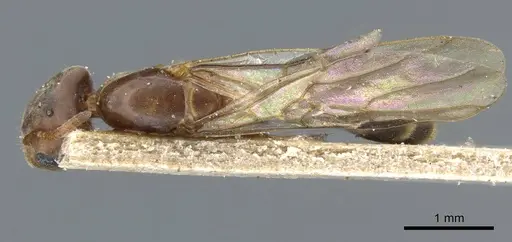
Irodalom
Elterjedési térkép betöltése...Termékek betöltése...