
Ancyridris rupicapra
- Tud. név
- Ancyridris rupicapra
- Nemzetség
- Crematogastrini
- Alcsalád
- Myrmicinae
- Szerző
- Stitz, 1938
- Elterjedés
- 0 országban megtalálható
Bevezetés
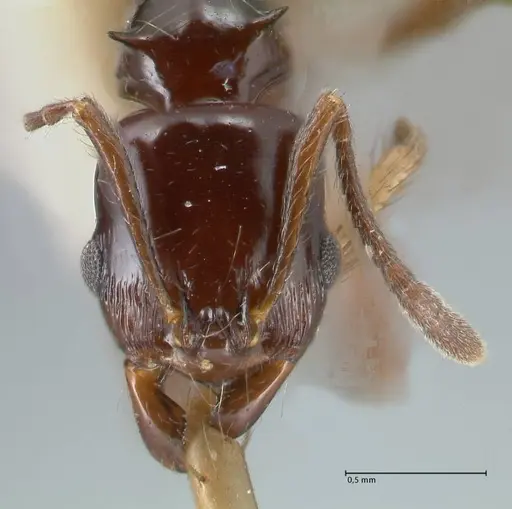
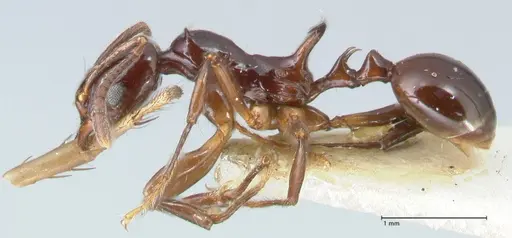
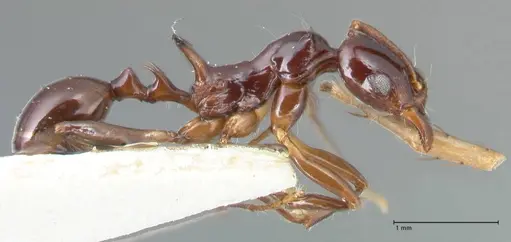
Ancyridris rupicapra is one of the rarest ants on Earth - scientists have only ever documented a single worker specimen collected in Papua New Guinea . This solitary individual represents everything known about the species. Workers are reddish-brown, earning them the nickname 'red goat' ant (rupicapra means red goat in Latin), and carry distinctive hooked spines on their back that curve toward the head, plus elongated spines on the waist that bend backward . These spines give them a silhouette similar to Aphaenogaster or certain Pheidole workers . Beyond this single preserved worker, the species remains completely unknown - no queen, no nest, and no living colony has ever been observed .
Quick Summary
- Difficulty: Expert
- Origin & Habitat: Papua New Guinea (historically German New Guinea), exact microhabitat unknown but likely tropical forest [1][2]
- Colony Type: Unknown, only worker caste known [1]
- Size & Growth:
- Antkeeping:
- Temperature: Unknown, likely tropical given New Guinea origin, start around 24-26°C and observe
- Humidity: Unknown, likely high humidity given tropical forest location
- Diapause: Unknown, likely not required for tropical species
- Nesting: Unknown
- Behavior: Unknown, insufficient data from single specimen. Members of Myrmicinae typically use a smear defense mechanism, wiping venom onto enemies with a modified stinger, but this has not been confirmed for this specific species.
- Common Issues: only one specimen exists in collections, captive keeping has never been documented., no information available on diet, nesting preferences, or colony structure., extremely unlikely to be available in the ant trade.
The Single Specimen and Taxonomic History
Everything we know about Ancyridris rupicapra comes from one worker collected during the Kaiserin-Augustafluss Expedition in German New Guinea (now Papua New Guinea) [1][2]. Stitz originally described this ant in 1938 as Pheidole (Pheidolacanthinus) rupicapra, but Bolton moved it to the new genus Ancyridris in 1995 when he realized it was distinct from Pheidole [2]. The specimen sits in the Museum für Naturkunde in Berlin [1]. No additional specimens have turned up in over 80 years of collecting, making this one of the most elusive ants in the world [1].
Physical Appearance and Identification
If you somehow encountered this ant, you would notice the spines first. Workers have long spines on their back with hooked ends that curve toward the head, plus elongated spines on the waist that bend backward [1]. These features distinguish them from similar-looking Aphaenogaster. The reddish-brown coloration inspired the common name 'red goat' [2]. The genus name Ancyridris comes from the Greek word for hook, referring to these spines [1]. Without these distinctive spines, they might look like small Pheidole workers [1].
The Genus and Its Mystery
Ancyridris contains only two species. While rupicapra remains a mystery, the other species appears to be a workerless parasite found in moss forests on Mount Kaindi near Edie Creek [2]. This suggests rupicapra might be the free-living host species, but this is speculation based on a single specimen [2]. The tribe Crematogastrini includes many species with varied lifestyles, but rupicapra's biology remains completely unstudied [1].
Captive Keeping Reality
You cannot keep Ancyridris rupicapra in captivity because no one has ever found a colony, queen, or even a live nest [1]. The single preserved specimen provides no information on diet, temperature needs, or nesting habits. If a colony were ever discovered, it would likely require expert-level care based on its rarity and unknown requirements. For now, this species belongs in museums and scientific papers, not formicariums.
Frequently Asked Questions
Can I keep Ancyridris rupicapra in a test tube?
No. Only one worker specimen exists in the world, and no one has ever found a colony or queen [1]. This species is not available in the ant trade and cannot be kept as a pet.
How long is the egg to worker timeline for Ancyridris rupicapra?
Unknown. No one has ever observed brood development in this species [1].
What do Ancyridris rupicapra ants eat?
Unknown. The diet of this species has never been studied [1].
Where does Ancyridris rupicapra live?
Papua New Guinea (historically German New Guinea), but the exact location and habitat of the single specimen are poorly documented [1][2].
Why is it called the red goat ant?
The name comes from the reddish-brown coloration of the single known specimen, 'rupicapra' means red goat in Latin [2].
Do Ancyridris rupicapra ants sting?
Unknown. No living colonies have been observed, so defensive behaviors are unstudied [1].
How big do Ancyridris rupicapra colonies get?
Unknown. Colony size, structure, and even whether they form large or small colonies remains a mystery [1].
Is Ancyridris rupicapra a parasitic ant?
Probably not. While the other species in the genus appears to be a workerless parasite, rupicapra is known from a worker, suggesting it is a free-living species [2].
Do Ancyridris rupicapra need hibernation?
Unknown. As a tropical New Guinea species, they likely do not require hibernation, but this is unconfirmed [1].
Are Ancyridris rupicapra good for beginners?
No. This species is not available to keepers and exists only as a museum specimen [1].
Report an Issue
The current care sheet is based fully on literature. See inconsistencies, or something that's incorrect? Please , it will be resolved after review from an admin. Contributing to the blogs tab also helps providing information, to make us be able to further improve the caresheets. Thank you for your support!
References

Ez a tartási útmutató a következő licenc alatt áll: CC BY-SA 4.0 .
Közösségi blogok
FOCOL1569
Megtekintés az AntWeb-en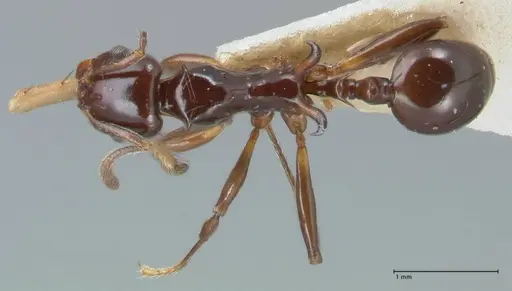
Irodalom
Elterjedési térkép betöltése...Termékek betöltése...