
Tetraponera parops
- Nom sci.
- Tetraponera parops
- Tribu
- Pseudomyrmecini
- Sous-famille
- Pseudomyrmecinae
- Auteur
- Ward, 2006
- Distribution
- Trouvé dans 0 pays
Introduction
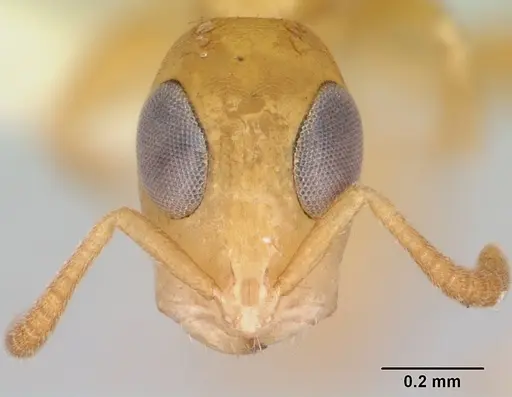
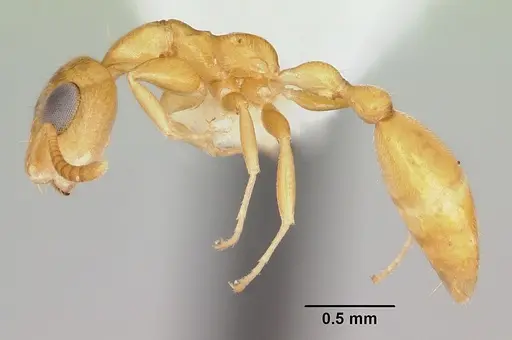
Tetraponera parops is a small ant species measuring around 2.5mm in total length . They have an elongate head, pale yellow to yellowish-brown coloration, and distinctive standing hairs on the upper half of the head - a key feature that separates them from the similar Tetraponera ophthalmica which only has 2-4 such hairs compared to Tetraponera parops's 12-22 . This species belongs to the Tetraponera ambigua group and is known only from arid and semi-arid regions of East Africa, specifically Kenya, Somalia, and Tanzania . Collectors have found colonies in dead twigs, typically on savannah trees like Vachellia and Lannea schweinfurthii .
Quick Summary
- Difficulty: Unknown, limited data available
- Origin & Habitat: Arid and semi-arid regions of East Africa (Kenya, Somalia, Tanzania). Colonies found in dead twigs on savannah trees [2][1].
- Colony Type: Unconfirmed, colony structure has not been documented in scientific literature
- Size & Growth:
- Queen: Undocumented, no queen total length measurements available
- Worker: ~2.5 mm total length [1]
- Colony: Unknown, only small collections of 14-19 individuals have been reported [1]
- Growth: Unknown
- Development: Unconfirmed, no development data available for this species (Related Tetraponera species may take a few weeks at warm temperatures, but this is an estimate only.)
- Antkeeping:
- Temperature: Likely tolerates warm conditions given arid habitat, start around 24-28°C and monitor colony activity. No direct temperature data exists.
- Humidity: Low to moderate, arid habitat suggests they prefer drier conditions. Allow the nest to dry out between waterings.
- Diapause: Unlikely, as an arid tropical species, they probably do not require a diapause period. Seasonal temperature drops may reduce activity but full hibernation is not expected.
- Nesting: In nature they nest in dead twigs, a standard test tube setup or a small Y-tong or plaster nest works well. They are arboreal-nesting ants, so provide vertical climbing space and branches.
- Behavior: Based on genus behavior, these ants are likely active foragers. Pseudomyrmecinae ants are typically alert and quick-moving with good vision. Their tiny 2.5mm size means escape prevention is critical, they can squeeze through very small gaps. As members of the sting-bearing subfamily, handle with care and avoid bare-hand contact.
- Common Issues: escape prevention is critical due to tiny 2.5mm size, use fine mesh barriers on all openings., limited care information means you must monitor colony response closely and adjust conditions gradually., dry conditions are preferred but too dry may cause desiccation, aim for a balance with occasional moisture., small size makes them vulnerable to injury during transfers, handle with extra care.
Identification and Distinction
Tetraponera parops belongs to the Tetraponera ambigua species group. Workers are small (about 2.5mm total length) and pale yellow to yellowish-brown [2][1]. They have 12-22 standing hairs on the upper half of the head, compared to only 2-4 in the similar Tetraponera ophthalmica [2]. Roughened patches of cuticle on the sides of the head near the posterior margin are also a key feature, these are absent in Tetraponera ophthalmica. Queens can be distinguished by a longitudinal line of roughened, punctate integument on the posterolateral corner of the head [2].
Natural History and Habitat
This species is known only from arid and semi-arid regions of East Africa: Kenya, Somalia, and Tanzania [2]. Colonies have been collected in dead twigs, often found on savannah trees including Vachellia (Acacia) species and Lannea schweinfurthii [1]. The type location is 4km NW of Watamu, Kenya [2]. The largest collections have only yielded 14-19 specimens, suggesting colonies may stay relatively small [1].
Housing and Nesting
In the wild, Tetraponera parops nests in dead twigs, this gives clear guidance for captive housing. A standard test tube setup (15-18mm diameter) with a water reservoir at the end works well. You can also use a small Y-tong or plaster nest with chambers scaled to their tiny size. Because they are arboreal nesters, they appreciate vertical climbing space and may benefit from small twigs or branches in the outworld. Excellent escape prevention is a must, use fine mesh on all ventilation holes and seal any gaps larger than 0.5mm. [2][1]
Feeding and Diet
The natural diet of Tetraponera parops is not documented, but Tetraponera species are typically omnivorous foragers. Based on related species, they likely consume small insects, honeydew, and may tend sap-feeding insects. In captivity, offer tiny protein sources like flightless fruit flies, pinhead crickets, or freshly hatched termites. For carbohydrates, offer a small drop of sugar water or honey water once a week. Prey items should be no larger than the ant's body size (about 2.5mm). Feed small amounts 2-3 times per week and remove uneaten food promptly to prevent mold.
Temperature and Seasonal Care
No specific temperature requirements are documented for Tetraponera parops, but their arid East African habitat suggests they prefer warm conditions. Start by keeping them at 24-28°C and observe colony activity, if workers are foraging actively, the temperature is likely appropriate. If they cluster and reduce activity, try warming slightly. Unlike temperate species, they probably do not need a diapause period. Room temperature (20-24°C) may be acceptable but likely supports slower development. Avoid sudden temperature swings.
Behavior and Temperament
As members of the Pseudomyrmecinae subfamily, Tetraponera parops ants have a functional sting and are alert, active foragers. They are quick-moving and likely nervous when disturbed. Their tiny size (2.5mm) makes them appear delicate, but they are probably robust given their arid habitat. Handle colony transfers gently, using a soft brush or aspirator, to avoid crushing them. While stings are not well-documented for this specific species, treat them with caution, related Pseudomyrmecinae can deliver mild stings.
Frequently Asked Questions
How long does it take for Tetraponera parops to develop from egg to worker?
The development timeline for Tetraponera parops has not been documented. Based on related Tetraponera species, it may take a few weeks at warm temperatures, but this is an estimate only.
What do Tetraponera parops ants eat?
Their natural diet is not specifically documented, but Tetraponera species are typically omnivorous. In captivity, offer tiny protein sources like flightless fruit flies, pinhead crickets, and freshly hatched termites. Sugar water or honey water can be offered for carbohydrates. Feed small amounts 2-3 times per week and remove uneaten food.
Can I keep Tetraponera parops in a test tube?
Yes, a standard test tube setup (15-18mm diameter with a water reservoir) is appropriate given they naturally nest in dead twigs. Ensure all ventilation openings are covered with fine mesh, their tiny 2.5mm size lets them squeeze through gaps that hold larger ants.
Do Tetraponera parops ants sting?
Yes, as a member of the Pseudomyrmecinae subfamily, they have a functional sting. Their sting is not well-documented for this specific species, so treat with caution and avoid handling with bare hands.
Are Tetraponera parops good for beginners?
This species is not well-documented in the antkeeping hobby, and very limited scientific data exists for care guidance. It may be challenging for beginners due to the lack of established care protocols. Consider starting with more commonly kept species until you have more experience.
What temperature do Tetraponera parops need?
No specific temperature data exists for this species. Based on their arid East African habitat, keep them warm at 24-28°C. Monitor colony activity, active foraging indicates the temperature is suitable.
How big do Tetraponera parops colonies get?
Colony size is not well documented. The largest wild collections have found only 14-19 specimens, suggesting colonies remain small. Maximum colony size is unknown.
Do Tetraponera parops need hibernation?
Unlikely, as an arid-tropical species from East Africa, they probably do not require a diapause period. They may show reduced activity during cooler periods but full hibernation is not expected.
Where is Tetraponera parops found?
This species is known only from arid and semi-arid regions of East Africa: Kenya, Somalia, and Tanzania. The type location is near Watamu, Kenya [2].
Why are my Tetraponera parops dying?
Without documented care requirements, troubleshooting is challenging. Common issues to check: escape through tiny gaps (use fine mesh), humidity that is too high for this arid-adapted species, temperature stress (avoid extremes), or stress from handling. Monitor closely and adjust conditions gradually based on colony response.
Report an Issue
The current care sheet is based fully on literature. See inconsistencies, or something that's incorrect? Please , it will be resolved after review from an admin. Contributing to the blogs tab also helps providing information, to make us be able to further improve the caresheets. Thank you for your support!
References

Cette fiche d'élevage est sous licence CC BY-SA 4.0 .
Blogs de la communauté
CASENT0106133
Voir sur AntWeb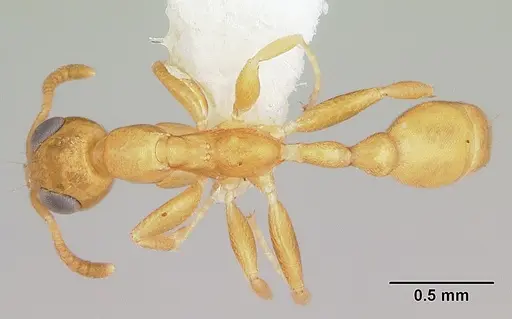
Littérature
Chargement de la carte de répartition...Chargement des produits...