
Tetraponera notabilis
- Nom sci.
- Tetraponera notabilis
- Tribu
- Pseudomyrmecini
- Sous-famille
- Pseudomyrmecinae
- Auteur
- Ward, 2001
- Distribution
- Trouvé dans 0 pays
Introduction
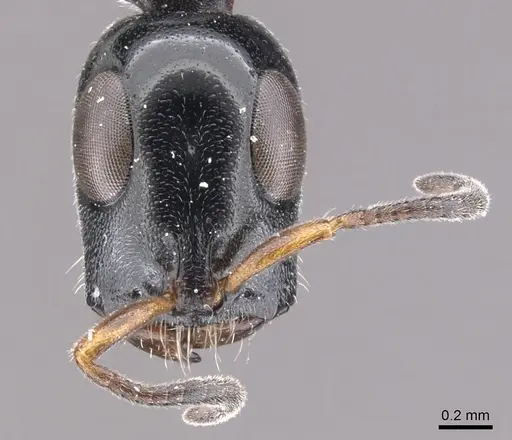
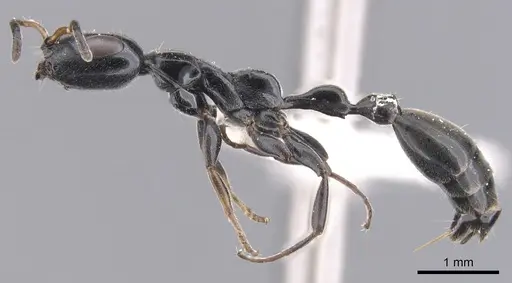
Tetraponera notabilis is a slender, medium-sized ant from the Pseudomyrmecinae subfamily. Workers are monomorphic, all the same size, with an elongate head and a very slender petiole that is much longer than it is high . The body is black, with dark brown mandibles, tarsi, and funicular segments, and lighter brown on the front legs, scape, and first funicular segment . Sharp posteroventral teeth on the petiole help tell it apart from similar species . This ant is native to northern Thailand, lowland rainforest sites in peninsular Malaysia, and Yunnan Province, China .
Quick Summary
- Difficulty: Medium
- Origin & Habitat: Native to northern Thailand, peninsular Malaysia, and Yunnan Province, China. Found in lowland rainforest habitats [3][2].
- Colony Type: Colony structure is unconfirmed. Based on typical Tetraponera patterns, likely single-queen (monogyne) colonies.
- Size & Growth:
- Queen: Size data unavailable, alate queen known from type locality but total length not measured [1].
- Worker: Size data unavailable, only head width measurements exist in literature (0.87-0.90 mm) [1].
- Colony: Unknown, no documented colony sizes for this species.
- Growth: Unknown, estimated moderate based on genus patterns.
- Development: Unconfirmed, estimated 6-10 weeks based on typical Pseudomyrmecinae development at tropical temperatures. (Development timeline has not been directly studied for this species. Estimates are based on genus-level data for related Tetraponera species.)
- Antkeeping:
- Temperature: Keep at 24-28°C, they are a tropical species from lowland rainforests. A slight gradient with warmer nesting areas is recommended [3].
- Humidity: High humidity required, aim for 70-85%. These tree-nesting ants prefer moist conditions similar to their rainforest habitat. Provide a water tube as a moisture source.
- Diapause: Unlikely required, as a tropical species from lowland habitats, they probably do not enter true diapause. However, a slight reduction in temperature during winter months may be appropriate [3].
- Nesting: Use a naturalistic setup or Y-tong/plaster nest. These ants naturally nest in hollow twigs, branches, and rotting wood in rainforest environments. Provide tight-fitting escape prevention as workers are small enough to escape through standard gaps.
- Behavior: Active, agile, and alert foragers. As Pseudomyrmecinae, they have a functional sting used to defend their host plants against herbivores. Workers are slender and quick-moving, adapted for navigating through vegetation. Escape prevention is critical due to their small size. They are generally non-aggressive toward keepers but will defend the colony if threatened. They likely forage for nectar, honeydew, and small prey.
- Common Issues: escape prevention is critical due to small worker size, use fine mesh and tight-fitting lids, high humidity requirements can lead to mold if ventilation is inadequate, tropical temperature needs may require heating in cooler climates, founding queens may fail if conditions are not stable, avoid disturbing them, overfeeding can cause spoilage and mold, especially uneaten prey
Housing and Nest Setup
Tetraponera notabilis naturally nests in hollow twigs, branches, and rotting wood within rainforest environments. In captivity, a naturalistic setup with carefully arranged twigs and branches works well, or you can use a Y-tong (AAC) nest with narrow chambers scaled to their size. Plaster nests also help maintain humidity. The key is providing a nest cavity that mimics their natural tree-nesting habitat, tight spaces with good humidity retention. Escape prevention is essential because workers are small enough to slip through standard gaps, use fine mesh on all ventilation holes and ensure lids fit tightly [1]. A test tube setup can work for founding colonies but monitor humidity carefully as these ants prefer moister conditions than many test tube setups provide.
Feeding and Diet
Based on typical Pseudomyrmecinae behavior, T. notabilis likely forages for nectar, honeydew from aphids and scale insects, and small arthropod prey. In captivity, offer sugar water or honey as a constant energy source. For protein, provide small live prey such as fruit flies, small crickets, or other appropriately-sized insects. They are active foragers so food should be offered every 2-3 days for growing colonies. Remove uneaten prey after 24 hours to prevent mold. Their slender body and quick movements suggest they are active hunters, so live prey may be preferred over pre-killed options.
Temperature and Humidity
As a tropical lowland rainforest species, T. notabilis requires warm and humid conditions [3]. Maintain temperatures between 24-28°C with a slight gradient if possible, warmer nesting areas around 26-28°C and slightly cooler foraging areas. Humidity should be kept at 70-85%. Use a water tube connected to the nest to provide constant moisture, and mist the outworld occasionally if needed. Avoid both drying out (which can kill brood) and stagnant air (which causes mold). A small ventilation hole or mesh top helps balance humidity with fresh air. If your room temperature falls below 24°C, use a heating cable on one side of the nest to maintain warmth.
Colony Development
The colony structure and founding behavior of T. notabilis have not been documented. Based on typical Tetraponera patterns, colonies are likely monogyne (single queen), but the founding type is unconfirmed, do not assume claustral or semi-claustral. The first workers (nanitics) will likely be smaller than mature workers. Colony growth rate is unknown but likely moderate, expect several months before you see significant worker numbers. Be patient with founding colonies as they are vulnerable to stress and require stable conditions. Do not disturb them unnecessarily.
Behavior and Temperament
Tetraponera notabilis ants are alert, quick-moving, and generally non-aggressive toward keepers. As Pseudomyrmecinae, they have a functional sting used to aggressively defend their host plants against browsing herbivores. Workers are slender with long legs, adapted for navigating through vegetation. They are diurnal foragers, actively searching for food during daylight hours. The most important behavioral note for keepers is their excellent escape ability despite small size, they can squeeze through remarkably small gaps [1]. Always use fine mesh (at least 0.5mm) for ventilation and check all lid seals regularly. Their tropical nature means they remain active year-round without hibernation, though you may notice reduced activity during winter months.
Frequently Asked Questions
How long does it take for Tetraponera notabilis to raise first workers?
The exact development timeline has not been documented for this species. Based on typical Pseudomyrmecinae development, expect 6-10 weeks from egg to first worker at optimal temperatures (26-28°C). Founding colonies may take longer as the queen raises nanitics alone.
Can I keep Tetraponera notabilis in a test tube?
Yes, test tubes can work for founding colonies, but monitor humidity closely. These ants prefer higher humidity than many test tube setups naturally provide. Consider adding a water tube or switching to a plaster/Y-tong nest once the colony has outgrown the test tube or when humidity becomes difficult to maintain.
Do Tetraponera notabilis ants sting?
Yes, as a member of the Pseudomyrmecinae subfamily, they have a functional sting and will use it to defend the colony. They are not considered dangerous to humans, but the sting can be painful.
What do Tetraponera notabilis eat?
Based on typical genus behavior, they likely accept sugar sources (honey, sugar water) and small live prey (fruit flies, small crickets). Offer sugar constantly and protein prey 2-3 times per week.
Are Tetraponera notabilis good for beginners?
This species is rated as medium difficulty. While not as challenging as some exotic species, they do require specific tropical conditions (high humidity, warm temperatures) that beginners may find challenging to maintain consistently.
Do Tetraponera notabilis need hibernation?
No, as a tropical lowland rainforest species, they do not require hibernation. They remain active year-round with stable warm temperatures. You may notice slightly reduced activity in winter months, but no formal diapause is needed [3].
How big do Tetraponera notabilis colonies get?
Colony size has not been documented for this specific species. It is unknown at this time.
Why are my Tetraponera notabilis escaping?
These ants are excellent escape artists due to their small size. Workers can squeeze through tiny gaps. Use fine mesh (0.5mm or smaller) on all ventilation, check lid seals regularly, and use barrier tape (fluon) on container rims [1].
Can I keep multiple Tetraponera notabilis queens together?
Colony structure is unconfirmed for this species. Based on typical Tetraponera patterns, they likely form single-queen colonies. Combining unrelated queens is not recommended as it has not been studied and may result in aggression.
When should I move Tetraponera notabilis to a formicarium?
Move from test tube to a larger nest setup (Y-tong, plaster, or naturalistic) when the colony has outgrown the test tube or when the test tube shows signs of drying out too quickly. Ensure the new setup maintains similar humidity levels.
Report an Issue
The current care sheet is based fully on literature. See inconsistencies, or something that's incorrect? Please , it will be resolved after review from an admin. Contributing to the blogs tab also helps providing information, to make us be able to further improve the caresheets. Thank you for your support!
References

Cette fiche d'élevage est sous licence CC BY-SA 4.0 .
Blogs de la communauté
CASENT0902829
Voir sur AntWeb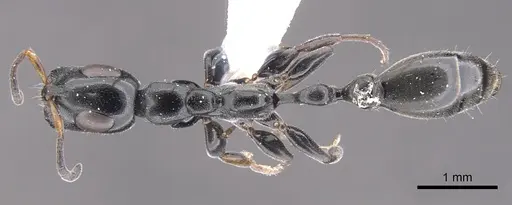
Littérature
Chargement de la carte de répartition...Chargement des produits...