
Tetramorium punctiventre
- Nom sci.
- Tetramorium punctiventre
- Tribu
- Crematogastrini
- Sous-famille
- Myrmicinae
- Auteur
- Emery, 1887
- Distribution
- Trouvé dans 0 pays
Introduction
Tetramorium punctiventre is a small ant species native to New Guinea, first described by Carlo Emery in 1887. The only known specimen is a queen measuring 3.5mm in total length, with a black body and reddish mandibles, antennae, tibiae, and tarsi. It has long propodeal spines, a transversely ovate petiole node, and a unique abdominal sculpture: the base of the first gaster segment is densely punctate with longitudinal rugulae, a feature rare in Tetramorium but more common in the related genus Triglyphothrix . Notably, the described queen was wingless, which may indicate an ergatoid (worker-like) queen. This species belongs to the Tetramorium scabrosum species group . Almost nothing is known about its biology or ecology; no worker specimens or additional colonies have been documented since 1887.
Quick Summary
- Difficulty: Unknown
- Origin & Habitat: New Guinea (Australasian region), specific habitat preferences are unconfirmed [2]
- Colony Type: Unconfirmed, colony structure has not been documented
- Size & Growth:
- Queen: ~3.5mm [1]
- Worker: Unconfirmed, no worker specimens have been described
- Colony: Unknown
- Growth: Unknown
- Development: Unconfirmed, based on related Tetramorium species, an estimate of 6-10 weeks at 24-26°C is plausible [2] (No direct development data exists for this species. The estimate relies on general Tetramorium development patterns.)
- Antkeeping:
- Temperature: No species-specific data. Start around 24-26°C and observe colony behavior. Most Tetramorium species thrive in warm, stable conditions [2].
- Humidity: No species-specific data. For most Tetramorium, keep the nest substrate moderately moist but not waterlogged. Adjust based on colony response.
- Diapause: Unknown. As a tropical New Guinea species, hibernation is not expected, but monitor activity for seasonal changes.
- Nesting: No specific data. Most Tetramorium nest in soil, under stones, or in rotting wood. A standard test tube setup or Y-tong nest is a reasonable starting point [2].
- Behavior: Behavior is unconfirmed for this species. As a member of the tribe Crematogastrini, its primary defense mechanism is likely 'smearing' venom using a modified flattened stinger, rather than piercing. This is typical for the tribe but has not been observed in this species. Based on genus-level patterns, workers may forage for small prey and tend honeydew-producing insects. Escape prevention should be standard, although exact worker size is unknown, most Tetramorium are small and can squeeze through tiny gaps.
- Common Issues: no biological data exists, this is one of the least studied ant species in the hobby, colony may fail because specific requirements are unknown, the queen was described as wingless (ergatoid), founding behavior may differ from typical claustral establishment, monitor closely during founding, risk of purchasing misidentified specimens, taxonomic uncertainty exists between Tetramorium and Triglyphothrix, no established husbandry guidelines means trial and error is required
Taxonomic Notes
The species was described from a single queen collected in New Guinea by Beccari in 1887. Researcher Bolton (1977) expressed uncertainty about whether it belongs in Tetramorium or the genus Triglyphothrix. The unique abdominal sculpture, punctate base with longitudinal rugulae, is rare in Tetramorium but more common in Triglyphothrix. For now, it is provisionally placed in the Tetramorium scabrosum species group [2]. This taxonomic ambiguity means that any colony sold under this name should be carefully verified.
Appearance and Identification
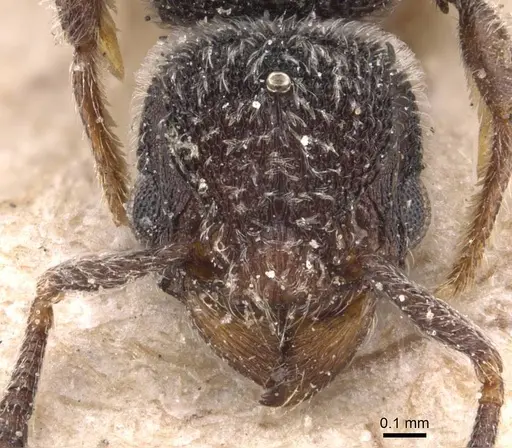
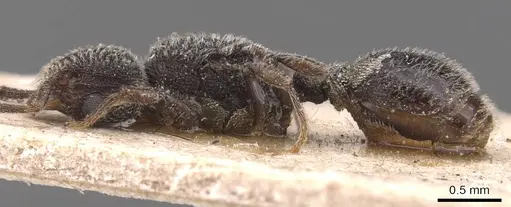
The only known specimen is a queen (wingless) measuring 3.5mm total length. Body color is very black, with reddish mandibles, antennae, tibiae, and tarsi. Key features include long propodeal spines, a transversely ovate petiole node in dorsal view, frontal carinae extending beyond the eyes, and dense rugose-punctate sculpture on the head and thorax. The first gaster tergite has a unique sculpture: the base is densely punctate and bears longitudinal rugulae, which become finer and sparser toward the middle of the segment. This gaster sculpture is the most distinctive trait and differs from almost all other Tetramorium [1].
Distribution and Habitat
The species is known only from Hatam, New Guinea, collected before 1887. No additional specimens have been reported in over 135 years. The specific habitat is unknown, but most Tetramorium in the Indo-Australian region inhabit forests, nesting in soil, under stones, or in decaying wood. The lack of modern records suggests the species may be rare, locally distributed, or easily confused with similar taxa [1][2].
Care Recommendations
Because no species-specific husbandry information exists, keepers must rely on general Tetramorium care guidelines. Use a standard test tube setup for the founding stage, keeping it dark and stable. Once workers appear, transition to a Y-tong or naturalistic nest with moderate moisture. Maintain temperature around 24-26°C and provide a varied diet of small insects (fruit flies, pinhead crickets) and sugar water. Be prepared to adjust conditions based on colony response. The queen’s wingless morphology may affect founding behavior, observe closely without disturbance. Document all observations, any captive breeding would be scientifically valuable. [2]
Defense Mechanism
No species-specific observations exist for this ant. However, as a member of the tribe Crematogastrini (subfamily Myrmicinae), it likely possesses a modified, flattened stinger used to wipe or smear venom onto enemies, rather than piercing. This 'smear' defense is typical of the tribe. The sting is not expected to be painful to humans, but treat with caution.
Frequently Asked Questions
How long do Tetramorium punctiventre ants live?
Lifespan is unknown because no captive colonies have been studied. Based on related Tetramorium, queens may live several years and workers months to a year, but this is unconfirmed.
Can I keep Tetramorium punctiventre in a test tube?
A test tube setup is a reasonable choice for a founding colony, following standard methods (water reservoir, cotton plug, kept horizontally and dark). However, no species-specific data supports this, it is a general assumption.
What do Tetramorium punctiventre ants eat?
Diet is unconfirmed. Offer small insects (fruit flies, pinhead crickets) and sugar sources (honey water, sugar water) based on typical Tetramorium feeding habits. Adjust according to colony acceptance.
Do Tetramorium punctiventre ants sting?
As a member of Myrmicinae and especially the tribe Crematogastrini, this species likely uses a 'smear' defense with a modified stinger that wipes venom onto the target rather than piercing. The venom is not known to be medically significant, but no direct observations exist for this species.
Are Tetramorium punctiventre good for beginners?
No. This species cannot be recommended due to the complete lack of biological and care data. Beginners should choose better-documented Tetramorium species such as T. caespitum or T. bicarinatum.
How big do Tetramorium punctiventre colonies get?
Colony size is completely unknown. Most Tetramorium species form colonies ranging from dozens to a few hundred workers, but without documented colonies, even an estimate is impossible.
Do Tetramorium punctiventre need hibernation?
Diapause requirements are unknown. As a New Guinea tropical species, it likely does not require cold hibernation, but slight seasonal slowing may occur. Observe your colony’s activity patterns.
How do I identify Tetramorium punctiventre?
Identification is difficult. The only known specimen is a wingless queen 3.5mm long with black body, reddish appendages, long propodeal spines, and unique gaster sculpture (punctate base with longitudinal rugulae). Reliable identification requires comparison with the original description and preferably expert confirmation [1].
Why is so little known about this species?
Only a single queen specimen has been collected and described in 1887. No additional specimens or colonies have been found in over 135 years. The species may be rare, geographically restricted, or easily overlooked [1].
Can I breed Tetramorium punctiventre in captivity?
Breeding success is uncertain, no captive colonies have been documented. If you obtain a founding queen, provide standard conditions and hope for successful first workers. Document all observations carefully, as any captive breeding would be a significant scientific contribution.
Report an Issue
The current care sheet is based fully on literature. See inconsistencies, or something that's incorrect? Please , it will be resolved after review from an admin. Contributing to the blogs tab also helps providing information, to make us be able to further improve the caresheets. Thank you for your support!
References

Cette fiche d'élevage est sous licence CC BY-SA 4.0 .
Blogs de la communauté
CASENT0905778
Voir sur AntWeb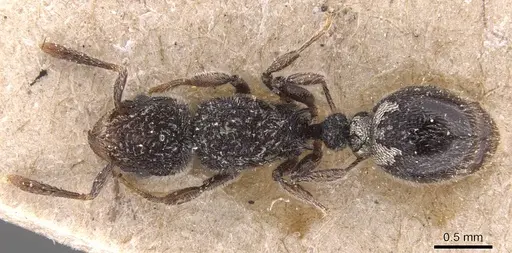
Littérature
Chargement de la carte de répartition...Chargement des produits...