
Tetramorium myrmidon
- Nom sci.
- Tetramorium myrmidon
- Tribu
- Crematogastrini
- Sous-famille
- Myrmicinae
- Auteur
- Hita Garcia & Fisher, 2014
- Distribution
- Trouvé dans 1 pays
Introduction
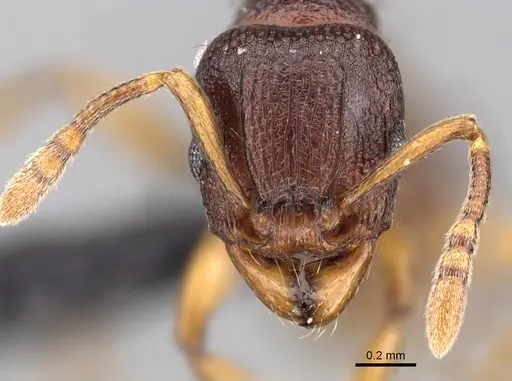
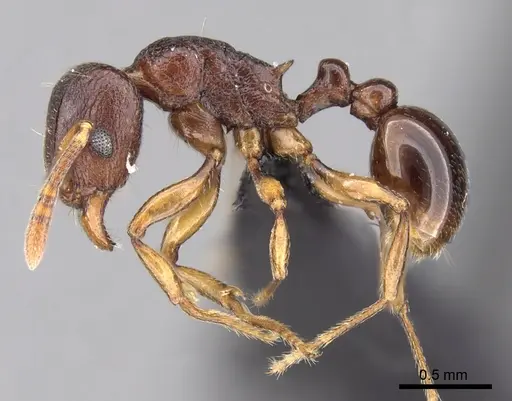
Tetramorium myrmidon is a tiny, extremely rare ant species found only in the montane rainforests of Ambohijanahary in central-western Madagascar. Workers are uniformly brown to dark brown with relatively large eyes and two pairs of long, standing hairs on the upper body. The species belongs to the Tetramorium schaufussii group and was first described in 2014,making it one of the most recently named ants in the hobby. The name comes from the ancient Greek 'myrmidons' - the legendary ant-people warriors . Only six workers have ever been collected, all from two leaf litter samples taken in January 2003 at elevations of 1050-1100m. This species is so rare it's essentially unknown in the antkeeping world. If you somehow obtain it, you'll be breaking new ground - no captive care data exists .
Quick Summary
- Difficulty: Expert
- Origin & Habitat: Endemic to Ambohijanahary, an isolated montane rainforest in central-western Madagascar at 1050-1100m elevation. Collected from sifted leaf litter and rotten wood in a protected reserve [1][3].
- Colony Type: Unknown. Colony structure has never been documented. Most Tetramorium species are single-queen, but this is not confirmed for Tetramorium myrmidon specifically.
- Size & Growth:
- Queen: Undescribed, no queen specimens have ever been collected [1].
- Worker: Size data unavailable, only head length measurements (~0.7mm) have been published, not total body length [1]. The often-quoted '3-4mm' is an estimate without direct evidence.
- Colony: Unknown, only six workers have ever been found in the wild [3].
- Growth: Unknown, no captive data exists.
- Development: Unconfirmed. Based on typical Tetramorium patterns, expect 6-10 weeks at optimal temperature. (No direct development data exists for this species. The estimate is a rough guess from related small Myrmicinae.)
- Antkeeping:
- Temperature: Likely prefers cooler conditions than most tropical ants due to its montane origin (1050-1100m). Start around 20-24°C and observe. Related Tetramorium do well in the low-to-mid 20s°C. Avoid overheating [1].
- Humidity: Requires high humidity, think damp forest floor. Keep the nest substrate consistently moist but not waterlogged. Montane rainforests are persistently humid [1].
- Diapause: Unknown. Madagascar doesn't have harsh winters, but montane elevations may have cooler, drier seasons. Watch your colony for natural slowdowns rather than forcing a diapause schedule [1].
- Nesting: In the wild, they live in leaf litter and rotten wood on the forest floor. In captivity, a small test tube setup or Y-tong nest with fine chambers works. The tiny worker size means chambers must be appropriately scaled, too large a space can stress the colony [1].
- Behavior: Active foragers that search through leaf litter for tiny prey. Based on its tribe (Crematogastrini), this species uses a 'smear' defense: it wipes venom onto attackers with its flattened stinger rather than piercing them. Their very small size means escape prevention must be excellent, they can squeeze through tiny gaps. Use fine mesh barriers and tight-fitting lids.
- Common Issues: extreme rarity makes obtaining founding colonies nearly impossible, no captive breeding data exists, keeping this species alive requires significant trial and error, tiny size means escapes are likely without fine mesh barriers, unknown colony structure makes it difficult to plan the right founding setup, montane origin may require cooler temperatures than typical ant setups provide
Rarity and Collection
Tetramorium myrmidon is one of the rarest ants in the world to keep. Only six specimens have ever been collected, all from leaf litter samples in Ambohijanahary Reserve in Madagascar during two brief collection periods in January 2003. The species was formally described in 2014 by Hita Garcia and Fisher, making it a relatively recent addition to scientific knowledge [1][3].
This extreme rarity means Tetramorium myrmidon is essentially unavailable in the antkeeping hobby. Unlike more common Tetramorium species like Tetramorium caespitum or Tetramorium bicarinatum, you will not find colonies for sale. This species exists primarily in scientific collections. If you do acquire it, document your care notes carefully, any successful captive breeding would be a significant contribution [1][3].
Natural Habitat and Temperature
This species comes from montane rainforest at 1050-1100m elevation in central-western Madagascar. The Ambohijanahary forest is described as an isolated montane ecosystem, which is significantly cooler and wetter than lowland tropical areas [1].
For captive care, this suggests temperatures in the low-to-mid 20s°C range would be appropriate, possibly slightly cooler than typical tropical ant setups. Avoid hot conditions. A room-temperature environment (around 20-22°C) is likely safer than active heating. If your colony shows signs of stress (workers clustering away from heat sources, reduced activity), reduce temperature further. The key is stability, avoid major temperature fluctuations [1].
Housing and Nest Setup
Because the workers are so tiny (size data unavailable, only head length known), you need to scale the nest appropriately. Small test tubes with fine chambers or a Y-tong style nest with narrow passages work well. The chambers should be sized for small ants, too large a space can stress the colony [1].
Escape prevention is critical. Use tight-fitting lids, fluon barriers, and fine mesh on any ventilation. These ants can squeeze through gaps that would stop larger species. The nesting material should retain moisture well, they come from a persistently humid montane environment. A small water reservoir connected to the nest helps maintain humidity [1].
Feeding and Diet
Like most Tetramorium species, Tetramorium myrmidon is likely a generalist forager that collects small insects, honeydew, and nectar in the wild. Their small size means their prey items are tiny, springtails, minute soil mites, and other micro-arthropods found in leaf litter [1].
In captivity, offer small protein sources like fruit flies, pinhead crickets (appropriately sized), and small mealworms. Sugar water or honey can be offered occasionally, though many litter-dwelling ants prefer protein. Feed small amounts and remove uneaten prey after 24-48 hours to prevent mold. The key is matching prey size to their tiny workers, anything too large will simply be ignored [1].
Unknown Aspects of Care
This species has never been kept in captivity that we know of, so all care recommendations are educated guesses based on related species and natural habitat. Key unknowns include: colony founding behavior (likely claustral like other Tetramorium, but unconfirmed), colony structure (single or multi-queen), development timeline, and exact humidity requirements [1][3].
If you obtain this species, treat it as a learning experience. Start with conditions matching its montane origin (cool, humid), offer varied foods, and carefully document what works. Any successful breeding would be a valuable scientific contribution since so little is known about this species in life, let alone in captivity [1][3].
Frequently Asked Questions
Is Tetramorium myrmidon available in the antkeeping hobby?
No. This is one of the rarest ant species in the world, only six specimens have ever been collected. It is essentially unavailable in the commercial antkeeping trade and would be extremely difficult to obtain [1][3].
How big do Tetramorium myrmidon workers get?
Their total length hasn't been measured. The head length is about 0.7mm, but that's not total body size. Without published total length data, we can't give a reliable body size [1].
What temperature should I keep Tetramorium myrmidon at?
Based on their montane rainforest origin at 1050-1100m elevation, they likely prefer cooler conditions than typical tropical ants. Start around 20-24°C and adjust based on colony behavior. Avoid overheating, they come from a relatively cool, elevated habitat [1].
Do Tetramorium myrmidon ants sting?
As a Myrmicinae, they have a stinger, but it's used for smearing venom rather than piercing. Given their tiny size, any sting would be negligible to humans. The sting is primarily effective against small invertebrate prey [1].
What do Tetramorium myrmidon eat?
Like other Tetramorium species, they are generalist foragers. In captivity, offer small protein sources like fruit flies, tiny crickets, and springtails. Sugar water or honey can be offered occasionally. Prey must be appropriately sized for their tiny workers [1].
Is Tetramorium myrmidon a good species for beginners?
No. This species is rated Expert difficulty due to its extreme rarity, complete lack of captive care data, and specific habitat requirements. Even experienced antkeepers would be starting from scratch with no established protocols. It is a collector's species for advanced hobbyists [1][3].
How long does it take for Tetramorium myrmidon to develop from egg to worker?
This has never been documented. Based on typical Tetramorium patterns for small Myrmicinae ants, expect approximately 6-10 weeks at optimal temperature. Without direct data, this is only an estimate [1].
Where is Tetramorium myrmidon found in the wild?
Only in Ambohijanahary, an isolated montane rainforest in central-western Madagascar at 1050-1100m elevation. It is endemic to this very restricted area and has never been found anywhere else in the world [1][3].
Do I need to hibernate Tetramorium myrmidon?
Unknown. Madagascar does not have harsh winters, but montane elevations may have cooler seasonal periods. Observe your colony for natural slowdowns rather than forcing a specific diapause schedule. The safe approach is to maintain stable, cool conditions year-round [1].
Can I keep multiple Tetramorium myrmidon queens together?
We don't know. Colony structure (single-queen vs multi-queen) has never been documented for this species. Most Tetramorium are single-queen, but without data on Tetramorium myrmidon specifically, combining unrelated queens is not recommended [1].
Report an Issue
The current care sheet is based fully on literature. See inconsistencies, or something that's incorrect? Please , it will be resolved after review from an admin. Contributing to the blogs tab also helps providing information, to make us be able to further improve the caresheets. Thank you for your support!
References

Cette fiche d'élevage est sous licence CC BY-SA 4.0 .
Blogs de la communauté
CASENT0028635
Voir sur AntWeb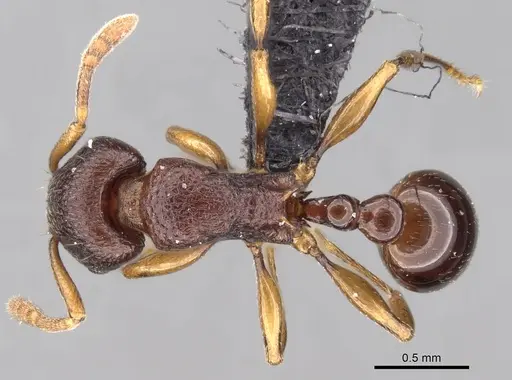
Littérature
Chargement de la carte de répartition...Chargement des produits...