
Tetramorium mars
- Nom sci.
- Tetramorium mars
- Tribu
- Crematogastrini
- Sous-famille
- Myrmicinae
- Auteur
- Hita Garcia & Fisher, 2014
- Distribution
- Trouvé dans 1 pays
Introduction
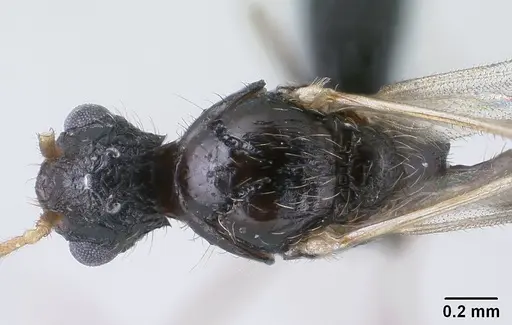
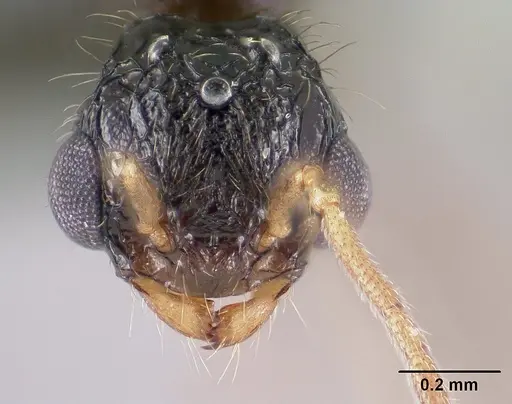
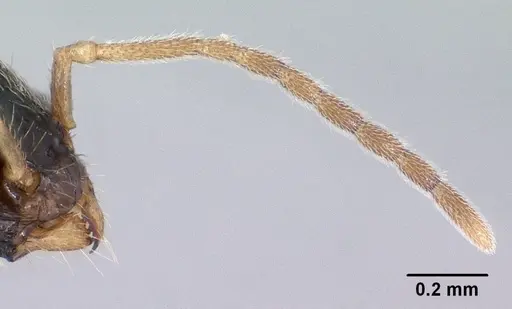
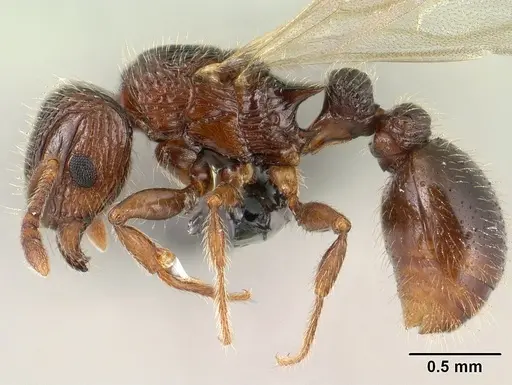
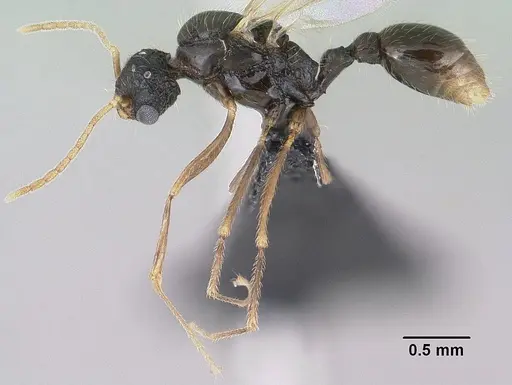
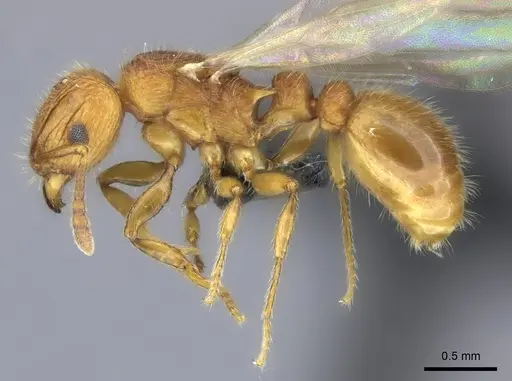
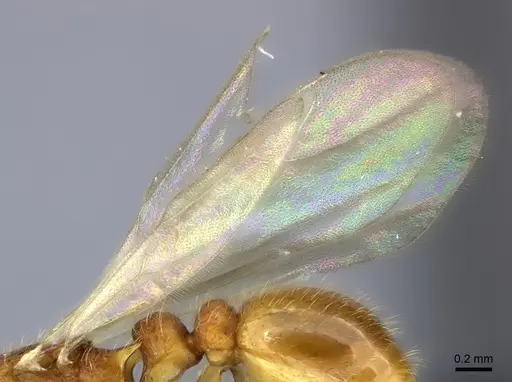
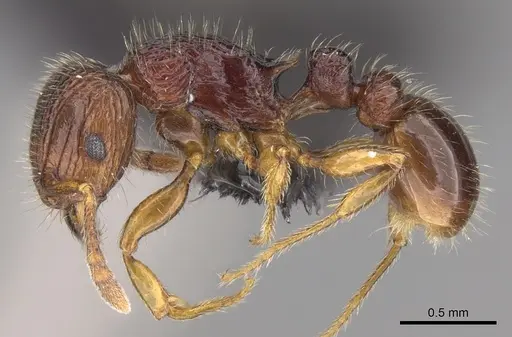
Tetramorium mars is a small, ground-dwelling ant native to western Madagascar. Workers are about 3mm long (estimated) with a blocky waist (petiolar node) and very short antenna scapes that don't reach the back of their head. Their body is light to reddish brown with lots of long, upright hairs. It belongs to the Tetramorium plesiarum species group and was described in 2014 . What makes T. mars interesting is its wide distribution across western Madagascar with almost no variation in appearance. It lives in tropical dry and gallery forests at low elevations (10 to 165 meters), foraging in leaf litter. The species was named after the Roman god of war, Mars . It uses a venom-smearing defense (typical of its tribe), smearing venom onto attackers instead of piercing them.
Quick Summary
- Difficulty: Unknown, no captive care records exist
- Origin & Habitat: Western Madagascar, from Beza-Mahafaly in the south through Kirindy Mite and Tsingy de Bemaraha to Baie de Baly and Ankarafantsika in the north. All localities are tropical dry or gallery forests at low elevations of 10-165 m [1]. The species is terricolous (ground-dwelling) and found in dry, dark habitats [2].
- Colony Type: Unconfirmed, no research has documented whether this species is single-queen (monogyne) or multi-queen (polygyne). Based on patterns in related Tetramorium species, single-queen colonies are likely, but this needs verification.
- Size & Growth:
- Queen: Undescribed, no queen caste has been documented in scientific literature
- Worker: ~3 mm (estimated from related Tetramorium species, direct body length not provided in research) [1]
- Colony: Unknown, no colony size data exists
- Growth: Unknown
- Development: Unknown, no development data for this species. Based on typical Tetramorium patterns, expect 6-10 weeks at tropical temperatures. (Development time is estimated from related Tetramorium species since no direct observations exist for T. mars.)
- Antkeeping:
- Temperature: Unconfirmed, no thermal studies exist. Based on its origin in tropical dry forests of Madagascar (low elevation, warm climate), aim for roughly 24-28°C. This is an estimate based on habitat inference.
- Humidity: Unconfirmed, no humidity data exists. As a ground-dwelling ant from dry forest, it likely prefers moderate humidity with drier areas. Provide a moisture gradient so ants can self-regulate.
- Diapause: Unlikely, Madagascar experiences minimal cold periods. No diapause requirement has been documented.
- Nesting: In nature, this species was collected by sifting leaf litter and pitfall trapping, indicating a ground-active lifestyle [1]. It likely nests in soil or leaf litter. In captivity, use a test tube for founding, then a Ytong (AAC), plaster, or soil nest. Provide loose substrate (sand/soil) in the outworld for tunneling.
- Behavior: Temperament is unconfirmed. Based on typical Tetramorium behavior, it is likely moderately active, searching for small prey and tending aphids. Its defense mechanism is venom-smearing (smear venom onto attackers) rather than stinging, typical of its tribe Crematogastrini. Workers are tiny (~3 mm), so escape prevention is critical, use fine mesh and tight seals. They are ground-dwelling, so they need floor space more than climbing surfaces.
- Common Issues: no captive care records exist, this is an extremely rare species with no established protocols., escape prevention is critical due to tiny worker size, standard barriers may not contain them., ground-dwelling lifestyle means they need floor space in the outworld rather than vertical climbing areas., lack of documented colony structure means uncertainty about whether multi-queen arrangements work., no documented diet acceptance, start with typical ant foods (sugar water, small insects) and observe.
Natural History and Distribution
Tetramorium mars is endemic to western Madagascar, with a relatively broad distribution compared to many other Tetramorium species in the region. It has been found from Beza-Mahafaly and Forêt de Mite in the south, through Kirindy Mite and Tsingy de Bemaraha, to Baie de Baly and Ankarafantsika in the north [1].
This species lives exclusively in tropical dry forests and gallery forests at low elevations between 10 and 165 meters [1]. Researchers collected specimens mainly by sifting leaf litter or pitfall trapping, confirming its ground-dwelling lifestyle. Despite its wide range, T. mars shows very little variation across different populations [1].
The species was described in 2014 by Hita Garcia and Fisher. It was named after Mars, the Roman god of war, though the name is arbitrary and not related to behavior. Environmental data indicates it prefers dry, dark, terrestrial habitats [2].
Identification and Morphology
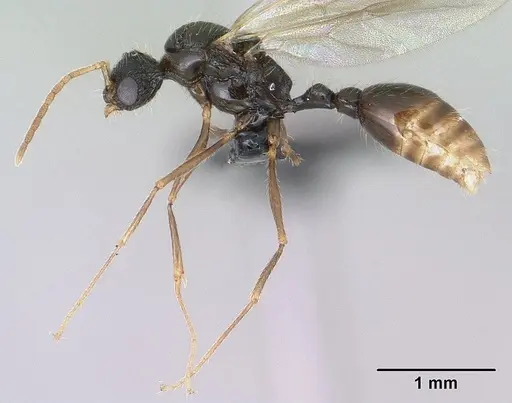
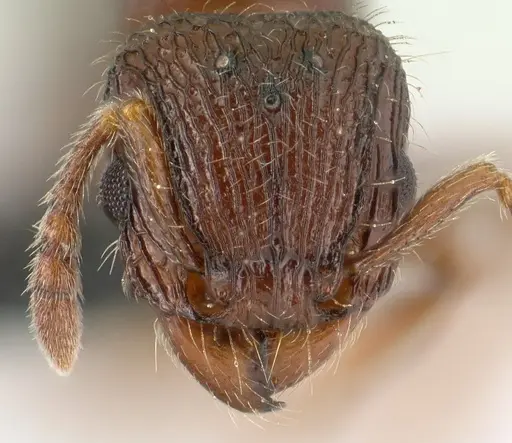
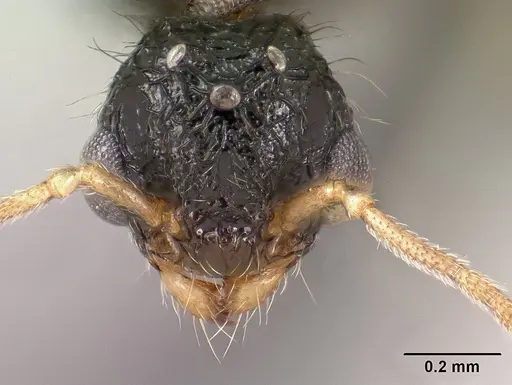
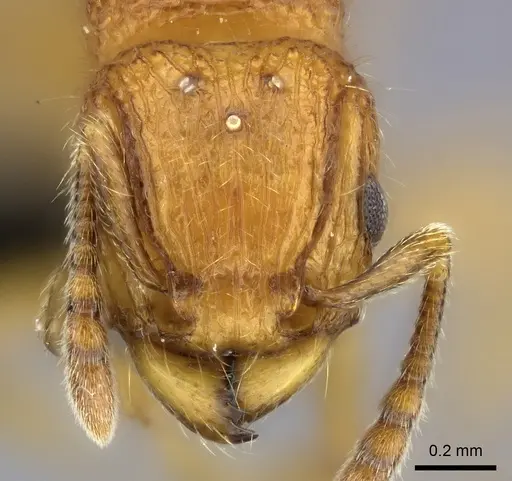
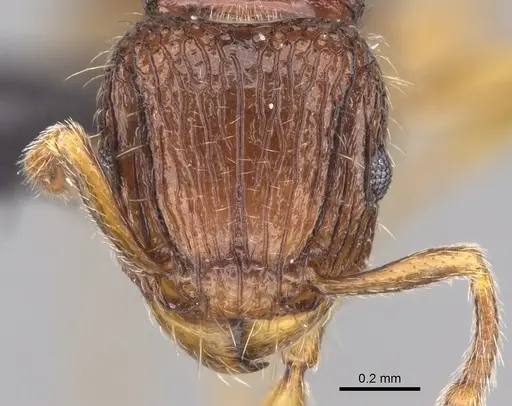
Workers of Tetramorium mars are small but distinctive. They are about 3 mm long (estimated from related species). Their most notable feature is very short antennal scapes (the first segment of the antenna) that are shorter than the head width [1].
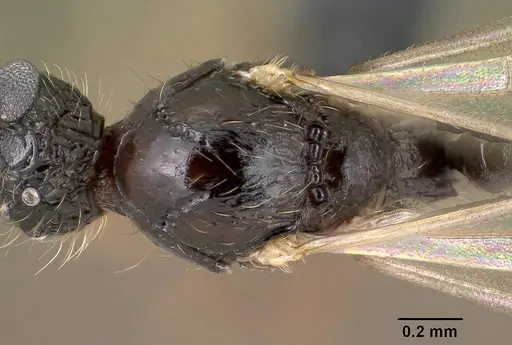
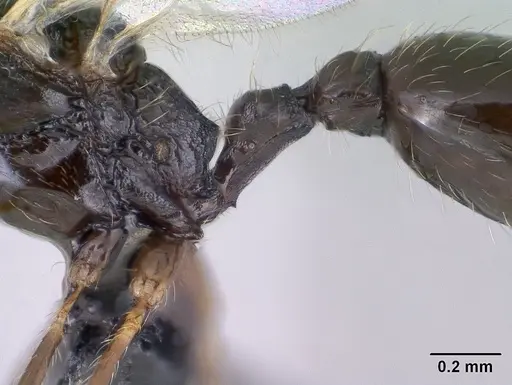
The waist segment (petiolar node) is blocky and rectangular when viewed from the side, with well-defined front and back edges. It is relatively low compared to related species, about 1.3 to 1.5 times higher than long. The body surface is mostly smooth and shiny, with weak or absent texture. But they have lots of long, upright hairs, giving a fuzzy look [1].
Color is light to reddish brown, sometimes darker. You can tell T. mars apart from similar species (like Tetramorium hobbit) by its smaller size, shorter antennal scapes, and lack of strong sculpturing on the front part of the abdomen [1].
Housing and Nest Setup
Since this is a ground-dwelling ant that lives in leaf litter, your setup should match that. Use a test tube for founding (keep it dark and undisturbed). For larger colonies, switch to a Ytong (AAC), plaster, or soil nest, avoid acrylic nests. Provide loose substrate like sand or soil in the outworld, as the species was collected from leaf litter and will enjoy digging.
Because workers are only about 3 mm, escape prevention is crucial. Use fine mesh (0.5 mm or smaller) on ventilation holes, and seal all connections with tight-fitting barriers. These tiny ants can squeeze through gaps that would hold larger species.
Include a water tube and offer sugar water on a cotton ball or feeder. Always keep a moisture gradient in the nest, one area moist, another drier, so ants can choose their preferred humidity.
Feeding and Diet
No specific diet studies exist for Tetramorium mars. Based on typical Tetramorium and other ground-dwelling myrmicines, they likely eat small insects and honeydew. In captivity, start with standard ant foods: sugar water (1:3 sugar to water ratio) for carbs, and small protein sources like fruit flies, pinhead crickets, or bits of mealworm.
Offer protein once or twice a week, and keep sugar water available all the time. Remove uneaten prey after 24-48 hours to prevent mold. Watch to see what they accept and adjust accordingly.
Temperature and Seasonal Care
No specific temperature data exists for this species. But its habitat, tropical dry forests of Madagascar, stays warm year-round (typically 24-32°C in lowlands). So aim for 24-28°C for good activity and brood development.
Use a heating cable or mat on one side of the nest to create a gradient. Room temperature (22-24°C) may work if your home is warm. Do not try to force hibernation, Madagascar doesn't have cold winters, and T. mars likely does not need diapause. Keep temperatures stable year-round.
Colony Development and Growth
No research documents colony development for T. mars. Based on related Tetramorium species, development from egg to worker probably takes 6-10 weeks at 25-27°C. The first workers (nanitics) are often smaller than later ones.
Founding behavior is unconfirmed, we don't know if queens are claustral or semi-claustral. If you have a queen, keep her in a dark test tube with water. Don't disturb her for at least 4-8 weeks. Colony size in the wild is unknown, given the small worker size, colonies might reach a few hundred workers, but that's just a guess.
Frequently Asked Questions
How do I care for Tetramorium mars ants?
Care for T. mars is not well established since it's extremely rare in captivity. Based on its origin (tropical dry forests of Madagascar), provide 24-28°C, moderate humidity with a gradient, and a ground-based nest (Ytong, plaster, or soil). Use excellent escape prevention due to 3 mm size. Feed sugar water and small insects. Monitor and adjust.
What do Tetramorium mars ants eat?
No specific diet data exists. Based on typical Tetramorium, they likely accept sugar sources (honey, sugar water) and small protein items (fruit flies, tiny insects). Offer sugar water constantly and protein prey 1-2 times per week. Remove uneaten prey after 24 hours.
How long does it take for Tetramorium mars to develop from egg to worker?
Unknown, no development data for this species. Based on related Tetramorium, expect 6-10 weeks at optimal tropical temperatures (25-27°C).
Do Tetramorium mars ants need hibernation?
No diapause requirement has been documented, and it's unlikely given Madagascar's warm year-round climate. Maintain consistent tropical temperatures (24-28°C) without winter simulation.
Are Tetramorium mars ants aggressive?
No behavioral studies exist. Based on typical Tetramorium, they are likely moderately active and not particularly aggressive, but will defend their nest. They use venom-smearing (smear venom onto attackers) instead of stinging, typical of their tribe. Their small size means minimal risk to humans.
What size colony does Tetramorium mars reach?
Unknown, no maximum colony size data. Based on related species and small worker size, colonies might reach a few hundred workers at most, but this is an estimate.
Can I keep multiple Tetramorium mars queens together?
The colony structure (monogyne vs polygyne) is unconfirmed. No research documents multiple queens. Based on typical Tetramorium, single-queen colonies are likely. Do not combine unrelated queens without established protocols for this species.
What type of nest is best for Tetramorium mars?
Use a test tube for founding. For larger colonies, use Ytong (AAC), plaster, or a soil nest, these are ground-dwelling ants collected from leaf litter. Include loose substrate (sand/soil) in the foraging area. Avoid acrylic nests.
Do Tetramorium mars ants sting?
Tetramorium belongs to Myrmicinae, whose members have a stinger, but T. mars uses a venom-smearing defense (smears venom onto attackers) rather than a typical sting, based on its tribe (Crematogastrini). Their tiny size (3 mm) means even a direct sting would be very mild.
Is Tetramorium mars a good species for beginners?
No, this species is not recommended for beginners. No captive care protocols exist, and there are no established breeding lines. You would be pioneering husbandry for a species with unknown requirements. Start with well-documented ants like Tetramorium caespitum.
Report an Issue
The current care sheet is based fully on literature. See inconsistencies, or something that's incorrect? Please , it will be resolved after review from an admin. Contributing to the blogs tab also helps providing information, to make us be able to further improve the caresheets. Thank you for your support!
References

Cette fiche d'élevage est sous licence CC BY-SA 4.0 .
Blogs de la communauté
CASENT0134555
Voir sur AntWeb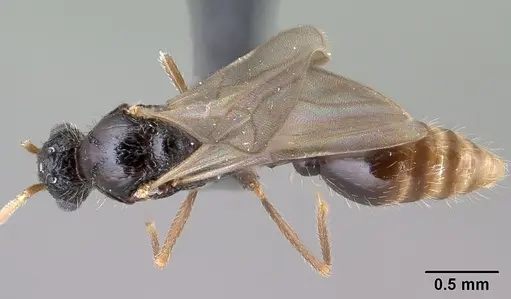
CASENT0134584
Voir sur AntWeb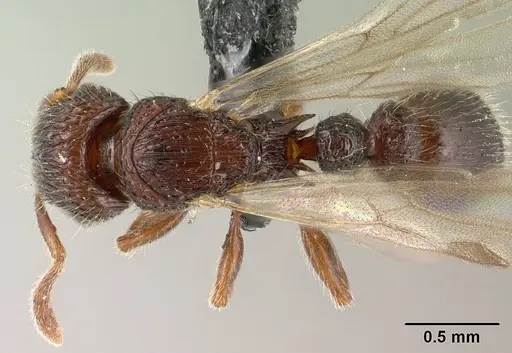
CASENT0144888
Voir sur AntWeb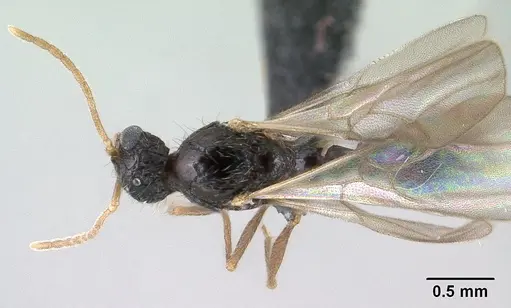
CASENT0444316
Voir sur AntWeb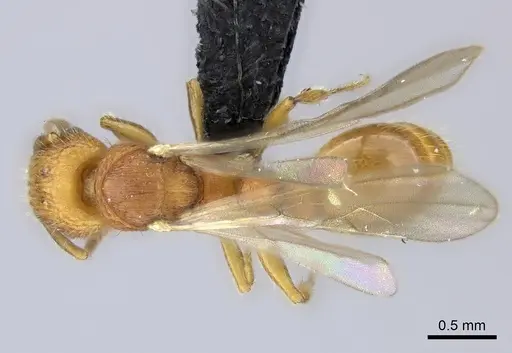
CASENT0474279
Voir sur AntWeb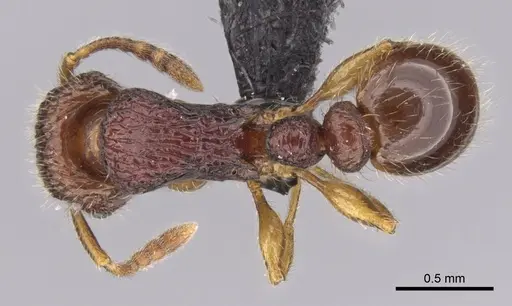
Littérature
Chargement de la carte de répartition...Chargement des produits...