
Smooth-backed Fierce ant
Tetramorium laevithorax
- Nom sci.
- Tetramorium laevithorax
- Tribu
- Crematogastrini
- Sous-famille
- Myrmicinae
- Auteur
- Emery, 1895
- Nom Commun
- Smooth-backed Fierce ant
- Distribution
- Trouvé dans 4 pays
Introduction
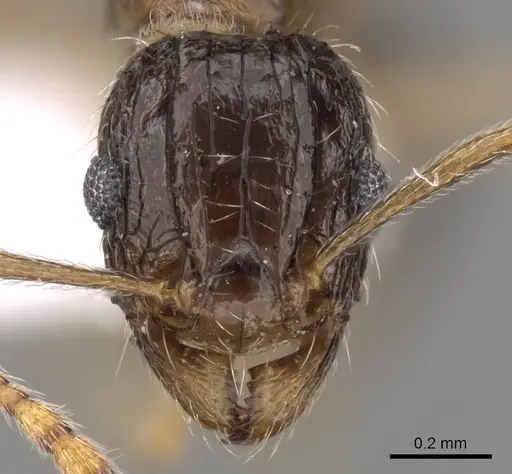
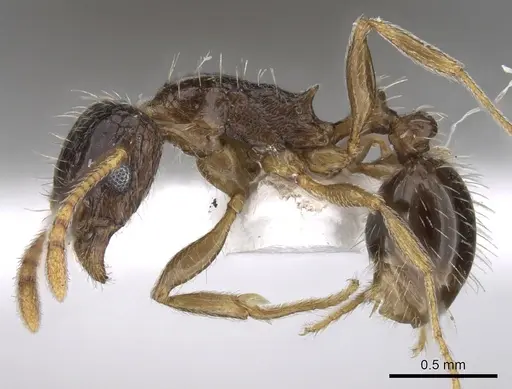
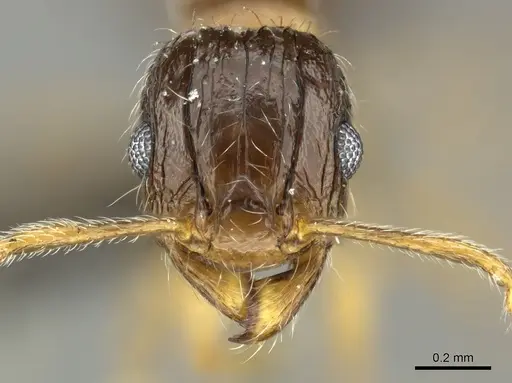
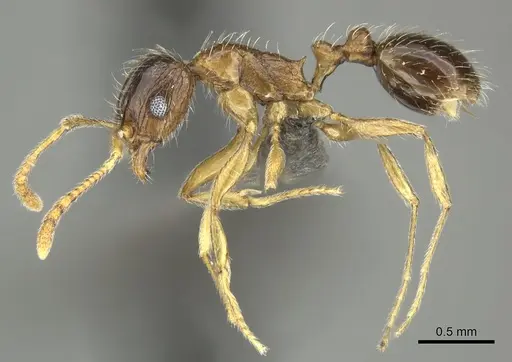
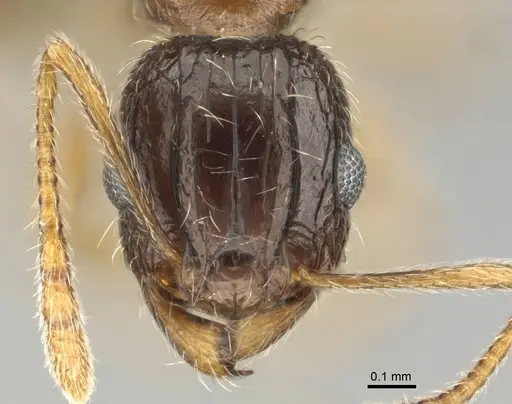
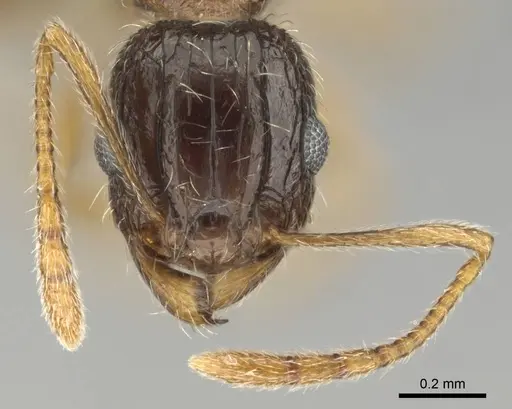
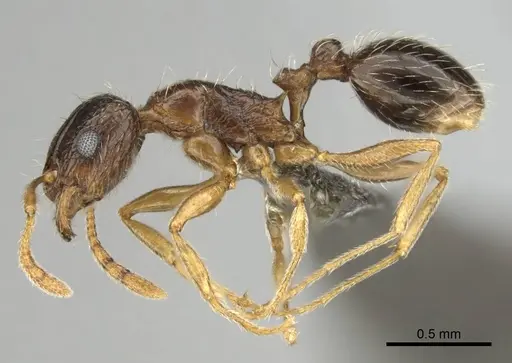
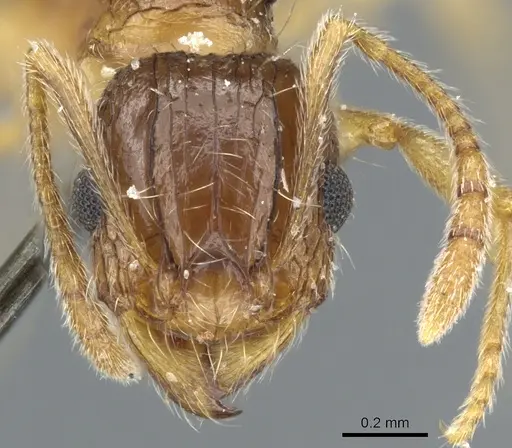
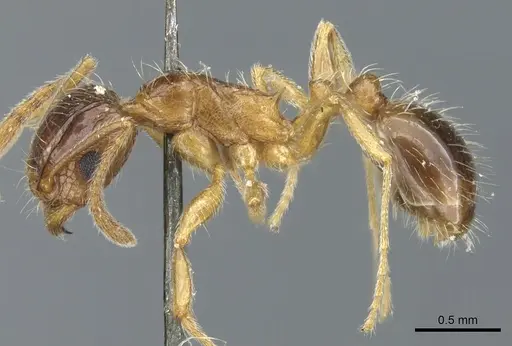
Tetramorium laevithorax is a small ground-nesting ant native to the Afrotropical region, found across Kenya, Namibia, South Africa, Sudan, and Uganda . Workers are 3.0-3.5mm and stand out from other Tetramorium by their smooth, glossy upper body with very reduced sculpture . They are mid-brown to dark brown, with dense hairs covering the head and body . This ant thrives in open to semi-open habitats like grassland, savannah, and Acacia woodland, but also handles disturbed areas such as urban gardens . They nest underground and build small grass turrets (about 1cm high) around nest entrances, usually in open ground away from plants . Studies in Rwanda show they are common in exotic tree plantations and prefer soils with higher moisture, clay, and silt content, though they are not strongly tied to specific soil chemicals .
Quick Summary
- Difficulty: Easy
- Origin & Habitat: Afrotropical region: Kenya, Namibia, South Africa, Sudan, Uganda. Lives in open grassland, savannah, semi-open habitats like Acacia woodland and Bushveld, and disturbed areas such as urban gardens [1].
- Colony Type: Unconfirmed. Inferred from typical Tetramorium patterns as likely single-queen (monogyne), but this has not been directly documented.
- Size & Growth:
- Queen: Unconfirmed, inferred from Tetramorium genus (~5-7mm)
- Worker: 3.0-3.5mm [1]
- Colony: Unknown, based on similar small Tetramorium species, colonies may reach a few hundred workers.
- Growth: Moderate
- Development: Estimated 6-10 weeks at optimal temperature based on related Tetramorium species (Specific timing for this species has not been documented, timeline is inferred.)
- Antkeeping:
- Temperature: Keep at 22-26°C. They are adapted to warm African conditions and can tolerate room temperature if inside this range. A gentle heat gradient is beneficial but not required.
- Humidity: Moderate to high. They prefer soil with good moisture content, keep the nesting substrate damp but not waterlogged. In the wild they inhabit areas with clay and silt-rich soils that hold moisture [2][3].
- Diapause: No. As an Afrotropical species, they do not need hibernation. Keep at stable warm temperatures year-round.
- Nesting: Ground-nesting. Use naturalistic setups with soil substrate, Y-tong nests, or plaster nests. Provide at least 2-3cm of damp soil for tunneling. They may build small turrets at the nest entrance in captivity too.
- Behavior: Workers are active ground foragers. They are not aggressive and have a smear defense mechanism (flattened stinger wipes venom instead of piercing). Their small size means they can escape through tiny gaps, use good escape prevention (fluon barriers on smooth surfaces). They likely accept standard ant foods: sugar sources and small protein items.
- Common Issues: colonies may stagnate if kept too cool, maintain warm temperatures (22-26°C), small colony size means slow growth, patience is required, ground-nesting requires proper substrate moisture, too dry causes desiccation, too wet promotes mold, small size demands thorough escape prevention, any gap is an escape route
Housing and Nest Setup
Tetramorium laevithorax is a ground-nesting ant that needs access to soil or suitable substrate for digging. In captivity they do well in naturalistic setups with a soil mix, Y-tong (AAC) nests, or plaster nests with a dirt chamber. The nesting area should have at least 2-3cm of damp substrate. Since they build small grass turrets around nest entrances in the wild, you may see similar behavior with debris piled at the entrance in captivity. The outworld should be a simple foraging area for food. Use a test tube setup for founding colonies, then move them to a formicarium once the colony reaches 20-30 workers. Escape prevention is crucial because of their small size, use fluon barriers on smooth surfaces [1].
Feeding and Diet
Tetramorium laevithorax is likely omnivorous, accepting both sugar and protein. In the wild they forage for honeydew and small insects. Offer sugar water or diluted honey as a constant sugar source, and small insects like fruit flies, pinhead crickets, or mealworm pieces for protein. They are small ants, so keep prey items appropriately sized. Based on their presence in agricultural studies, they are adaptable feeders [2][3]. Feed 2-3 times per week for small colonies, reducing as the colony grows. Remove uneaten prey after 24 hours to prevent mold.
Temperature and Seasonal Care
As an Afrotropical species from warm African habitats, Tetramorium laevithorax prefers temperatures of 22-26°C. They can tolerate slightly cooler conditions (down to about 20°C) but growth slows. Room temperature (around 22-24°C) is often suitable without extra heating. If your room is cooler, use a heating cable on one side of the nest to create a gradient, place it on top of the nest to avoid drying the substrate too quickly. They do not need hibernation or diapause, keep them at stable warm temperatures year-round [1].
Humidity and Water
This species prefers moderate to high humidity with consistently damp substrate. In the wild they inhabit areas with clay and silt-rich soils that retain moisture well [2][3]. Keep the nesting substrate damp but not waterlogged, water should not pool. A well-hydrated setup mimics their natural underground nests. You can provide a water tube in the outworld for drinking, but they will also get moisture from the substrate. Monitor for condensation, some is normal and indicates good humidity, but excessive moisture can lead to mold. Let the substrate surface dry slightly between waterings rather than keeping it constantly saturated.
Growth and Development
Colony growth is expected to be moderate. Founding colonies will stay small for the first few months as the queen raises her first workers (nanitics) alone. The first generation typically emerges 6-10 weeks after founding, depending on temperature. Initial colony size is small but growth should accelerate once the first workers begin foraging. Based on similar Tetramorium species, colonies likely max out at a few hundred workers. Be patient with founding colonies, disturbing them too often can cause stress. Once established, they are relatively hardy [1].
Frequently Asked Questions
How long does it take for Tetramorium laevithorax to get their first workers?
Expect first workers (nanitics) to emerge 6-10 weeks after the queen lays her first eggs, assuming optimal temperatures around 24-26°C. This is an estimate based on related Tetramorium species, specific timing for this species has not been documented.
Can I keep Tetramorium laevithorax in a test tube?
Yes, test tubes work well for founding colonies. Use a standard test tube setup with a water reservoir and cotton plug. Once the colony reaches 20-30 workers, consider moving them to a formicarium with a dirt chamber for more space.
Do Tetramorium laevithorax ants sting?
This species belongs to the subfamily Myrmicinae and tribe Crematogastrini, which uses a smear defense mechanism. Workers have a modified, flattened stinger that wipes or smears venom onto enemies rather than piercing flesh. They are not known for aggressive stinging and the effect is mild to humans.
What temperature do Tetramorium laevithorax need?
Keep them at 22-26°C. They are adapted to warm African conditions and do best at the warmer end of this range. Room temperature is often suitable. Avoid temperatures below 20°C for extended periods.
Do they need hibernation or diapause?
No, as an Afrotropical species from Africa, they do not require hibernation. Keep them at warm, stable temperatures year-round. Temperatures below 20°C for prolonged periods may stress them.
How big do Tetramorium laevithorax colonies get?
Colony size is not well documented, but based on similar small Tetramorium species, colonies likely reach a few hundred workers at maximum. They are not among the larger Tetramorium species.
Are Tetramorium laevithorax good for beginners?
Yes, they are considered an easy species to keep. They are hardy, tolerate a range of conditions, and are not aggressive. Their small size and ground-nesting habits make them straightforward to house. The main challenge is patience, colony growth is moderate.
What do Tetramorium laevithorax eat?
They are omnivorous. Offer sugar water or honey as a constant energy source, and protein like small insects (fruit flies, pinhead crickets, mealworm pieces) 2-3 times per week. They are small, so keep prey items appropriately sized.
Why is my colony not growing?
Check temperature first, they need warmth for proper development. Also ensure humidity is adequate (damp substrate, not soggy). Poor nutrition can also slow growth. If the queen has died, colonies will naturally stagnate. Founding colonies are slow, give it time.
Report an Issue
The current care sheet is based fully on literature. See inconsistencies, or something that's incorrect? Please , it will be resolved after review from an admin. Contributing to the blogs tab also helps providing information, to make us be able to further improve the caresheets. Thank you for your support!
References

Cette fiche d'élevage est sous licence CC BY-SA 4.0 .
Blogs de la communauté
CASENT0217220
Voir sur AntWeb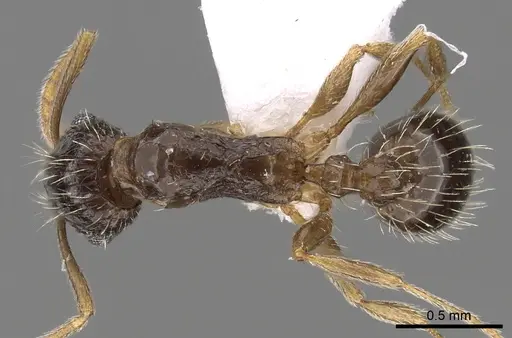
CASENT0249027
Voir sur AntWeb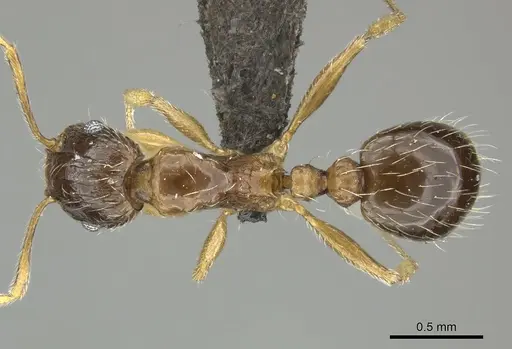
CASENT0253001
Voir sur AntWeb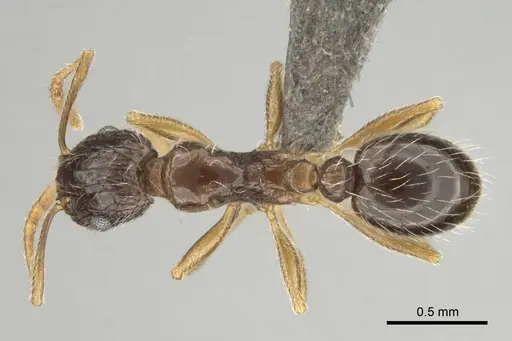
CASENT0904842
Voir sur AntWeb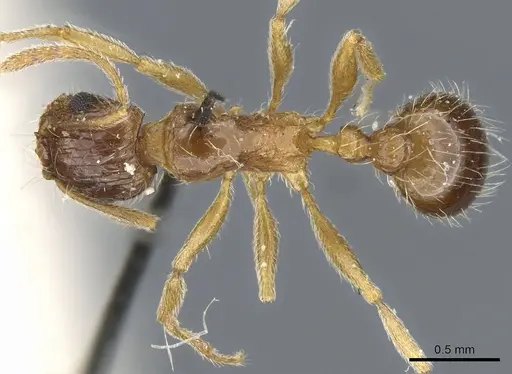
Littérature
Chargement de la carte de répartition...Chargement des produits...