
Tetramorium isectum
- Nom sci.
- Tetramorium isectum
- Tribu
- Crematogastrini
- Sous-famille
- Myrmicinae
- Auteur
- Bolton, 1979
- Distribution
- Trouvé dans 2 pays
Introduction
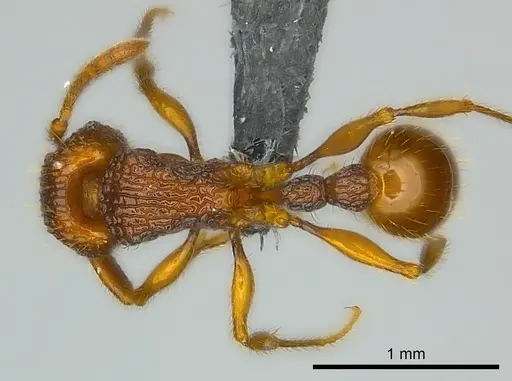
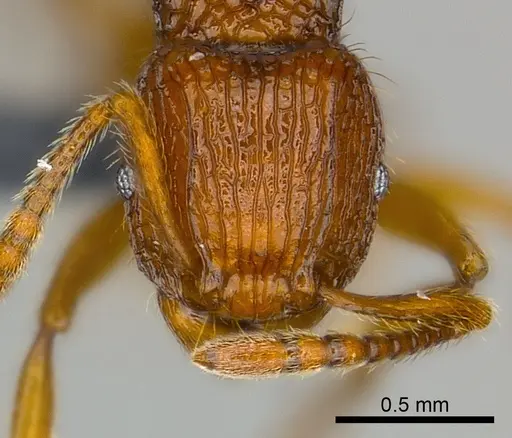
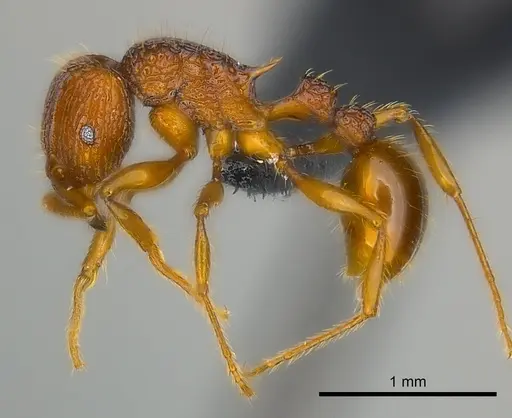
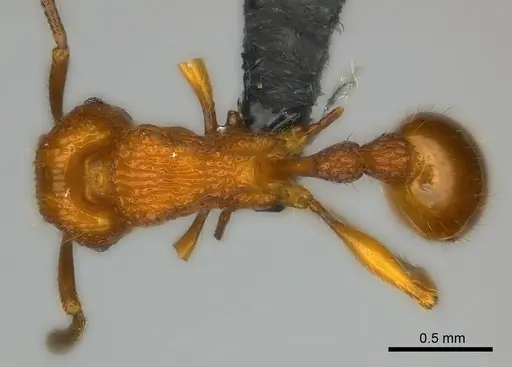
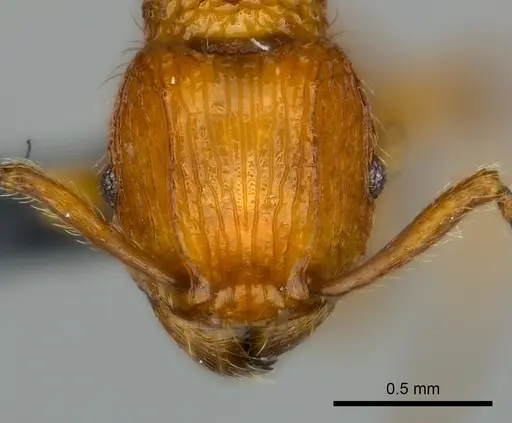
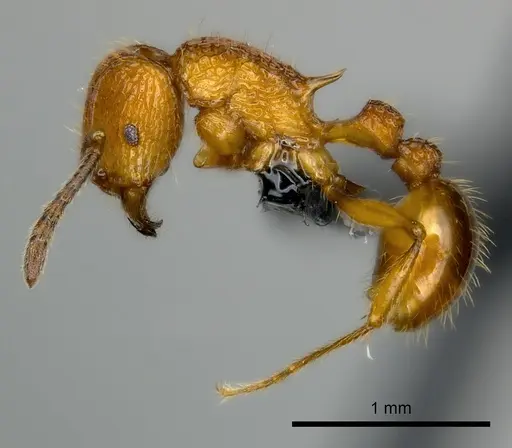
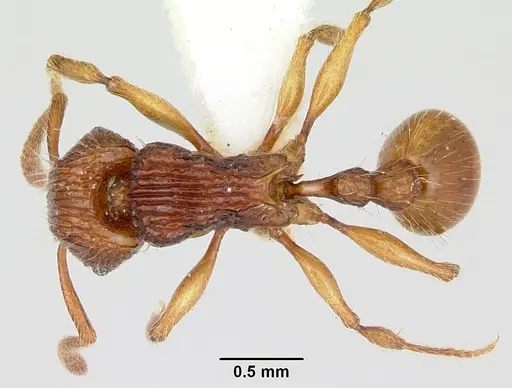
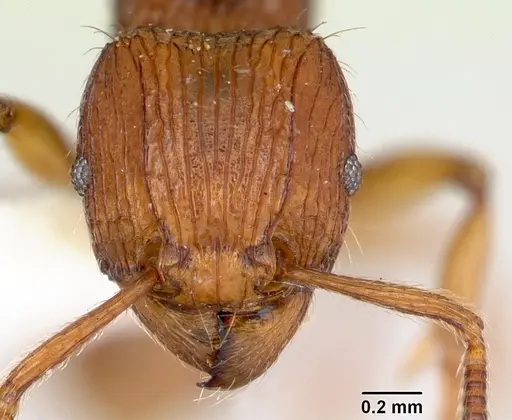
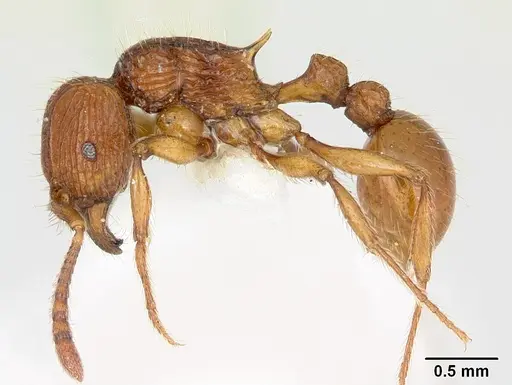
Tetramorium isectum is a small, bright yellow-orange ant native to the rainforests of eastern Madagascar. Workers are small but body length measurements are unavailable in the literature. They have very small eyes and relatively long propodeal spines, giving them a distinctive look . This species belongs to the Tetramorium tortuosum group and the T. andrei complex, where it stands out because of its tiny eyes and bright color . These ants live in a narrow strip of eastern Madagascar, from central-eastern to northeastern areas, in rainforests and montane rainforests between 125 and 1040 meters elevation, typically in leaf litter . What makes T. isectum interesting is its restricted range and its ability to coexist with the similar T. andrei without mixing. Despite looking very similar, the two species stay distinct, with no hybrid forms, suggesting strong reproductive isolation even where they overlap . This makes the species a good case study for ant biodiversity and species boundaries.
Quick Summary
- Difficulty: Medium
- Origin & Habitat: Eastern Madagascar, rainforests and montane rainforests from central-eastern to northeastern regions,125-1040 m elevation [1][2]
- Colony Type: Colony structure is unconfirmed. No published data on queen number. Based on typical Tetramorium patterns, colonies are likely monogyne (single queen) [2].
- Size & Growth:
- Queen: Size data unavailable, queen measurements not documented in available literature
- Worker: Size data unavailable, worker total length not given in the literature. Only head and other body part measurements are known, but not full body size [1]
- Colony: Unconfirmed, no published colony size data. Based on related Tetramorium species, likely reaches up to several hundred workers
- Growth: Unknown, no development data available
- Development: Estimated 6-10 weeks based on related Tetramorium species at optimal temperature (Timeline inferred from genus-level data since species-specific studies are unavailable)
- Antkeeping:
- Temperature: Keep at temperatures typical of montane rainforests, around 20-24°C. This is inferred from their natural habitat. Avoid temperatures above 28°C as this exceeds their likely thermal tolerance [1]
- Humidity: High humidity is critical, they come from rainforest leaf litter. Keep the nest substrate consistently moist but not waterlogged, aiming for 70-80% relative humidity [1]
- Diapause: Diapause is not expected given Madagascar's tropical climate. However, if the colony stops brood production in winter, you can offer a slight temperature drop (to 18-20°C) as a rest period. Do not let it get cold
- Nesting: Natural nesting happens in leaf litter and rotting wood on rainforest floors. In captivity, use a Y-tong (AAC) or plaster nest with good moisture retention. Provide a small outworld for foraging
- Behavior: These are small, relatively docile ants that are not aggressive toward keepers. Workers forage for small prey and honeydew in the leaf litter. Their defense mechanism is 'smearing', they have a modified, flattened stinger used to wipe venom onto enemies rather than injecting it. Due to their tiny size, escape prevention must be excellent: they can squeeze through very small gaps. Use fine mesh and tight-fitting lids. They are not particularly escape-prone compared to other tiny ants.
- Common Issues: high humidity maintenance is critical, these rainforest ants easily succumb to mold or desiccation if kept too dry, small worker size means escape prevention must be excellent, use fine mesh and tight-fitting lids, no published colony data makes care challenging, start with standard Tetramorium protocols and adjust based on colony response, limited availability in the antkeeping hobby due to restricted range and export restrictions from Madagascar, temperature sensitivity, avoid overheating as montane species are not adapted to high temperatures
Housing and Nest Setup
For Tetramorium isectum, a small formicarium with good moisture retention works best. Y-tong (AAC) nests are ideal because they allow you to easily monitor the colony and maintain proper humidity levels. The chambers should be appropriately scaled to their tiny worker size, avoid large, open spaces that might make them feel insecure. A small outworld area connected to the nest allows workers to forage and dispose of waste. Since they come from leaf litter environments in Madagascar, you can also consider a naturalistic setup with a moist soil substrate and pieces of rotting wood or leaf litter for cover. Whatever setup you choose, ensure excellent escape prevention, these small ants can slip through surprisingly tiny gaps. Use fluon on the edges of the outworld and fine mesh for any ventilation openings. [1][2]
Feeding and Diet
Like most Tetramorium species, T. isectum is omnivorous and will accept a variety of foods. In captivity, offer small protein sources such as fruit flies, small mealworms, or other tiny insects. Sugar sources are also important, you can provide honey water or sugar water, though acceptance may vary individually. In the wild, these ants forage in the leaf litter layer where they likely scavenge small invertebrates and collect honeydew from aphids or scale insects. Feed small amounts of protein 2-3 times per week and keep a constant sugar source available. Remove uneaten food after 24-48 hours to prevent mold growth in the humid environment they require.
Temperature and Humidity Requirements
These ants come from the montane rainforests of eastern Madagascar where temperatures are moderate and humidity is consistently high. Aim for temperatures between 20-24°C, this is warmer than room temperature for many keepers, so you may need a small heating method like a heating cable on one side of the nest to create a gentle gradient. Avoid temperatures above 28°C as this exceeds what they experience in their natural habitat. Humidity is critical: maintain 70-80% relative humidity by keeping the nest substrate consistently moist. The substrate should feel damp to the touch but not have standing water. A water reservoir connected to the nest chamber helps maintain stable moisture levels. Poor humidity quickly leads to colony decline or death in these rainforest specialists [1].
Colony Development and Growth
Since no species-specific development data exists for T. isectum, care is based on typical Tetramorium patterns. Founding behavior is unconfirmed, but if claustral, the queen would seal herself in a small chamber and raise the first workers alone using stored fat reserves. Expect the founding process to take 6-10 weeks from egg to first worker under optimal conditions, based on related species. Growth rate is unknown. Colony size will probably reach up to several hundred workers over time, though exact maximums are unknown. Be patient with founding colonies as they are most vulnerable during the initial stages. Avoid disturbing the queen during founding as this can cause her to abandon or consume her brood.
Seasonal Care and Winter Management
Madagascar has a tropical climate with relatively minor seasonal temperature variations, so T. isectum may not require a true hibernation period. However, you can provide a slight temperature reduction during winter months (dropping to around 18-20°C) to simulate natural seasonal cues. This winter rest period may help stimulate colony activity in spring. Do not dramatically reduce temperatures or allow the colony to become cold, they are not adapted to freezing conditions. Maintain humidity even during winter as the rainforest environment stays moist year-round. If your room temperature naturally drops during winter, this may be sufficient without active cooling.
Frequently Asked Questions
How long does it take for Tetramorium isectum to raise first workers?
The exact timeline is unconfirmed for this species, but based on related Tetramorium species, expect 6-10 weeks from egg to first worker at optimal temperature (around 22-24°C). Founding behavior is unconfirmed, but if claustral, the queen would seal herself in and raise the first brood alone using stored fat reserves.
What do Tetramorium isectum ants eat?
They are omnivorous like most Tetramorium species. Offer small protein sources such as fruit flies, tiny mealworms, or other small insects. They also accept sugar sources like honey water or sugar water. In the wild, they forage in leaf litter for small invertebrates and honeydew.
Can I keep Tetramorium isectum in a test tube?
Yes, test tubes work well for founding colonies. Use a small test tube with a water reservoir sealed with cotton, this maintains humidity. Ensure the tube is in a warm, dark location during founding. Once the colony grows to around 20-30 workers, consider moving to a small formicarium with more space.
Do Tetramorium isectum ants sting?
They have a modified stinger used for smearing venom rather than stinging. The venom is applied by wiping the tip, so it's more like a contact irritant than a typical ant sting. Due to their very small size, any effect on humans is negligible. They are not aggressive and rarely use it unless directly threatened.
What temperature do Tetramorium isectum ants need?
Keep them at 20-24°C based on their montane rainforest origin in Madagascar. Avoid temperatures above 28°C as they are not adapted to hot conditions. A heating cable on one side of the nest can help maintain optimal temperatures.
Are Tetramorium isectum ants good for beginners?
This species is rated as medium difficulty. While not the hardest species, the lack of published care data and their specific humidity requirements make them better suited for keepers who already have some experience with tropical rainforest ants. Their small size and humidity needs require attention to detail.
How big do Tetramorium isectum colonies get?
Colony size is unconfirmed, but based on related Tetramorium species, colonies likely reach up to several hundred workers over time. They are not among the largest Tetramorium species but can still form substantial colonies with proper care.
Do Tetramorium isectum ants need hibernation?
A true diapause is likely not required due to Madagascar's tropical climate. However, a slight temperature reduction during winter months (to around 18-20°C) may be beneficial. Do not allow temperatures to drop dramatically, they are not cold-hardy.
Why are my Tetramorium isectum ants dying?
The most common causes are low humidity (rainforest species need 70-80% humidity), temperatures that are too high or too low, and poor escape prevention. Check that the nest substrate stays moist, temperatures are in the 20-24°C range, and there are no tiny gaps in the enclosure they could escape through.
When should I move Tetramorium isectum to a formicarium?
Move from a test tube to a small formicarium once the colony reaches around 20-30 workers and the test tube's water reservoir needs frequent refilling. Make the transition gradually by connecting the test tube to the formicarium and allowing workers to explore before moving the queen.
Report an Issue
The current care sheet is based fully on literature. See inconsistencies, or something that's incorrect? Please , it will be resolved after review from an admin. Contributing to the blogs tab also helps providing information, to make us be able to further improve the caresheets. Thank you for your support!
References

Cette fiche d'élevage est sous licence CC BY-SA 4.0 .
Blogs de la communauté
Littérature
Chargement de la carte de répartition...Chargement des produits...