
Terataner nymeria
- Nom sci.
- Terataner nymeria
- Tribu
- Crematogastrini
- Sous-famille
- Myrmicinae
- Auteur
- Hita Garcia, 2017
- Distribution
- Trouvé dans 1 pays
Introduction
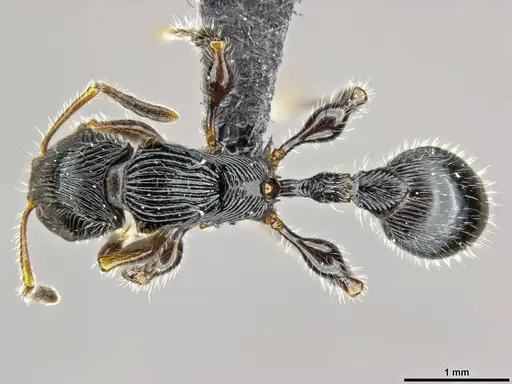
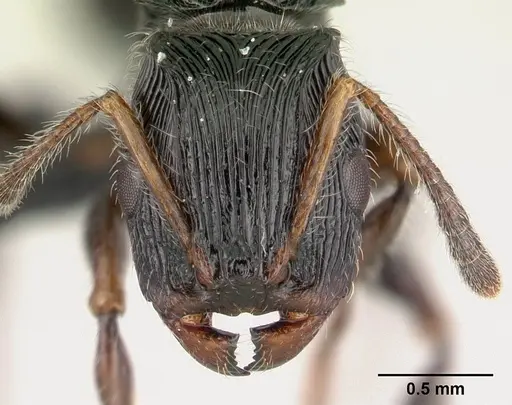
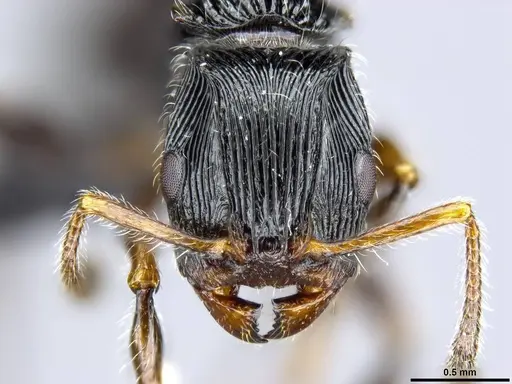
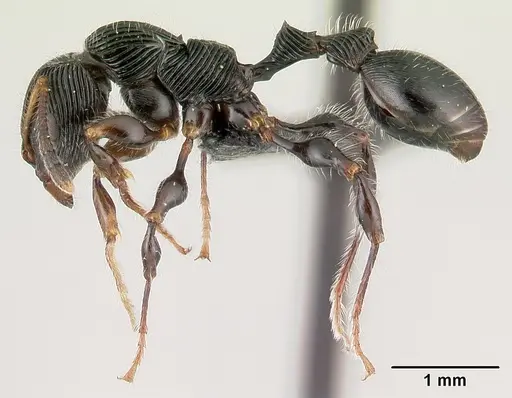
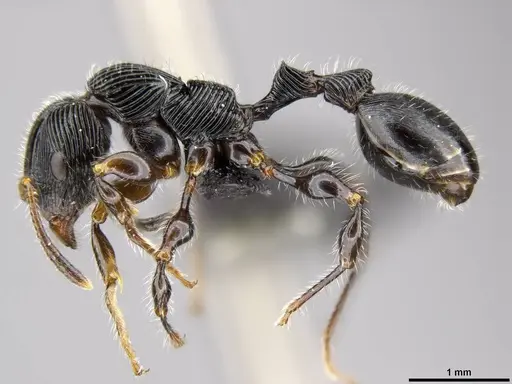
Terataner nymeria is a strikingly slender arboreal ant known only from the Analamerana Special Reserve in northern Madagascar. Workers are very small (head length about 1.1 mm) . Their most unusual feature is the extremely elongate, narrow body – the head narrows conspicuously toward the back before widening into angular corners, and the waist segments are longer than in any other Terataner species . The body is very dark brown to black with strong sculpturing and abundant short hairs . They live on vegetation and nest inside dead branches, much like other stick-inhabiting ants such as Tetraponera . The species name honors Nymeria, a direwolf from George R.R. Martin’s fantasy series, reflecting their ferocious predatory nature .
Quick Summary
- Difficulty: Expert
- Origin & Habitat: Analamerana Special Reserve, northern Madagascar – tropical dry forest at 225 m altitude [1]. Arboreal, lives on vegetation and nests in dead branches [1].
- Colony Type: Monogynous colonies with a single ergatoid queen. Ergatoid queens are wingless and differ only subtly from workers – they lack wings and ocelli, have a worker-like thorax, and possess 2–3 ovarioles [2].
- Size & Growth:
- Queen: Ergatoid queen size is similar to workers, distinguished only by tiny spines or tubercles below the mesonotal groove [2].
- Worker: Total body length data unavailable. Head length approximately 1.1 mm – a very small ant [1].
- Colony: Unknown – only 12 workers known from type material. Based on related Terataner species, colonies likely reach several hundred workers [1].
- Growth: Unknown – no captive breeding data available.
- Development: Unknown – no development data available. For similar small Myrmicinae, estimate 6–10 weeks at optimal temperature. (Development timeline is unconfirmed, related Malagasy Terataner suggest moderate pace.)
- Antkeeping:
- Temperature: Keep warm at 22–26 °C. As a tropical dry‑forest species from Madagascar, they need stable warmth. Avoid temperatures below 20 °C or above 30 °C.
- Humidity: Moderate – keep the nest substrate consistently damp but not waterlogged, with some dryer areas. Mimic the dry forest: provide a moisture gradient rather than constant high humidity.
- Diapause: Unlikely – as a tropical species from Madagascar, they probably do not require a diapause period. Maintain consistent temperatures year‑round.
- Nesting: Arboreal setup is required. These ants naturally nest in dead branches above ground. Provide vertical nesting options such as cork bark rounds, bamboo sections, or 3D‑printed nests with narrow chambers scaled to their tiny size. Avoid large open spaces.
- Behavior: This is an arboreal, predatory species. Its elongate body is an adaptation for living inside narrow sticks and branches [1]. They are likely active hunters of small arthropods. Workers are very small, so escape prevention is critical – use fine mesh barriers. Their temperament is not well documented, but Terataner species are generally not aggressive toward keepers. As Myrmicinae with a specialized spatulate stinger, they smear venom rather than sting, but their tiny size makes them harmless to humans.
- Common Issues: availability is extremely limited – only known from a single locality in Madagascar, rarely if ever in the hobby, escape prevention is critical due to their tiny size – they can squeeze through minute gaps, no captive breeding data exists – keeping this species would be pioneering work, arboreal nesting requirements differ from commonly kept ants – standard test tube setups are not suitable, tropical temperature and humidity must be maintained consistently year‑round
Discovery and Naming
Terataner nymeria was only described in 2017 by Hita Garcia and colleagues, making it one of the most recently discovered ant species. It was found during a biodiversity survey in the Analamerana Special Reserve in northern Madagascar – the only locality where it has ever been recorded [1]. The type material consists of just 12 workers collected on December 3,2004,from dead branches and low vegetation [1]. The species name honors Nymeria, the fictional direwolf from George R.R. Martin's 'A Song of Ice and Fire' series, referring to the ant's ferocious, predatory nature [1]. The strongly elongated and slender body is thought to be an adaptation to living inside narrow sticks and branches, similar to other arboreal stick‑inhabiting ants like Tetraponera [1].
Identification and Morphology
Terataner nymeria is unmistakable within its genus due to its extremely slender and elongate body. The head is relatively thin, with sides that narrow conspicuously toward the back before widening into angular corners – a shape not found in any other Terataner [1]. The waist segments (petiole and postpetiole) are unusually long. Workers are very small (head length about 1.1 mm) and very dark brown to black [1]. The body is covered with abundant short to moderately long hairs, and the sculpturing is strongly developed with longitudinal ridges on the head and coarse pattern on the mesosoma [1]. The mandibles have 5–6 teeth, and the antennal scapes are moderately long but do not reach the back of the head [1].
Colony Structure and Ergatoid Queens
All Malagasy Terataner species, including Terataner nymeria, have ergatoid queens instead of typical winged alate queens. Ergatoid queens are wingless and externally resemble workers very closely – they can only be distinguished by very subtle characters such as small spines or tubercles below the mesonotal groove and unique ridge patterns on the pronotum [2]. These queens lack wings and ocelli, and have an almost normal worker‑like thorax. Their ovaries contain just 2–3 ovarioles [2]. Colonies are almost always monogynous, meaning they contain a single reproductive queen [2]. This ergatoid system means new colonies likely form through local mating and nest budding, as queens cannot fly to start new nests.
Housing and Nest Setup
Because Terataner nymeria is an arboreal species that naturally nests in dead branches and vegetation [1], captive housing must reflect this. Use vertical or arboreal setups – cork bark rounds, bamboo sections, or 3D‑printed formicaria with narrow chambers scaled to the ants' tiny size. Standard test tube setups are not ideal, these ants need tight‑fitting lids and fine mesh to prevent escapes. Provide climbing structures and small branches in the outworld. Keep the nesting area dark and quiet. Humidity should be moderate – keep the nest substrate damp but not waterlogged, with one small area slightly drier. A small water tube can provide humidity without flooding.
Feeding and Diet
Terataner nymeria is a predatory arboreal ant that likely hunts small arthropods in nature. In captivity, offer tiny live prey such as springtails, fruit flies, and other small insects. Their tiny size means even small crickets or mealworms may be too large – scale prey accordingly. Sugar sources may be accepted occasionally, but these ants are primarily predators. Feed small prey items every few days, removing uneaten remains to prevent mold. The workers' strongly swollen femora (thighs) suggest they can carry prey relatively large for their size [1].
Temperature and Seasonal Care
As a tropical species from Madagascar's dry forests, Terataner nymeria requires warm temperatures year‑round. Maintain the nest area at 22–26 °C, avoiding temperatures below 20 °C or above 30 °C. A gentle temperature gradient lets workers choose their preferred zone. They likely do not require a winter diapause – keep conditions consistent. Avoid placing the nest near air conditioning or drafty windows that could cause rapid temperature changes.
Frequently Asked Questions
Is Terataner nymeria available for ant keepers?
This species is extremely rare in the hobby. It was only described in 2017 and is known from a single locality in northern Madagascar. You will likely not find it from commercial suppliers – keeping it would be pioneering work.
What do Terataner nymeria ants eat?
They are predatory and hunt small arthropods. In captivity, feed tiny live prey like springtails, fruit flies, and other small insects scaled to their tiny size. Sugar water may be accepted occasionally but should not be the primary food.
How big do Terataner nymeria colonies get?
Colony size is unknown – only 12 workers have ever been collected. Based on related Terataner species, colonies likely reach several hundred workers [1].
Do Terataner nymeria ants sting?
As a Myrmicinae ant they possess a stinger, but it is modified into a spatulate structure used to smear venom rather than pierce skin. Their tiny size makes any sting negligible to humans. Their primary defense is fleeing or biting.
What temperature do Terataner nymeria ants need?
Keep them warm at 22–26 °C. As a tropical species from Madagascar, they do not need hibernation. Avoid temperatures below 20 °C.
Can I keep Terataner nymeria in a test tube setup?
A standard test tube setup is not ideal. These are arboreal ants that naturally nest in dead branches above ground. They need a vertical setup with narrow chambers, such as cork bark rounds, bamboo sections, or 3D‑printed nests scaled to their small size [1].
How long does it take for Terataner nymeria to develop from egg to worker?
The development timeline is unconfirmed – no captive breeding data exists. Based on similar small Myrmicinae, estimate 6–10 weeks at optimal temperature.
Are Terataner nymeria ants good for beginners?
No. This is an expert‑level species: they are virtually unavailable in the hobby, require arboreal housing, need precise tropical conditions, have no captive breeding data, and their tiny size makes them prone to escaping.
Do Terataner nymeria queens fly?
No. This species has ergatoid queens – wingless queens that resemble workers. All Malagasy Terataner species have this characteristic. The queen lacks wings and ocelli and has an almost normal worker‑like thorax [2].
Why is Terataner nymeria named after Nymeria?
The species is named after Nymeria, a fictional female direwolf from George R.R. Martin's 'A Song of Ice and Fire' series. The name reflects the ant's ferocious, predatory nature [1].
Report an Issue
The current care sheet is based fully on literature. See inconsistencies, or something that's incorrect? Please , it will be resolved after review from an admin. Contributing to the blogs tab also helps providing information, to make us be able to further improve the caresheets. Thank you for your support!
References

Cette fiche d'élevage est sous licence CC BY-SA 4.0 .
Blogs de la communauté
CASENT0053630
Voir sur AntWeb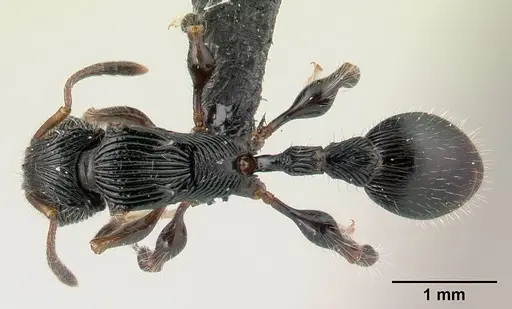
Littérature
Chargement de la carte de répartition...Chargement des produits...