
Temnothorax mongolicus
- Nom sci.
- Temnothorax mongolicus
- Tribu
- Crematogastrini
- Sous-famille
- Myrmicinae
- Auteur
- Pisarski, 1969
- Distribution
- Trouvé dans 0 pays
Introduction
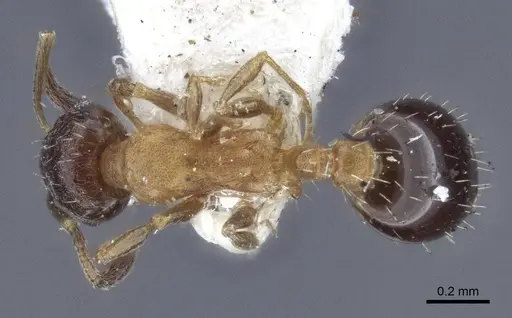
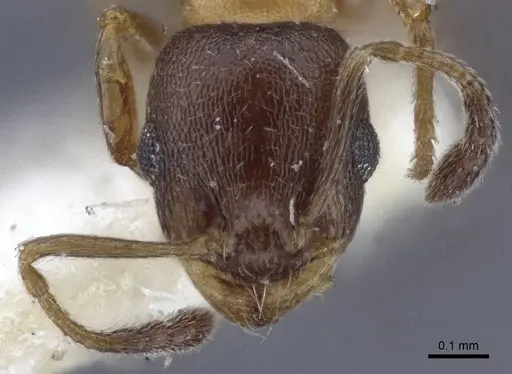
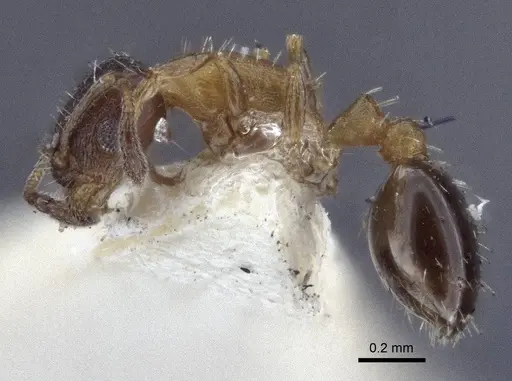
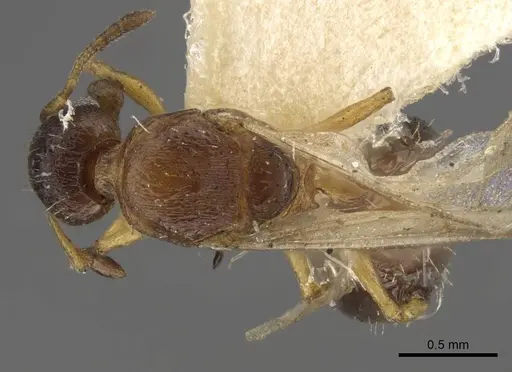
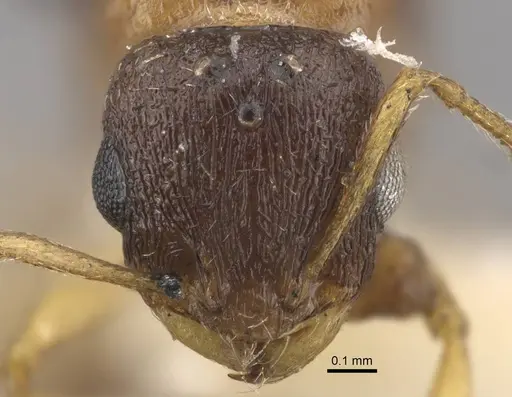
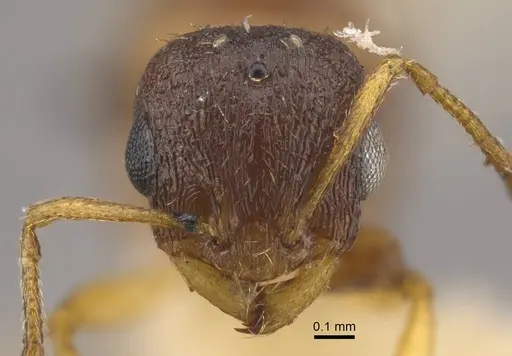
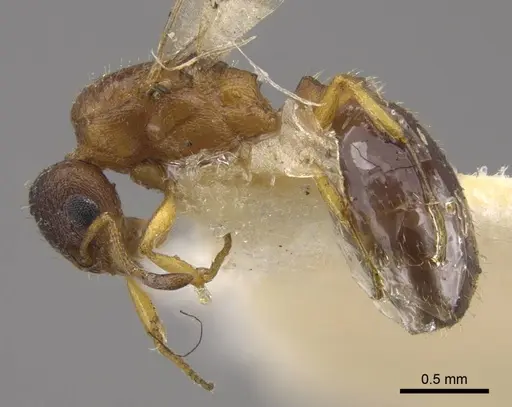
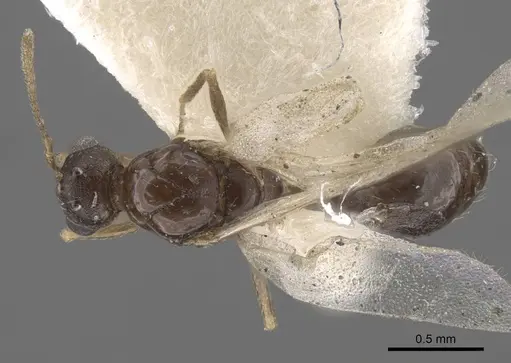
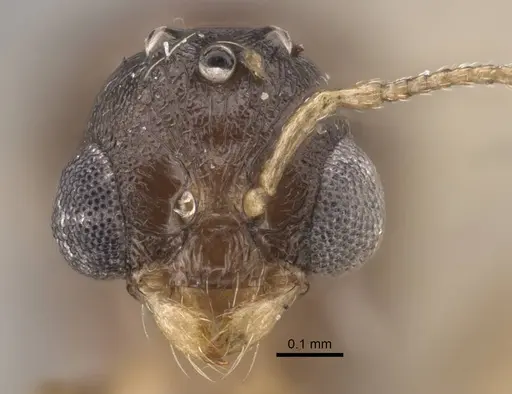
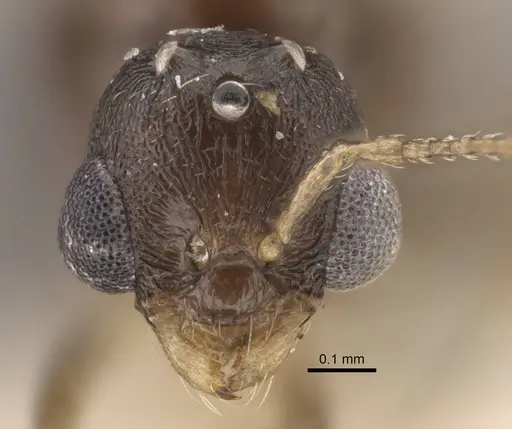
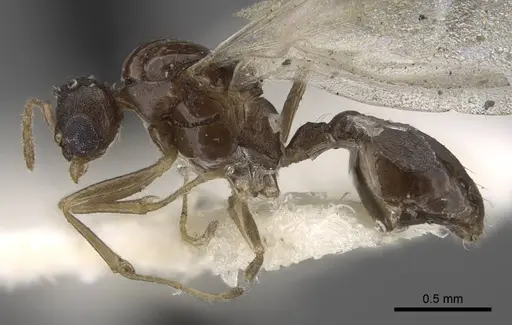
Temnothorax mongolicus is a small, ground-nesting ant native to the steppes and dry meadows of Central and East Asia. Workers are about 2.5-4 mm in length (inferred from typical Temnothorax sizes) and have a distinctive two-tone color pattern: the head and gaster are dark brown to blackish, while the mesosoma (middle body section) and waist are a lighter yellowish to brownish-yellow . This species builds nests directly in soil, often under stones in dry, sunlit areas . The propodeal spines are short and thin compared to many relatives . Notably, it has been found living together with Temnothorax nassonovi in the same nest, it is suspected that one species is a parasite of the other . Originally described from Mongolia as a subspecies of Leptothorax serviculus, it was elevated to full species and later confirmed to include the synonym T. opaciabdomin . Its known range covers Mongolia, northern China (Hebei, Inner Mongolia), North Korea, and parts of eastern Russia .
Quick Summary
- Difficulty: Medium
- Origin & Habitat: Native to the Palearctic region: Mongolia, northern China (Hebei, Inner Mongolia), North Korea, and Russia (East Siberia, Far East) [3][4][2]. Lives in steppes, dry meadows, and dry, sunlit sparse forests, nests are built in soil, often under stones [3][4].
- Colony Type: Colony structure has not been directly studied. Based on typical Temnothorax patterns, this species likely forms single-queen (monogyne) colonies, but some related species can be polygyne. Ergatoid (wingless) replacement queens have not been documented for this species.
- Size & Growth:
- Queen: Estimated ~5-6 mm, based on typical Temnothorax queen sizes (direct measurements not published).
- Worker: Approximately 2.5-4 mm, inferred from typical Temnothorax worker sizes.
- Colony: Unknown, related Temnothorax species typically reach several hundred workers at maturity.
- Growth: Moderate
- Development: Estimated 6-10 weeks at optimal temperature (based on related species). (Development time varies with temperature, warmer conditions within acceptable range speed it up.)
- Antkeeping:
- Temperature: Keep at room temperature, roughly 20-24°C. This species comes from temperate steppe regions with warm summers and cold winters, so it can handle a range but prefers stable, moderate warmth (inferred from habitat).
- Humidity: Prefers relatively dry conditions, think steppe grassland, not rainforest. Keep the nest substrate lightly moist but allow it to dry out partially between waterings. Provide a moisture gradient so ants can choose their preferred spot (inferred from habitat).
- Diapause: Yes, this temperate species needs a winter rest period. Provide 2-3 months at 5-10°C (e.g., in a refrigerator) during the coldest months (inferred from range).
- Nesting: Soil-nesting species that does well in naturalistic setups with a soil layer or in Y‑tong (AAC) nests with compact chambers. Provide some substrate depth and ensure the nest area stays relatively dry. Flat stones or bark pieces make good covers, mimicking natural conditions [4] (inferred from habitat).
- Behavior: Generally peaceful and not aggressive. Workers are quick and will flee rather than fight. Their primary defense is a modified stinger that smears venom (typical of the tribe Crematogastrini), but they pose no threat to humans. Their small size means they can slip through tiny gaps, fine mesh is essential for escape prevention. They are not particularly territorial, which may explain why they are found living together with T. nassonovi [4].
- Common Issues: escape prevention is critical, tiny workers can slip through standard barrier setups, colonies grow slowly, which can frustrate beginners, patience is key, moisture balance during founding is tricky, too wet causes mold, too dry can kill the queen, winter dormancy is required for long‑term health, skipping diapause weakens colonies, wild‑caught colonies may carry parasites that can devastate captive populations
Housing and Nest Setup
Temnothorax mongolicus does best in naturalistic setups that mimic their soil‑nesting behavior. Use a 2-3 cm layer of sandy loam soil (good drainage) topped with a flat stone or piece of bark, these ants naturally nest under stones. Y‑tong (AAC) nests with compact, narrow chambers also work well since they prefer snug spaces. Keep the nest area relatively dry compared to tropical species, this is a steppe ant that likes aired conditions. Always use fine escape prevention because the tiny workers can slip through gaps that larger ants cannot [3][4].
Feeding and Diet
These ants are omnivorous but need plenty of protein to grow. Offer small live prey like fruit flies, pinhead crickets, or tiny insects, they can only handle prey smaller than themselves. They also readily take diluted honey or sugar water. In the wild they likely collect honeydew from aphids. Feed small portions 2-3 times a week for established colonies, remove uneaten prey within 24 hours to prevent mold. Founding queens need very little, a tiny drop of honey and an occasional small insect.
Temperature and Seasonal Care
Keep the colony at room temperature, around 20-24°C. This species comes from temperate steppe regions with warm summers and cold winters, so stable moderate warmth is ideal. During the active season (spring-fall), room temperature is typically enough. In winter, they need a dormancy period of 2-3 months at 5-10°C. This can be achieved in an unheated garage, basement, or refrigerator. Do not feed during diapause and keep the nest slightly drier than normal. Skipping the rest period will weaken the colony over time (inferred from range).
Colony Founding
Queens likely start colonies claustrally, sealing themselves in a small underground chamber and raising the first workers entirely on stored fat reserves. After mating, a queen digs a tiny chamber in soil and blocks the entrance. She lays eggs and tends brood without leaving to eat. The first workers (nanitics) emerge, usually smaller than later ones. Once they harden, they take over foraging. During this phase, keep the founding chamber slightly humid but not wet, and avoid disturbing the queen (inferred from genus).
Behavior and Temperament
Temnothorax mongolicus is a peaceful species. Workers are fast and active foragers, but they flee rather than confront threats. Like other Crematogastrini, they have a modified stinger that smears venom rather than piercing, so they are harmless to people. Colonies are not very territorial, they are known to share nests with Temnothorax nassonovi [4]. In captivity, keep them in a quiet spot with minimal vibration. Their tiny size means excellent escape prevention is vital, even a small gap around tubing can be an escape route.
Frequently Asked Questions
How long does it take for Temnothorax mongolicus to have first workers?
Expect first workers (nanitics) to emerge 6-10 weeks after the queen lays eggs at around 22-24°C. This estimate is based on related Temnothorax species, as specific data for T. mongolicus is not published. Cooler temperatures will slow development significantly.
Can I keep multiple Temnothorax mongolicus queens together?
Not recommended. While some Temnothorax can found colonies together (pleometrosis), this behavior has not been documented for T. mongolicus. Combining unrelated queens typically leads to fighting and colony failure. Start with a single mated queen.
Do Temnothorax mongolicus ants sting?
They have a modified stinger used for smearing venom, not for piercing. They are not a stinging threat to humans and are completely harmless.
What size colony does Temnothorax mongolicus reach?
Maximum colony size is not documented in the literature, but related Temnothorax species typically top out at several hundred workers. Growth is slow, expect a few years to reach full size.
Do Temnothorax mongolicus need hibernation?
Yes. As a temperate species from Mongolia and northern Asia, they require 2-3 months of cold (5-10°C) during winter. Provide this by moving the colony to a cold basement or refrigerator. Skipping hibernation will weaken the colony over time.
Are Temnothorax mongolicus good for beginners?
They are rated medium difficulty. Their small size and need for stable, dry conditions make them less forgiving than standard beginner species like Lasius or Messor. Some experience with other small ants is helpful.
What do Temnothorax mongolicus eat?
They accept small live insects (fruit flies, tiny crickets), diluted honey or sugar water, and occasional seeds. Protein is crucial for brood development. Feed small amounts 2-3 times weekly.
How do I set up a naturalistic terrarium for Temnothorax mongolicus?
Use a shallow container with 2-3 cm of sandy soil. Place flat stones or bark pieces on the surface for cover, these ants naturally nest under stones [4]. Keep the substrate lightly moist but let it dry partially before re‑wetting. Add moss or small plants for looks, but ensure good ventilation to avoid mold. Connect an outworld for feeding.
Why are my Temnothorax mongolicus dying?
Common causes: overly wet conditions (they need it dry), temperature stress (too hot or too cold), mold from overwatering, parasites from wild‑caught colonies, or starvation. Check that humidity is on the drier side, temperature stable at 20-24°C, and remove uneaten food promptly. Parasites are a likely suspect in wild‑caught colonies.
When should I move Temnothorax mongolicus to a formicarium?
Wait until the colony has at least 30-50 workers before moving them to a formicarium. Test tubes work well for young colonies. A naturalistic soil setup is best for this species. Moving too early can cause stress.
Report an Issue
The current care sheet is based fully on literature. See inconsistencies, or something that's incorrect? Please , it will be resolved after review from an admin. Contributing to the blogs tab also helps providing information, to make us be able to further improve the caresheets. Thank you for your support!
References

Cette fiche d'élevage est sous licence CC BY-SA 4.0 .
Blogs de la communauté
Littérature
Chargement de la carte de répartition...Chargement des produits...