
Temnothorax liviae
- Nom sci.
- Temnothorax liviae
- Tribu
- Crematogastrini
- Sous-famille
- Myrmicinae
- Auteur
- Agosti & Collingwood, 2011
- Distribution
- Trouvé dans 2 pays
Introduction
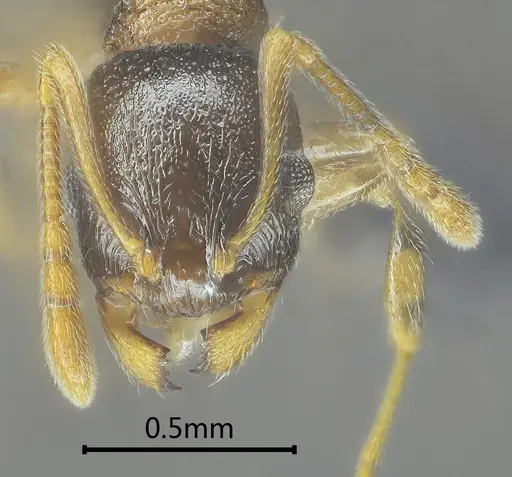
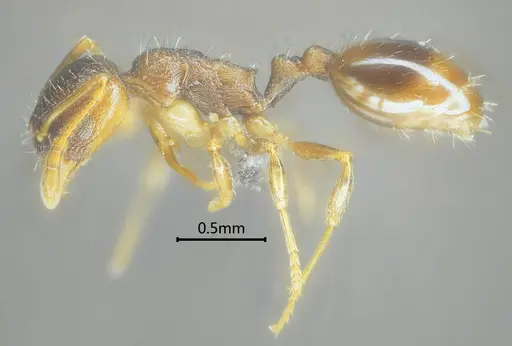
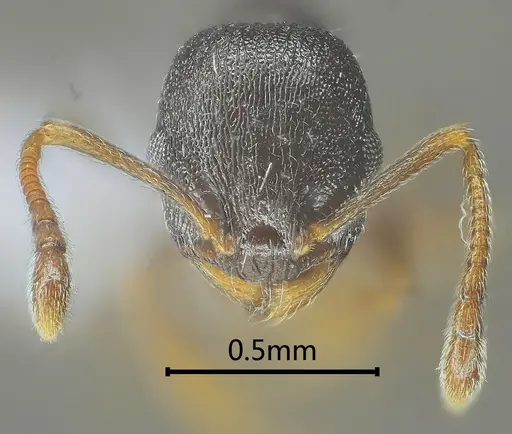
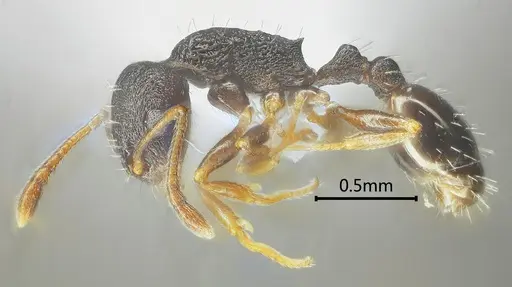
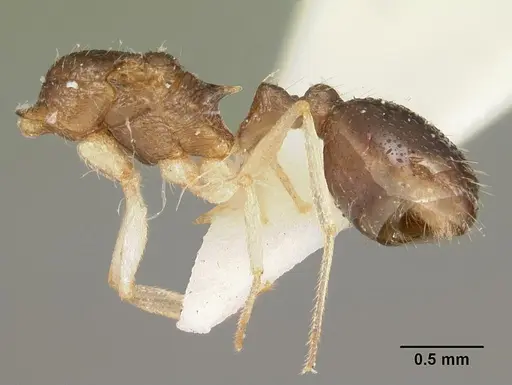
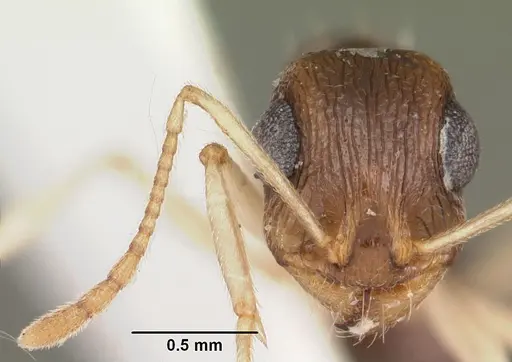
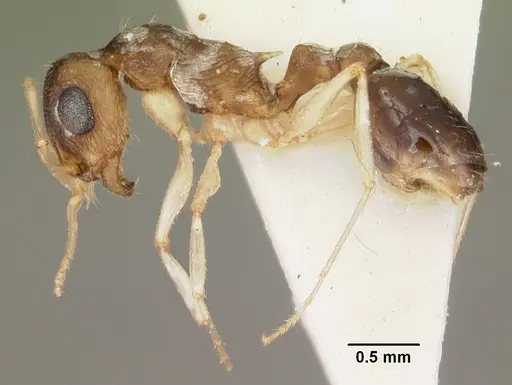
Temnothorax liviae is a small, pale-colored ant species known only from the United Arab Emirates. Workers range from 2.9-4.2 mm in total length, with a light brown body, a darker brown gaster, and pale yellow legs and antennae . They have large eyes - nearly half the head length - and long, pointed spines on the back . This desert species was discovered in 2011 and has only been found in a few locations: the Baynunah sand desert and around Buraimi and al-Ain, where workers were collected under stones near trees . The species is named after Livia Leu Agosti, wife of one of the discoverers . No biological studies have been published on its behavior, colony structure, or captive care, so all husbandry guidance is inferred from genus-level patterns .
Quick Summary
- Difficulty: Expert
- Origin & Habitat: United Arab Emirates, known only from the Baynunah sand desert and nearby areas (Buraimi, al-Ain). Inhabits sandy desert environments, specimens collected under stones near trees and in pitfall traps [1][2].
- Colony Type: Unconfirmed, colony structure has not been documented. Based on typical *Temnothorax* patterns, likely single-queen (monogyne) colonies, but this requires confirmation.
- Size & Growth:
- Queen: Size data unavailable, the only known queen specimen has not been measured for total length [2].
- Worker: 2.9-4.2 mm total length, holotype measures 4.2 mm, with smaller workers (2.9-3.0 mm) found in the Buraimi area [1][2].
- Colony: Unknown, no colony size data exists. Based on typical *Temnothorax* patterns, likely up to several hundred workers at maturity.
- Growth: Unknown, no development data exists.
- Development: Estimated 6-10 weeks at optimal temperature, no direct data for this species, inferred from genus-level patterns [2]. (Temperature-dependent, a desert species likely develops faster at warmer temperatures within its tolerable range.)
- Antkeeping:
- Temperature: Aim for warm conditions typical of desert habitats, roughly 24-30°C. Provide a temperature gradient so workers can self-regulate [1].
- Humidity: Keep the nest relatively dry, this is a desert species from arid sandy environments. Provide a small water source but avoid damp substrate. Sandy desert, not rainforest.
- Diapause: Unknown, no documented winter behavior. The UAE has mild winters, the species may have reduced activity periods. Monitor for seasonal slowdowns.
- Nesting: Provide a dry nest environment. Based on collection data (under stones in sandy areas), they likely prefer tight, dark chambers. Use Y-tong (AAC), plaster, or 3D‑printed nests. Avoid naturally humid setups.
- Behavior: Generally peaceful and non-aggressive, typical of the genus. Workers are active foragers that likely search for small prey and honeydew. Their small size (under 4 mm) makes them prone to escapes, use fine mesh barriers and seal any gaps. They have a modified stinger used for smearing venom, but they are not dangerous to humans. Activity increases with warmth [2].
- Common Issues: desert species may be sensitive to humidity, overwatering or damp nests could stress or kill colonies, small size means escape prevention is critical, they can squeeze through standard mesh, no documented hibernation requirements, monitor your colony for seasonal activity changes, wild-caught colonies may have parasites or diseases since no captive-bred populations exist
Housing and Nest Setup
Temnothorax liviae requires dry housing conditions reflecting its desert origin. Y‑tong (AAC) nests work well, providing the dark, tight chambers these ants prefer. Plaster or 3D‑printed nests with narrow galleries are also suitable. Avoid naturalistic setups requiring soil or high humidity, this species comes from arid sandy environments where moisture is limited. A small water reservoir should be provided, but the nest material itself should remain relatively dry. Given their small size (under 4 mm), ensure all connections between the nest and outworld are sealed with cotton or fine mesh to prevent escapes. The outworld can be standard, these ants will forage in the open space provided [1][2].
Feeding and Diet
Based on typical Temnothorax feeding behavior, offer a varied diet including sugar sources (honey water, sugar water) and protein (small insects like fruit flies, pinhead crickets, or mealworms). In the wild, desert Temnothorax species typically forage for honeydew from aphids and scale insects, plus small arthropods. Offer protein prey twice weekly, and keep a constant sugar source available. Remove uneaten prey after 24-48 hours to prevent mold. Start with small prey items given the workers' modest 2.9-4.2 mm size. Some Temnothorax species are picky eaters, so observe what your colony accepts best [2].
Temperature and Seasonal Care
As a desert species from the UAE, T. liviae requires warm conditions, aim for 24-30°C in the nest area. A heating cable or mat on one side of the nest creates a temperature gradient, allowing workers to self‑regulate. The UAE experiences extreme summer heat but also mild winters, so this species may not require a true hibernation period. Monitor your colony for seasonal changes in activity. If workers become less active in winter, reduce feeding and allow a cool period (15-18°C) rather than forcing activity. Never let temperatures drop below 15°C, as this species has no cold tolerance data. Keep the nest area warm and stable while the outworld can be at room temperature [1].
Behavior and Colony Dynamics
Temnothorax liviae exhibits typical genus behavior: peaceful colonies with non‑aggressive workers. Workers are active foragers that will search the outworld for food. The queen remains hidden in the nest chamber after founding, tended by workers. They have a modified stinger used for smearing venom, they are not known to sting humans effectively. Their small size and docile nature make them suitable for observation, you'll often see workers patrolling the outworld and tending to the queen. Colony growth is likely slow initially, typical of claustral founding, with the first nanitic workers (smaller first brood) appearing after several weeks. Once established, growth continues moderately. The exceptionally large eyes are a distinctive feature, possibly related to foraging in their desert habitat [2].
Frequently Asked Questions
How long does it take for Temnothorax liviae to have first workers?
An estimated 6-10 weeks from egg to first worker at optimal temperature (around 26-28°C). No direct data exists for this species, so this is based on typical Temnothorax genus development patterns. The first workers (nanitics) will be smaller than mature workers [2].
Can I keep Temnothorax liviae in a test tube?
Yes, test tubes work well for founding colonies and small groups. Ensure the cotton is packed tightly, these tiny ants can escape through gaps that would hold larger species. Use a fine mesh barrier on any ventilation. Once the colony reaches about 20-30 workers, consider moving to a proper nest [4].
Do Temnothorax liviae ants sting?
They have a modified stinger, but it is used for smearing venom rather than piercing, so they are not known to sting humans effectively. They are completely harmless to keepers, any defensive behavior is mild [2].
What temperature do Temnothorax liviae need?
Keep them warm at 24-30°C. A temperature gradient around 26-28°C in the nest area is ideal. You can achieve this with a heating cable on one side of the nest. Avoid temperatures below 15°C, this desert species has no documented cold tolerance [1].
Are Temnothorax liviae good for beginners?
No, this is an expert‑level species due to very limited data. No captive‑breeding records exist, and all stock comes from wild‑caught queens. The desert habitat requirements (warm, dry) differ from common pet ants. We recommend starting with more established species like Temnothorax nylanderi or Lasius niger before attempting T. liviae [2].
How big do Temnothorax liviae colonies get?
Colony size is unknown, no scientific data exists on maximum colony size. Based on typical Temnothorax genus patterns, expect up to several hundred workers at maturity. Growth is likely slow to moderate once established [2].
Do Temnothorax liviae need hibernation?
Unknown, no documented overwintering behavior exists. The UAE has mild winters, so this species may not require a true diapause. If your colony shows reduced activity in winter, provide a cool period around 15-18°C rather than active hibernation. Monitor your colony's behavior and adjust accordingly [2].
Why are my Temnothorax liviae dying?
Common causes include: too much humidity (desert species, keep nest dry), temperatures too low (need 24-30°C), poor escape prevention allowing ants to wander and die, or stress from wild‑caught origin. Ensure the nest is dry, warm, and secure. Wild‑caught colonies may carry parasites. If problems persist, review temperature and humidity before assuming disease [2].
When should I move Temnothorax liviae to a formicarium?
Wait until the colony has about 20-30 workers and is actively foraging. For this species, a Y‑tong, plaster, or 3D‑printed nest works well. Ensure the new nest maintains the dry, warm conditions they prefer. Move the test tube into the nest and let them relocate naturally, do not force them [4].
Can I keep multiple queens together?
Not recommended, combining unrelated queens has not been documented for this species. Temnothorax are typically single‑queen colonies. If you obtain multiple founding queens, house them separately. In the wild, only one queen typically establishes each colony [2].
Report an Issue
The current care sheet is based fully on literature. See inconsistencies, or something that's incorrect? Please , it will be resolved after review from an admin. Contributing to the blogs tab also helps providing information, to make us be able to further improve the caresheets. Thank you for your support!
References

Cette fiche d'élevage est sous licence CC BY-SA 4.0 .
Blogs de la communauté
ANTWEB1060592
Voir sur AntWeb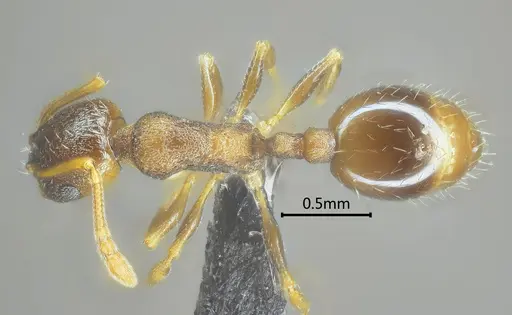
ANTWEB1060593
Voir sur AntWeb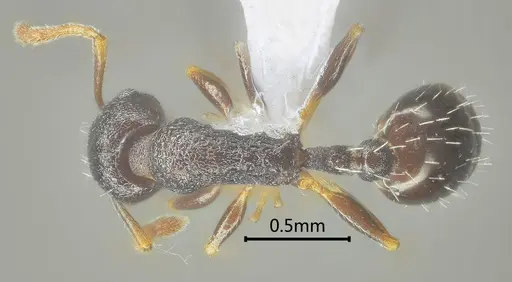
CASENT0102699
Voir sur AntWeb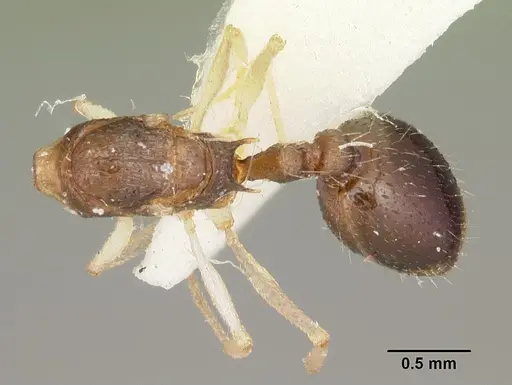
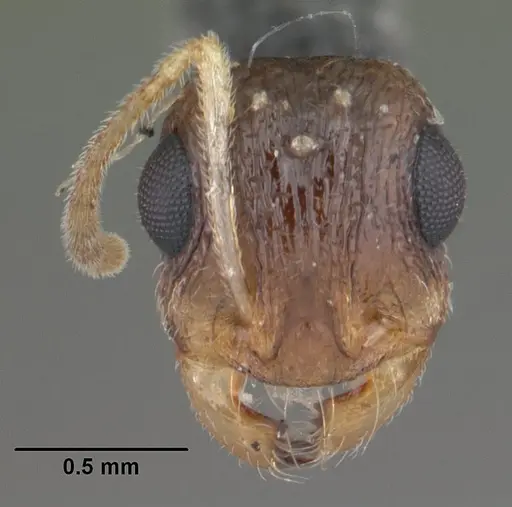
CASENT0102700
Voir sur AntWeb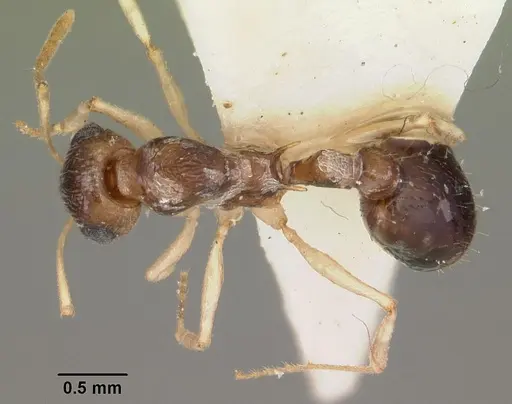
Littérature
Chargement de la carte de répartition...Chargement des produits...