
Temnothorax fragosus
- Nom sci.
- Temnothorax fragosus
- Tribu
- Crematogastrini
- Sous-famille
- Myrmicinae
- Auteur
- Mackay & Buschinger, 2002
- Distribution
- Trouvé dans 0 pays
Introduction
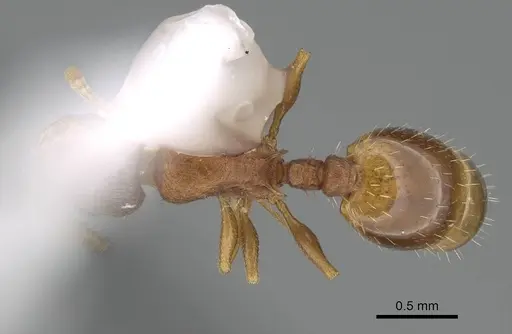
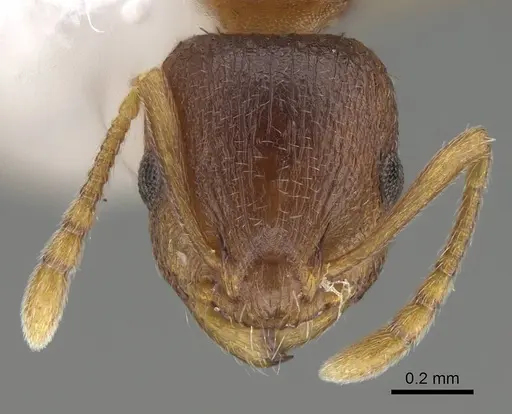
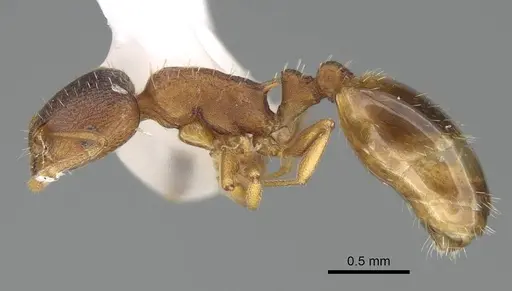
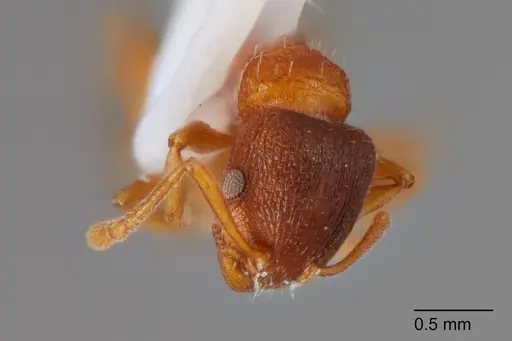
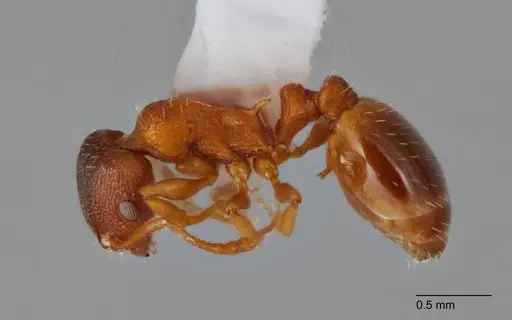
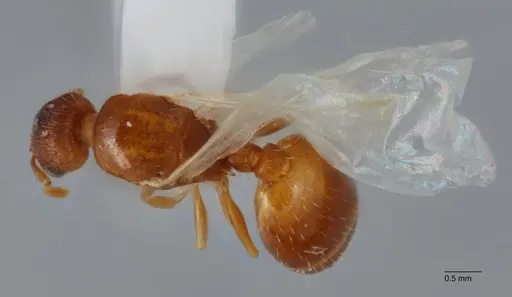
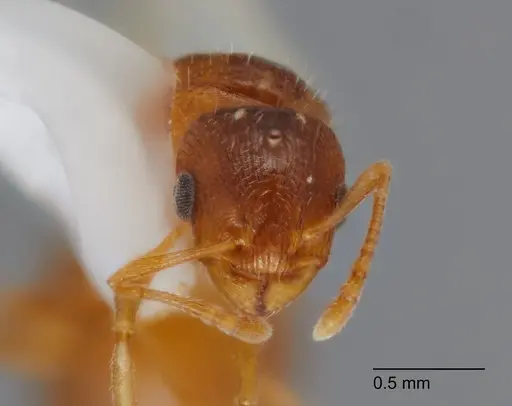
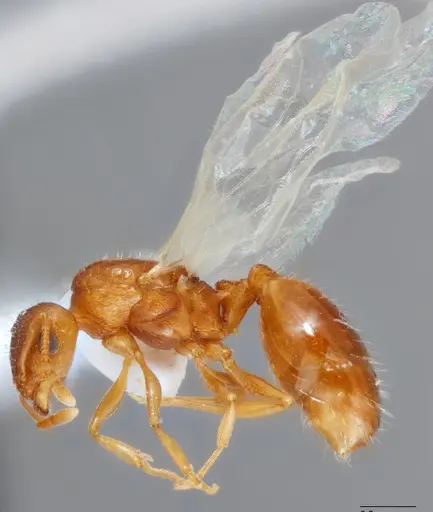
Temnothorax fragosus is a tiny, rugged ant known only from a single locality in Jasper National Park, Alberta, Canada. Workers are easily recognized by their rough, wrinkled sculpture covering the head, body, and waist segments - this is where the species gets its name 'fragosus' (meaning 'rough' in Latin) . They have 11-segmented antennae and very well-developed propodeal spines that are thick and blunt at the tips . The body is medium brown in workers and pale brown in queens . They belong to the rugatulus-clade within Temnothorax . What makes T. fragosus special is its extremely restricted range - it has only been found at one specific spot despite extensive searching in the area. Colonies nest in soil under pebbles in an open pine forest at the base of a southeast-facing slope, around 1250m elevation . This is a monogyne species (single queen per colony), with wild colonies containing up to 150 workers .
Quick Summary
- Difficulty: Medium
- Origin & Habitat: Known only from Jasper National Park, Alberta, Canada. Nests in soil under pebbles in an open pine forest at the base of a SE-exposed slope, approximately 1250m elevation [1].
- Colony Type: Monogyne, single queen colonies. Nearly all colonies collected had a single queen, only two orphaned colonies were found without one [1].
- Size & Growth:
- Queen: Size data unavailable, only head measurements recorded in literature [1]
- Worker: Size data unavailable, only head measurements recorded in literature [1]
- Colony: Up to 150 workers [1]
- Growth: Moderate (inferred from related Temnothorax species, no direct data)
- Development: Unknown, no data available for this species (Development time has not been studied. Any figures would be pure speculation.)
- Antkeeping:
- Temperature: Inferred from habitat: keep cool to room temperature, around 18-22°C. This species comes from a mountainous environment at 1250m in Canada, so avoid overheating
- Humidity: Provide moderate moisture. In nature they nest under pebbles in soil, suggesting a damp but not waterlogged substrate. Keep the nest area moist but allow some drying [1]
- Diapause: Yes, required. This species is native to latitude ~52°N in the Canadian Rockies, where winters are harsh. Provide a winter rest period of 3-4 months at 5-10°C, gradually cooling in fall and warming in spring
- Nesting: Tight, small chambers are essential. Y-tong (AAC), plaster, or small test tube nests work well. Keep the nest dark and provide fine mesh on ventilation, these ants can squeeze through tiny gaps. Mimic their natural preference for soil cavities under stones [1]
- Behavior: Temnothorax fragosus is docile and non-aggressive. Workers are tiny and will flee rather than fight. Their primary defense is a modified stinger that smears venom rather than piercing, they are not a stinging threat to humans. Due to their minute size, escape prevention is critical. They are not parasitic or slave-making.
- Common Issues: tiny size makes escapes likely without extremely fine mesh barriers, workers can pass through standard ant-proof gaps, hibernation is essential, skipping winter rest may lead to colony decline or death, very limited natural range suggests specialized habitat requirements that are poorly understood, expect some trial and error, little captive breeding experience exists, wild colonies are legally protected? (not listed, but extremely restricted, do not release if kept), small colony sizes (up to 150 workers) leave little room for mistakes during founding and early growth
Housing and Nest Setup
Because Temnothorax fragosus is tiny and nests in soil under pebbles, your setup should mimic small, tight cavities. Test tubes with a water reservoir and cotton plug work well for founding and small colonies. Once the colony grows, move them to a Y-tong (AAC) or plaster nest with narrow chambers, they feel secure in confined spaces. Avoid large, open areas. Use fine mesh (e.g.,0.5mm or smaller) on all ventilation holes, as workers can slip through standard ant mesh. Keep the nest area dark or covered. These ants originally nested in shallow soil under stones at the base of a slope in an open pine forest [1].
Feeding and Diet
Like most small Temnothorax, T. fragosus is probably omnivorous. Offer sugar water or honey water as a carbohydrate source. For protein, provide tiny prey such as fruit flies, small mealworms, or pinhead crickets. Feed small amounts every 2-3 days and remove leftovers to prevent mold. There are no detailed dietary studies for this species, so watch how your colony responds and adjust accordingly. [1]
Temperature and Seasonal Care
Based on its natural habitat, a cool, mountainous site at ~1250m in Alberta, this species prefers stable, cool conditions. Maintain room temperature around 18-22°C year-round. The most critical aspect is providing a proper winter diapause: gradually reduce temperatures in fall to 5-10°C and keep them there for 3-4 months (roughly November to February in the northern hemisphere). Do not skip hibernation, as it is essential for colony health and reproduction. In summer, avoid direct heat or temperatures above 25°C. [1]
Colony Founding
The founding behavior of T. fragosus has not been formally documented. Many Temnothorax species are claustral (queens seal themselves in a chamber and raise the first brood on stored reserves), but that is not confirmed for this species. If you are lucky enough to obtain a mated queen, provide her with a small, dark, secure chamber (e.g., a test tube with water) and avoid disturbance. The first workers (nanitics) are likely to be smaller than mature workers. Be patient, growth may be slow at first
Growth and Development
There are no published studies on the development rate of T. fragosus. Wild colonies contained up to 150 workers with numerous worker pupae when collected in August, suggesting moderate growth. Colony growth likely depends on temperature and food availability. Because information is so limited, keep detailed records of your own colony to help build our understanding of this rare ant [1].
Frequently Asked Questions
How long does it take for Temnothorax fragosus to get their first workers?
This is not known for this species. In related Temnothorax species it takes roughly 6-10 weeks under warm conditions, but that is only an educated guess, there is no published data for T. fragosus.
Do Temnothorax fragosus ants sting?
These ants have a modified, flattened stinger that is used to smear venom onto enemies rather than piercing flesh. They are not a stinging threat to humans, but the venom may cause mild irritation. Handle with care if necessary.
What temperature should I keep Temnothorax fragosus at?
Based on its cool mountain habitat, keep them at room temperature (18-22°C). They do not need additional heat, and overheating can be harmful. See the hibernation section for winter cooling.
Do Temnothorax fragosus need hibernation?
Yes, almost certainly. The species is native to Jasper National Park (latitude ~52°N) where winters are long and cold. Provide a winter rest of 3-4 months at 5-10°C each year, gradually cooling down in autumn and warming up in spring.
Can I keep multiple Temnothorax fragosus queens together?
No, this species is monogyne (single queen). In the wild, nearly all colonies had one queen. Do not attempt to combine unrelated queens [1].
How big do Temnothorax fragosus colonies get?
Wild colonies contain up to 150 workers. In captivity you can expect a similar upper limit, these are small colonies typical of cavity-nesting Temnothorax [1].
What do Temnothorax fragosus eat?
They are probably omnivorous. Offer sugar water or honey regularly and small protein sources like fruit flies or tiny mealworms. Remove uneaten food after a few days to prevent mold.
Why is escape prevention important for Temnothorax fragosus?
Workers are extremely small, they can squeeze through gaps that larger ants cannot. Use very fine mesh (0.5mm or smaller) on all ventilation, seal lids tightly, and inspect for any cracks. Standard ant-proof mesh may not be sufficient.
Are Temnothorax fragosus good for beginners?
Not recommended for beginners. Their tiny size requires extreme escape prevention, they need proper hibernation, and very little is known about their captive care. They are best suited for experienced keepers willing to experiment carefully.
Where is Temnothorax fragosus found in the wild?
It is known only from one location in Jasper National Park, Alberta, Canada, about 20 km north of Jasper on Celestine Lake Road, at ~1250m elevation. It nests in soil under pebbles in an open pine forest, on a southeast-facing slope. This extremely restricted range makes it a species of conservation concern, do not release any captive colonies [1].
Report an Issue
The current care sheet is based fully on literature. See inconsistencies, or something that's incorrect? Please , it will be resolved after review from an admin. Contributing to the blogs tab also helps providing information, to make us be able to further improve the caresheets. Thank you for your support!
References

Cette fiche d'élevage est sous licence CC BY-SA 4.0 .
Blogs de la communauté
Littérature
Chargement de la carte de répartition...Chargement des produits...