
Technomyrmex rotundiceps
- Nom sci.
- Technomyrmex rotundiceps
- Tribu
- Tapinomini
- Sous-famille
- Dolichoderinae
- Auteur
- Karavaiev, 1926
- Distribution
- Trouvé dans 1 pays
Introduction
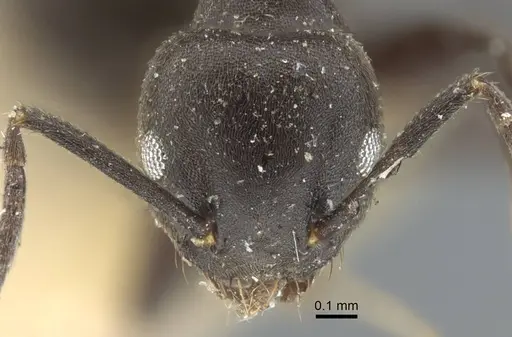
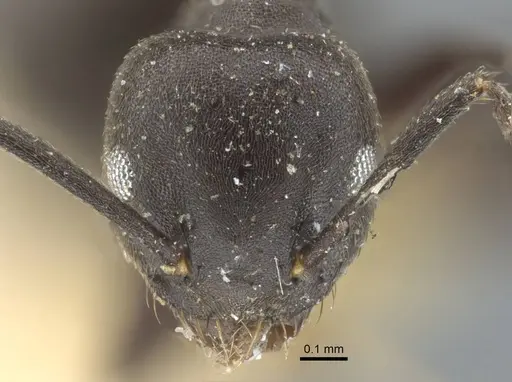
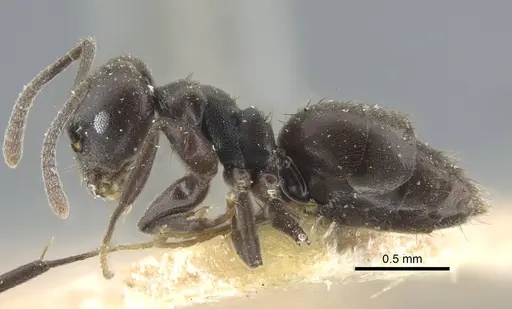
Technomyrmex rotundiceps is a small, dark ant measuring 2.6-2.7 mm in total length . Workers are blackish brown to black with a distinctly rounded head and eyes placed farther back on the head than in related species. A key identification feature is the dark hind basitarsus, the same color as the dark tibia, unlike the closely related Technomyrmex albipes which has a pale yellow to white hind basitarsus. This species belongs to the subfamily Dolichoderinae, so it lacks a functional stinger and defends itself by excreting a sticky, foul-smelling chemical from its anal gland (a defense known as “smear”). Native to Southeast Asia, it has been recorded from Java (Indonesia) and Sabah (Borneo) . Specimens have been collected from leaf litter in swamp forests and by pyrethrum fogging of forest trees . The dark hind basitarsus is a quick way to tell this species apart from the similar Technomyrmex albipes, which is often encountered in the pet trade. Very little is known about its colony biology, so most care advice is inferred from related Technomyrmex species.
Quick Summary
- Difficulty: Medium
- Origin & Habitat: Native to Java (Indonesia) and Sabah, Borneo [1]. Found in tropical forest environments, including swamp forest leaf litter and forest canopies [1].
- Colony Type: Colony structure is unconfirmed. No data exists on queen number for this species.
- Size & Growth:
- Queen: Unknown, no measurements documented in available literature.
- Worker: 2.6-2.7 mm total length [1]
- Colony: Unknown, no wild colony size data available.
- Growth: Moderate (inferred from related tropical Technomyrmex species)
- Development: Estimated 6-8 weeks at 24-28 °C, based on genus-level patterns for Technomyrmex (Direct species-specific data is unavailable. Tropical species typically develop faster than temperate ones.)
- Antkeeping:
- Temperature: Keep at 24-28 °C. These are tropical ants from Southeast Asia. A heating cable on one side of the nest can create a temperature gradient. Avoid temperatures below 20 °C.
- Humidity: High humidity preferred, think damp tropical forest floor. Keep the nest substrate consistently moist but not waterlogged. Provide a water reservoir (e.g., test tube with cotton) and maintain a humid nest chamber.
- Diapause: No, as a tropical species from Java and Borneo, they do not require hibernation. Keep them warm year-round.
- Nesting: Test tubes work well for founding colonies. For larger setups, Y-tong (AAC) or plaster nests retain humidity well. They prefer dark, humid conditions similar to their natural leaf-litter habitat. Use fine mesh and fluon on all openings to prevent escapes (workers are under 3 mm).
- Behavior: Workers are small, generally non‑aggressive ants. They lack a functional stinger, defense is via a sticky, foul‑smelling anal gland secretion (smear defense), which is harmless to humans in small amounts. They are likely moderate escape artists due to their size, use standard escape prevention (fluon, tight seals). Workers probably forage in trails for honeydew and small insects.
- Common Issues: limited availability, this species is rarely found in the antkeeping hobby, escape prevention is critical because workers are under 3 mm, use fine mesh and fluon barriers on all openings, tropical humidity requirements mean dry conditions can kill the colony, monitor substrate moisture, no species‑specific care data exists, keepers must rely on genus‑level guidance and careful observation, avoid temperatures below 20 °C, as this species is not adapted to cool conditions
Housing and Nest Preferences
Technomyrmex rotundiceps does well in standard ant housing. Test tubes with a water reservoir work well for founding colonies, use cotton to separate the water from the ants. For larger colonies, Y‑tong (AAC) or plaster nests hold humidity well. These ants prefer dark, moist conditions, so keep the nest covered and away from direct light. Because workers are under 3 mm, seal all connections between the outworld and nest with fluon or tight‑fitting tubing to prevent escapes. A naturalistic setup with a soil substrate can also work, mimicking their leaf‑litter habitat.
Feeding and Diet
Like other Technomyrmex species, T. rotundiceps is likely a generalist feeder. Provide a constant sugar source such as sugar water or honey. For protein, offer small insects like fruit flies, small crickets, or mealworm pieces. Feed protein once or twice a week, removing any leftovers after 24 hours. Fresh water should always be available. In the wild they likely forage on honeydew and small arthropods.
Temperature and Humidity
As a tropical species from Java and Borneo, Technomyrmex rotundiceps needs warm, humid conditions. Keep the nest at 24-28 °C. You can use a heating cable placed on top of the nest (never under it, to avoid drying out the substrate). If your room is naturally warm, additional heating may not be needed. Humidity should be high, aim for a substrate that feels damp but not waterlogged. Use a water reservoir (e.g., a test tube with cotton) and consider covering part of the nest ventilation to retain moisture. Avoid temperatures below 20 °C.
Colony Founding
The founding behavior of Technomyrmex rotundiceps has not been directly documented. Based on typical Technomyrmex patterns, the queen likely seals herself in a small chamber (claustral founding) and raises her first workers alone using stored fat reserves. Keep founding colonies in complete darkness with minimal disturbance. Do not offer food to the queen, she relies on her reserves. The first workers (nanitics) will be smaller than mature workers and should appear after several weeks if conditions are right.
Behavior and Temperament
Technomyrmex rotundiceps workers are small, dark, and generally calm. As members of the subfamily Dolichoderinae (tribe Tapinomini), they lack a functional stinger. Instead, they excrete a sticky, foul‑smelling chemical from their anal gland (a defense known as smear). This is harmless to humans in small amounts but can be irritating. Workers likely forage in trails for sugars and small prey. Their small size allows them to escape through tiny gaps, so use fine mesh (0.5 mm or smaller) on all ventilation and ensure lid seals are tight.
Frequently Asked Questions
How long does it take for Technomyrmex rotundiceps to have first workers?
Based on typical Technomyrmex development, expect first workers (nanitics) in approximately 6-8 weeks at optimal tropical temperatures (24-28 °C). This is an estimate since no species‑specific data exists. The queen stays in the nest and the first workers are smaller than mature workers.
What temperature do Technomyrmex rotundiceps ants need?
Keep them at 24-28 °C. These are tropical ants from Southeast Asia and need warmth year‑round. Use a heating cable on the nest if needed. Avoid temperatures below 20 °C.
Can I keep Technomyrmex rotundiceps in a test tube?
Yes. A standard test tube with a water reservoir works well for founding and small colonies. Make sure the cotton barrier is tight, and apply fluon to any connecting tubes or outworld access points to prevent escapes.
What do Technomyrmex rotundiceps eat?
They are generalist feeders. Offer sugar water or honey constantly for energy. For protein, provide small insects like fruit flies, small crickets, or mealworm pieces. Feed protein once or twice a week and remove uneaten food after 24 hours.
Do Technomyrmex rotundiceps need hibernation?
No. As a tropical species from Java and Borneo, they do not require hibernation. Keep them warm and active year‑round at 24-28 °C.
How big do Technomyrmex rotundiceps colonies get?
The maximum colony size is unknown, no wild colony data exists for this species. Based on related Technomyrmex species, colonies may reach several hundred to a few thousand workers over several years, but this is speculative.
Are Technomyrmex rotundiceps good for beginners?
This species is rated as Medium difficulty. While not the easiest species for beginners due to their specific humidity and temperature needs, they are generally calm and manageable. The main challenge is that they are rarely available in the antkeeping hobby.
Why are my Technomyrmex rotundiceps dying?
Common causes include: low humidity (keep substrate damp), temperatures below 20 °C (they need warmth), escapes due to small size (check all seals), or poor nutrition. Ensure they have constant sugar water and small protein prey. Avoid disturbing the nest during founding.
When should I move my colony to a larger nest?
Wait until the colony has outgrown the test tube, at least 20-30 workers is a reasonable guideline, but watch for crowding. When moving, use gentle methods and ensure the new nest has matching humidity and temperature. Avoid moving a colony that is still very small.
Report an Issue
The current care sheet is based fully on literature. See inconsistencies, or something that's incorrect? Please , it will be resolved after review from an admin. Contributing to the blogs tab also helps providing information, to make us be able to further improve the caresheets. Thank you for your support!
References

Cette fiche d'élevage est sous licence CC BY-SA 4.0 .
Blogs de la communauté
CASENT0917127
Voir sur AntWeb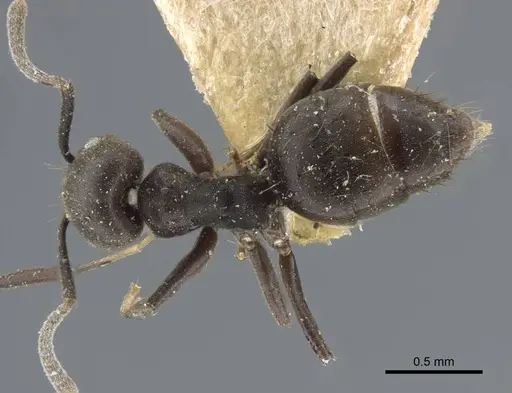
Littérature
Chargement de la carte de répartition...Chargement des produits...