
Tapinoma modestum
- Nom sci.
- Tapinoma modestum
- Tribu
- Tapinomini
- Sous-famille
- Dolichoderinae
- Auteur
- Santschi, 1932
- Distribution
- Trouvé dans 1 pays
Introduction
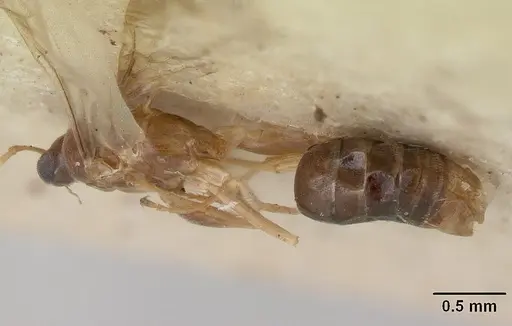
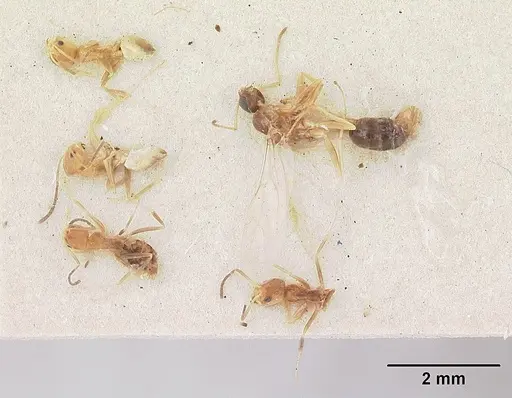
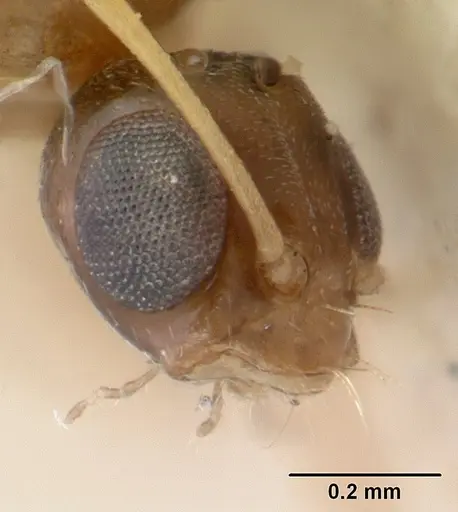
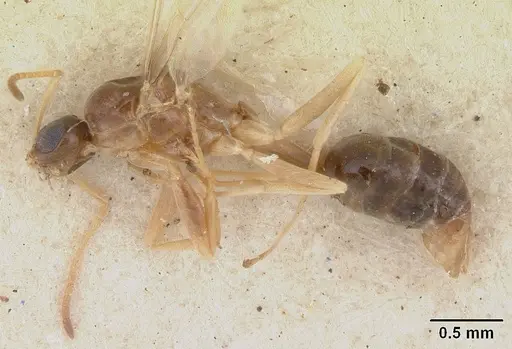
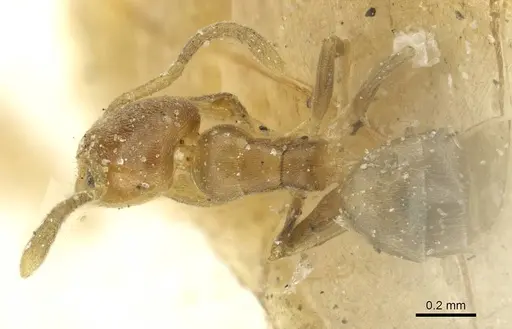
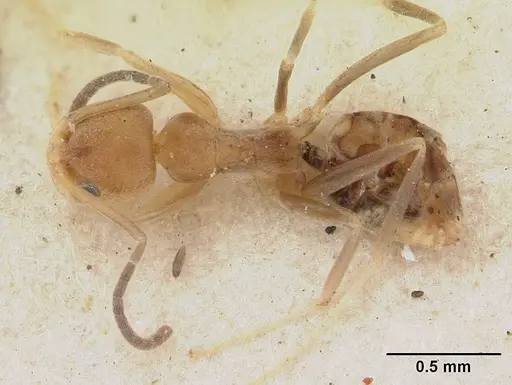
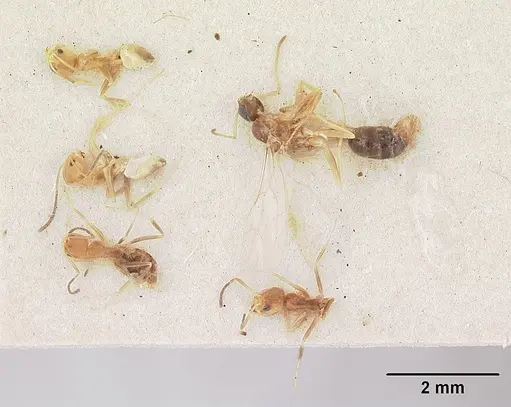
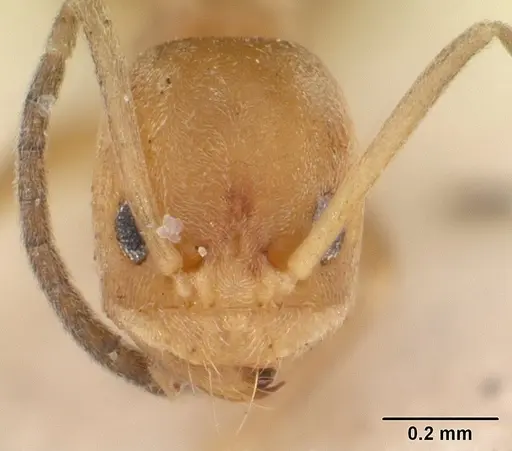
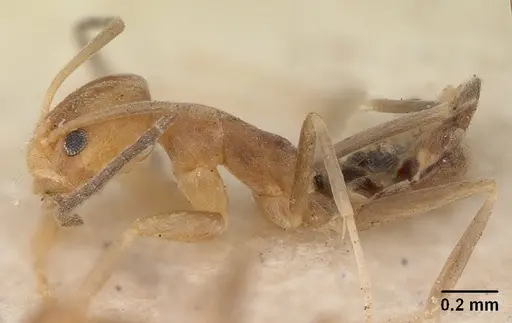
Tapinoma modestum is a tiny Afrotropical ant, with workers measuring just 1.4-1.5mm total length . It belongs to the Dolichoderinae subfamily and lacks a functional stinger. Instead, it defends itself by exuding a sticky, foul‑smelling chemical from an anal gland. This species was originally described from Zimbabwe and has since been recorded across West Africa (Benin, Gambia, Mali) and East Africa (Tanzania, Gabon) . In the wild, they forage on savannah trees like Vachellia nilotica and Lannea schweinfurthii, and occasionally on human structures .
Quick Summary
- Difficulty: Hard
- Origin & Habitat: Afrotropical distribution from Zimbabwe (type location), across West Africa (Benin, Gambia, Mali), and East Africa (Tanzania, Gabon). Found in savannah environments, foraging on trees and buildings [1][4][2].
- Colony Type: Colony structure is unconfirmed, no research documents queen number or social organization for this species.
- Size & Growth:
- Queen: size data unavailable, no measurements exist for queens
- Worker: 1.4-1.5mm TL [1]
- Colony: Unknown, no colony size data available
- Growth: Unknown
- Development: Unknown, no species‑specific data exists (No developmental timeline has been documented. Keep warm (24-28°C) if you obtain a colony, but expect long periods without visible progress.)
- Antkeeping:
- Temperature: As an Afrotropical species, keep nest areas at 24-28°C. Room temperature (22-25°C) may be acceptable. Avoid persistent temperatures below 20°C [1].
- Humidity: Provide moderate humidity. Keep the nest substrate lightly moist but not waterlogged. Their savannah habitat suggests they tolerate drier conditions than rainforest species.
- Diapause: Unlikely, as an Afrotropical species from warm climates, they probably do not require a winter diapause. Maintain consistent temperatures year‑round.
- Nesting: Natural nesting sites are unknown. For captivity, use a small test tube setup or a Y‑tong nest with very fine chambers. Avoid large open spaces.
- Behavior: Little is known about the behavior of Tapinoma modestum. Workers are tiny and soft‑bodied, likely foraging for honeydew and small insects. They are not aggressive and will flee when disturbed. Escape prevention is absolutely critical, their 1.5mm size allows them to slip through standard barriers [1].
- Common Issues: escape prevention is critical, their 1.5mm size means they can squeeze through microscopic gaps, so use fluon barriers and fine mesh (≤0.5mm), soft bodies make them vulnerable to crushing, handle with care, no documented captive breeding success, establishing a colony may be difficult, tiny size limits food choices, need appropriately sized prey (e.g., fruit flies, springtails), wild‑caught colonies may carry unknown parasites
Housing and Escape Prevention
Housing Tapinoma modestum requires extreme attention to their minute size. Workers measure just 1.4-1.5mm, making them one of the smallest ant species kept in captivity [1]. Standard test tube setups work well, but you must use excellent escape prevention. Apply fluon or a similar barrier to all edges, and ensure any connecting tubes have smooth interiors without gaps. Even tiny gaps in silicone seals can allow escape. Use a small outworld area, large spaces may cause stress. Keep housing simple and secure. For the nest itself, use fine‑chambered Y‑tong or plaster nests, or a test tube with a cotton plug.
Feeding and Diet
Like most Tapinoma species, T. modestum likely feeds on honeydew from aphids and scale insects, plus small insects. In captivity, offer sugar water or honey water as a constant energy source. For protein, provide tiny prey items like fruit flies, springtails, or other micro‑arthropods, anything too large for their 1.5mm workers will be left untouched. Feed small amounts several times per week rather than large infrequent meals. Remove uneaten sugar sources within 2-3 days to prevent mold.
Temperature and Seasonal Care
As an Afrotropical species recorded from Zimbabwe, Tanzania, and West Africa, T. modestum prefers warm conditions [1]. Keep the nest area at 24-28°C. A heating cable on one side of the nest can create a gentle gradient if your room temperature runs cool. They do not require hibernation or diapause, maintain consistent temperatures year‑round. Avoid prolonged drops below 20°C, as this species is not known from temperate regions. Stable warmth supports colony activity and any potential brood development.
Colony Establishment
Establishing T. modestum colonies in captivity presents major challenges. No documented captive breeding success exists for this species, and wild colonies are rarely encountered due to their small size and inconspicuous nesting habits. If you obtain a founding queen, provide a small, humid test tube setup with a dark cover. Founding type is unconfirmed, do not assume claustral. Expect an uncertain development timeline, no research has documented egg‑to‑worker time for this species. Patience is essential, and success may require specialized care. [1]
Defense and Handling
As a Dolichoderine ant (tribe Tapinomini), T. modestum lacks a functional stinger. Its primary defense is exuding a sticky, foul‑smelling cyclopentanoid monoterpene from an anal gland, a “smear” defense. This substance can be irritating, but is not dangerous to humans. These ants are soft‑bodied and delicate, handle gently when moving colonies. They are not aggressive and will flee rather than fight when disturbed. Their small size and soft bodies make them vulnerable in mixed‑species setups.
Frequently Asked Questions
How long does it take for Tapinoma modestum to develop from egg to worker?
The development time is completely unknown for this species. No research has documented it. If you have a colony, expect an indefinite period, keep them warm (24-28°C) and well‑fed.
What size do Tapinoma modestum workers reach?
Workers are extremely small at just 1.4-1.5mm total length [1]. This makes them one of the smaller ant species kept in captivity. Their tiny size requires fine mesh barriers and fluon for escape prevention.
Are Tapinoma modestum good for beginners?
This species is not recommended for beginners. Their extremely small size (1.4mm) makes escape prevention challenging, and there is no documented captive breeding information. They are best suited for experienced antkeepers who can provide appropriate micro‑housing and handle delicate species.
What temperature do Tapinoma modestum need?
Keep them warm at 24-28°C. As an Afrotropical species, they prefer warm conditions and do not tolerate persistent cool temperatures well. Avoid temperatures below 20°C.
Can I keep multiple Tapinoma modestum queens together?
The colony structure of this species is unconfirmed. No research documents whether they are single‑queen or multi‑queen. Combining unrelated queens is not recommended due to lack of data on their social tolerance.
What do Tapinoma modestum eat?
Like most Tapinoma species, they likely feed on honeydew and small insects. In captivity, offer sugar water or honey water as a constant energy source, plus tiny protein prey like fruit flies or springtails. Their small size limits what they can consume.
Where is Tapinoma modestum found?
This is an Afrotropical species originally described from Zimbabwe. Records exist from Benin, Gambia, Mali, Gabon, and Tanzania. They inhabit savannah environments and are often found foraging on trees like Vachellia and Lannea, as well as on human structures [1][4].
Do Tapinoma modestum need hibernation?
They do not require hibernation. Being an Afrotropical species from warm African climates, they do not enter diapause. Maintain consistent warm temperatures (24-28°C) year‑round.
Why are my Tapinoma modestum escaping?
Their tiny 1.4-1.5mm size allows them to squeeze through incredibly small gaps. Standard barrier setups often fail. Apply fluon to all edges, use fine mesh (0.5mm or smaller), and check all tube connections for gaps. Even microscopic spaces can allow escape.
Report an Issue
The current care sheet is based fully on literature. See inconsistencies, or something that's incorrect? Please , it will be resolved after review from an admin. Contributing to the blogs tab also helps providing information, to make us be able to further improve the caresheets. Thank you for your support!
References

Cette fiche d'élevage est sous licence CC BY-SA 4.0 .
Blogs de la communauté
Littérature
Chargement de la carte de répartition...Chargement des produits...