
Strumigenys superstes
- Nom sci.
- Strumigenys superstes
- Tribu
- Attini
- Sous-famille
- Myrmicinae
- Auteur
- Booher & Uhey, 2020
- Distribution
- Trouvé dans 0 pays
Introduction
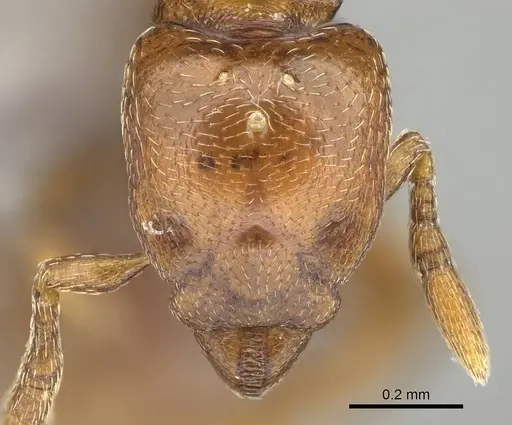
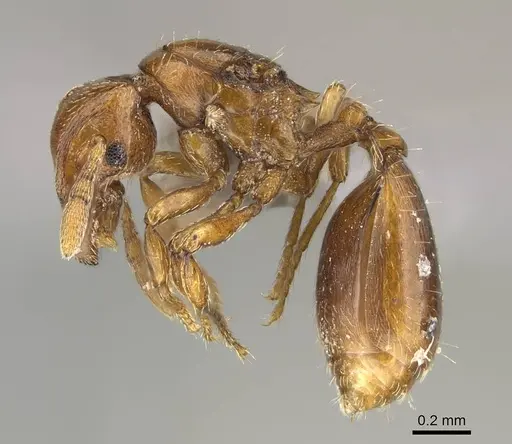
Strumigenys superstes is an extremely rare trap-jaw ant known only from a single location in northern Arizona. The species is known from one dealate queen collected in a pitfall trap between Flagstaff and the Grand Canyon at 1940m elevation in pinyon-juniper woodland . The queen is minute, with a head length of about 0.5mm, but total body length has not been recorded . The species belongs to the excisa group, a clade of shiny short-mandible species formerly placed in the genus Glamyromyrmex . What makes S. superstes stand out is its disjunct distribution: all other excisa-group members live in Central America, making this species a 'survivor' (the meaning of its Latin name) at the edge of the genus's range . The queen has a specialized trap-jaw mechanism with 10 teeth and a basal mandibular lamella that locks the mandibles open for snapping .
Quick Summary
- Difficulty: Expert
- Origin & Habitat: Known only from a single location in Coconino County, Arizona, at 1940m elevation in undisturbed arid pinyon-juniper woodland on the Colorado Plateau [1][2]. This is the only excisa-group species found north of Mexico.
- Colony Type: Unknown, only a single queen specimen has ever been collected. The smaller mesosoma suggests reduced flight capability, and researchers have speculated this species might be a social parasite of another Strumigenys species [1]. No workers or colony structure has been documented.
- Size & Growth:
- Queen: Size data unavailable – only head measurements exist for the single queen specimen, which do not indicate total body length [1].
- Worker: Unknown, workers have never been collected
- Colony: Unknown
- Growth: Unknown
- Development: Unknown (No data exists on development for this species or its close relatives in the excisa group.)
- Antkeeping:
- Temperature: Unknown for this species. Based on its habitat (arid pinyon-juniper woodland at 1940m elevation), it likely tolerates cooler and drier conditions than tropical Strumigenys, but exact requirements are unconfirmed [1].
- Humidity: Unknown. The pinyon-juniper woodland habitat suggests moderate to low humidity preferences, but no specific data is available [1].
- Diapause: Unknown. The location experiences cold winters at 1940m elevation, so some form of cold tolerance or winter dormancy is likely, but it has not been documented [1].
- Nesting: Unknown. The single specimen was collected from a pitfall trap under a Juniper tree, so it is likely ground-dwelling, but no nest site has been found [1].
- Behavior: Unknown, workers have never been observed. The trap-jaw mechanism suggests predatory behavior similar to other Strumigenys, which use their snap-jaws to catch small prey like springtails. The queen may be a social parasite given her reduced mesosoma (suggesting limited flight) and the presence of other Strumigenys in the region [1].
- Common Issues: this species is essentially impossible to obtain – only one queen has ever been documented, no captive colonies exist and no established care protocols exist for this species, the species may be a social parasite, meaning it would need a host colony of another ant species to reproduce – such species cannot be kept in the typical sense, workers have never been collected, so nothing is known about their size, behavior, or care requirements, even if you could obtain a queen, there is no information on founding behavior or what she would need to raise first workers
Why This Species Cannot Be Kept
Strumigenys superstes is one of the most poorly known ants in North America, and it is impossible to keep in captivity for several reasons. First, the species is known from a single dealate queen collected in 2014 – no workers, no males, no colony has ever been documented [1]. Second, even if another queen were found, researchers have speculated that S. superstes may be a social parasite [1]. Parasitic ant species invade host colonies and cannot found their own colonies independently – they would need a host colony of a different Strumigenys species to survive. Third, no one has ever documented what this species eats, how it reproduces, or what conditions it needs. There are no captive colonies, no breeding programs, and no established care protocols. This is not a species for antkeepers – it remains a scientific curiosity that may already be extinct or extremely rare in the wild.
The Trap-Jaw Mechanism
Like other Strumigenys in the excisa group, S. superstes has a specialized trap-jaw mechanism. The mandibles have 10 teeth following a widely truncated basal lamella (a flat plate at the base of the mandible). When the mandibles open, this basal lamella fits into a complementary indentation on the labrum (a mouthpart), allowing the mandibles to lock in an open position [1]. This is the same mechanism used by trap-jaw ants like Odontomachus. The queen's mandibles can snap shut with force to capture prey or defend the nest. In related Strumigenys species, these snap-jaws are used to catch small invertebrates, particularly springtails (tiny soil-dwelling arthropods). Since workers of this species have never been observed, we cannot confirm how they hunt or what specific prey they target.
Distribution and Rarity
Strumigenys superstes has the most restricted distribution of any Strumigenys in North America – it is known from a single location in Coconino County, Arizona, approximately 30 km south of the Grand Canyon [1]. The specimen was collected at 1940m elevation in a pinyon-juniper woodland, making this the only species in the excisa group (which contains mostly Neotropical species) found north of Mexico [2]. The species was collected in a pitfall trap between late June and mid-July 2014 [1]. The etymology 'superstes' means 'survivor' – a reference to this species surviving in a disjunct temperate location far from the Central American range of its closest relatives [1]. The smaller mesosoma of the queen suggests reduced dispersibility by flight, which may explain why this isolated population has persisted separately [1].
Related Species for Keepers
If you are interested in keeping trap-jaw Strumigenys, several other species are available in the antkeeping hobby. Strumigenys species in general are small, glossy ants with specialized snap-jaw mandibles. Most are predatory on springtails and other tiny invertebrates. Unlike S. superstes, these species have established captive populations and known care requirements. Look for more common Strumigenys species from the southeastern United States or tropical regions – these have documented colony structures, known diets, and established breeding programs. Remember that even with well-studied Strumigenys, their small size and specialized diets make them advanced-level species that require experience with micro-ant keeping.
Frequently Asked Questions
Can I keep Strumigenys superstes ants?
No. This species is known from a single queen collected in 2014 – no workers have ever been documented, no captive colonies exist, and there are no established care protocols. The species may already be extinct or extremely rare in the wild. Even if another queen were found, researchers suspect it may be a social parasite that cannot found its own colony [1].
What does Strumigenys superstes eat?
Unknown. Workers have never been collected, so their diet is unconfirmed. Based on related Strumigenys species, they are likely predatory on small invertebrates, especially springtails (tiny soil arthropods), using their trap-jaw mandibles to snap shut on prey [1].
Where does Strumigenys superstes live?
Only known from a single location in Coconino County, Arizona, approximately 30 km south of the Grand Canyon at 1940m elevation in pinyon-juniper woodland. This is the only excisa-group species found north of Mexico [1][2].
How big do Strumigenys superstes colonies get?
Unknown. Colony size has never been documented because workers have never been collected. The only known specimen is a single dealate queen [1].
Is Strumigenys superstes a good species for beginners?
No. This species cannot be kept at all – it is known from a single specimen and may be a social parasite. Even experienced antkeepers would not be able to keep this species. If you are interested in Strumigenys, look for more common species with established captive populations [1].
What is the trap-jaw mechanism in Strumigenys superstes?
The queen has specialized mandibles with 10 teeth and a basal lamella that can lock in an open position, allowing the mandibles to snap shut with force. This is the same mechanism used by trap-jaw ants to capture prey. The basal lamella fits into a complementary indentation on the labrum when the mandibles are open [1].
Why is Strumigenys superstes called the 'survivor'?
The Latin name 'superstes' means 'survivor.' It refers to this species surviving in a disjunct temperate location (Arizona) far from the centralized Panamanian distribution of other excisa-group members. All other species in this group live in Central America, making S. superstes a remarkable isolated population [1].
Do I need to hibernate Strumigenys superstes?
Unknown. However, given that the species lives at 1940m elevation in Arizona, it likely experiences cold winters and would require some form of cold tolerance or dormancy period. No specific diapause requirements have been documented [1].
Report an Issue
The current care sheet is based fully on literature. See inconsistencies, or something that's incorrect? Please , it will be resolved after review from an admin. Contributing to the blogs tab also helps providing information, to make us be able to further improve the caresheets. Thank you for your support!
References

Cette fiche d'élevage est sous licence CC BY-SA 4.0 .
Blogs de la communauté
CASENT0749291
Voir sur AntWeb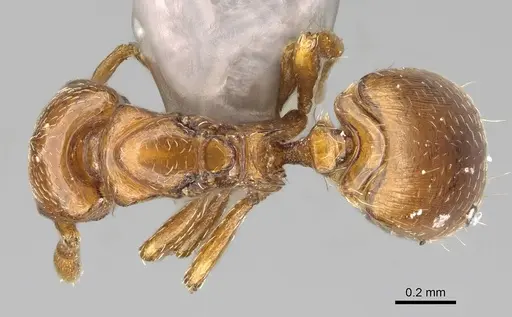
Littérature
Chargement de la carte de répartition...Chargement des produits...