
Strumigenys smythiesii
- Nom sci.
- Strumigenys smythiesii
- Tribu
- Attini
- Sous-famille
- Myrmicinae
- Auteur
- Forel, 1902
- Distribution
- Trouvé dans 0 pays
Introduction
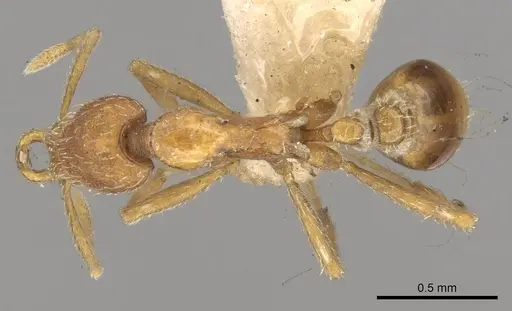
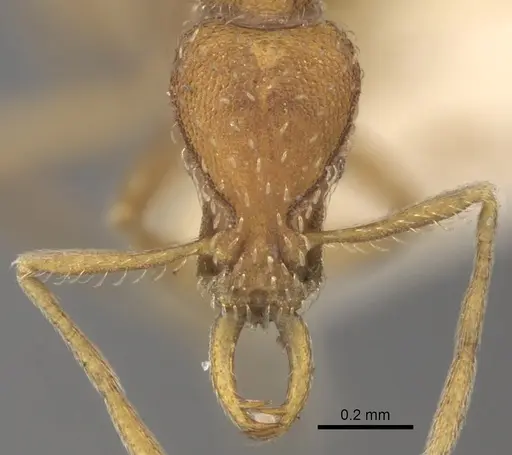
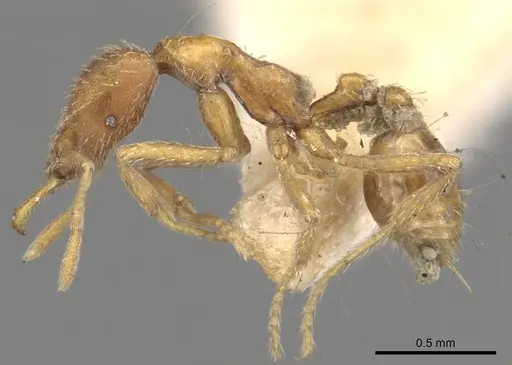
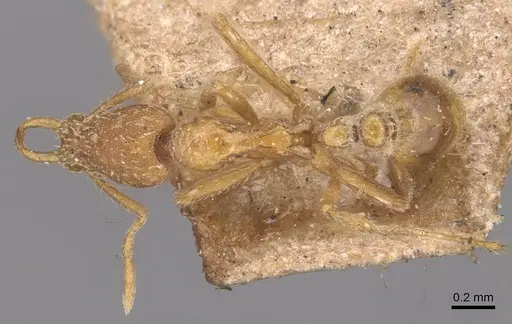
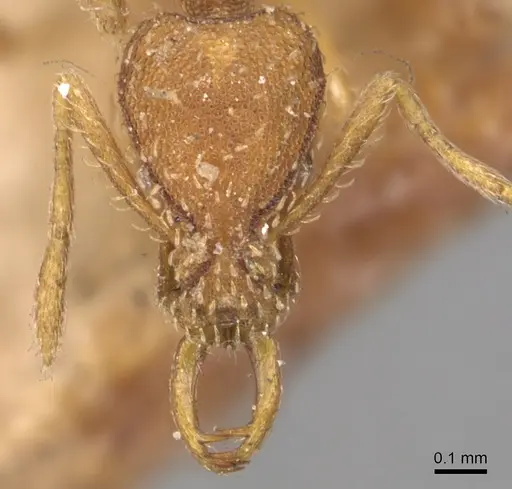
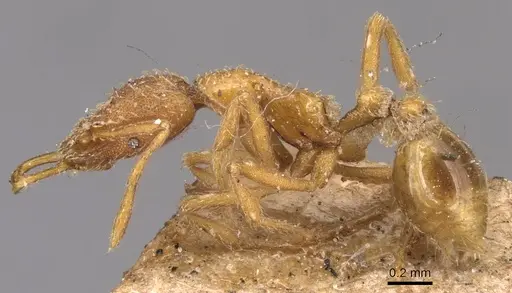
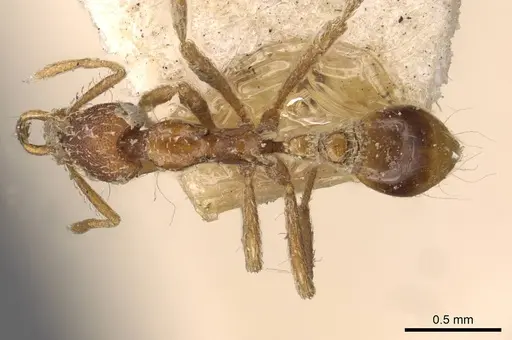
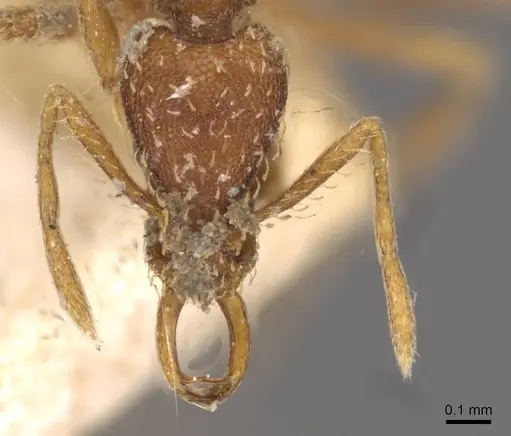
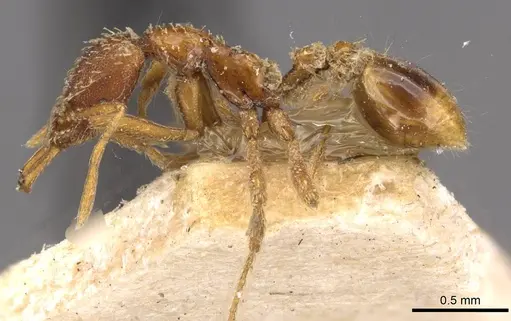
Strumigenys smythiesii is a tiny predatory ant measuring 2.5-2.7 mm in total length . It belongs to the trap-jaw genus Strumigenys (subfamily Myrmicinae, tribe Attini). Workers have long, flagellate (whip-like) hairs covering the body, and the dorsal part of the middle body (mesosoma) is completely smooth and shiny - a key identifying feature . The mandibles are shallowly bowed outwards with a preapical tooth near the tip, and the head has a mix of curved spatulate hairs and flagellate hairs . This species is endemic to India, recorded from Assam and Kerala at around 1200 meters elevation in the Himalayas . Like other Strumigenys, this ant uses extremely fast snap-jaw mandibles to capture tiny prey such as springtails. Very little is known about its wild biology, so captive care is mostly based on what works for related species. The ants are docile towards keepers and have a functional but tiny sting that poses no danger to humans (based on subfamily Myrmicinae).
Quick Summary
- Difficulty: Medium
- Origin & Habitat: Endemic to India, found in the Himalayas at approximately 1200 meters elevation [3][4]. Likely lives in deep leaf litter on shaded, humid forest floors.
- Colony Type: Unconfirmed, based on genus patterns, probably single-queen (monogyne) colonies with a small worker population.
- Size & Growth:
- Queen: Queens have been described but specific measurements are not available in the literature [1].
- Worker: 2.5-2.7 mm total length [1].
- Colony: Likely up to 300 workers, inferred from typical Strumigenys colony sizes.
- Growth: Slow, small colonies grow gradually.
- Development: Estimated 6-8 weeks at 24°C based on related Strumigenys species (unconfirmed for this species). (Development depends on temperature and prey availability. Slow growth is normal.)
- Antkeeping:
- Temperature: Keep at 22-26°C. Based on the Himalayan origin at 1200 m, they prefer cooler conditions than tropical species. Avoid sustained temperatures above 28°C [3].
- Humidity: High humidity needed, think damp forest floor. Keep nest substrate consistently moist but not waterlogged. Provide a humidity gradient so ants can choose their preferred spot.
- Diapause: Unknown, Himalayan origin suggests they might tolerate cooler winters, but specific diapause needs are unconfirmed. If activity drops in winter, reduce temperature to 15-18°C for a few months, but do not freeze.
- Nesting: Prefers naturalistic setups with moist substrate. Y‑tong or plaster nests work well. These are ground‑nesting ants that forage in leaf litter and soil crevices. Provide deep substrate for foraging channels.
- Behavior: Docile ants that rely on their trap‑jaw mandibles for defense, they rarely sting keepers and the tiny sting cannot pierce human skin. Workers are slow and deliberate, foraging singly or in small groups. Escape prevention is critical due to their tiny size (2.5 mm), they can slip through the smallest gaps.
- Common Issues: escape prevention is critical, their tiny 2.5 mm size means they can squeeze through the smallest gaps., slow growth can frustrate beginners expecting rapid colony expansion., specialized diet means they may refuse standard ant foods, they need live springtails or other tiny prey., high humidity can lead to mold if ventilation is poor, balance moisture and airflow., wild‑caught colonies may have parasites that are hard to detect.
Housing and Nest Setup
Because Strumigenys smythiesii is so tiny, you need a setup that leaves no gaps. A Y‑tong or plaster nest works well, both let you control humidity and provide a snug space for the ants. Connect the nest to an outworld (foraging area) with tubing that has a very small diameter, or use a tight‑sealing connector. Test tubes are also fine for founding colonies, just pack the cotton plug firmly enough that workers cannot squeeze past. Apply a barrier such as Fluon to all surfaces the ants can walk on in the outworld. Keep the outworld simple and easy to clean, these ants do not need large or elaborate spaces. All connections must be airtight to prevent escapes.
Feeding and Diet
Strumigenys are specialized predators that hunt tiny arthropods. In captivity, the main food should be live springtails, they are the perfect prey size and match what the ants would naturally eat in forest floor leaf litter. Other small live prey like fruit flies (Drosophila), tiny isopods, and booklice may also be accepted. Do not rely on sugar water or honey, while some Strumigenys may occasionally take honeydew, their diet is almost entirely protein from prey. Feed small prey 2-3 times per week and remove any leftovers after 24 hours to prevent mold. For a founding colony, even a single springtail is a big meal. The key to success is a steady supply of appropriately‑sized live prey.
Temperature and Humidity
Based on the Himalayan origin at around 1200 m elevation [3], Strumigenys smythiesii prefers cooler temperatures than many tropical ants. Keep the nest at 22-26°C and avoid sustained temperatures above 28°C. A small heating cable on one side can create a gentle temperature gradient, but monitor carefully, overheating can be fatal. Humidity is critical. These ants come from damp forest floor environments, so keep the nest substrate consistently moist (feels damp to the touch, but not waterlogged). Provide a water source in the outworld. A humidity gradient allows the ants to self‑regulate, keep one area slightly moister than another. Good ventilation helps prevent mold, but avoid strong airflow that dries out the nest.
Behavior and Defense
Strumigenys ants are famous for their trap‑jaw mechanism, the mandibles snap shut at incredible speed to capture prey or fend off threats. However, they are not aggressive towards keepers and the tiny sting (present in all Myrmicinae) cannot penetrate human skin. When threatened, workers may snap their jaws or simply run away. Workers forage slowly and methodically, hunting individually or in small groups. They do not form large foraging trails. Colonies are quiet and non‑destructive. The main handling concern is their tiny size, they are easy to crush accidentally. Always observe gently and avoid disturbing the nest unnecessarily.
Growth and Development
Colony growth is slow. A founding queen lays a small batch of eggs, and development from egg to worker takes about 6-8 weeks under optimal conditions (around 24°C). The first workers (nanitics) are very small and may be hesitant to forage at first. The queen continues laying eggs slowly, and the colony gradually expands. Because this species has not been studied in captivity, exact timelines are estimates based on related Strumigenys. Monitor the colony’s activity levels, if workers are foraging regularly, conditions are probably good. Do not overfeed in an attempt to speed up growth, as leftover prey can rot and harm the colony. Patience is essential.
Frequently Asked Questions
How long does it take for Strumigenys smythiesii to produce first workers?
Based on related Strumigenys species, expect about 6-8 weeks from egg to first worker at around 24°C. However, this is an estimate, the specific development time for this species is not documented.
Can I keep Strumigenys smythiesii in a test tube?
Yes, a test tube setup works well for founding colonies. Use a small test tube with a very tightly packed cotton plug, these tiny ants can squeeze through standard cotton if it is not firm. Keep the tube horizontal with a water section, and place the whole setup inside a secondary enclosure with proper barriers to prevent escapes.
What do Strumigenys smythiesii ants eat?
They are specialized predators that need live tiny arthropods. The primary food should be live springtails. They may also accept tiny fruit flies, booklice, and other small live prey. Sugar sources are generally not accepted or needed, focus on providing live prey of the right size.
Are Strumigenys smythiesii good for beginners?
This species is rated Medium difficulty. Experienced beginners can succeed if they understand the key needs: escape‑proof housing, high humidity, and a steady supply of live small prey like springtails. Their slow growth and specialized diet require patience and dedication.
How big do Strumigenys smythiesii colonies get?
Based on genus patterns, colonies likely reach up to about 300 workers at maturity. They are not large‑colony species. Growth is slow, and the colony remains modest compared to Camponotus or Formica.
Do Strumigenys smythiesii need hibernation?
Diapause requirements are unconfirmed for this species. Their Himalayan origin suggests they may tolerate cooler winter conditions. If your colony shows reduced activity in winter, you can lower the temperature to around 15-18°C for a few months, but never freeze them. Always observe the colony’s reaction.
Why are my Strumigenys smythiesii dying?
Common causes include: escape (they are tiny and can slip through barriers), mold from too much moisture or leftover prey, temperatures above 28°C, or starvation if live prey is not provided regularly. Check that escape prevention is tight, reduce humidity if mold appears, and ensure you offer live springtails or other tiny prey at least twice a week.
When should I move Strumigenys smythiesii to a formicarium?
Wait until the colony has at least 20-30 workers and the test tube is becoming crowded. For this slow‑growing species, that may take 6-12 months or longer. When moving, connect the test tube to the new nest and let the ants relocate on their own, do not force them.
Can I keep multiple Strumigenys smythiesii queens together?
Not recommended. Combining unrelated queens of this species has not been documented and could lead to fighting. If you obtain a colony, assume it is single‑queen based on typical Strumigenys colony structure. Even if multiple foundresses tolerate each other initially, they may conflict later.
Report an Issue
The current care sheet is based fully on literature. See inconsistencies, or something that's incorrect? Please , it will be resolved after review from an admin. Contributing to the blogs tab also helps providing information, to make us be able to further improve the caresheets. Thank you for your support!
References

Cette fiche d'élevage est sous licence CC BY-SA 4.0 .
Blogs de la communauté
Littérature
Chargement de la carte de répartition...Chargement des produits...