
Strumigenys natynion
- Nom sci.
- Strumigenys natynion
- Tribu
- Attini
- Sous-famille
- Myrmicinae
- Auteur
- Bolton, 2000
- Distribution
- Trouvé dans 0 pays
Introduction
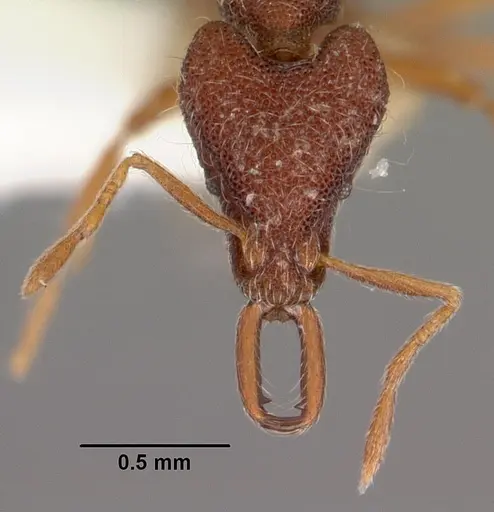
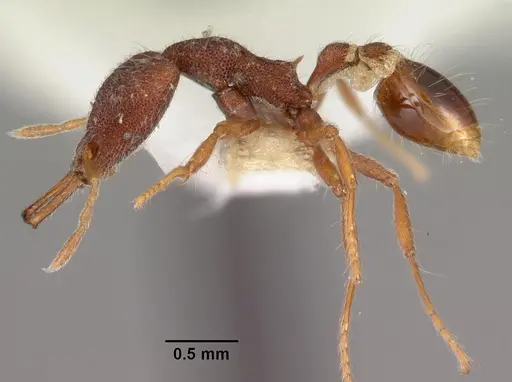
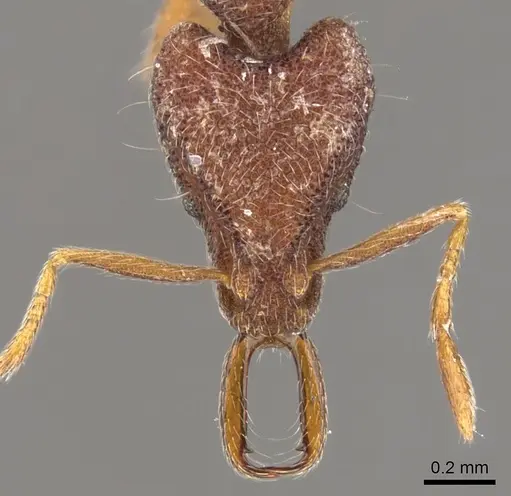
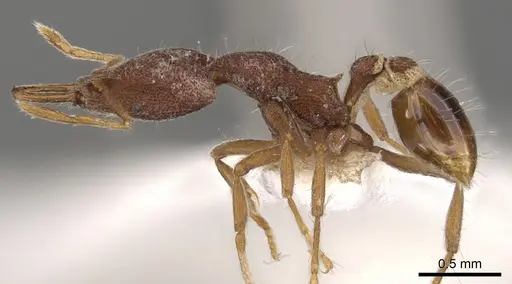
Strumigenys natynion is a tiny predatory ant measuring 2.5-3.5 mm in total length, belonging to tribe Attini . Workers have a distinctive appearance with dense erect hairs across their body, a club-shaped petiole, and small propodeal teeth . The species shows notable size variation across its range: specimens from Thailand and Vietnam are smaller (2.5-2.7 mm) than those from Borneo (3.2-3.5 mm), though body proportions are similar . It was described in 2000 and is known from Borneo (Malaysia), Thailand, and Vietnam in the Indomalaya region . These ants live in montane rainforest leaf litter and secondary forests at elevations from 140 to 1,540 m .
Quick Summary
- Difficulty: Hard
- Origin & Habitat: Native to the Indomalaya region, found in Borneo (Malaysia), Thailand, and Vietnam. Inhabits montane rainforest leaf litter and secondary forest at elevations from 140 m up to 1,540 m [1][2].
- Colony Type: Colony structure is unconfirmed. Based on typical Strumigenys patterns, likely single-queen colonies.
- Size & Growth:
- Queen: 2.7 mm total length [1], from a single known queen specimen.
- Worker: 2.5-3.5 mm total length [1], regional variation: Thailand/Vietnam specimens 2.5-2.7 mm, Borneo specimens 3.2-3.5 mm.
- Colony: Unknown, likely small colonies typical of the Strumigenys genus.
- Growth: Unknown, likely slow to moderate based on genus patterns.
- Development: Unknown, no direct data for this species. Based on related small Strumigenys, roughly 6-10 weeks at optimal temperatures. (Development is unconfirmed. Temperature and humidity will significantly affect speed.)
- Antkeeping:
- Temperature: Keep at 22-26°C. This species lives in tropical/subtropical forests, so steady warmth is important. Use a heating cable on one side of the nest to create a gentle gradient if room temperature is below this range.
- Humidity: High humidity is essential, these ants come from rainforest leaf litter. Keep the nest substrate consistently damp (not waterlogged). The substrate should feel moist to the touch, with some slightly drier areas available for the ants to choose.
- Diapause: Unconfirmed, as a tropical/subtropical species from Southeast Asia, true hibernation is probably not required. A slight cool period (around 18-20°C) during winter may be beneficial but is not necessary.
- Nesting: In nature they nest in leaf litter and rotting wood on forest floors. In captivity a naturalistic setup with moist substrate (e.g., soil and coco fiber mix) works well, or a Y-tong/plaster nest with small, low chambers scaled to their tiny size. Avoid tall open spaces.
- Behavior: Strumigenys are specialized predators that hunt micro-arthropods like springtails and mites using trap-jaw mandibles. They are shy, reclusive ants that spend most of their time in the nest or foraging in the substrate. They have a functional sting (tribe Attini) but it is mild and not medically significant. Due to their very small size, they are excellent escape artists, fine mesh and tight lids are critical. They are not aggressive and rarely observed in the open.
- Common Issues: escape prevention is critical, they can squeeze through gaps under 1 mm, use fine mesh and tight-fitting lids, slow growth may make the colony seem stagnant, leading to overfeeding or unnecessary disturbance, specialized diet (live micro-prey) can be hard to source consistently, high humidity requirements can cause mold if ventilation is poor, wild-caught colonies may carry parasites that can kill the colony in captivity, their secretive nature makes it hard to monitor colony health, watch for activity at the entrance
Housing and Nest Setup
Strumigenys natynion is a tiny leaf-litter ant that needs carefully scaled housing. Because they are so small, standard test tubes can work for founding colonies, but the water reservoir should be small to prevent flooding. A naturalistic setup with a deep layer of moist substrate (a mix of soil, sand, and coco fiber works well) mimics their natural forest-floor habitat. If using an artificial nest, choose one with small, low chambers, these ants feel safest in tight spaces. Whatever setup you choose, escape prevention must be excellent. Apply Fluon to the rim of any container and use fine mesh (0.5 mm or finer) on any ventilation holes. Their tiny size means they can escape through gaps you wouldn't believe possible. [1][2]
Feeding and Diet
This species is a specialized predator that hunts micro-arthropods. In captivity, their primary food should be live springtails, these are the ideal size and mimic their natural prey. Other small live prey like soil mites, booklice (psocids), and fruit fly larvae may also be accepted. Do not rely on sugar sources or honey, while some Strumigenys may occasionally accept sweet liquids, their main diet is protein from live prey. Feed small prey items every 2-3 days, adjusting based on colony size and consumption. Remove any uneaten prey after 24 hours to prevent mold. A well-fed colony will have workers that appear more active outside the nest. [2]
Temperature and Care
Keep your colony at 22-26°C for optimal activity and brood development. This species comes from tropical Southeast Asian forests, so they need consistent warmth. A heating cable placed on one side of the nest creates a temperature gradient that lets ants regulate their own temperature by moving between warmer and cooler areas. Avoid temperature fluctuations and keep them away from air conditioning vents or drafty areas. Room temperature in the low-to-mid 20s°C is ideal if your home is that warm. Monitor colony behavior, if workers seem sluggish, consider increasing temperature slightly, if they avoid the heated area, reduce heat. [1]
Humidity Management
High humidity is non-negotiable for this species. They come from rainforest leaf litter where moisture is constant. Keep the nest substrate consistently moist, it should feel damp but not have standing water. A good test is that the substrate should hold its shape when squeezed but not drip water. Mist the nest occasionally, but don't rely on a fixed schedule, instead, check the substrate moisture and condensation levels daily. Adequate ventilation is also important to prevent mold, but avoid excessive airflow that dries everything out. A balance is key: humid but not stagnant. [1][2]
Behavior and Temperament
Strumigenys natynion is a shy, reclusive ant that spends most of its time in the nest or foraging quietly through the substrate. They are not aggressive and their mild sting is rarely used against humans, the main defense is staying hidden. However, their tiny size makes them excellent escape artists. You will rarely see them out in the open like you would with Lasius or Camponotus, they prefer the dark, humid environment of their nest. When hunting, they use their trap-jaw mandibles to capture small prey, though this behavior is rarely observed in captivity due to their secretive nature. [2]
Colony Development
Expect slow growth from this species. The first workers (nanitics) will likely be smaller than mature workers and may take several months to appear after founding. Strumigenys colonies typically remain small, likely under a few hundred workers even at maturity. Be patient and resist the urge to overfeed or disturb the colony. A healthy founding queen will seal herself in a chamber and not emerge until her first workers hatch. Do not check on the colony too frequently during founding, excessive disturbance can cause the queen to abandon or eat her brood. Once workers emerge, they will gradually expand the nest and begin foraging. [2]
Frequently Asked Questions
How long does it take for Strumigenys natynion to produce first workers?
The exact timeline is unconfirmed for this species, but based on related Strumigenys species, expect about 6-10 weeks from egg to worker under optimal conditions. These are slow-growing ants, so patience is critical.
Can I keep Strumigenys natynion in a test tube?
Yes, a test tube can work for a founding colony, but use a small water reservoir to prevent flooding. Because they are so tiny, ensure the cotton plug is packed tightly. Transfer to a naturalistic setup once the colony reaches about 15-20 workers.
What do Strumigenys natynion ants eat?
They are specialized predators that need live micro-prey. Feed them live springtails as a primary food source. Other small live prey like soil mites, booklice, and fruit fly larvae may also be accepted. Sugar sources are not reliable as a primary food.
Are Strumigenys natynion good for beginners?
No, this species is not recommended for beginners. Their tiny size, specialized diet, high humidity requirements, and slow growth make them challenging. They are best suited for experienced antkeepers who can provide the precise conditions they need.
How big do Strumigenys natynion colonies get?
Colony size is unconfirmed for this species, but based on typical Strumigenys patterns, colonies likely reach only several dozen to a few hundred workers. They are not a large-colony species.
Do Strumigenys natynion need hibernation?
Unconfirmed, this is a tropical/subtropical species from Southeast Asia, so true hibernation is likely not required. A slight cool period (18-20°C) during winter months may be beneficial but is probably not necessary.
Why are my Strumigenys natynion escaping?
Their tiny size makes them excellent escape artists. Apply Fluon to container rims, use fine mesh (0.5 mm or finer) on ventilation, and check for any gaps even as small as 1 mm. Escape prevention must be excellent with this species.
When should I move my colony to a formicarium?
Wait until the colony has at least 15-20 workers and is actively foraging. A naturalistic setup with moist substrate is usually better than a standard formicarium for these tiny leaf-litter ants.
Can I keep multiple Strumigenys natynion queens together?
Not recommended, combining unrelated queens of this species has not been documented and is likely to result in fighting. Keep only one queen per colony.
Report an Issue
The current care sheet is based fully on literature. See inconsistencies, or something that's incorrect? Please , it will be resolved after review from an admin. Contributing to the blogs tab also helps providing information, to make us be able to further improve the caresheets. Thank you for your support!
References

Cette fiche d'élevage est sous licence CC BY-SA 4.0 .
Blogs de la communauté
CASENT0102558
Voir sur AntWeb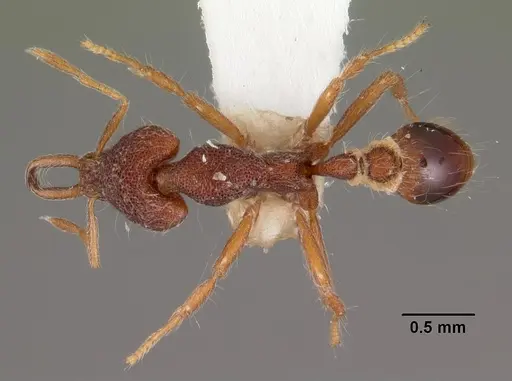
CASENT0900794
Voir sur AntWeb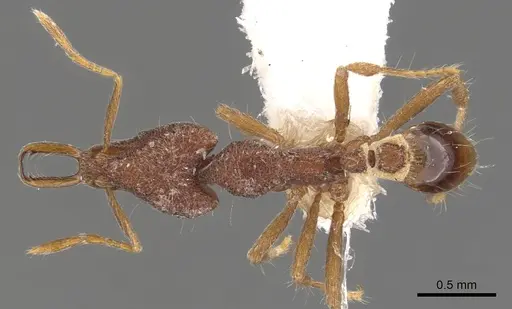
Littérature
Chargement de la carte de répartition...Chargement des produits...