
Strumigenys fanano
- Nom sci.
- Strumigenys fanano
- Tribu
- Attini
- Sous-famille
- Myrmicinae
- Auteur
- Fisher, 2000
- Distribution
- Trouvé dans 1 pays
Introduction
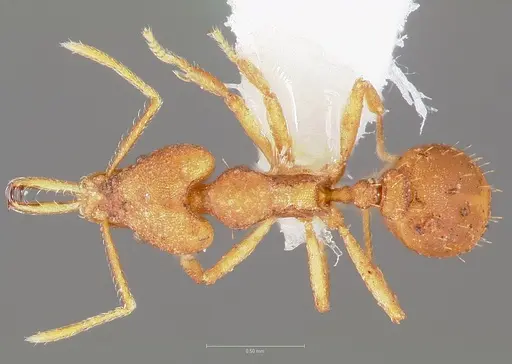
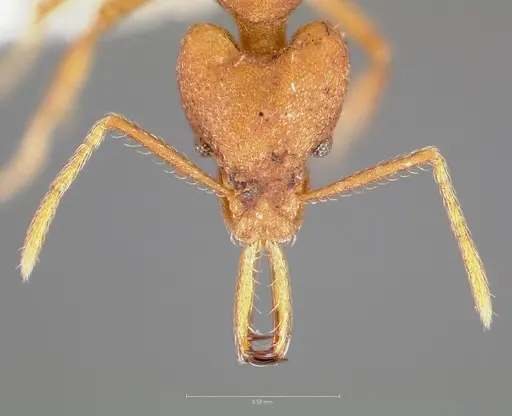
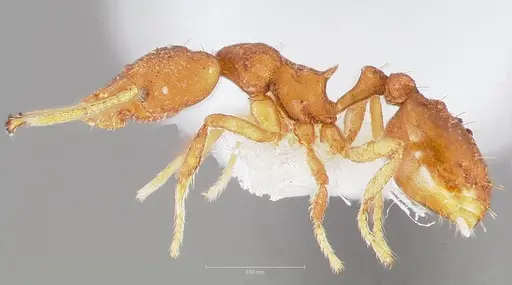
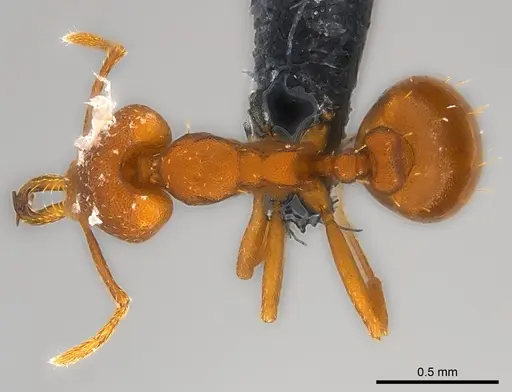
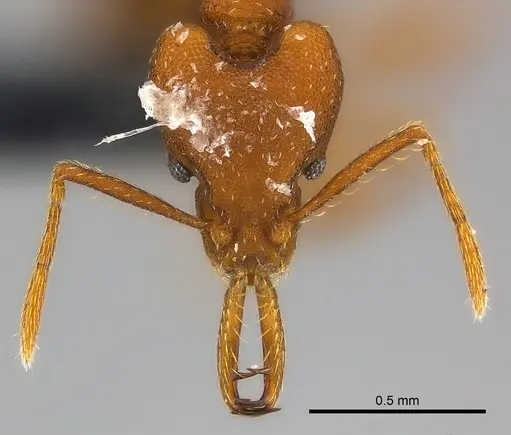
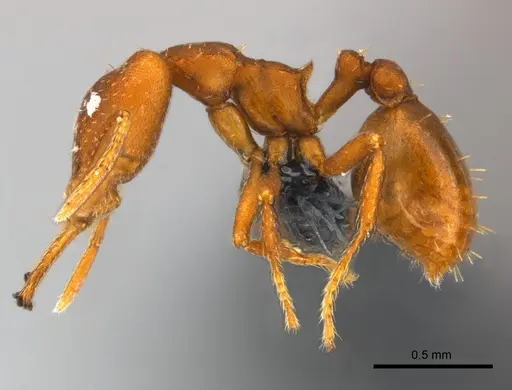
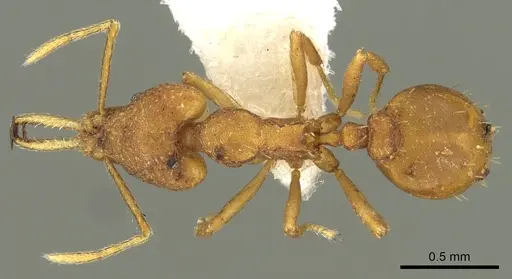
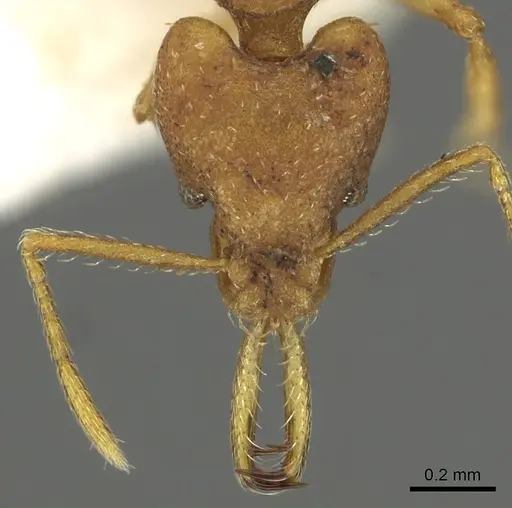
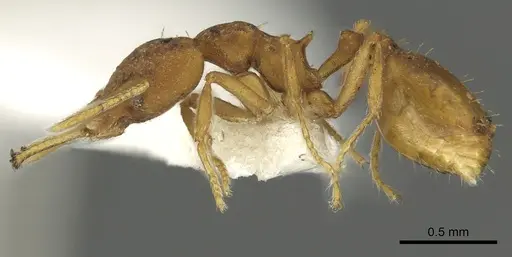
Strumigenys fanano is a tiny predatory ant native to Madagascar, measuring just 3.0-3.1 mm in total length . Workers are orange-brown with a dense, pitted (reticulate-punctate) sculpturing on the head, body sides, and first gastral segment. They belong to the *grandidieri* group and are easily told apart from similar species by the dense punctures on the front half of the gaster and the single pair of backward-facing hairs on the petiole . These ants are found in a range of forest habitats across Madagascar, living in leaf litter, rotten logs, rotten sticks, and on low vegetation . One record comes from a montane rainforest at 150 m elevation in the Ankarana Reserve, and they also occur in dry deciduous forests of the Beanka Reserve .
Quick Summary
- Difficulty: Hard
- Origin & Habitat: Madagascar, found in montane rainforest and dry deciduous forest habitats, often in leaf litter, rotten wood, and on low vegetation [2][1].
- Colony Type: Colony structure is unconfirmed. Based on typical Strumigenys patterns, colonies are likely small with a single queen, but queens have not been described.
- Size & Growth:
- Queen: Unconfirmed, no queen measurements available
- Worker: 3.0-3.1 mm total length [1]
- Colony: Probably under 100 workers, as is typical for most Strumigenys species [1]
- Growth: Slow, these are tiny, specialized predators that develop slowly
- Development: Estimated 8-12 weeks based on related Strumigenys species [1] (Development is likely slow due to their specialized predatory lifestyle and small colony size)
- Antkeeping:
- Temperature: 22-26°C, they are tropical Madagascar ants that need stable warmth [1]
- Humidity: High humidity required, a damp forest floor environment. Keep substrate consistently moist but not waterlogged [1]
- Diapause: No, being tropical, they do not require hibernation [1]
- Nesting: Prefers naturalistic setups with moist substrate, leaf litter, and small chambers. Test tubes with tight lids and fluon barriers can work, but a Y-tong (AAC) nest with narrow chambers and fine mesh escape prevention is ideal. Never use acrylic nests [1]
- Behavior: These are shy, cryptic ants that prefer to flee rather than fight. They are slow-moving and spend most of their time hunting in leaf litter. They possess a functional stinger but it is not medically significant and rarely used on keepers. Escape prevention is critical, their small size allows them to squeeze through standard mesh [1].
- Common Issues: escape prevention is critical, they are extremely small and can slip through gaps larger than 1 mm, predatory diet requires a constant supply of live micro-prey like springtails, which can be challenging, slow colony growth can frustrate keepers expecting rapid development, high humidity requirements can lead to mold if ventilation is poor, wild-caught colonies may harbor mites or parasites that are hard to treat
Housing and Setup
Because Strumigenys fanano is so small (3.0-3.1 mm), you need a setup with no gaps larger than 1 mm. A naturalistic enclosure works best: use a small container with a layer of moist coconut fiber or soil mix, topped with leaf litter and a few pieces of rotting wood. Test tubes can be used but require tight-fitting lids and a fluon barrier on the rim. A Y-tong (AAC) nest with narrow, low-ceilinged chambers and fine-mesh ventilation is ideal. Make sure the humidity stays high and that the ants cannot escape, check regularly for cracks or loose fittings [1].
Feeding and Diet
These are obligate predators, they live only on live small arthropods. Their natural prey includes springtails (Collembola), and this should be the main food in captivity. They may also accept other tiny prey like booklice, soil mites, and fruit fly larvae. Offer prey every 2-3 days, and remove any uneaten food within 24 hours to prevent mold. Do not provide sugar water or honey, Strumigenys do not feed on carbohydrates [1].
Temperature and Humidity
Keep the nest temperature stable at 22-26°C. A small heating cable on one side can create a gradient. Humidity needs to be high, the substrate should feel damp but not wet. Use a water reservoir (e.g., a test tube with a cotton plug) to maintain moisture without frequent misting, which can flood the tiny ants. Good airflow is essential to prevent mold while keeping humidity up [1].
Behavior and Temperament
Strumigenys fanano is shy and non‑aggressive. When disturbed, workers will retreat rather than attack. They have a functional stinger, but it is mild and rarely used against keepers. These ants move slowly and methodically through the leaf litter, using their specialized mandibles (with an apical fork and preapical teeth) to capture tiny prey. They are not climbers and spend most of their time on the substrate. Because they are so small and quiet, you may forget they need feeding, set a regular schedule [1].
Colony Care
Colony growth is slow. A queen may take 6-12 months to produce her first nanitic workers, which will be even smaller than the normal workers. Even established colonies grow at a snail’s pace compared to most ants. Be patient, maintain stable warmth, humidity, and regular feeding. Watch for signs of stress: workers wandering aimlessly, rejecting prey, or clustering at the nest edges. Stress often indicates wrong temperature, low humidity, or starvation. No hibernation is needed, keep conditions warm year‑round [1].
Frequently Asked Questions
How long does it take for Strumigenys fanano to produce first workers?
Expect 6-12 months from founding to first workers. Development is slow due to their specialized predatory lifestyle and small colony size. The first workers (nanitics) will be very tiny [1].
What do Strumigenys fanano ants eat?
They are obligate predators, they need live small arthropods. Feed springtails (Collembola) as the primary food. Other options include booklice, fruit fly larvae, and tiny soil mites. Do not offer sugar or honey [1].
Can I keep Strumigenys fanano in a test tube?
Yes, but you must prevent escape. Their tiny size means they can squeeze through standard barriers. Use fluon on the test tube rim and ensure the lid fits tightly. A naturalistic setup with small chambers often works better long‑term [1].
Are Strumigenys fanano good for beginners?
No, they are suited for intermediate to advanced keepers. Their predatory diet, high escape risk, slow growth, and humidity needs make them challenging for beginners [1].
Do Strumigenys fanano need hibernation?
No. Being tropical Madagascar ants, they do not require hibernation. Keep them warm year‑round at 22-26°C. Prolonged drops below 20°C can be harmful [1].
How big do Strumigenys fanano colonies get?
Colonies likely remain small, probably under 100 workers at maturity. This is typical for Strumigenys species, which maintain small, specialized colonies [1].
Why are my Strumigenys fanano dying?
Common causes: escape (check for tiny gaps), starvation (ensure regular springtail feedings), low humidity (substrate should be damp), temperature stress (keep 22-26°C), or mold from overfeeding. These ants require precise conditions [1].
When should I move Strumigenys fanano to a formicarium?
Wait until the colony has at least 20-30 workers and is actively foraging. Moving too early can stress founding colonies. A naturalistic setup often works better than traditional formicaria for these cryptic leaf‑litter ants [1].
How often should I feed Strumigenys fanano?
Offer prey every 2-3 days. Remove any uneaten prey within 24 hours to prevent mold. Unlike sugar‑feeding ants, they cannot store carbohydrates, regular protein feeding is essential for colony survival [1].
Report an Issue
The current care sheet is based fully on literature. See inconsistencies, or something that's incorrect? Please , it will be resolved after review from an admin. Contributing to the blogs tab also helps providing information, to make us be able to further improve the caresheets. Thank you for your support!
References

Cette fiche d'élevage est sous licence CC BY-SA 4.0 .
Blogs de la communauté
Littérature
Chargement de la carte de répartition...Chargement des produits...