
Strumigenys cabira
- Nom sci.
- Strumigenys cabira
- Tribu
- Attini
- Sous-famille
- Myrmicinae
- Auteur
- Fisher, 2000
- Distribution
- Trouvé dans 1 pays
Introduction
Strumigenys cabira is a tiny ant from Madagascar, about 2.8-3.0 mm long . Workers have a dull yellowish-brown color and belong to the Strumigenys scotti group, which includes ants with elongated mandibles. The mandibles are nearly straight and run parallel except at the base, with a narrow lamella along the inner edge. A noticeable gap between the mandibles at the clypeal margin is about as wide as one mandible . The body has club-shaped (clavate) hairs on the head, mesonotum, and elsewhere, giving a fuzzy look. The postpetiole disc is mostly shiny with faint punctures, which sets it apart from similar species like Strumigenys balux and Strumigenys tegar . This ant lives only in Madagascar's rainforests, where it nests in leaf litter and rotting logs at elevations of 800-1250 m . It is terricolous (ground-dwelling) and prefers humid conditions . Very little is known about its colony life or behavior in the wild, making it a challenging but fascinating species for advanced antkeepers.
Quick Summary
- Difficulty: Expert
- Origin & Habitat: Endemic to Madagascar. Found in montane and lowland rainforest at 800-1250 m elevation, in leaf litter and rotting wood [1].
- Colony Type: Unknown, colony structure, queen number, and founding behavior have not been documented in scientific literature.
- Size & Growth:
- Queen: Unconfirmed, queen has not been described [1]
- Worker: 2.8-3.0 mm total length [1]
- Colony: Unknown, no colony size data available
- Growth: Unknown, likely slow given small body size
- Development: Estimated 8-12 weeks based on typical Myrmicinae development at optimal temperature (Development timeline unconfirmed for this species, estimates based on genus-level patterns)
- Antkeeping:
- Temperature: Keep around 22-24°C. These rainforest floor ants from Madagascar need warm, stable conditions. Avoid temperatures below 20°C or above 28°C. No specific data, but their natural habitat suggests moderate warmth [1].
- Humidity: High humidity is crucial, aim for 70-85%. They live in humid rainforest leaf litter [2]. Keep the nest substrate consistently moist but not waterlogged, with a gradient so ants can self-regulate.
- Diapause: Unknown, no documented hibernation requirement. Madagascar has a mild climate, so a formal diapause may not be needed, but a slight winter activity reduction might occur.
- Nesting: Best kept in naturalistic setups with moist soil and leaf litter, mimicking their natural home. They nest in rotting wood and leaf litter [1], so provide soft substrate they can tunnel through. Y-tong (AAC) nests with small chambers or plaster nests may work due to their tiny size. Avoid acrylic nests.
- Behavior: These are very small, slow-moving ants that forage in leaf litter. They are likely specialized predators on micro-arthropods due to their mandible shape, but specific hunting behavior is unknown. They are not aggressive and pose no danger to keepers. Their subfamily (Myrmicinae, tribe Attini) has a functional sting, but it is harmless to humans. Escape prevention is critical, they are minute and can slip through incredibly small gaps. They probably are nocturnal or crepuscular, typical of litter-dwellers.
- Common Issues: escape prevention is critical, they can squeeze through gaps under 0.5 mm, high humidity needs can cause mold if ventilation is poor, specialized diet requirements are poorly understood, may need live micro-prey, slow growth and probably small colony sizes make the colony fragile, no information on captive breeding, wild colonies may adapt poorly
Housing and Nest Setup
Because they are tiny and need high humidity, Strumigenys cabira require a well-sealed setup. A naturalistic nest with a mix of soil and leaf litter works well, they naturally live in leaf litter and rotten logs [1]. Use a container with a tight-fitting lid and fine mesh (under 0.5 mm) on any ventilation holes. Standard test tubes may not seal properly, consider using a snug sponge or cork with a finer barrier. Y-tong or plaster nests with very small chambers are a good choice. Avoid acrylic nests, as they don't hold humidity well. Provide a water reservoir or a moist section with sphagnum moss to keep humidity up. The outworld should also stay somewhat humid, as they are terricolous and prefer damp conditions [2].
Feeding and Diet
No specific dietary data exists for Strumigenys cabira, but related Strumigenys species are usually specialized predators of springtails, mites, and other micro-arthropods. Offer live prey like springtails (Collembola), tiny isopods, or fruit fly larvae as the main food. Some may also accept diluted honey or sugar water as a supplement, but start with protein-rich live food. Feed small amounts every 2-3 days and remove leftovers to prevent mold. Even though Strumigenys belongs to the Attini tribe (fungus-growers), most species in this genus are predators, so do not rely on fungus for food. [1]
Temperature and Humidity
Aim for a steady temperature of 22-24°C, matching the cool montane rainforest climate of Madagascar [1]. Avoid drops below 20°C or spikes above 28°C. Humidity should be high (70-85%), the species prefers humid conditions [2]. Keep the nest substrate damp but not waterlogged, use a water reservoir or moist moss. Light misting can help, but ensure ventilation to prevent condensation. A heating mat on one side can create a gradient, but direct heat is usually unnecessary at room temperature.
Behavior and Temperament
Strumigenys cabira is docile and harmless. Their tiny size means they cannot harm humans, though they do have a functional sting (like other Myrmicinae), it is too weak to feel. Workers move slowly and deliberately, hunting in leaf litter. They are likely nocturnal or crepuscular. The main behavioral challenge is escape: they can slip through gaps that would contain most other ants. Use fine mesh and seal all seams. Do not mistake them for aggressive ants, they are completely safe to handle with care (though handling is not recommended due to their fragility). [1]
Colony Establishment
Very little is known about colony founding in this species. The queen has not been described, and no wild nests have been studied. If you obtain a colony, it will likely be wild-caught, check for stress or parasite load. Founding behavior is unconfirmed, so assume claustral founding (queen seals herself in) as a guess, but be prepared to offer small pieces of prey if she appears to feed. Do not disturb the nest during early growth. Given the slow development (likely 8-12 weeks for first workers), patience is essential. Keep conditions stable and avoid bright light. [1]
Frequently Asked Questions
How long does it take for Strumigenys cabira to produce first workers?
The exact timeline is unknown. Based on typical Myrmicinae patterns and their small size, expect 8-12 weeks from egg to worker at 22-24°C. Growth is likely slow.
Can I keep Strumigenys cabira in a test tube?
Test tubes can work, but escape prevention is critical, they can slip through standard cotton. Use a tight-fitting sponge or cork with fine mesh. Ensure a water reservoir for high humidity.
What do Strumigenys cabira ants eat?
They likely prey on tiny arthropods such as springtails, mites, and fruit fly larvae. Offer live micro-prey as the staple. Some may take diluted honey or sugar water as a supplement, but protein is primary.
Are Strumigenys cabira ants dangerous?
No, they are completely harmless to humans. They have a functional sting but it is too small to penetrate skin. They are not aggressive.
Do Strumigenys cabira ants need hibernation?
Diapause requirements are unknown. Madagascar has mild winters, so a formal hibernation may not be necessary. A natural reduction in activity during winter may occur, but you don't need to force a cold period.
Why are my Strumigenys cabira escaping?
Their minute size makes them expert escape artists. Use fine mesh (0.3 mm or finer), tight lids, and seal all gaps. Check around tubing and junctions. Use barrier oils or talc if needed.
Are Strumigenys cabira good for beginners?
No, this is an expert-level species. Their tiny size, high humidity needs, unknown diet, and high escape risk make them challenging even for experienced keepers.
How big do Strumigenys cabira colonies get?
Colony size is unknown. Based on their tiny body size and leaf-litter habitat, colonies are likely small, perhaps under 100 workers, but no data exists.
What temperature do Strumigenys cabira need?
Maintain 22-24°C. This matches their native Madagascar rainforest habitat at 800-1250 m elevation. Avoid extremes [1].
Why are my Strumigenys cabira dying?
Common causes: escape and desiccation (humidity too low), mold from poor ventilation, temperature stress, or inadequate diet. These fragile ants require very stable conditions. Wild-caught colonies may also fail to adapt.
When should I move Strumigenys cabira to a formicarium?
Wait until the colony is well-established with at least 15-20 workers. These tiny ants do best in naturalistic setups. Ensure any formicarium has tiny chambers and perfect escape prevention.
Report an Issue
The current care sheet is based fully on literature. See inconsistencies, or something that's incorrect? Please , it will be resolved after review from an admin. Contributing to the blogs tab also helps providing information, to make us be able to further improve the caresheets. Thank you for your support!
References

Cette fiche d'élevage est sous licence CC BY-SA 4.0 .
Blogs de la communauté
CASENT0004369
Voir sur AntWeb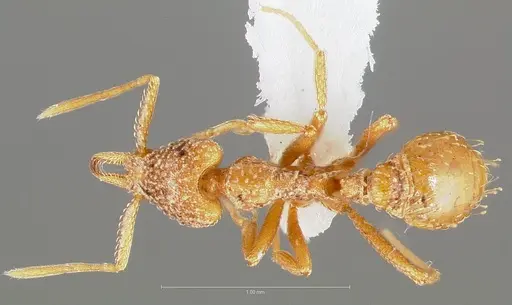
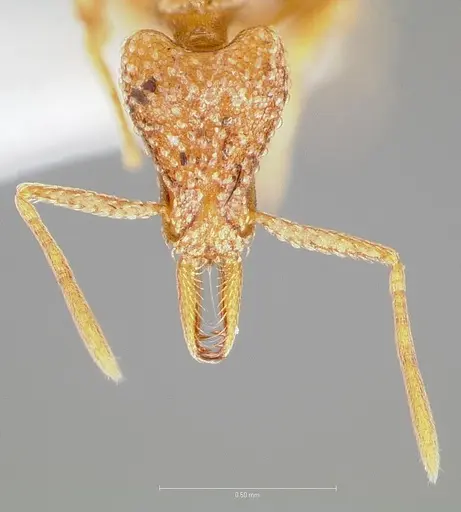
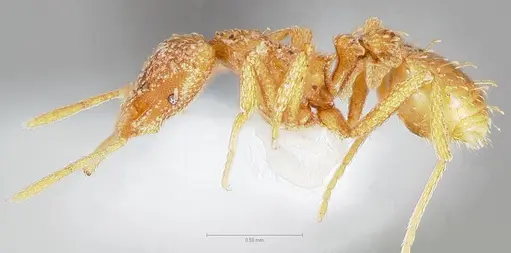
Littérature
Chargement de la carte de répartition...Chargement des produits...