
Stigmatomma scrobiceps
- Nom sci.
- Stigmatomma scrobiceps
- Tribu
- Amblyoponini
- Sous-famille
- Amblyoponinae
- Auteur
- Guénard <i>et al.</i>, 2013
- Distribution
- Trouvé dans 0 pays
Introduction
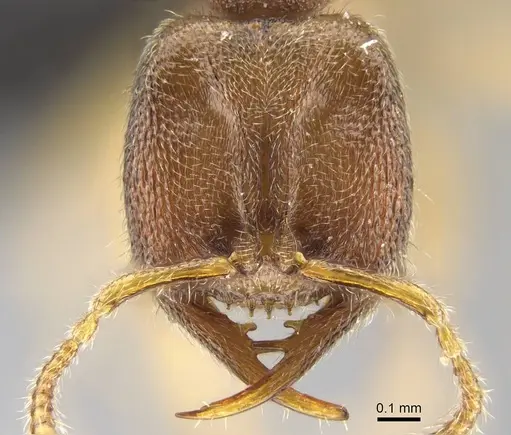
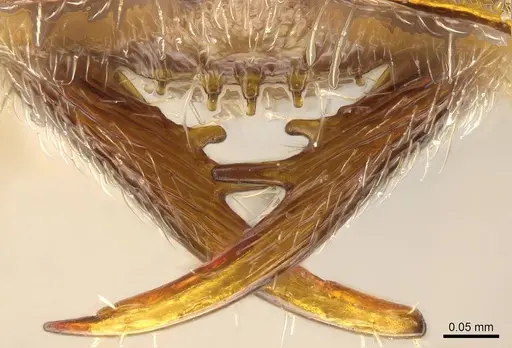
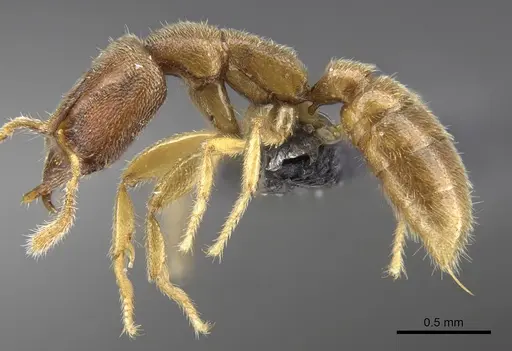
Stigmatomma scrobiceps is a tiny, rarely seen ant species known only from the tropical forests of Yunnan Province, China. Workers measure 3.30 mm in total length . They have an almost square-shaped head, long sickle-like mandibles with three teeth, and 11-segmented antennae . Unlike most ants, they have no eyes. The body is covered in fine white hairs, with a light yellow color on the mesosoma, metasoma, and legs, while the head is a darker orange-brown . Originally described in 2013 as Bannapone scrobiceps, it was moved to the genus Stigmatomma in 2016 based on genetic analysis .
Quick Summary
- Difficulty: Expert
- Origin & Habitat: Known only from Xishuangbanna Tropical Botanical Garden in Yunnan Province, China, at 550 meters elevation. Found in secondary forest with thick leaf litter and abundant decomposing woody material [1][5]. This is a habitat specialist restricted to secondary forest, not found in primary forest or rubber plantations [5].
- Colony Type: Unknown, only the worker caste has been described. Based on typical Amblyoponinae patterns, likely single-queen colonies, but this is unconfirmed.
- Size & Growth:
- Queen: Undescribed, queen caste has not been documented [1]
- Worker: 3.30 mm total length [1]
- Colony: Unknown, only two worker specimens have ever been collected [1]
- Growth: Unknown
- Development: Unconfirmed, no direct observations of colony development exist (Based on typical Amblyoponinae patterns, expect 6-10 weeks from egg to first worker at warm temperatures, but this is an estimate)
- Antkeeping:
- Temperature: Likely requires warm, stable conditions, aim for 24-28°C based on its tropical forest origin in Yunnan [1]. This is inferred from genus patterns, not confirmed for this species.
- Humidity: Requires high humidity, its natural habitat has thick leaf litter and decomposing wood in secondary forest [1]. Keep the nest substrate consistently moist but not waterlogged.
- Diapause: Unknown, no data on overwintering requirements. Likely minimal or no diapause given the tropical origin, but this is uncertain.
- Nesting: In nature, they live in leaf litter and rotting wood in humid forest floors [1]. In captivity, a naturalistic setup with moist substrate (like a plaster nest or test tube setup with damp soil) works well. Keep them in small, tight chambers scaled to their tiny size.
- Behavior: These are small, cryptic ants that likely forage in leaf litter. Their elongated sickle-like mandibles suggest specialized predatory behavior, similar to other Amblyoponinae which are known predators of small invertebrates [1]. They have a functional sting and likely use it for prey capture and defense. Escape prevention should be excellent given their tiny size, they can easily slip through standard barriers. Activity level is likely low to moderate, typical of cryptic leaf-litter ants.
- Common Issues: only two specimens ever collected, this species is extremely rare in the wild, making wild-caught colonies nearly impossible to obtain., queen caste undescribed, you may not be able to obtain a founding queen., escape prevention is critical due to tiny size, use fine mesh and tight-fitting barriers., predatory diet requires live prey, they likely need small live invertebrates like springtails or fruit fly larvae., high humidity requirements mean mold can be an issue if ventilation is poor.
Discovery and Taxonomy
Stigmatomma scrobiceps has a notable taxonomic history. The species was first described in 2013 as Stigmatomma scrobiceps based on just two worker specimens collected from leaf litter in Xishuangbanna, Yunnan Province, China [1]. This was important because it was only the second species ever described in Bannapone, and it allowed researchers to describe the worker caste for the genus for the first time [1]. In 2016,genetic analysis showed that Bannapone was actually part of the genus Stigmatomma, so the species was transferred and now goes by Stigmatomma scrobiceps [3][4]. The name 'scrobiceps' comes from Latin meaning 'trench head' and refers to the distinctive antennal scrobes on their head [1].
Identification and Morphology
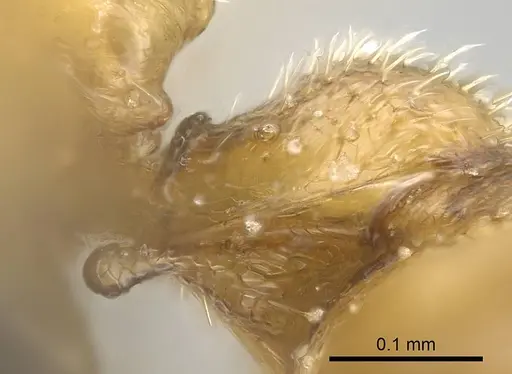
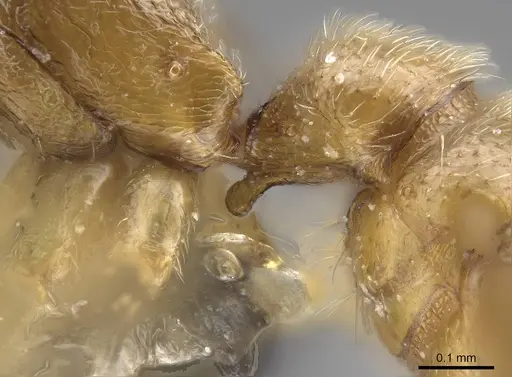
Workers of Stigmatomma scrobiceps measure 3.30 mm in total length [1]. They have 11-segmented antennae (most ants have 12) and lack eyes entirely [1][2]. The most distinctive feature is the long, narrow, sickle-like mandibles with three teeth: one long acute apical tooth followed by two blunt teeth [1]. The frontal carinae are very long, reaching almost to the back of the head [2]. The clypeus (above the mandibles) has five teat-like setae [1][2]. The metasoma ends with a long, up-curved sting, typical of Amblyoponinae [1].
Natural History and Ecology
Very little is known about this species in the wild. It has only been collected from a single location in Xishuangbanna Tropical Botanical Garden at 550 meters elevation [1][6]. The habitat was secondary forest with thick leaf litter and abundant decomposing woody material on the forest floor, collected using Winkler extraction from sifted leaf litter [1]. Research shows this is a habitat specialist restricted to secondary forest, it has not been found in primary forest or rubber plantations [5]. The distinctive mandibles strongly suggest a specialized predatory diet, as is typical for Amblyoponinae, which are known predators of small invertebrates like springtails [1]. However, no direct observations of feeding have been made.
Housing and Care
Since this species has never been kept in captivity (as far as documented), care recommendations are based on what we know about related Amblyoponinae and its natural habitat. It requires high humidity, mimicking damp forest floor conditions with moisture-retaining substrate [1]. A naturalistic setup with moist substrate works well, or a test tube setup with damp soil. Because workers are only 3.30 mm, they need very small, tight chambers and excellent escape prevention, fine mesh barriers are essential. Temperature should be warm,24-28°C, reflecting its tropical origin in Yunnan's lowland forests. Foraging is likely cryptic and slow, so provide hunting opportunities with small live prey.
Feeding and Diet
No direct observations exist for this species, but the elongated sickle-like mandibles strongly indicate a specialized predatory diet, like other Amblyoponinae [1]. These ants are likely obligate predators that hunt small invertebrates in leaf litter. In captivity, offer small live prey such as springtails, fruit fly larvae (Drosophila), or other tiny arthropods. Sugar sources are unlikely to be accepted, Amblyoponinae are not typically honeydew feeders. Feed small prey items every few days, adjusting based on colony consumption. Remove any uneaten prey to prevent mold issues in the humid setup.
Challenges and Limitations
This is one of the most challenging ant species to keep simply because we know almost nothing about it in captivity, there may never have been a captive colony. The biggest obstacle is that only the worker caste has been described, the queen is unknown, so you cannot obtain a founding queen [1]. Only two worker specimens have ever been collected, both from the same location in 2013 [1]. This species is essentially unavailable to antkeepers and would be considered a 'holy grail' for advanced hobbyists, but without knowing how to find or keep the queen, it remains out of reach. If you somehow obtain workers, expect a significant learning curve given the lack of documented care information.
Frequently Asked Questions
Can I keep Stigmatomma scrobiceps in captivity?
This species has essentially never been kept in captivity, and there are no documented captive colonies. The biggest problem is that only workers have been described, the queen caste is unknown, so you cannot obtain a founding queen [1]. Additionally, only two workers have ever been collected from a single location in China, making this one of the rarest ants in the world. Even if you somehow obtained workers, there is no care information to guide you. This is an expert-only species that remains out of reach for hobbyists.
What do Stigmatomma scrobiceps eat?
While not directly observed, their morphology strongly suggests they are specialized predators. Their long, sickle-like mandibles are designed for hunting small prey, similar to other Amblyoponinae [1]. In captivity, you would likely need to provide small live prey such as springtails, fruit fly larvae, or other tiny arthropods. They probably do not accept sugar sources like honey water, as Amblyoponinae are not typically honeydew feeders.
How big do Stigmatomma scrobiceps colonies get?
Unknown, colony size has never been documented. Only two worker specimens have ever been collected [1]. Based on typical Amblyoponinae patterns, colonies are likely to be small (dozens to a few hundred workers), but this is purely speculative for this species.
Do Stigmatomma scrobiceps ants sting?
Yes, they have a functional sting. Amblyoponinae ants are known for their well-developed, up-curved stings [1]. However, given their tiny size (only 3.30 mm), the sting would be negligible to humans. Its primary use is likely for prey capture and colony defense, not for painful defense against large predators.
Where does Stigmatomma scrobiceps live?
This species is known only from a single location in Yunnan Province, China, the Xishuangbanna Tropical Botanical Garden in Mengla County, at 550 meters elevation [1][6]. The habitat is secondary forest with thick leaf litter and decomposing wood. Notably, this is a habitat specialist that has never been found in primary forest or rubber plantations [5].
Are Stigmatomma scrobiceps good for beginners?
No. This species is completely unsuitable for beginners and even experts have never kept it. Only the worker caste has been described (the queen is unknown), and only two specimens have ever been collected [1]. There is no documented care information, and the species may not even be available to hobbyists. If you want to keep Amblyoponinae, consider more commonly available species like Amblyopone or Stigmatomma that have documented care information.
What temperature do Stigmatomma scrobiceps need?
Not directly studied, but based on their tropical origin in Yunnan's lowland forests, they likely require warm conditions around 24-28°C. This is inferred from their natural habitat, not confirmed through captive observation. Related Amblyoponinae species typically prefer warm, humid conditions.
Do Stigmatomma scrobiceps need hibernation?
Unknown, no data exists on their seasonal requirements. However, given their origin in tropical Yunnan (which has a mild climate), they likely do not require a true hibernation period. The warm, humid conditions of their habitat suggest they remain active year-round.
How do I identify Stigmatomma scrobiceps?
Workers are tiny at 3.30 mm with a distinctive square-shaped head that is slightly wider than long [1]. Key identifying features include: 11-segmented antennae (unusual, most ants have 12), lack of eyes, long sickle-like mandibles with three teeth, five teat-like setae on the clypeus, and very long frontal carinae reaching almost to the back of the head [1][2]. They have a long, up-curved sting at the end of the metasoma.
Why is Stigmatomma scrobiceps so rare?
This species has only ever been collected twice, both from the same location in Xishuangbanna, China, in 2013 [1]. It appears to be genuinely rare in the wild, possibly due to its specialized habitat requirements, it is only found in secondary forest with specific leaf litter conditions and has never been found in primary forest or rubber plantations [5]. Additionally, its entire known range is extremely limited to one botanical garden location.
Report an Issue
The current care sheet is based fully on literature. See inconsistencies, or something that's incorrect? Please , it will be resolved after review from an admin. Contributing to the blogs tab also helps providing information, to make us be able to further improve the caresheets. Thank you for your support!
References

Cette fiche d'élevage est sous licence CC BY-SA 4.0 .
Blogs de la communauté
CASENT0339957
Voir sur AntWeb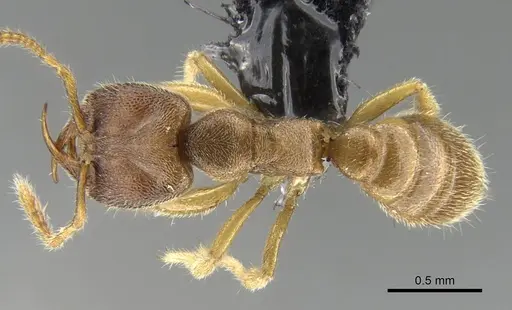
Littérature
Chargement de la carte de répartition...Chargement des produits...