
Solenopsis sumara
- Nom sci.
- Solenopsis sumara
- Tribu
- Solenopsidini
- Sous-famille
- Myrmicinae
- Auteur
- Collingwood & Agosti, 1996
- Distribution
- Trouvé dans 0 pays
Introduction
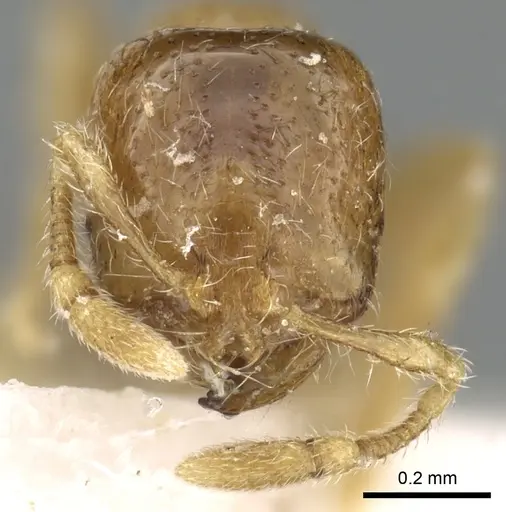
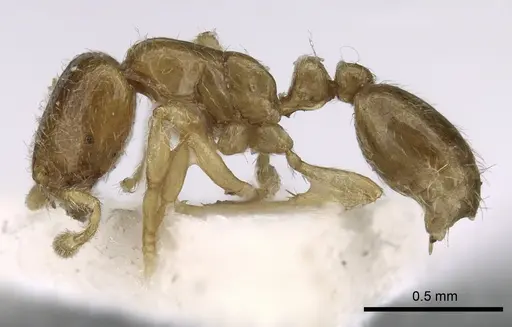
Solenopsis sumara is a tiny thief ant known only from the highlands of Yemen. Workers measure just 1.7-2.5 mm and have a distinctive look: a subrectangular head with tiny eyes containing only two ommatidia, a massive rounded petiolar node, and a smooth yellowish-brown body . They nest under stones in loose soil at elevations around 2500-2800 m in the Sumara Pass region . This species is unusual because only the worker caste has been documented - queens and males remain unknown . Its high‑altitude origin and unknown colony structure make it a challenging ant to keep. As a member of the Solenopsidini (the tribe that includes fire ants), it has a sting, but these tiny ants are not aggressive.
Quick Summary
- Difficulty: Hard
- Origin & Habitat: Yemen, Sumara Pass at 2500-2800 m elevation in the Afrotropical Region. They nest under stones in loose soil in this highland habitat [2][1].
- Colony Type: Unknown, only workers have been documented. Queens and males remain undescribed, so colony structure (single‑queen or multi‑queen) is unconfirmed [1].
- Size & Growth:
- Queen: Unknown, queens have not been described [1].
- Worker: 1.7-2.5 mm for major workers [1].
- Colony: Unknown, colony size has not been documented.
- Growth: Unknown, no development data exists for this species.
- Development: Unknown, no data exists [1]. Based on related Solenopsis species, development might take 4-8 weeks at warm temperatures, but this is speculative. (No direct measurements exist. Related Solenopsis typically develop in 4-8 weeks at optimal temperatures.)
- Antkeeping:
- Temperature: High elevation origin suggests they prefer cooler conditions than typical tropical ants. Start around 20-24 °C and observe colony activity. A gentle temperature gradient allows workers to self‑regulate.
- Humidity: Nesting under stones in loose soil indicates moderate humidity needs. Keep the substrate consistently moist but not waterlogged, with some drier areas available.
- Diapause: Unknown, the high elevation location suggests they may experience seasonal temperature changes, but specific diapause requirements have not been documented.
- Nesting: Natural nesting is under stones in loose soil. In captivity, use a small test tube setup or a Y‑tong (AAC) nest with fine chambers. Their tiny size requires tight‑fitting lids and excellent escape prevention.
- Behavior: As a member of the Solenopsidini, Solenopsis sumara has a sting, but it is a shy, non‑aggressive species that rarely uses it on humans. Their tiny size (under 3 mm) makes them excellent escape artists, they can squeeze through the smallest gaps. Expect secretive, mostly underground activity. Handle with care, not because they are dangerous, but because they are easily lost.
- Common Issues: tiny size makes escape prevention critical, use fine mesh barriers and tight‑fitting lids., no documented colony structure means uncertainty about queen care., development timeline is unknown, making it hard to track colony progress., high elevation origin suggests different temperature needs than typical Solenopsis, may not tolerate heat well., only worker caste known, cannot establish a full colony from wild‑caught queens.
Housing and Nest Setup
Solenopsis sumara [1] requires careful housing due to its tiny size. Use test tubes with cotton plugs for founding colonies, or a small Y‑tong (AAC) nest with narrow chambers scaled to their 2 mm body size. Escape prevention is critical, these ants can squeeze through gaps smaller than 0.5 mm. Apply fluon to all edges and use fine mesh (at least 0.5 mm or smaller) on any ventilation. Provide a small outworld with a secure lid. Since they naturally nest under stones in loose soil, you can also use a naturalistic setup with a thin soil layer and flat stones on top, but test tubes offer easier humidity control for beginners.
Temperature Requirements
Solenopsis sumara [2][1] comes from high elevations (2500-2800 m) in Yemen, so it likely prefers cooler conditions than lowland tropical ants. Start with temperatures in the 20-24 °C range and monitor colony behavior. If workers become sluggish, slightly raise the temperature. Avoid sustained heat above 28 °C. A heating cable on one side of the nest can create a gradient, allowing ants to self‑regulate. Room temperature (around 20-22 °C) may be ideal.
Feeding and Diet
No specific dietary studies exist for Solenopsis sumara [1]. As a member of the Solenopsidini (thief ants), it is likely omnivorous. Offer small protein sources like fruit flies, pinhead crickets, or tiny mealworm pieces. It may also consume honeydew, provide occasional drops of diluted honey or sugar water. Feed small amounts every 2-3 days and remove uneaten food to prevent mold. Because the workers are so tiny, even small prey items are substantial, adjust portions accordingly. Remove uneaten protein within 24 hours.
Humidity and Water
These ants nest under stones in loose soil, indicating they prefer moderate humidity with some moisture in the substrate [2][1]. Keep the nest area consistently damp but not waterlogged, the substrate should feel like a wrung‑out sponge. Provide a water tube or small dish in the outworld so workers can drink. Monitor for condensation buildup, which can signal excessive humidity. Allow the substrate surface to dry slightly between waterings rather than following a fixed schedule.
Handling and Temperament
Solenopsis sumara [1] is a shy, non‑aggressive species. As a Solenopsidini, it has a sting, but due to its tiny size and timid nature it is not considered a threat to humans. The main concern is their escape ability, they will quickly find and exploit any gap in their enclosure. Always handle their setup with escape prevention in mind. When cleaning or moving colonies, work slowly and carefully to avoid accidentally crushing these tiny workers.
Frequently Asked Questions
How long does it take for Solenopsis sumara to develop from egg to worker?
No development data exists for this species [1]. Based on related Solenopsis, development might take 4-8 weeks at warm temperatures (22-24 °C), but this is an estimate rather than a confirmed measurement.
What do Solenopsis sumara ants eat?
No specific diet studies exist for this species [1]. Based on its tribe (Solenopsidini), it is likely omnivorous. Offer small protein sources like fruit flies, tiny crickets, or small mealworm pieces. It will also accept sugar sources like diluted honey or sugar water. Feed small amounts every 2-3 days and remove uneaten food promptly.
Can I keep multiple Solenopsis sumara queens together?
This is unknown, colony structure has not been documented. Only workers have been described, and queens remain unknown [1]. Do not attempt combining unrelated foundresses until more is known about their natural colony structure.
What temperature should I keep Solenopsis sumara at?
Based on their high elevation origin in Yemen, they prefer cooler conditions than typical tropical ants. Aim for 20-24 °C, with room temperature (around 20-22 °C) likely being ideal. Avoid temperatures above 28 °C.
How big do Solenopsis sumara colonies get?
Unknown, colony size has not been documented for this species [1]. Based on their tiny worker size and related Solenopsis species, colonies likely remain relatively small, possibly under a few hundred workers, but this is speculative.
Are Solenopsis sumara good for beginners?
No, this species is considered difficult for antkeepers. Key challenges include escape prevention due to tiny size, unknown colony structure and development timeline, and potentially specific temperature needs from their high elevation habitat. Choose a more established species for your first colony.
Why are my Solenopsis sumara escaping?
This is likely due to their tiny size, they can squeeze through gaps smaller than 0.5 mm. Improve escape prevention by using fine mesh on all ventilation, applying fluon to enclosure edges, and ensuring all lids fit tightly. Check for gaps around water tubes and foraging areas.
Do Solenopsis sumara need hibernation?
Diapause requirements are unknown, no specific data exists for this species [2]. Their high elevation origin suggests they may experience seasonal temperature changes. If you choose to provide a cool period, you could try 2-3 months at 15-18 °C, but this is speculative and not based on species‑specific data.
Where is Solenopsis sumara naturally found?
This species is only known from the Sumara Pass in Yemen, at elevations around 2500-2800 m. It is endemic to this small region in the Afrotropical Region. This limited distribution makes it a rare and unusual species in the antkeeping hobby [2][1].
Report an Issue
The current care sheet is based fully on literature. See inconsistencies, or something that's incorrect? Please , it will be resolved after review from an admin. Contributing to the blogs tab also helps providing information, to make us be able to further improve the caresheets. Thank you for your support!
References

Cette fiche d'élevage est sous licence CC BY-SA 4.0 .
Blogs de la communauté
CASENT0249586
Voir sur AntWeb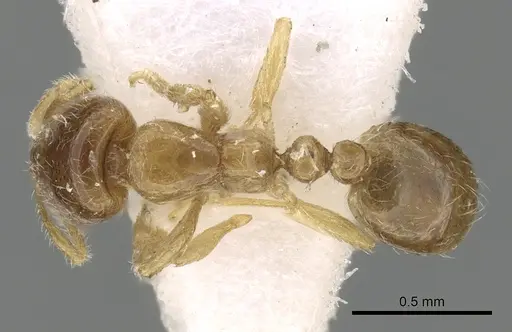
Littérature
Chargement de la carte de répartition...Chargement des produits...