
Solenopsis canariensis
- Nom sci.
- Solenopsis canariensis
- Tribu
- Solenopsidini
- Sous-famille
- Myrmicinae
- Auteur
- Forel, 1893
- Distribution
- Trouvé dans 1 pays
Introduction
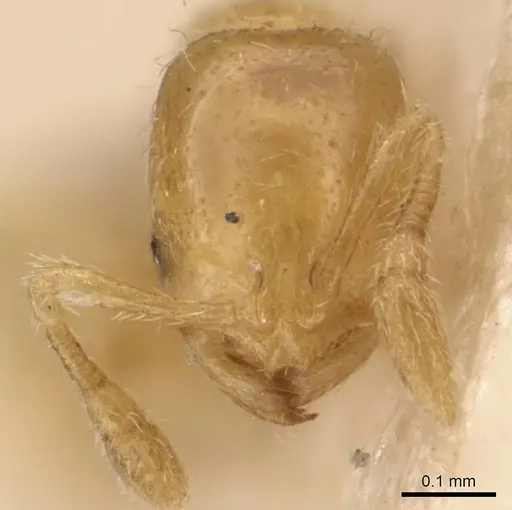
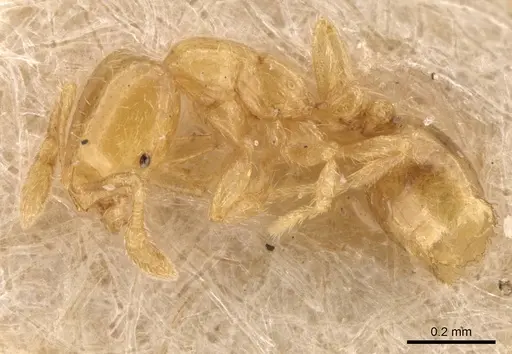
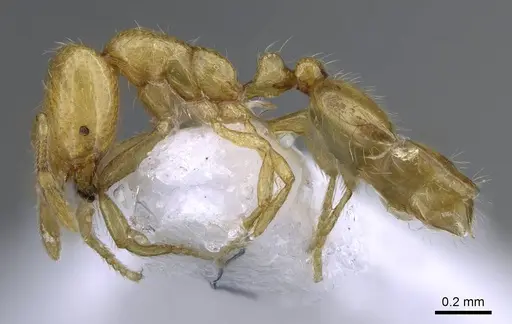
This small yellowish ant was first documented on the island of El Hierro in the Canary Islands, where it lives from the coast up to 1300 meters elevation . It belongs to a group of tiny yellow Solenopsis that taxonomists still need to sort out, so identifying them properly is tricky . It nests underground and keeps out of sight - a typical cryptic lifestyle.
Quick Summary
- Difficulty: Medium
- Origin & Habitat: Canary Islands, specifically El Hierro. Found from 20m coastal areas up to 1300m elevation, so it adapts to varied microhabitats within this volcanic island [1].
- Colony Type: Colony structure has not been documented for this species. Based on patterns in other small yellow Solenopsis, they may be polygynous (multiple queens), but that's speculative.
- Size & Growth:
- Queen: ~5-7 mm, inferred from typical small yellow Solenopsis species (no direct data available).
- Worker: ~2-4 mm, inferred from typical small yellow Solenopsis species (no direct data available).
- Colony: Unknown, no data available for this species.
- Growth: Moderate, estimated from related Solenopsis species (no species-specific data).
- Development: Estimated 5-8 weeks at 22-26°C based on related tropical/subtropical Solenopsis (no species-specific data). (All development estimates are inferred from genus-level patterns.)
- Antkeeping:
- Temperature: Keep at 22-26°C, based on the mild subtropical climate of the Canary Islands. A slight gradient is beneficial.
- Humidity: Keep the nest substrate consistently moist but not waterlogged. As a cryptic underground nester, stable soil moisture is important.
- Diapause: Probably not required, the Canary Islands are warm year-round. A brief winter slowdown (18-20°C) may be offered but is not needed.
- Nesting: Cryptic underground nester. In captivity, provide deep soil or a diggable substrate (sand‑clay mix) at least 5‑8 cm deep for tunneling. Plaster nests with narrow chambers also work. Test tubes are fine for founding, but switch to a soil setup once the colony grows.
- Behavior: They have a functional stinger and will use it defensively, the sting is painful, typical of fire ants. Workers are small but aggressive when the nest is disturbed. They stay hidden underground, so you won't see much surface activity. Because they are so tiny, escape prevention is critical, use fine mesh (at least 0.5 mm) and fluon barriers.
- Common Issues: stinging, workers sting if threatened, and the sting hurts. Handle carefully and avoid shaking the nest., tiny size makes escape prevention difficult, they can crawl through tiny gaps., cryptic behavior means you may barely see workers, don't panic if the colony seems inactive., taxonomic uncertainty may lead to misidentification, verify your source carefully., do not release outdoors even if you can't keep them, contact another keeper.
Housing and Nest Setup
Solenopsis canariensis is a cryptic underground nester, so you need a setup that lets them dig. A test tube works for the queen and first workers, fill it one-third with water and plug with cotton. Once you have about 10 workers, connect the test tube to an outworld. For an established colony, provide at least 5‑8 cm of soil or a sand‑clay mix. Plaster nests with narrow chambers also work, as long as there are dark, hidden areas. Cover the nest to block light, since these ants prefer darkness. The outworld must be escape‑proof: use fluon on the walls and fine mesh (0.5 mm) on ventilation holes [1].
Feeding and Diet
Like other Solenopsis, these ants are omnivorous. Offer small insects (fruit flies, pinhead crickets, mealworms) for protein, and sugar water, honey, or diluted honey for carbohydrates. Feed small amounts every 2-3 days and remove leftovers to prevent mold. You can leave a constant sugar source (a cotton ball soaked in sugar water) in the outworld. Because they are cryptic, place food near the nest entrance rather than expecting them to forage openly.
Temperature and Seasonal Care
Keep the temperature around 22-26°C. This matches the mild subtropical climate of the Canary Islands. In winter (November-February) you can let it drop to 18-20°C, which may slow activity, but true diapause is not needed. Avoid temperatures below 15°C or above 30°C. Provide a heat gradient by placing a heating mat on one side of the nest.
Handling and Safety
These ants have a painful sting and will sting if the colony is disturbed. Move slowly when working on the setup. Use gentle puffs of air to encourage workers away from your hands. If you need to move the colony, connect a new container and let them relocate themselves. Never excavate the nest. Wash your hands after handling ant equipment.
Frequently Asked Questions
Does Solenopsis canariensis sting?
Yes, they have a functional stinger and will use it if threatened. The sting is painful but generally less severe than larger fire ant species. Handle carefully.
How long does it take for Solenopsis canariensis to raise first workers?
Estimated 5-8 weeks from egg to worker at 22-26°C. This is based on related Solenopsis species, no species‑specific data exists.
Can I keep multiple Solenopsis canariensis queens together?
Probably yes, many small yellow Solenopsis are polygynous, but this has not been confirmed for this species. If you try, start by placing queens together in a test tube and watch for aggression before combining established colonies.
What do Solenopsis canariensis eat?
They are omnivorous. Offer small insects (fruit flies, pinhead crickets, mealworms) for protein, and sugar water or honey for carbohydrates. Feed every 2-3 days, removing leftovers.
Do Solenopsis canariensis need hibernation?
Probably not. Since they come from the warm Canary Islands, they likely stay active year‑round. A winter slowdown (18-20°C) may be offered but is not required.
How big do Solenopsis canariensis colonies get?
Unknown, no data is available for this species. Related small Solenopsis can reach several hundred to a few thousand workers, but this is speculation.
Is Solenopsis canariensis a good beginner ant?
It's medium difficulty. The small size and cryptic nature make it less suitable for beginners who want to see lots of activity. The painful sting also requires careful handling.
Why can't I see my Solenopsis canariensis ants?
That's normal, they are cryptic underground nesters and prefer to stay hidden. They will only come out briefly to collect food. Don't worry, the colony is likely fine.
When should I move Solenopsis canariensis to a formicarium?
Wait until the colony has at least 20-30 workers and you see them regularly using the outworld. Moving too early can stress the queen. Give them a deep, diggable substrate or plaster nest with narrow chambers.
Report an Issue
The current care sheet is based fully on literature. See inconsistencies, or something that's incorrect? Please , it will be resolved after review from an admin. Contributing to the blogs tab also helps providing information, to make us be able to further improve the caresheets. Thank you for your support!
References

Cette fiche d'élevage est sous licence CC BY-SA 4.0 .
Blogs de la communauté
CASENT0908861
Voir sur AntWeb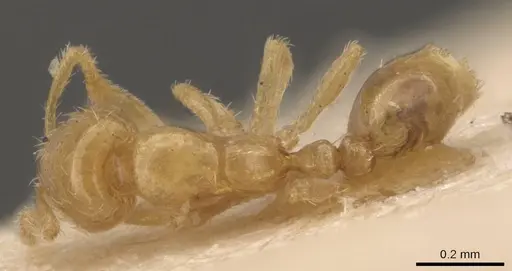
CASENT0914826
Voir sur AntWeb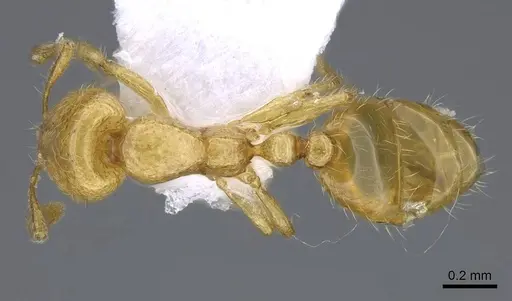

Littérature
Chargement de la carte de répartition...Chargement des produits...