
Simopone rex
- Nom sci.
- Simopone rex
- Sous-famille
- Dorylinae
- Auteur
- Bolton & Fisher, 2012
- Distribution
- Trouvé dans 1 pays
Introduction
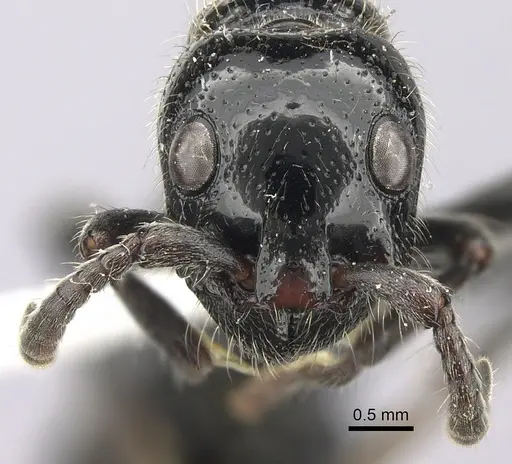
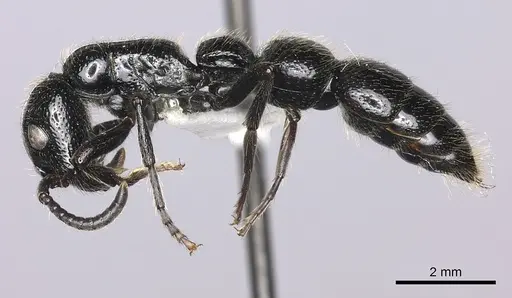
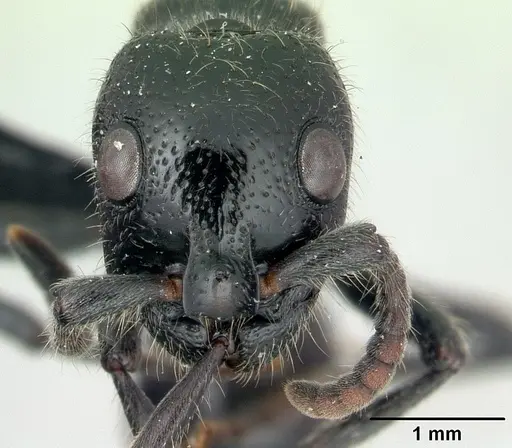
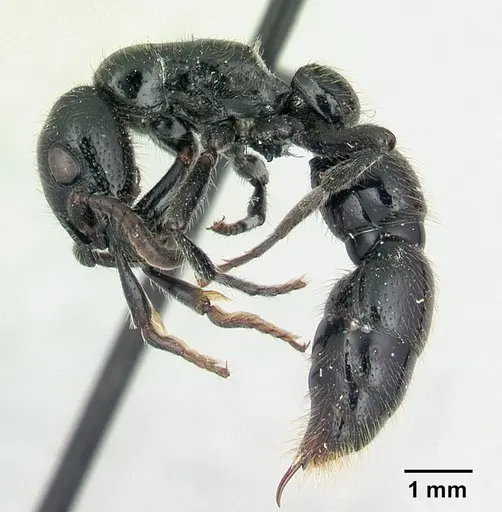
Simopone rex is a large, stocky ant species native to northern Madagascar, specifically the Antsiranana Province . Workers are notably large, with a head length of 2.10–2.36 mm and a mesosoma length of 2.56–2.88 mm (total body length is not recorded in literature) . The species is easily recognized by its abundant pilosity – numerous curved setae covering the abdominal tergites from AII to AIV, giving it a distinctly hairy appearance compared to related species . The body is black with blackish‑brown to black appendages, and the clypeus typically shows a dull reddish coloration . This species belongs to the emeryi species group and is one of five similar large, size‑variable Madagascan species . Like other Dorylinae ants, Simopone rex is likely predatory, though specific hunting behaviors are not documented. Specimens have been collected from various forest habitats including tropical dry forest, found foraging on the ground, in low vegetation, on tree stumps, and in dead twigs above ground level .
Quick Summary
- Difficulty: Expert
- Origin & Habitat: Northern Madagascar (Antsiranana Province), specifically from Forêt Orangea near Remena. Found in tropical dry forest at low elevation (90 m) in microhabitats such as low vegetation, tree stumps, dead twigs, and on the ground [1][2].
- Colony Type: Colony structure is unconfirmed. No data exists on queen number, worker castes, or social organization. Based on the lack of documentation, assume monogyne (single queen) until evidence emerges, but this is purely speculative.
- Size & Growth:
- Queen: Unknown – queen has not been described in scientific literature.
- Worker: Size data unavailable – only head length (2.10–2.36 mm) and mesosoma length (2.56–2.88 mm) have been measured [1]. Total body length is not recorded.
- Colony: Unknown – no colony size data available.
- Growth: Unknown
- Development: Unconfirmed – no direct development data exists. If kept warm (around 24–28 °C), an estimate based on typical Dorylinae patterns would be 4–8 weeks, but this is a rough guess. (Development timeline has not been directly studied. Do not plan colony growth around this estimate.)
- Antkeeping:
- Temperature: Likely requires warm conditions similar to other Madagascan forest ants. Based on origin (tropical dry forest at low elevation), aim for 24–28 °C with a slight gradient. This is an estimate based on habitat inference.
- Humidity: Moderate to high humidity is likely needed – forest floor conditions in tropical Madagascar are typically humid. Keep nest substrate moist but not waterlogged.
- Diapause: Unlikely – Madagascar has no true winter. These ants probably remain active year‑round if kept warm.
- Nesting: No captive nesting data exists. In the wild, they have been found in dead twigs above ground, under bark, and in low vegetation. For captivity, a naturalistic setup with a suitable nest type such as Y‑tong (AAC), plaster, or a soil nest with good moisture retention would be appropriate. Do not use acrylic nests.
- Behavior: As a Dorylinae ant, Simopone rex is likely predatory and probably hunts small invertebrates. Dorylinae ants possess a functional sting used for subduing prey, but they are not known to be aggressive toward humans. Temperament is undocumented, handle with caution only if absolutely necessary. Escape risk is moderate due to their size – standard barrier methods (e.g., fluon, oil) should suffice. Do not rely on formic acid spray, that is a trait of Formicinae, not Dorylinae.
- Common Issues: lack of captive husbandry information makes this species extremely challenging to keep, predatory diet requires regular live prey – this is not a species for beginners, no information on founding behavior makes colony establishment very difficult, humidity and temperature requirements are estimates based on habitat, not confirmed, wild‑caught colonies may have parasites or fail to adapt to captive conditions, uncertain social structure increases risk of queen death or colony collapse
Identification and Appearance
Simopone rex is one of the larger Simopone species. The most distinctive feature is the abundant pilosity – numerous curved setae that cover the abdominal tergites from AII to AIV, standing up and directed posteriorly [1]. These setae are dense, curved, and very conspicuous, making this species easily distinguishable from related taxa. The body is uniformly black with blackish‑brown to black legs and antennae, though the clypeus typically shows a dull reddish spot [1]. A distinctive longitudinal carina (ridge) runs along the lateral surface of the second abdominal segment (AII), and the posterior corners of AII are rounded rather than forming sharp angles [1]. Head length ranges from 2.10 to 2.36 mm and mesosoma length from 2.56 to 2.88 mm [1] – total body length is not recorded.
Distribution and Habitat
Simopone rex is known only from northern Madagascar, specifically the Antsiranana Province [1]. The type locality is Forêt Orangea, located 3.6 km southeast of Remena at approximately 12°16′S,49°22′E, at an elevation of 90 m above sea level [1]. This area represents tropical dry forest habitat. Specimens have been collected from various microhabitats including low vegetation, tree stumps, foraging on the ground, and from dead twigs above ground level [2]. The species appears to be a forest‑dwelling ant that forages in multiple strata of the forest environment.
Taxonomy and Relationships
Simopone rex was formally described by Bolton and Fisher in 2012 as part of a comprehensive revision of the cerapachyine ant genera [1]. The species belongs to the emeryi species group, which contains five large, stocky Madagascan species that share the characteristic of abundant pilosity [1]. Simopone is classified in the subfamily Dorylinae (formerly part of the tribe Cerapachyini), which also includes true army ants (Dorylus). While not true army ants, Simopone shares a predatory lifestyle and some morphological features typical of this group. The genus Simopone contains numerous African and Madagascan species that are primarily predators of other small invertebrates.
Predatory Behavior and Diet
As a member of Dorylinae, Simopone rex is almost certainly predatory, though specific prey preferences are not documented. Dorylinae ants typically hunt small invertebrates including springtails, mites, and other micro‑arthropods. In captivity, you should expect to provide regular live prey. Based on the worker size (head length ~2 mm), they likely can take moderately sized prey items. While some ants accept sugary foods, this species is primarily a predator – do not rely on honey or sugar water as a primary food source until acceptance is confirmed. Related Simopone species are assumed to be generalist predators, but this has not been directly observed.
Keeping Simopone rex in Captivity
This species is NOT recommended for beginners. There is essentially no captive husbandry information available, making successful keeping very challenging. If you attempt to keep them, you would need to replicate tropical forest conditions: temperatures around 24–28 °C, moderate to high humidity, and regular feeding with live small invertebrates. A naturalistic setup with moist substrate or a well‑humidified Y‑tong/plaster nest would be most appropriate. Given the complete lack of captive data, expect a steep learning curve and high probability of colony failure. This species is best left to experienced antkeepers with the resources to experiment with husbandry methods. Do not use acrylic nests, as they are not recommended for moisture control.
Frequently Asked Questions
Is Simopone rex a good species for beginners?
No. Simopone rex is not recommended for beginners. There is virtually no captive husbandry information available for this species, making it extremely challenging to keep successfully. The lack of data on founding behavior, diet preferences, and optimal care conditions means even experienced antkeepers would struggle with this species.
What do Simopone rex ants eat?
Like other Dorylinae ants, Simopone rex is likely predatory. You should provide regular live prey such as small insects, springtails, and other micro‑arthropods. Specific prey preferences are not documented. Sugar acceptance is uncertain – do not rely on honey or sugar water as a primary food source.
How big do Simopone rex colonies get?
Colony size is unknown – no scientific data exists on maximum colony size for this species. Based on related Simopone species, colonies are likely small to moderate, possibly reaching a few hundred workers at most, but this is speculation.
What temperature do Simopone rex ants need?
Based on their origin in tropical Madagascar (dry forest at low elevation), they likely require warm conditions around 24–28 °C. This is an estimate based on habitat inference, not confirmed captive requirements. Avoid temperatures below 20 °C.
Do Simopone rex ants need hibernation?
No. Madagascar has no true winter, and this species is from a tropical region. They likely remain active year‑round if kept warm. Do not attempt to cool them down for winter – maintain tropical temperatures throughout the year.
How long does it take for Simopone rex to develop from egg to worker?
The development timeline is unconfirmed – no scientific data exists for this species. Based on typical Dorylinae patterns at tropical temperatures (around 26 °C), development might take 4–8 weeks, but this is purely an estimate.
Can I keep multiple Simopone rex queens together?
Colony structure is unconfirmed – no data exists on whether this species is monogyne (single queen) or polygyne (multiple queens). Combining unrelated queens is not recommended given the lack of information about their social structure.
Where is Simopone rex found in the wild?
Simopone rex is endemic to northern Madagascar, specifically the Antsiranana Province. The species has been collected in tropical dry forest at Forêt Orangea near Remena, at approximately 90 m elevation. Specimens have been found foraging on the ground, in low vegetation, and in dead twigs above ground [1][2].
How do I set up a nest for Simopone rex?
No captive nesting data exists for this species. Based on collection data (dead twigs above ground, low vegetation), a naturalistic setup with moist substrate or a well‑humidified plaster/Y‑tong nest would be appropriate. Ensure the nest maintains moderate to high humidity and provide a foraging area with access to live prey. Do not use acrylic nests.
Report an Issue
The current care sheet is based fully on literature. See inconsistencies, or something that's incorrect? Please , it will be resolved after review from an admin. Contributing to the blogs tab also helps providing information, to make us be able to further improve the caresheets. Thank you for your support!
References

Cette fiche d'élevage est sous licence CC BY-SA 4.0 .
Blogs de la communauté
CASENT0410462
Voir sur AntWeb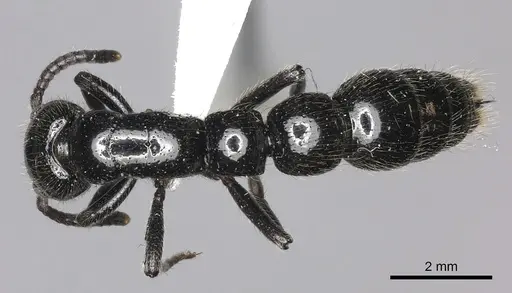
CASENT0410467
Voir sur AntWeb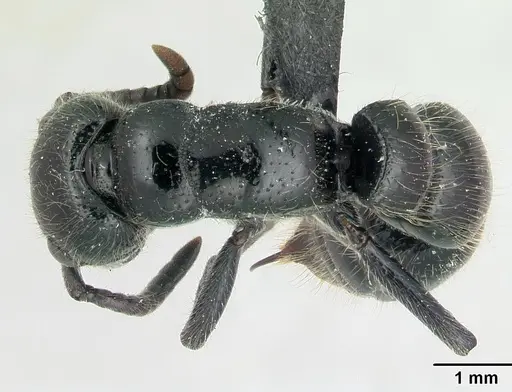
Littérature
Chargement de la carte de répartition...Chargement des produits...