
Simopone grandidieri
- Nom sci.
- Simopone grandidieri
- Sous-famille
- Dorylinae
- Auteur
- Forel, 1891
- Distribution
- Trouvé dans 1 pays
Introduction
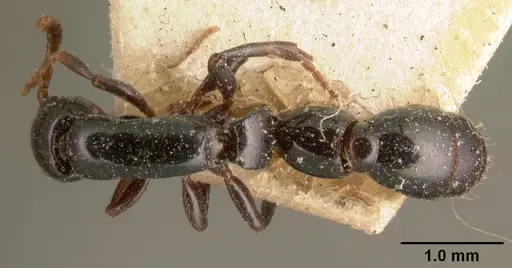
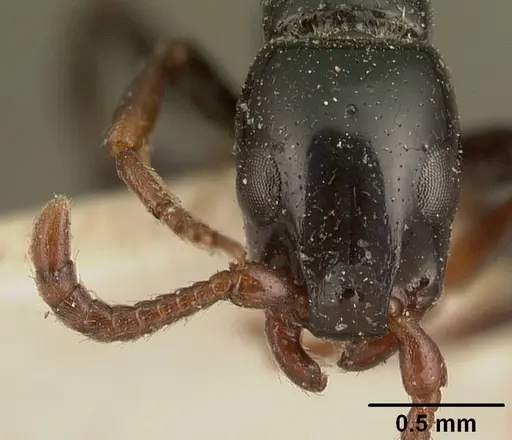
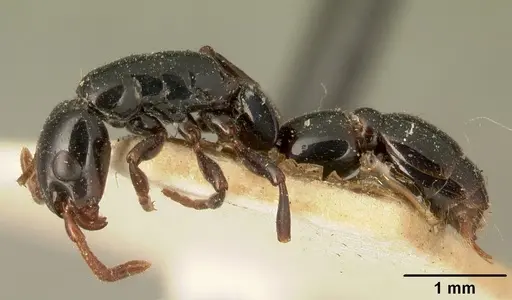
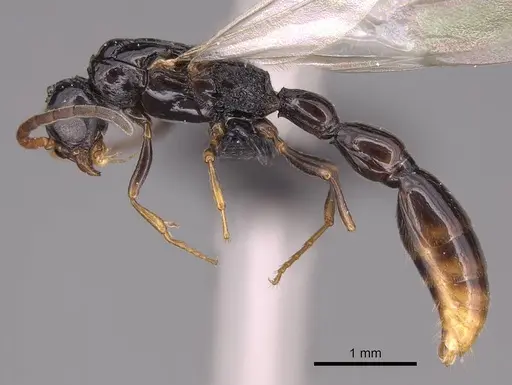
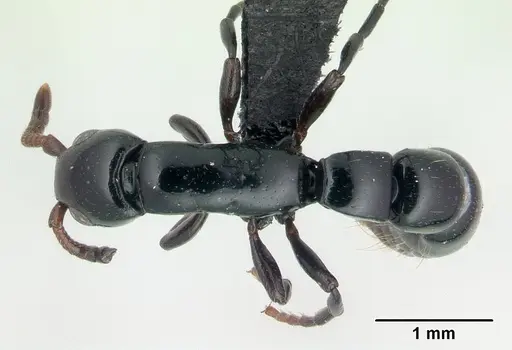
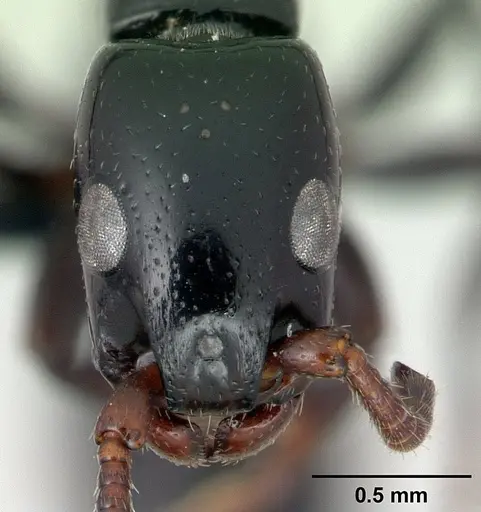
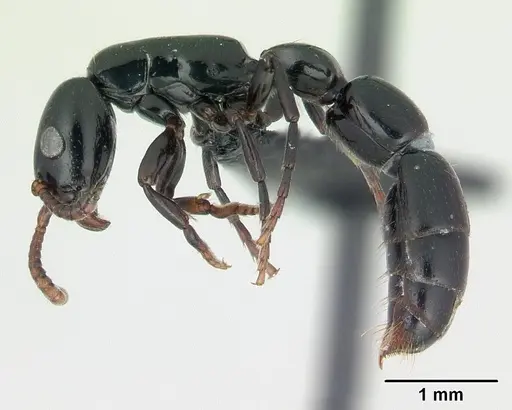
Simopone grandidieri is a small predatory ant from Madagascar, part of the Dorylinae subfamily (the army ant group). Workers are uniformly black, sometimes with weak bluish reflections . They show size-related variation in head shape: larger workers have broader heads, while smaller workers have relatively longer, narrower heads . This species was the first described in the genus Simopone and is one of only two species in the grandidieri group known from Madagascar . Workers forage on the ground, low vegetation, and inside dead woody structures above ground . Its specific body length has not been reported; only head and mesosoma measurements are available .
Quick Summary
- Difficulty: Expert
- Origin & Habitat: Madagascar, specifically the central region (Imerina) and surrounding forest habitats [4][3]. This species is endemic to Madagascar and has been collected in various forest situations.
- Colony Type: Colony structure is unconfirmed. As a Dorylinae species, they likely form colonies with a single queen, but specific colony organization has not been documented.
- Size & Growth:
- Queen: Undocumented, queen measurements have not been published.
- Worker: Worker total length is not documented, only head width and mesosoma length have been reported [1]. They are small ants, estimated around 4-5 mm total length based on related Dorylinae genera.
- Colony: Unknown, no colony size data has been documented.
- Growth: Unknown, development times have not been studied.
- Development: Unconfirmed, no direct measurements exist. Development timeline for this species has not been studied. (Development timeline is unconfirmed.)
- Antkeeping:
- Temperature: Based on Madagascar's tropical climate, aim for warm temperatures (24-28°C is a reasonable estimate). Provide a slight gradient so ants can choose their preferred zone [3].
- Humidity: Maintain the nest substrate consistently moist but not waterlogged, mimicking forest floor conditions. Avoid standing water [3].
- Diapause: Unknown, no specific studies exist. Given the tropical origin, a true diapause is unlikely to be required.
- Nesting: No species-specific nesting data exists. In captivity, a naturalistic setup with moist substrate (soil-sand mix) and hiding places is appropriate. Plaster or Y-tong nests that retain moisture well are likely good options. Ensure excellent escape prevention due to tiny worker size.
- Behavior: These ants are predatory, foraging for small arthropods on the ground and vegetation [3]. As Dorylinae, they may use chemical recruitment for hunting, but specific behavior is undocumented. Workers are tiny, so escape prevention must be flawless, they can slip through standard barriers. Their temperament toward humans is not well studied, but they are unlikely to be aggressive to large animals.
- Common Issues: tiny worker size makes escape prevention extremely challenging, standard barriers may not work, predatory diet requires constant supply of small live prey, which can be difficult to sustain, humidity management is critical, desiccation kills quickly, while mold from excess moisture is also deadly, no established care protocols exist, any success requires experimentation and experience
Species Overview and Identification
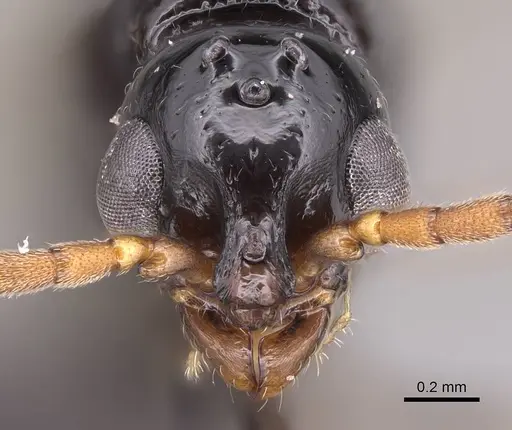
Simopone grandidieri is one of the first species described in its genus, dating back to 1891 [1]. Workers are uniformly black, sometimes showing subtle bluish reflections [1]. A key feature is the size-related variation in head shape: larger workers have broader heads, while smaller workers have relatively longer, narrower heads [1]. This species is one of only two in the grandidieri group from Madagascar [2]. You can identify workers by a single pair of standing setae on the head, located near the posterior margin of the eye, and by the leading edge of the antenna's scape having no projecting setae [1][2]. The eyes sit at or just in front of the head's midlength [1].
Natural History and Foraging
In the wild, Simopone grandidieri workers forage on the ground, on low vegetation, and inside dead woody structures above ground [3]. This suggests they are generalist predators, hunting small arthropods across different microhabitats. As Dorylinae, they are related to army ants but do not form huge swarm raids. Instead, they likely hunt as individuals or in small groups. Their prey probably includes springtails, mites, and other tiny invertebrates found in leaf litter and decaying wood [3].
Housing and Nesting in Captivity
No captive care protocols exist for this species. Based on its forest-floor habitat, a naturalistic setup with moist substrate (soil-sand mix) is recommended [3]. The nest area should retain humidity well, so plaster or Y-tong nests are good choices. Provide a gradient from wetter to drier areas so ants can regulate. Escape prevention must be exceptional: standard test tubes may need careful sealing, and any gaps larger than 1 mm can be an escape route. The outworld should include leaf litter, bark, and other hiding places for hunting [3].
Feeding Requirements
Simopone grandidieri is strictly predatory. Based on their foraging behavior, they need a steady supply of small live invertebrates [3]. Offer springtails, fruit flies, pinhead crickets, and other tiny arthropods. They may also accept pre-killed prey but prefer live food to trigger hunting. Feed small amounts every few days, adjusting based on consumption. Sugar sources are not necessary but can be offered occasionally as a supplement.
Temperature and Humidity
As a Madagascar endemic, this ant thrives in warm, humid conditions. Aim for 24-28°C, with a slight gradient so workers can choose their preferred spot [3]. Room temperature may suffice if your home stays in that range, otherwise use a gentle heat source on one side of the nest. Humidity should keep the substrate consistently moist, not waterlogged. Mist the nest occasionally but ensure good ventilation to prevent mold. Avoid condensation buildup [3].
Challenges and Why This Species Is Expert-Only
Simopone grandidieri is not for beginners. The biggest challenge is acquiring them, they are almost never available commercially, being endemic to Madagascar. There are no established captive breeding protocols, so you would need to pioneer all aspects of care. Their tiny size makes escape prevention difficult, and their predatory diet demands a constant supply of small live prey. Without species-specific data, keepers must experiment carefully. This species is only suitable for experienced antkeepers willing to work with unknown parameters.
Frequently Asked Questions
Is Simopone grandidieri available for purchase?
This species is extremely rare in the ant-keeping hobby and is not commonly available from commercial breeders. It is endemic to Madagascar and has rarely, if ever, been exported for the hobby trade.
How do I care for Simopone grandidieri?
Specific captive care protocols do not exist for this species. Based on its natural habitat, keep them warm (24-28°C), humid (moist substrate), and provide constant access to small live prey. This is an expert-only species with no established keeping protocols.
What do Simopone grandidieri ants eat?
They are predators, requiring small live invertebrates such as springtails, fruit flies, and tiny crickets. Their natural prey includes arthropods found in leaf litter and dead wood [3].
How big do Simopone grandidieri colonies get?
Colony size is unknown, no scientific data exists on maximum colony sizes for this species.
Do Simopone grandidieri need hibernation?
Diapause requirements are unconfirmed. Since Madagascar has a mild tropical climate without harsh winters, a true hibernation period is likely not necessary.
Can beginners keep Simopone grandidieri?
No, this is an expert-only species. There are no established care protocols, they are nearly impossible to acquire, and their small size and predatory diet make them extremely challenging to keep successfully.
What is the egg to worker development time for Simopone grandidieri?
Development timeline is unconfirmed, no scientific measurements exist for this species
Where is Simopone grandidieri found?
This species is endemic to Madagascar, specifically the central region (Imerina). It has been collected in various forest habitats across the island [4][3].
How do I set up a nest for Simopone grandidieri?
No species-specific nest recommendations exist. A naturalistic setup with moist substrate and good humidity retention (plaster or Y-tong nest) would be appropriate. Escape prevention must be excellent due to their tiny worker size [3].
Report an Issue
The current care sheet is based fully on literature. See inconsistencies, or something that's incorrect? Please , it will be resolved after review from an admin. Contributing to the blogs tab also helps providing information, to make us be able to further improve the caresheets. Thank you for your support!
References

Cette fiche d'élevage est sous licence CC BY-SA 4.0 .
Blogs de la communauté
Littérature
Chargement de la carte de répartition...Chargement des produits...