
Pseudoatta argentina
- Nom sci.
- Pseudoatta argentina
- Tribu
- Attini
- Sous-famille
- Myrmicinae
- Auteur
- Gallardo, 1916
- Distribution
- Trouvé dans 1 pays
Introduction
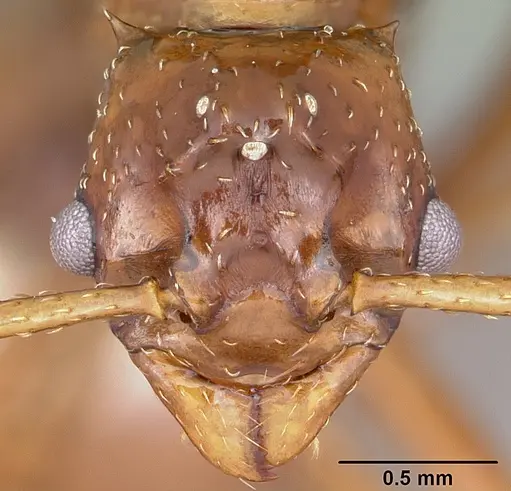
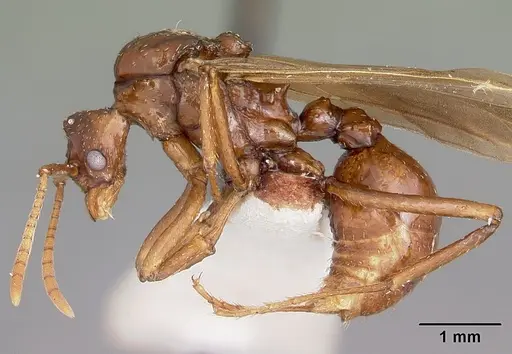
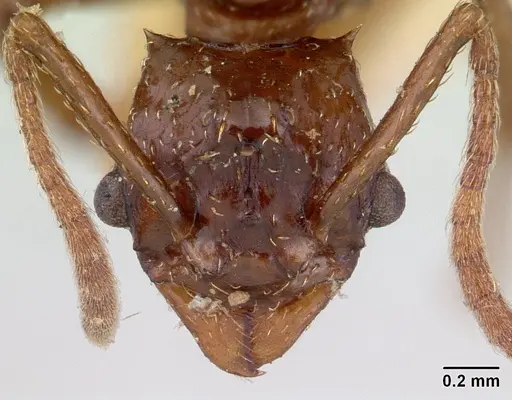
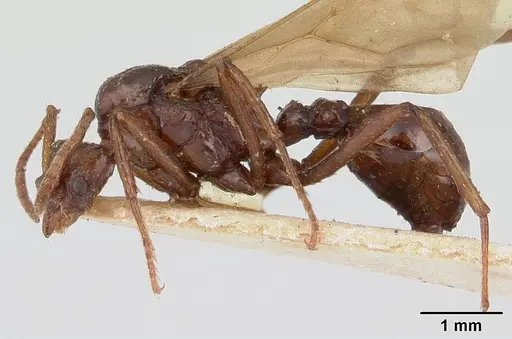
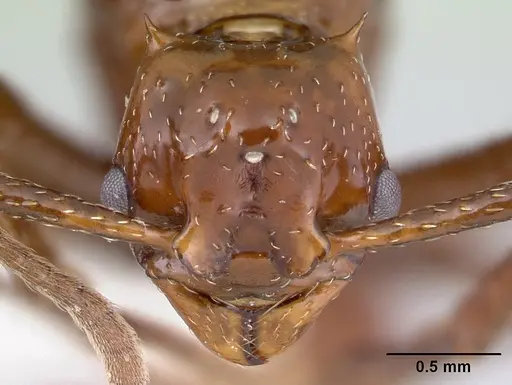
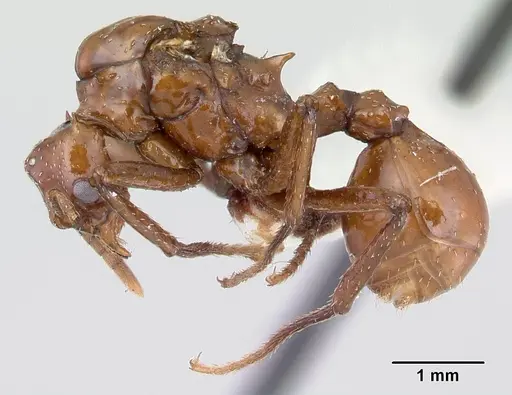
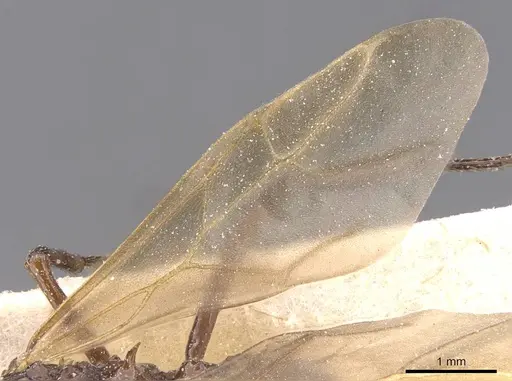
Pseudoatta argentina is an extremely unusual ant - it's a workerless inquiline social parasite that lives entirely inside colonies of leaf-cutting ants in the genus Acromyrmex. This species has lost its worker caste completely, and both queens and males have become gynaecomorphic (males look like queens). The queens have a shiny body, smaller size, and simpler mouthparts compared to their hosts . This species is found in southern Brazil (Paraná and Rio Grande do Sul), Uruguay, and northern Argentina . The most remarkable thing about this ant is that it represents one of the most highly evolved social parasites known - its genome shows the most extreme gene loss of any studied ant species, including a 44% loss of odor receptor genes compared to its host .
Quick Summary
- Difficulty: Expert
- Origin & Habitat: Southern Brazil (Paraná and Rio Grande do Sul), Uruguay, and northern Argentina. Lives inside leaf-cutter ant colonies (Acromyrmex) in tropical to subtropical regions [2][3].
- Colony Type: Workerless inquiline, no workers are produced. The parasite queen lives permanently inside host Acromyrmex colonies. She invades, either kills the host queen or joins queenless colonies, and produces only sexual offspring [2]. Mating happens inside the host colony with siblings (adelphogamy) [2][5].
- Size & Growth:
- Queen: Reduced compared to host, specific measurements not documented [3]
- Worker: Worker caste completely absent [1][3]
- Colony: The parasite colony consists only of the queen and her sexual offspring. The host colony may have hundreds of workers, but the parasite contributes none [2].
- Growth: Unknown, cannot be kept in traditional captivity
- Development: Not applicable, no workers produced [1][3] (This species produces only sexuals (males and new queens), never workers. The development timeline inside the host colony is unstudied.)
- Antkeeping:
- Temperature: Unclear, would match host colony conditions (Acromyrmex species typically kept at 24-28°C). However, this species cannot be kept in captivity.
- Humidity: Unclear, would match host colony conditions. However, this species cannot be kept in captivity.
- Diapause: Unknown, likely follows host colony activity patterns. However, this species cannot be kept in captivity.
- Nesting: Lives exclusively inside host Acromyrmex nests. Cannot be kept separately. This is not a species that can be maintained in standard ant keeping setups.
- Behavior: Extremely specialized social parasite. The parasite queen infiltrates an Acromyrmex colony, either killing the host queen or joining queenless colonies. Once established, she produces only sexual offspring (males and new queens) that mate within the host colony [2][5]. The host workers tend the parasite brood. This species has lost virtually all worker-related traits and cannot survive independently. Escape risk is irrelevant as this species cannot be kept in captivity.
- Common Issues: this species cannot be kept in captivity, it is an obligate social parasite requiring a living Acromyrmex host colony, no workers will ever be produced, the colony consists only of the parasite queen and her sexual offspring, attempting to keep this species without a host colony will result in death, even with a host colony, keeping both species is extremely advanced and not recommended, this species is listed as Vulnerable (VU) on the IUCN Red List, wild populations are protected [3]
Why This Species Cannot Be Kept in Captivity
Pseudoatta argentina is an obligate social parasite, it cannot survive without a living host colony of Acromyrmex ants. This is not a matter of difficult care or advanced husbandry, this species has evolved to live entirely inside host colonies and has lost the ability to function independently. Unlike typical ants where you start with a founding queen and grow a colony, P. argentina requires you to already have an established Acromyrmex colony, then introduce the parasite queen. Even then, success would require expert-level knowledge of both species and is not achievable with current antkeeping methods. The species produces no workers at all, only sexual offspring (males and new queens) that mate inside the host colony [1][2][3]. This means there is nothing to observe or keep in a traditional formicarium setup. For all practical purposes, Pseudoatta argentina should be considered observable only in the wild, not a species for captive keeping.
The Biology of Social Parasitism in Pseudoatta
Pseudoatta argentina represents one of the most extreme examples of social parasitism known in ants. It is considered a derived species of Acromyrmex that has lost its worker caste entirely [1]. The parasite queen invades host colonies and either kills the existing Acromyrmex queen or joins colonies that have already lost their queen [2]. Once established, she manipulates the host workers to care for her brood instead of the host's own brood. Her offspring are exclusively sexuals (males and new queens), never workers. Males are gynaecomorphic, meaning they look like queens [2]. This species practices adelphogamy, mating occurs inside the host colony with siblings [2][5]. The genome of P. argentina shows the most extreme gene loss of any ant studied, with massive reductions in olfactory genes (44% loss of odor receptors), gustatory receptors, and other traits linked to worker behavior [4]. This is the quintessential example of the 'inquiline syndrome', a set of morphological reductions found in permanent social parasites [4].
Host Species and Distribution
Pseudoatta argentina is a parasite of leaf-cutting ants in the genus Acromyrmex. Documented hosts include Acromyrmex lundii, A. heyeri, A. ambiguus, A. crassispinus, and possibly A. balzani [5][6][2][7]. The species is found across southern Brazil (Paraná and Rio Grande do Sul), Uruguay, and northern Argentina [2][3]. Its distribution overlaps with its host species, which are also found in these regions. This species is listed as Vulnerable (VU) on the IUCN Red List, meaning wild populations face conservation concerns [3].
Taxonomic Notes
Pseudoatta has been considered a separate genus, but some researchers suggest it should be treated as a junior synonym of Acromyrmex (Brown,1973) [6]. The genus name 'Pseudoatta' means 'false Atta', reflecting its similarity to leaf-cutter ants. The species was originally described by Gallardo in 1916,with a subspecies P. argentina platensis described by Santschi in 1926 [3]. It belongs to the tribe Attini (fungus-farming ants) within the subfamily Myrmicinae [8][9]. As a parasite of fungus-growing ants, it still depends on the host workers to maintain the fungus garden.
Defense Mechanism
Like other ants in the subfamily Myrmicinae (tribe Attini), Pseudoatta argentina has a functional stinger used to inject venom. However, because this species cannot be kept in captivity, stings are not a practical concern for antkeepers. Their parasitic lifestyle means they rely on host colony defense rather than their own.
Frequently Asked Questions
Can I keep Pseudoatta argentina as a pet ant?
No. Pseudoatta argentina is an obligate social parasite that cannot survive without a living Acromyrmex host colony. It produces no workers and cannot be maintained in any standard ant keeping setup. This species should be considered observable only in the wild [1][2].
Do Pseudoatta argentina ants have workers?
No. This species completely lacks a worker caste. The colony consists only of the parasite queen and her sexual offspring (males and new queens). Workers are never produced [1][3].
What do I feed Pseudoatta argentina?
Nothing you could provide would help. This species lives inside Acromyrmex nests and relies entirely on host workers to feed it and maintain the fungal garden. There is no captive care protocol for this species [2].
How do Pseudoatta argentina queens found new colonies?
The queen invades an established Acromyrmex colony, either killing the host queen or joining queenless colonies. She does not found a colony independently, she is a permanent social parasite that cannot survive without a host [2][5].
What is the difficulty level for keeping Pseudoatta argentina?
This is not a species that can be kept. It is rated 'Expert' because even attempting to maintain it would require expert knowledge of Acromyrmex husbandry plus the ability to obtain both species, but ultimately captive maintenance is not possible with current methods.
Do Pseudoatta argentina need hibernation or diapause?
Unknown. Any seasonal behavior would follow the host colony's patterns. However, this is irrelevant since the species cannot be maintained in captivity.
How long does it take for Pseudoatta argentina to develop from egg to adult?
This timeline has not been studied and is irrelevant for antkeeping. What is known is that only sexual offspring (males and new queens) are produced, never workers. Development would occur inside the protected host colony.
Is Pseudoatta argentina a good species for beginners?
No ant species is suitable for beginners if it cannot be kept at all. Pseudoatta argentina is one of the most specialized social parasites known and cannot be maintained in captive ant keeping. If you are interested in unusual ants, consider studying them in the wild or choosing a well-documented species like Lasius niger or Camponotus floridanus [1][2].
Report an Issue
The current care sheet is based fully on literature. See inconsistencies, or something that's incorrect? Please , it will be resolved after review from an admin. Contributing to the blogs tab also helps providing information, to make us be able to further improve the caresheets. Thank you for your support!
References

Cette fiche d'élevage est sous licence CC BY-SA 4.0 .
Blogs de la communauté
CASENT0104658
Voir sur AntWeb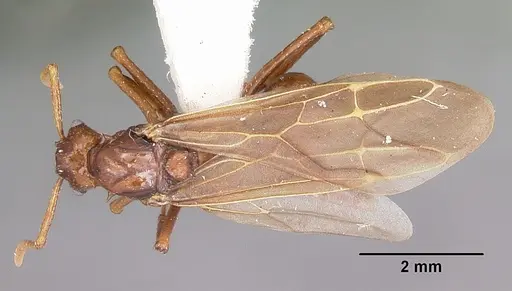
CASENT0178486
Voir sur AntWeb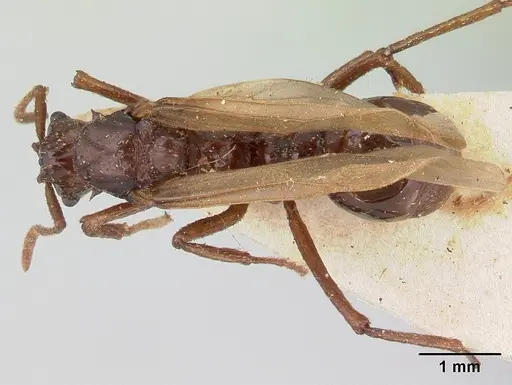
CASENT0178533
Voir sur AntWeb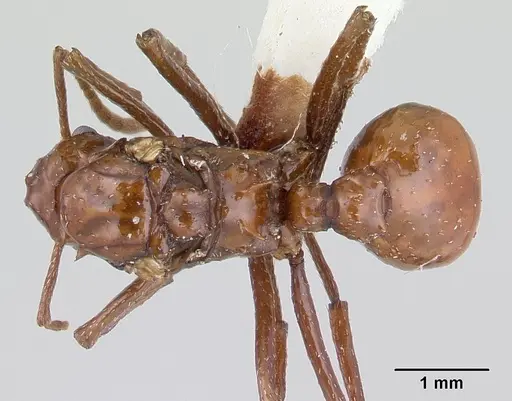
CASENT0909398
Voir sur AntWeb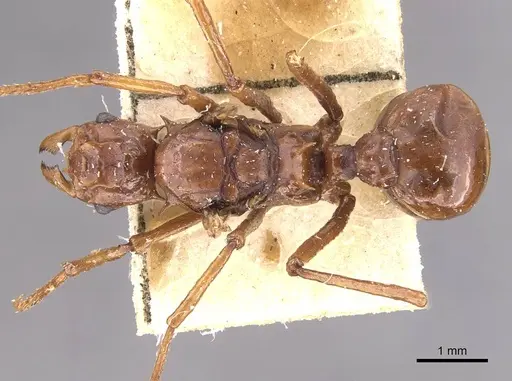
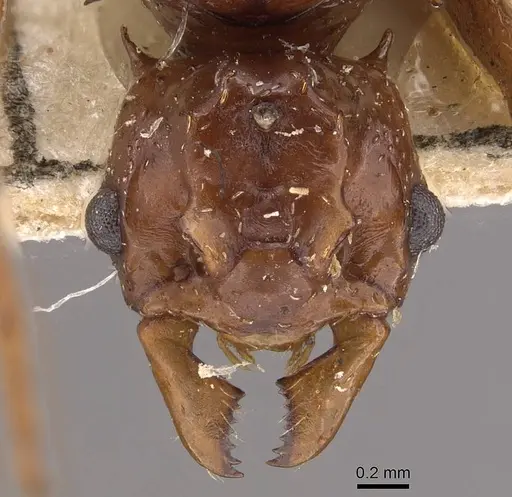
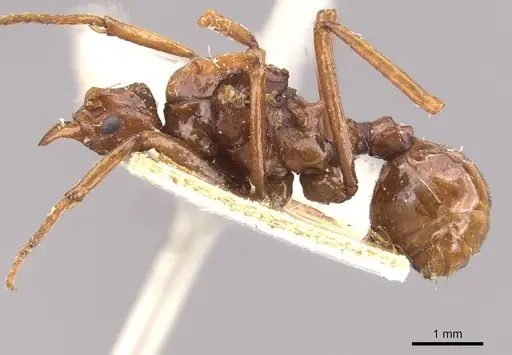
CASENT0912514
Voir sur AntWeb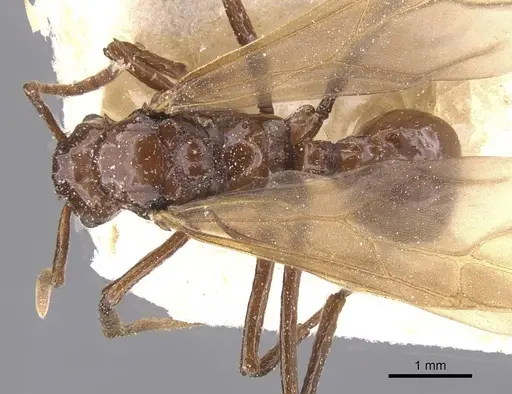
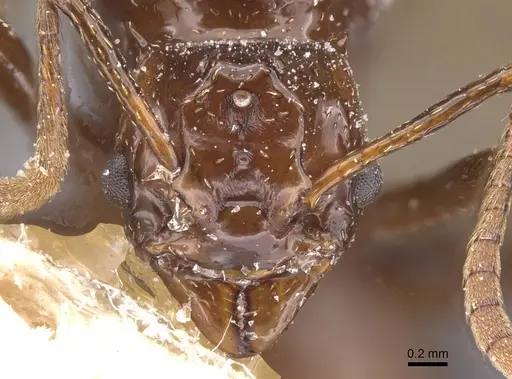
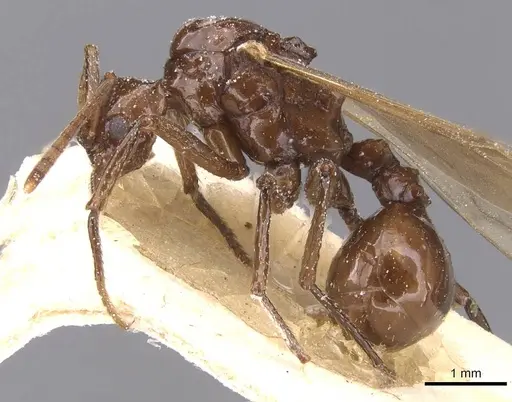
Littérature
Chargement de la carte de répartition...Chargement des produits...