
Protanilla wardi
- Nom sci.
- Protanilla wardi
- Tribu
- Leptanillini
- Sous-famille
- Leptanillinae
- Auteur
- Bharti & Akbar, 2015
- Distribution
- Trouvé dans 0 pays
Introduction
Protanilla wardi is a rare ant species in the Leptanillinae subfamily. Workers are tiny at 1.84-1.85 mm total length . They have a blackish-brown body with brownish-yellow head, legs, and petiole, and a visible stinger . This species is endemic to Silent Valley National Park in Kerala, India, at 900 m altitude . It lives in leaf litter in shady, humid forests . Only two worker specimens have ever been collected, making it one of the least-known ant species . Keeping this species offers a chance to study a virtually unknown ant, but care is uncharted territory.
Quick Summary
- Difficulty: Expert
- Origin & Habitat: Endemic to Kerala, India, specifically Silent Valley National Park in the Western Ghats mountains at 900 m altitude [1][2]. They live in tropical moist evergreen forests in leaf litter approximately 2 cm thick in shady areas with limited sunlight [1][3]. The region has a mean annual temperature of 20.2°C with 95% relative humidity and high rainfall [3].
- Colony Type: Unknown, colony structure has never been documented. Only two worker specimens have ever been collected [1].
- Size & Growth:
- Queen: Unknown, queens have never been described or collected [1].
- Worker: 1.84-1.85 mm total length [1]
- Colony: Unknown, only two workers have ever been recorded [1]
- Growth: Unknown
- Development: Unknown, no development data exists for this species [1] (Development timeline is completely unstudied.)
- Antkeeping:
- Temperature: Keep around 20-22°C based on natural habitat mean annual temperature of 20.2°C [3].
- Humidity: Keep nest substrate consistently moist but not waterlogged, based on 95% relative humidity in habitat [3].
- Diapause: Unknown, no research exists on their seasonal behavior.
- Nesting: Use a naturalistic setup with moist soil or leaf litter, matching their habitat in 2 cm thick leaf litter [1]. A Y-tong or plaster nest with small chambers scaled to their size is appropriate.
- Behavior: Nothing is known about their behavior in captivity. Workers have a visible stinger but are too small to harm humans [1]. Escape prevention is critical due to their tiny size.
- Common Issues: this species has never been kept in captivity, there is no established care protocol [1]., only two specimens exist in scientific collections, so wild colonies for founding are essentially unavailable [1]., extremely small size means escape prevention must be excellent, they can slip through microscopic gaps [1]., no information exists on what they eat or how to feed them., humidity requirements are extreme, keep substrate moist based on natural habitat [3]., growth and development are completely unstudied.
Why Keep Protanilla wardi?
Keeping Protanilla wardi offers a rare opportunity to study a virtually unknown ant species. It is known from only two specimens collected in 2015,making it one of the least-collected ant species on Earth [1]. By keeping this species, you could contribute new scientific knowledge about its behavior, diet, and development. However, this is an expert-level species with no established care protocol.
Natural History and Origin
Protanilla wardi comes from Silent Valley National Park in Kerala, India, which forms the core of the Nilgiri Biosphere Region [1][3]. The ants were collected from leaf litter about 2 cm thick in a shady location at 900 m altitude [1]. The climate has a mean annual temperature of 20.2°C,95% relative humidity, and high rainfall [3]. The species was described in 2015 by Bharti and Akbar and named after Professor Philip S. Ward [1].
Housing and Nest Setup
Use a naturalistic setup with a thin layer of moist forest floor material, about 2-3 cm deep, matching their leaf litter habitat [1]. A Y-tong or plaster nest with small chambers is essential due to their tiny size [1]. The outworld should be escape-proof, as these ants can slip through microscopic gaps. Provide adequate ventilation to prevent mold while maintaining high humidity.
Temperature and Humidity Control
Keep temperature around 20-22°C based on their natural habitat [3]. Avoid heating unless room temperature drops below 18°C. Humidity is critical, keep the nest substrate consistently moist but not waterlogged, based on 95% relative humidity in their habitat [3]. Use a hygrometer to monitor levels.
Feeding and Diet - The Unknown Factor
No direct data on diet exists for Protanilla wardi. Based on related Leptanillinae like Opamyrma hungvuong, which preys on centipedes [4], Protanilla may be predatory on small soil arthropods. Offer live springtails or tiny fruit flies and observe what they accept. This is uncharted territory.
Behavior and Observation Opportunities
Because so little is known, any captive observations could be valuable. Workers have a visible stinger but pose no threat to humans due to their size [1]. Expect subtle behavior rather than active foraging. Keep detailed notes on feeding, activity, and brood development.
Frequently Asked Questions
Is Protanilla wardi a good species for beginners?
No. This is an expert-only species with no established care protocol, no documented diet, and no known development timeline [1].
How big do Protanilla wardi colonies get?
Unknown, colony size has never been documented. Only two workers have been recorded [1], but colony size is unconfirmed.
What do Protanilla wardi ants eat?
Unconfirmed, no feeding observations exist. Based on related Leptanillinae, they may be predatory on small soil arthropods [4]. Try offering live springtails or tiny fruit flies.
Do Protanilla wardi ants sting?
Yes, they have a visible stinger [1]. However, at only 1.84 mm in length, they are far too small to penetrate human skin or cause any pain.
What temperature should I keep Protanilla wardi at?
Keep them cool at 20-22°C, based on their natural habitat mean annual temperature of 20.2°C [3].
Do Protanilla wardi need hibernation?
Unknown, no research exists on their seasonal behavior.
Where does Protanilla wardi come from?
They are endemic to Kerala, India, specifically Silent Valley National Park in the Western Ghats mountains at 900 m altitude [1][2].
How long does it take for Protanilla wardi to produce first workers?
Unknown, no development data exists for this species [1].
Can I keep multiple Protanilla wardi queens together?
Unknown, colony structure has never been documented [1]. Without data, combining queens is not recommended.
How do I obtain Protanilla wardi for my collection?
This is extremely difficult. Only two worker specimens have ever been collected, and they were obtained from a protected national park [1]. There are no known established colonies in captivity.
Report an Issue
The current care sheet is based fully on literature. See inconsistencies, or something that's incorrect? Please , it will be resolved after review from an admin. Contributing to the blogs tab also helps providing information, to make us be able to further improve the caresheets. Thank you for your support!
References

Cette fiche d'élevage est sous licence CC BY-SA 4.0 .
Blogs de la communauté
CASENT0221924
Voir sur AntWeb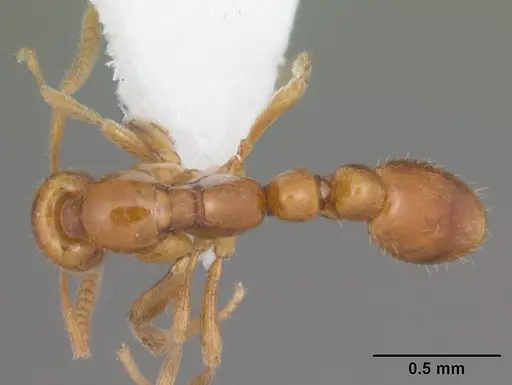
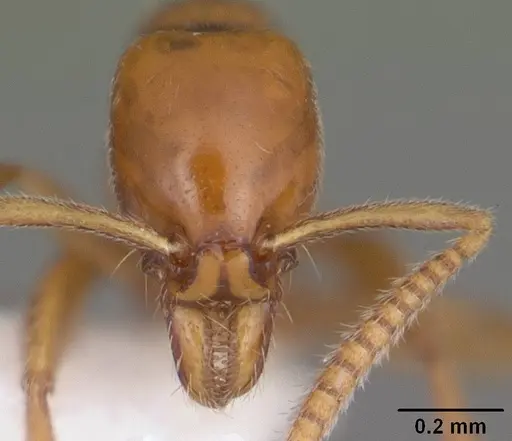
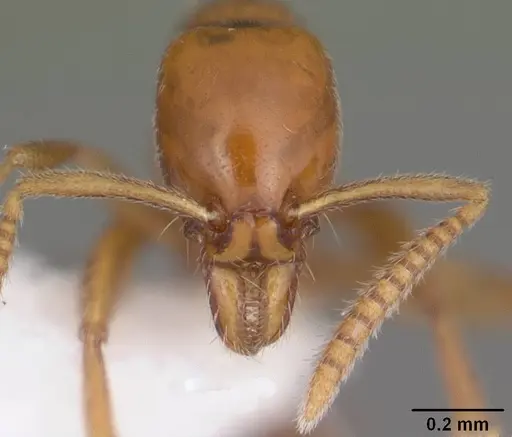
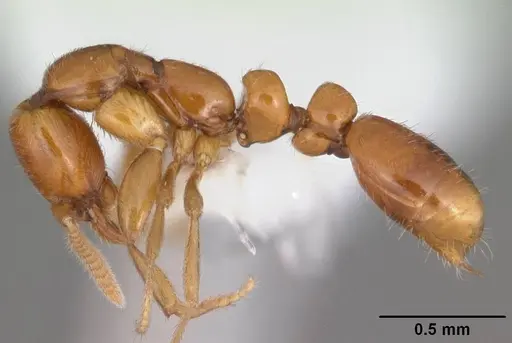
Littérature
Chargement de la carte de répartition...Chargement des produits...