
Protanilla taylori
- Nom sci.
- Protanilla taylori
- Tribu
- Leptanillini
- Sous-famille
- Leptanillinae
- Auteur
- Bolton, 1990
- Distribution
- Trouvé dans 0 pays
Introduction
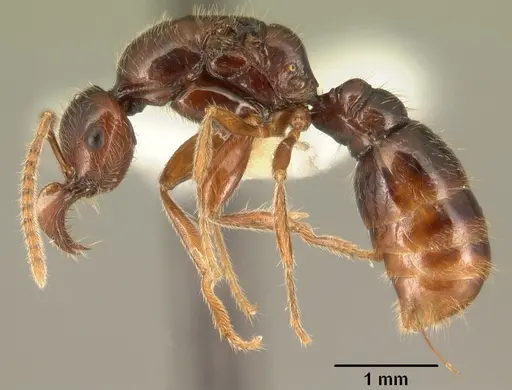
Protanilla taylori is a species from the primitive subfamily Leptanillinae, known only from a single dealate queen collected in Kinabalu National Park, Sabah, Malaysia at 1400m elevation . The queen has a total length of approximately 6mm and exhibits unique morphology, including complete fusion of the petiole and abdominal sternite III . No workers or colonies of this species have ever been documented. The genus was reclassified from Anomalomyrma to Protanilla in 2024 based on phylogenetic research , and P. taylori is distinct from other Protanilla species such as P. boltoni and P. helenae .
Quick Summary
- Difficulty: Expert
- Origin & Habitat: Known only from Borneo, Malaysia (Sabah) at Kinabalu National Park,1400m elevation in montane forest litter [1][2]. The type specimen was collected from a litter sample, suggesting a damp, shaded forest floor environment.
- Colony Type: Unknown, only a single queen has ever been documented. The species is not the gyne (queen) of Protanilla boltoni or Protanilla helenae, meaning it represents a distinct species with unknown colony structure [2].
- Size & Growth:
- Queen: ~6mm total length [3]
- Worker: Unknown, workers have never been described [2]
- Colony: Unknown
- Growth: Unknown
- Development: Unknown, no colonies have ever been observed [1] (Development timeline is completely unstudied. Based on related Leptanillinae, expect several months, but this is entirely speculative.)
- Antkeeping:
- Temperature: Likely prefers cool conditions given the high elevation collection site. Based on habitat inference, aim for 18-22°C with a gentle gradient [1].
- Humidity: Likely requires high humidity based on montane forest environment. Keep substrate consistently moist but not waterlogged, with a gradient from damp to slightly drier areas [1].
- Diapause: Unknown, no seasonal data exists for this species [1].
- Nesting: Unknown, no natural nesting observations exist. Based on litter collection and related genera, they likely nest in small cavities in rotting wood or soil beneath leaf litter, but this is speculative [1].
- Behavior: Completely unknown. Based on related Leptanillinae, they may be predatory on small invertebrates like centipedes [3], but this is inferred. Escape risk cannot be assessed without worker specimens. Temperament is unstudied.
- Common Issues: this species has never been kept in captivity, no care protocols exist, only a single specimen has ever been collected in the wild, no workers have ever been described, making colony establishment impossible, extremely high difficulty due to complete lack of biological data, collected from a protected area (Kinabalu National Park), legal restrictions may apply
Why This Species Is Extremely Challenging
Protanilla taylori is one of the most poorly known ant species in the world. Since its discovery in 1987,only a single dealate queen has been collected, no workers, no males, no colonies have been observed [1]. This means there is no scientific data on how to keep this species alive in captivity. The queen was collected from a litter sample in Kinabalu National Park, Borneo, at 1400m elevation, but beyond this, we have no information about their natural history, diet, colony size, or behavior [2]. Attempting to keep it would be entirely experimental with no established protocols.
What We Know About the Genus Protanilla
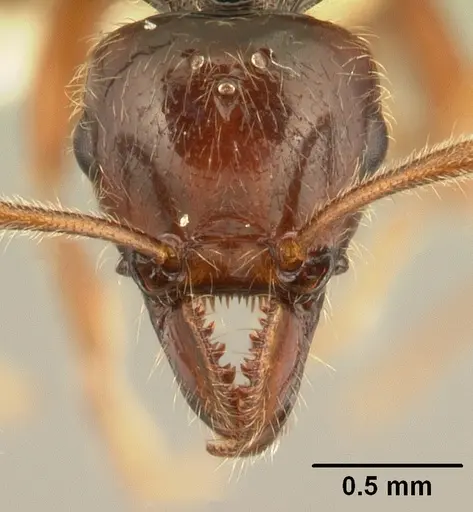
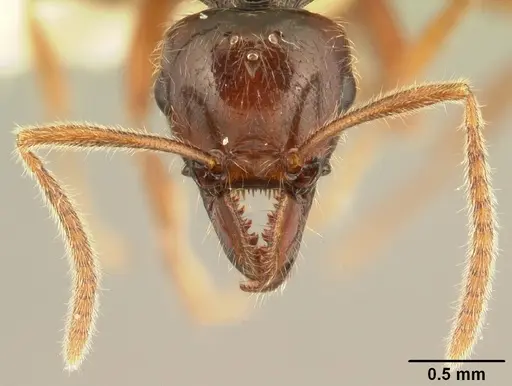
Protanilla belongs to the subfamily Leptanillinae, a group of primitive ants that are rarely encountered and poorly studied [4]. The genus was formerly classified as Anomalomyrma but was reclassified in 2024 after phylogenetic analysis revealed it was paraphyletic. Three species are recognized: P. taylori, P. boltoni, and P. helenae, all from Southeast Asia [4]. The worker caste was only described in 2011 for related species, revealing unique abdominal morphology [2]. P. taylori has a vertical dorsal lamella on the mandibles, a distinctive feature [4]. Based on related genera, Protanilla species are likely predatory on small soil invertebrates.
Inferred Care Based on Relatives
No direct care information exists for P. taylori, but we can make educated guesses based on related Leptanillinae and the habitat where the type specimen was found. The 1400m elevation in Borneo suggests a cool, montane forest environment with high humidity. Related Opamyrma species are known to prey on centipedes [3], suggesting a predatory diet. However, these inferences are speculative. If attempting to keep this species, you would need to replicate damp forest floor conditions with temperatures around 18-22°C and provide small live prey. But attempting this species is high-risk given how little we know.
Legal and Ethical Considerations
Protanilla taylori is known only from Kinabalu National Park in Borneo, a protected area. Collecting this species would require permits and could impact wild populations that have never been studied. Additionally, since no one has ever successfully kept this species, any attempt would be extremely high-risk with near-certain failure. For antkeepers interested in rare species, consider focusing on better-documented Leptanillinae or other unusual ants with established care protocols. WARNING: This species should not be collected from protected areas without proper authorization. [1]
Frequently Asked Questions
Can I keep Protanilla taylori ants?
No, this species has never been kept in captivity. Only a single queen has ever been collected in the wild (in 1987), and no workers have ever been described. There is no established care protocol for this species, and attempting to keep it would be extremely risky [1].
Where does Protanilla taylori live?
Only known from Borneo, Malaysia (Sabah) at Kinabalu National Park, collected at 1400m elevation from forest litter. This is the only documented location for this species [1][2].
What do Protanilla taylori eat?
Unknown, their diet has never been observed. Based on related Leptanillinae like Opamyrma, they are likely predatory on small soil invertebrates such as centipedes, but this is inferred [3].
How big do Protanilla taylori colonies get?
Unknown, no colonies have ever been documented. We don't know colony size, structure, or even if the species is single-queen or multi-queen [1].
What temperature do Protanilla taylori need?
Unknown, but likely cool conditions given the high elevation (1400m) collection site in Borneo. Based on habitat inference, temperatures around 18-22°C might be appropriate, but this is speculative [1].
Are Protanilla taylori available for sale?
Extremely unlikely. This species has never been cultured in captivity and is known only from a single museum specimen. No commercial sources exist [1].
How long does it take for Protanilla taylori to develop from egg to worker?
Unknown, no colonies have ever been established, so development times are completely unstudied [1].
Is Protanilla taylori endangered?
We don't have enough data to assess their conservation status. They are known only from a single specimen in a protected area, but we lack basic population data to determine if they are rare or simply rarely collected [1].
Can I find Protanilla taylori in the wild?
This would be extremely difficult and likely require research permits. They are known only from a single litter sample collected in 1987 at Kinabalu National Park. Even finding them would be a major scientific discovery [1].
Why is Protanilla taylori so poorly known?
Only a single dealate queen has ever been collected, despite over 35 years of ant research since its discovery. This suggests the species is either extremely rare, lives in microhabitats that are difficult to sample, or has a very limited range. The fact that no workers have ever been found makes studying them nearly impossible [2][1].
Report an Issue
The current care sheet is based fully on literature. See inconsistencies, or something that's incorrect? Please , it will be resolved after review from an admin. Contributing to the blogs tab also helps providing information, to make us be able to further improve the caresheets. Thank you for your support!
References

Cette fiche d'élevage est sous licence CC BY-SA 4.0 .
Blogs de la communauté
CASENT0101976
Voir sur AntWeb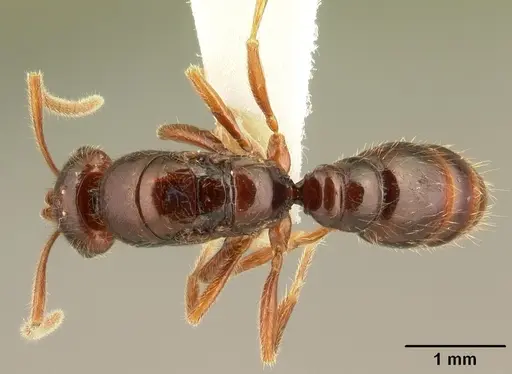
Littérature
Chargement de la carte de répartition...Chargement des produits...