
Polyrhachis rustica
- Nom sci.
- Polyrhachis rustica
- Sous-genre
- Hirtomyrma
- Tribu
- Camponotini
- Sous-famille
- Formicinae
- Auteur
- Kohout, 1990
- Distribution
- Trouvé dans 0 pays
Introduction
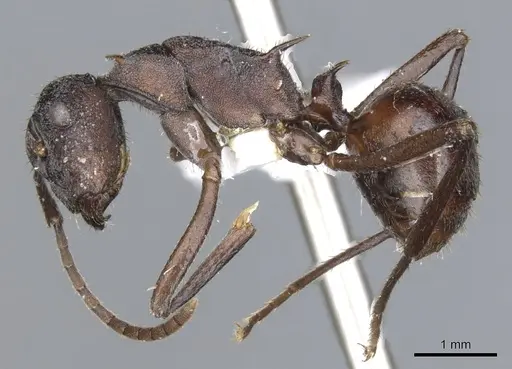
Polyrhachis rustica is a small ant native to Queensland, Australia. Workers measure around 7 mm and queens around 9 mm in total length . They have dark reddish-brown coloration with prominent spines on the pronotum, propodeum, and petiole . The species is found in savannah woodland habitats and is a subterranean nester, associated with Rhytidoponera ant colonies . This species belongs to the parasitic viehmeyeri group, meaning it is a social parasite that lives within host colonies of Rhytidoponera ants . This makes it one of the most challenging ants to keep in captivity.
Quick Summary
- Difficulty: Expert
- Origin & Habitat: Queensland, Australia, found in savannah woodland near Collinsville and Mareeba [1][2]. Subterranean nester associated with Rhytidoponera ?aurata nests [2][3].
- Colony Type: Social parasite, lives as a guest species within Rhytidoponera host colonies. The colony structure is not independent, they require a host colony to survive.
- Size & Growth:
- Antkeeping:
- Temperature: Keep at room temperature, around 22-26°C, based on the subtropical climate of Queensland [2]. No specific thermal studies exist for this species.
- Humidity: Maintain moderate to high humidity, as they are subterranean nesters in a subtropical climate [3]. Keep the nest substrate consistently moist but not waterlogged.
- Diapause: Unknown, Queensland has mild winters, so diapause is unlikely, but no specific studies exist.
- Nesting: Subterranean nester that requires a host Rhytidoponera colony. In captivity, you must maintain a mixed-species setup with soil substrate [3][2].
- Behavior: As a social parasite, P. rustica is less aggressive than typical ants. Workers are moderate escape risk due to their size (around 7 mm), but the primary challenge is maintaining the host colony [1][3].
- Common Issues: parasitic lifestyle makes them extremely difficult to keep without a host colony., obtaining both the parasite and the specific host Rhytidoponera is nearly impossible for hobbyists., maintaining a mixed-species colony is complex and rarely successful., the species is rarely collected and not available in the antkeeping trade., without proper host association, colonies will fail regardless of care.
Understanding the Parasitic Lifestyle
Polyrhachis rustica belongs to the viehmeyeri species-group, which is known to be socially parasitic on ants of the genus Rhytidoponera [3]. This is fundamentally different from typical ant keeping where you maintain an independent colony. As a guest species, P. rustica cannot establish its own colony, it requires a host Rhytidoponera colony to survive. The queen invades an existing Rhytidoponera nest and integrates into the host colony, using the host workers to raise her brood. This makes keeping P. rustica dramatically more difficult than even the most challenging non-parasitic species. Field studies have noted that visits to known localities in 2000 failed to locate any Polyrhachis specimens despite examining numerous Rhytidoponera nests, suggesting the parasite is always rarer than its host [2].
Housing Requirements
Housing Polyrhachis rustica is exceptionally challenging because they cannot be kept in isolation. You would need to maintain a healthy Rhytidoponera colony (likely R. ?aurata based on association records) and then introduce the parasite. A naturalistic setup with soil substrate would be required to allow both species to exhibit natural behaviors. Standard formicariums, test tubes, and acrylic nests are not appropriate. The nest must be subterranean to match their natural nesting preference [3]. This is not a species that can be kept by any hobbyist, it requires either established research colony facilities or very specific circumstances.
Distribution and Habitat
This species is known only from Queensland, Australia, with records from two localities: Collinsville (20°S,147°E) and Chewko Road near Mareeba (17°S,145°E) [1][2]. Both locations are in savannah woodland habitats in northern Queensland. The climate ranges from tropical to subtropical with distinct wet and dry seasons. The association with Rhytidoponera nests has been documented at both sites, specimens were collected 'under the same rock as large Rhytidoponera' [1]. This tight ecological association means P. rustica is never found far from its host species.
Identification and Morphology
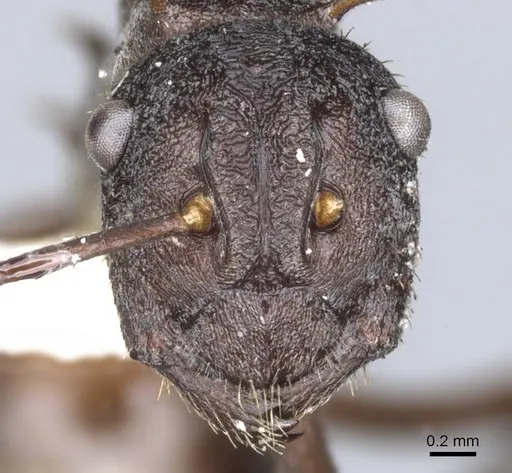
Workers of Polyrhachis rustica measure around 7 mm in total length with distinctive morphological features. They have prominent pronotal spines that are short and triangular, propodeal spines that are scarcely elevated and subparallel, and petiolar spines that are somewhat divergent and gently curved [1]. The head and mesosoma have vermiculate-rugose sculpture, while the gaster is finely reticulate and shiny. Color is dark reddish-brown with the dorsum and sides of the mesosoma and petiole infuscated to medium reddish-brown. The gaster has posterior margins of tergites widely bordered dark brown [1]. Queens are larger at around 9 mm and have reduced pronotal spines compared to workers [1].
Why This Species Is Not Recommended for Hobbyists
Polyrhachis rustica represents one of the most challenging ant species to keep, if it is even possible in captivity at all. Unlike typical ants where you can establish a colony with a queen, this parasitic species requires simultaneous access to both the parasite and its specific Rhytidoponera host. There are no documented cases of hobbyists successfully maintaining this species. The required combination of obtaining a rarely-collected parasitic queen, identifying and collecting the correct host species, and successfully integrating them makes this an expert-only, likely impossible, keeping goal. For antkeepers interested in Polyrhachis, consider non-parasitic species like Polyrhachis ammon, Polyrhachis dives, or Polyrhachis hookeri which are available in the hobby and can be kept in standard setups. [2][3]
Frequently Asked Questions
Can I keep Polyrhachis rustica in a test tube colony?
No. Polyrhachis rustica is a social parasite that cannot survive without a host Rhytidoponera colony. A test tube setup would result in certain death. This species requires a mixed-species naturalistic setup with both the parasite and its host.
How do I start a Polyrhachis rustica colony?
You cannot start an independent colony. Unlike typical ants, you would need to obtain both a parasitic P. rustica queen AND an established Rhytidoponera colony, then introduce the queen to the host nest. This has never been documented in captivity and would be extremely difficult to achieve.
What do Polyrhachis rustica eat?
Diet is unknown in captivity. As a social parasite, they may scavenge from host food stores, but no specific studies exist.
Are Polyrhachis rustica good for beginners?
No. This species is not recommended for any level of antkeeping. They are parasitic, require a host colony, and are nearly impossible to obtain. Even expert antkeepers should not attempt this species without specific research facilities.
Do Polyrhachis rustica need hibernation?
Probably not. Queensland has mild winters, and as a parasitic species living within a host nest, they would likely remain active year-round in captivity. However, no specific studies exist on their seasonal requirements.
Where does Polyrhachis rustica live?
Only in Queensland, Australia, specifically near Collinsville and Mareeba. They are always found in association with Rhytidoponera ant nests in savannah woodland areas.
How long do Polyrhachis rustica live?
This has not been studied. As a parasitic species integrated into a host colony, their lifespan would be tied to the host colony dynamics rather than independent colony founding.
Why are Polyrhachis rustica so hard to find?
They are social parasites that only exist within Rhytidoponera host colonies. Field studies have shown they are always rarer than their hosts, visits to known localities failed to find any specimens despite examining many host nests [2]. They are also only known from two specific locations in Queensland.
What is the best Polyrhachis species for beginners?
Consider non-parasitic Polyrhachis species like Polyrhachis ammon, Polyrhachis dives, or Polyrhachis hookeri. These are available in the antkeeping hobby, can be kept in standard formicariums, and do not require a host colony. They are still challenging compared to beginner species but are achievable for dedicated hobbyists.
Report an Issue
The current care sheet is based fully on literature. See inconsistencies, or something that's incorrect? Please , it will be resolved after review from an admin. Contributing to the blogs tab also helps providing information, to make us be able to further improve the caresheets. Thank you for your support!
References

Cette fiche d'élevage est sous licence CC BY-SA 4.0 .
Blogs de la communauté
CASENT0903357
Voir sur AntWeb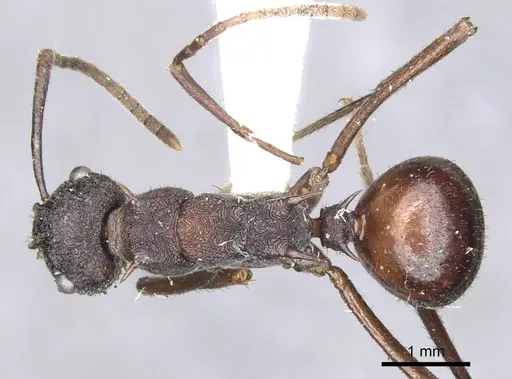
Littérature
Chargement de la carte de répartition...Chargement des produits...