
Polyrhachis pruinosa
- Nom sci.
- Polyrhachis pruinosa
- Sous-genre
- Myrma
- Tribu
- Camponotini
- Sous-famille
- Formicinae
- Auteur
- Mayr, 1872
- Distribution
- Trouvé dans 1 pays
Introduction
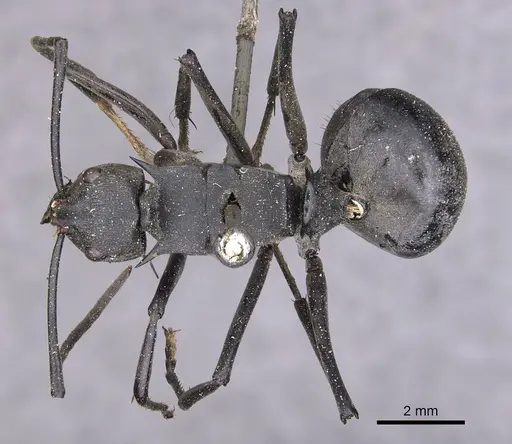
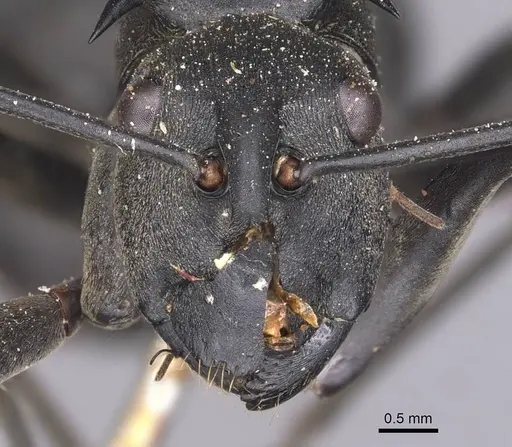
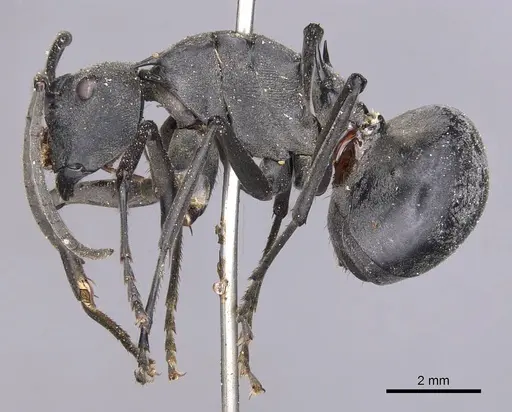
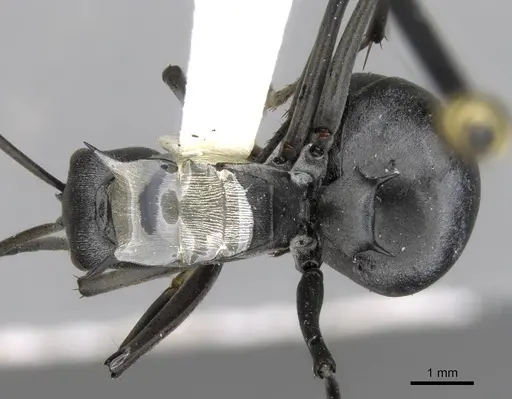
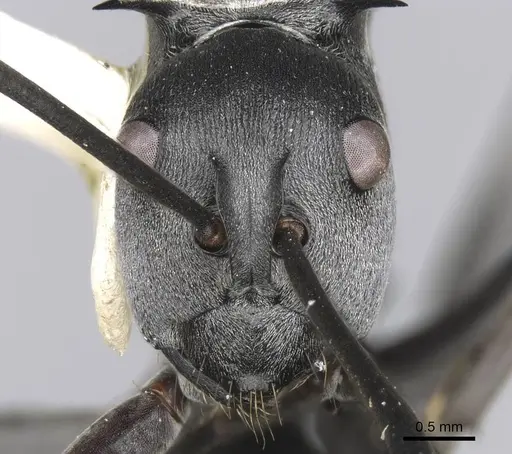
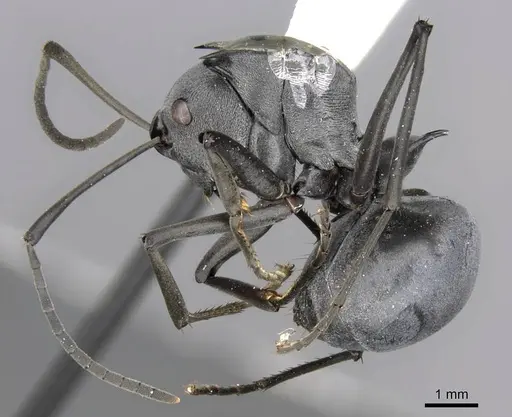
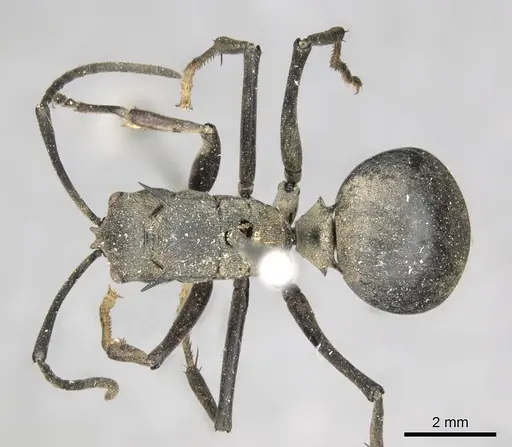
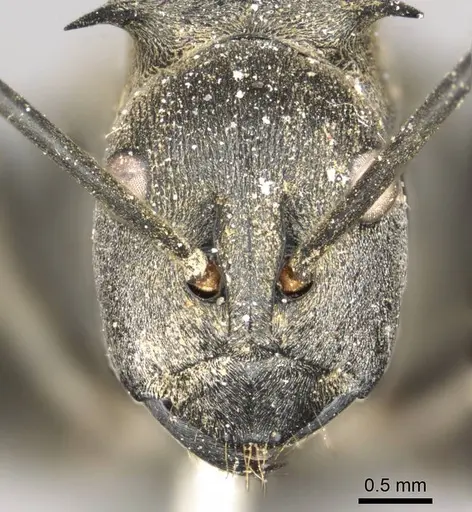
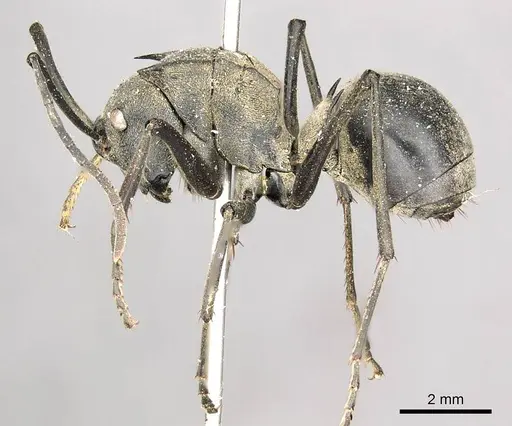
Polyrhachis pruinosa is a medium-sized ant in the subgenus Myrma, native to Southeast Asia. Size data is unavailable for this species, but it has distinctive spiny projections (propodeal spines) typical of the genus Polyrhachis. It is found in Borneo, Indonesia, Malaysia, and Singapore, usually in forested areas . A key behavior is its ability to escape digestive fluid in carnivorous pitcher plants, observed in Kebun Cina Forest Reserve . The genus often nests in elevated spots like tree hollows or under bark .
Quick Summary
- Difficulty: Medium
- Origin & Habitat: Native to the Indomalaya region, found in Borneo, Indonesia, Malaysia, and Singapore in forested areas [1][3][4].
- Colony Type: Based on typical Polyrhachis patterns, likely monogyne (single queen colonies), but unconfirmed for this species.
- Size & Growth:
- Queen: Size data unavailable
- Worker: Size data unavailable
- Colony: Estimated up to several hundred workers
- Growth: Moderate
- Development: Estimated 6-8 weeks at tropical temperatures (Development time is inferred from related species, no specific data for Polyrhachis pruinosa)
- Antkeeping:
- Temperature: Keep warm, around 24-28°C, based on tropical habitat inference [1].
- Humidity: Maintain moderate humidity with moist nest substrate but good ventilation [1].
- Diapause: No, as a tropical species, they do not require hibernation [1].
- Nesting: Use naturalistic setups with wood or bark, or Y-tong/plaster nests. Provide enclosed, slightly humid spaces [1].
- Behavior: Workers are calm and active foragers. They can escape smooth surfaces like pitcher plant fluid [2]. They are moderate escape artists but not highly aggressive.
- Common Issues: keep temperatures above 24°C to prevent colony stalling., ensure good ventilation to avoid mold growth., maintain adequate humidity to prevent brood failure., wild-caught colonies may have parasites or stress., established colonies may be hard to find due to limited availability.
Housing and Nest Preferences
You can keep Polyrhachis pruinosa in naturalistic setups with rotting wood or bark, as they naturally nest in elevated locations. Use Y-tong or plaster nests that hold some moisture. Provide an outworld with natural decorations for foraging [1].
Feeding and Diet
Offer sugar water or honey regularly, and protein from small insects like fruit flies or mealworms once or twice weekly. Remove uneaten prey to prevent mold [1].
Temperature and Seasonal Care
Keep the nest at 24-28°C year-round. Use a heating mat if needed, but avoid drying out the nest [1].
Behavior and Colony Dynamics
Workers are active foragers and can escape smooth surfaces like pitcher plant fluid [2]. Colonies grow moderately with continuous egg-laying in warm conditions.
Frequently Asked Questions
How long does it take for Polyrhachis pruinosa to produce first workers?
Estimated 6-8 weeks after queen lays eggs, assuming temperatures are 25-28°C, based on related Polyrhachis species [1].
Can I keep Polyrhachis pruinosa in a test tube?
Test tubes work for founding but transfer to a proper nest once the colony has workers, as they prefer naturalistic setups [1].
What temperature do Polyrhachis pruinosa need?
Keep them at 24-28°C year-round, as they are tropical [1].
Do Polyrhachis pruinosa need hibernation?
No, they do not require hibernation as a tropical species [1].
How big do Polyrhachis pruinosa colonies get?
Estimated up to several hundred workers, based on related species patterns.
What do Polyrhachis pruinosa eat?
They are primarily nectarivorous, offer sugar water and protein from small insects [1].
Is Polyrhachis pruinosa good for beginners?
Rated medium difficulty due to temperature and humidity needs, but not recommended for beginners due to limited availability.
Can I keep multiple queens together?
Likely monogyne, so it is not recommended to combine unrelated queens, as they may fight.
Why is my Polyrhachis pruinosa colony not growing?
Check temperature (above 24°C), humidity, and ventilation. Ensure consistent food access and minimize disturbances [1].
Report an Issue
The current care sheet is based fully on literature. See inconsistencies, or something that's incorrect? Please , it will be resolved after review from an admin. Contributing to the blogs tab also helps providing information, to make us be able to further improve the caresheets. Thank you for your support!
References

Cette fiche d'élevage est sous licence CC BY-SA 4.0 .
Blogs de la communauté
Littérature
Chargement de la carte de répartition...Chargement des produits...