
Polyrhachis numeria
- Nom sci.
- Polyrhachis numeria
- Sous-genre
- Myrma
- Tribu
- Camponotini
- Sous-famille
- Formicinae
- Auteur
- Smith, 1861
- Distribution
- Trouvé dans 0 pays
Introduction
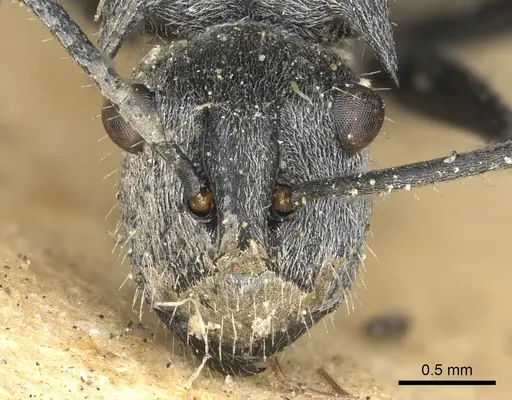
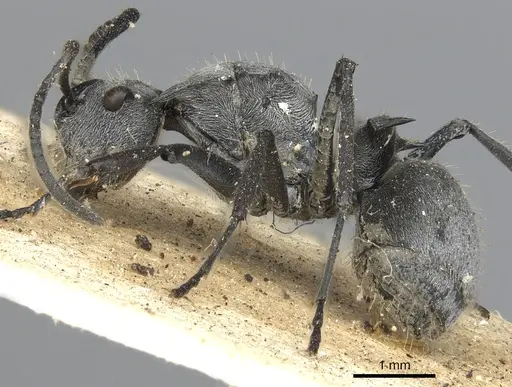
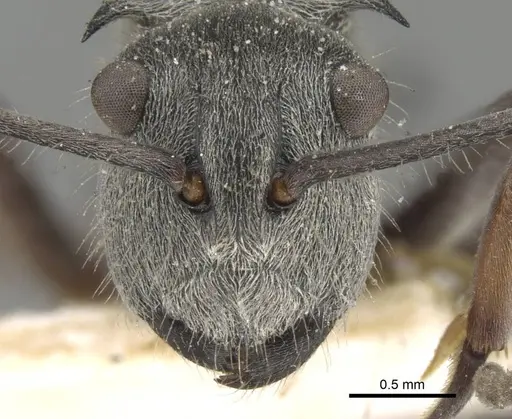
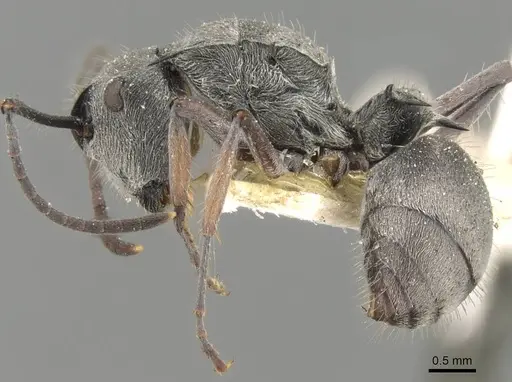
Polyrhachis numeria is a medium-sized ant belonging to the Formicinae subfamily, in the Myrma subgenus of the aculeata species group . Workers reach about 6.5 mm in total length, queens about 8 mm . Look for weakly truncate eyes, numerous short hairs on the antennal scapes, and abundant golden hairs covering all dorsal body surfaces. The pronotal spines are relatively short with broad, flat bases . This species is rare in museum collections – the holotype worker collected by Alfred Russel Wallace remains the only specimen known from Sulawesi, though additional records exist from India's Andaman and Nicobar Islands . Originally described in 1861,it was later synonymized with Polyrhachis schizospina . Despite being described over 160 years ago, nothing has been documented about its biology, behavior, or colony structure in the wild .
Quick Summary
- Difficulty: Unknown, likely Medium to Hard
- Origin & Habitat: Recorded from Tondano (Sulawesi, Indonesia) and the Andaman and Nicobar Islands (India) [4][3][1][2]. Natural habitat is unconfirmed but based on related Polyrhachis species it likely inhabits tropical forests, possibly arboreal.
- Colony Type: Unconfirmed, likely monogyne based on typical Polyrhachis patterns
- Size & Growth:
- Queen: ~7.96 mm [1][2]
- Worker: ~6.50 mm [1][2]
- Colony: Unknown, no colony data exists for this species
- Growth: Unknown, likely moderate
- Development: Unknown, estimated 6-10 weeks based on related Polyrhachis species at warm temperatures (No direct development data exists for this species. Estimate based on typical Polyrhachis patterns.)
- Antkeeping:
- Temperature: Likely needs warm conditions around 24-28°C based on tropical distribution. Provide a temperature gradient.
- Humidity: Keep the nest substrate consistently moist but not waterlogged, mimicking tropical forest conditions.
- Diapause: Unknown – tropical species likely do not require a formal hibernation period.
- Nesting: Polyrhachis (Myrma) species often nest in dead wood or under bark. Use a naturalistic setup with wood pieces or a Y‑tong/plaster nest with good moisture retention.
- Behavior: No captive observations exist. Based on related Polyrhachis species, they are likely moderately active foragers that tend honeydew‑producing insects and hunt small insects. They use formic acid spray as defense (typical Formicinae). Not dangerous to humans. Standard escape prevention for 6–8 mm ants should be adequate.
- Common Issues: no established captive care – keeping this species is experimental., unknown founding success – both natural and captive founding are undocumented., humidity control is critical – tropical species often fail in dry conditions., potential escape risk despite moderate size – use proper barriers., extremely rare in the hobby – obtaining a queen is nearly impossible for most keepers.
Discovery and Taxonomy
Polyrhachis numeria was first described by Frederick Smith in 1861 based on a worker collected by Alfred Russel Wallace in Sulawesi (Tondano) [1][2]. In 1927,Karavaiev described a queen from Prinsen Island (Sunda Strait) as Polyrhachis numeria, which Kohout synonymized under P. numeria in 1998 [1][2]. The species belongs to the aculeata species-group within the subgenus Myrma and is closely related to Polyrhachis diana from Mindanao, from which it can be separated by its truncate eyes, hairy antennal scapes, and abundant golden body pilosity [1][2].
Distribution and Rarity
This species is known from remarkably few specimens. The holotype from Sulawesi remains the only record from that island despite intensive collecting efforts (e.g., Project Wallace,1985) [1][2]. Additional records exist from the Andaman and Nicobar Islands (India) [3]. The type locality is Tondano, Celebes [4]. Male and immature stages remain unknown, and no biological observations have ever been published, making P. numeria one of the most poorly known ant species in the region [1][2].
Related Species and Identification
Polyrhachis numeria is most similar to Polyrhachis diana (Wheeler,1909) from Mindanao. Key differences: P. numeria has weakly truncate eyes, numerous short hairs on the antennal scapes, and abundant golden hairs covering all dorsal surfaces. P. diana has normal eyes, bare scapes, and pilosity limited to the front of the head and the underside and tip of the gaster. Additionally, P. numeria has shorter pronotal spines with broad, flat bases, while P. diana has longer, more slender spines [1][2]. These features require examination under magnification.
Keeping Polyrhachis numeria in Captivity
No documented captive care exists for this species. Based on the tropical distribution and typical Polyrhachis (Myrma) husbandry, provide warm (24–28°C) conditions and a consistently moist substrate (plaster or Y‑tong nest). Founding is likely claustral – the queen seals herself in and lives on stored fat. Feed sugar water and small insects (fruit flies, small mealworms). This species is experimental: keepers will be pioneering its care. No published observations on behavior, growth, or reproduction are available.
Morphology and Physical Characteristics
Workers measure about 6.5 mm in total length, queens about 8 mm [1][2]. Distinctive features include weakly truncate eyes, numerous short hairs on the superior edge of the antennal scapes, and abundant golden hairs covering all dorsal body surfaces. The pronotal spines are relatively short with broad, flat bases [1][2]. These characteristics are useful for identification but have no direct implications for captive care.
Frequently Asked Questions
How do I care for Polyrhachis numeria ants?
No documented care information exists for this species. Based on related Polyrhachis species, provide a warm (24–28°C), humid (keep substrate moist) environment with a Y‑tong or soil nest. Feed sugar water and small insects. This species is experimental – you will be pioneering its husbandry.
What do Polyrhachis numeria ants eat?
Unconfirmed for this species. Polyrhachis (Myrma) species typically feed on honeydew from aphids and scale insects, plus small insects for protein. Offer sugar water or honey water as a constant energy source and protein sources like fruit flies, small mealworms, or other tiny insects.
How big do Polyrhachis numeria colonies get?
Unknown – no wild colony data exists for this species. Related Polyrhachis species typically form colonies ranging from dozens to several hundred workers.
Where is Polyrhachis numeria found?
Recorded from Sulawesi (Tondano, Indonesia) and the Andaman and Nicobar Islands (India) [4][3].
How long does it take for Polyrhachis numeria to develop from egg to worker?
Unknown – no direct data exists. Estimated 6–10 weeks at warm temperatures based on related Polyrhachis species.
Is Polyrhachis numeria a good species for beginners?
No – it is extremely rare in the hobby with no established care protocols. Start with more documented species like Lasius, Camponotus, or Tetramorium.
Do Polyrhachis numeria queens found colonies alone?
Likely yes – most Polyrhachis species have claustral founding. The queen seals herself in a chamber and raises the first workers using stored fat reserves. However, this has not been directly observed for P. numeria.
What temperature do Polyrhachis numeria ants need?
Likely 24–28°C based on the tropical distribution of this species and related Polyrhachis ants. Provide a temperature gradient allowing the ants to choose their preferred warmth.
Why is Polyrhachis numeria so rare?
Known from very few specimens despite over 160 years since its description. This may reflect true rarity, arboreal or cryptic nesting habits making them difficult to collect, or simply limited sampling. No biological observations have ever been published [1][2].
Report an Issue
The current care sheet is based fully on literature. See inconsistencies, or something that's incorrect? Please , it will be resolved after review from an admin. Contributing to the blogs tab also helps providing information, to make us be able to further improve the caresheets. Thank you for your support!
References

Cette fiche d'élevage est sous licence CC BY-SA 4.0 .
Blogs de la communauté
CASENT0901872
Voir sur AntWeb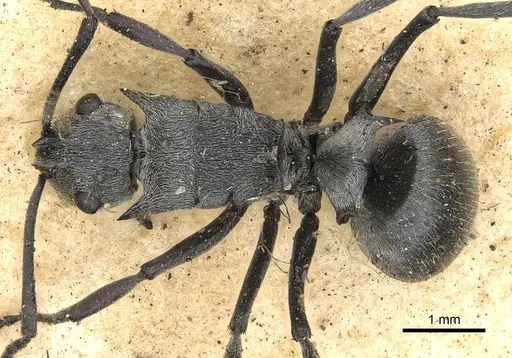
CASENT0906794
Voir sur AntWeb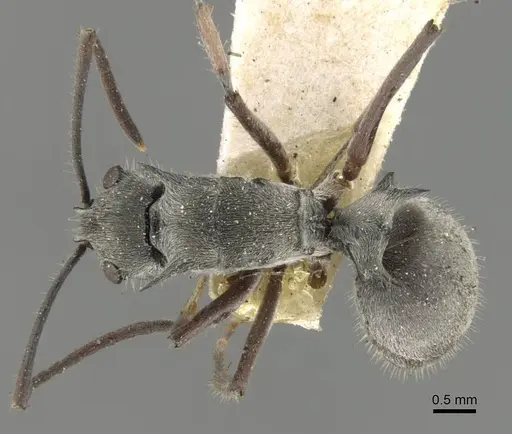
Littérature
Chargement de la carte de répartition...Chargement des produits...